
10 Best Things to Do in Bangkok—Here’s What’s Worth the Time
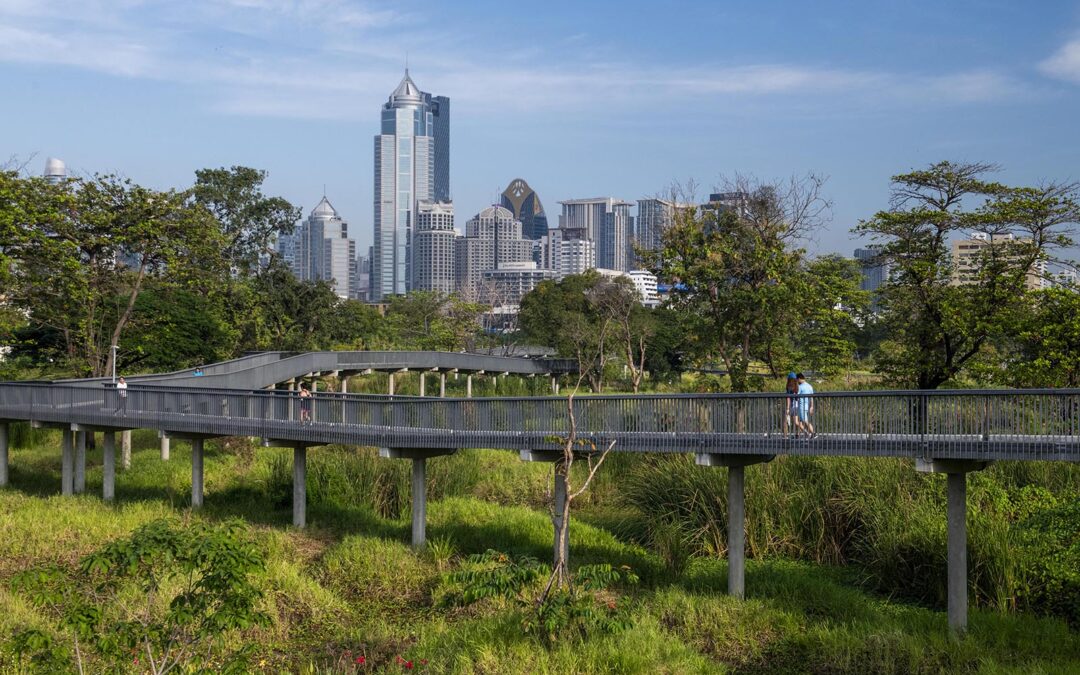
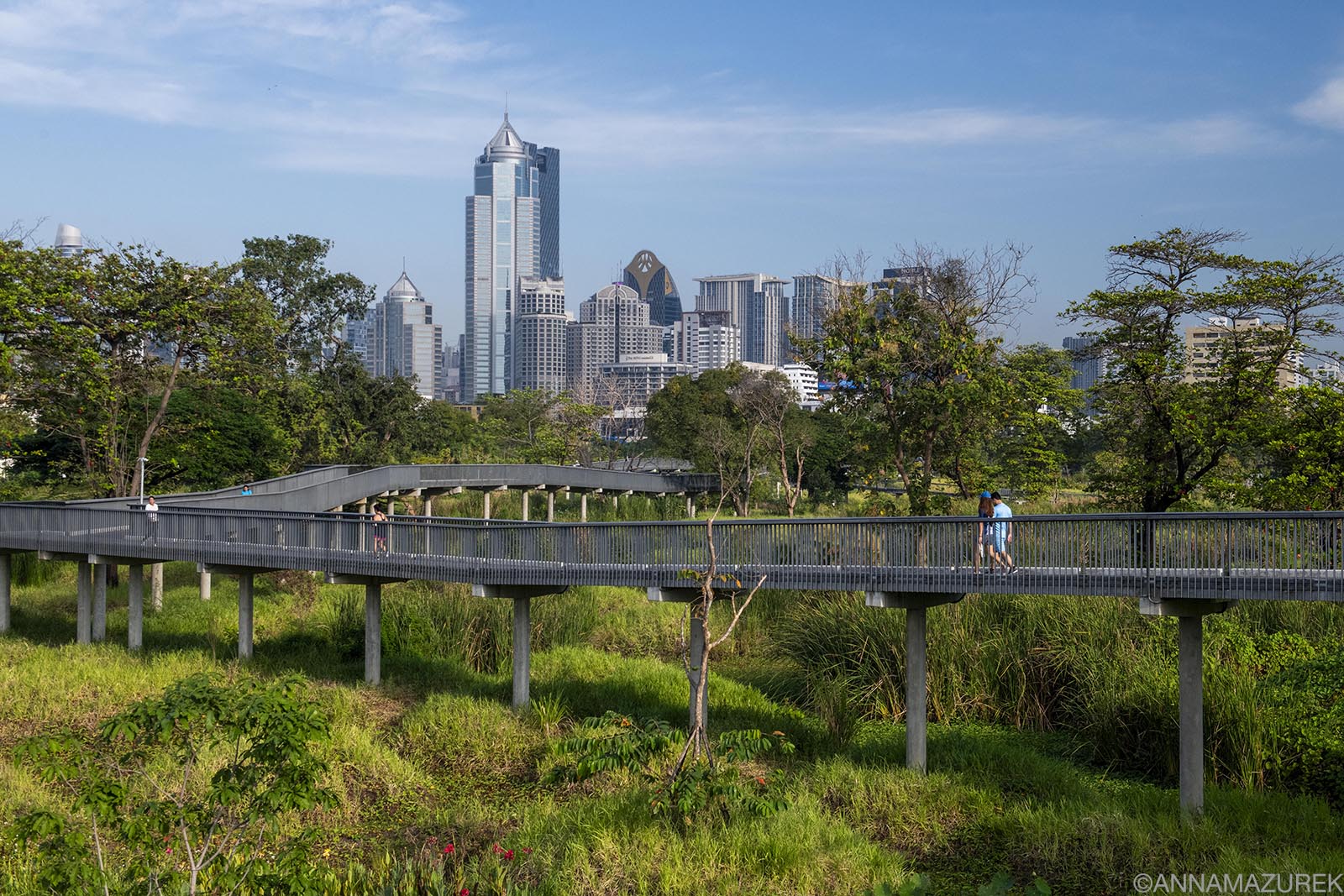 A former industrial site in the heart of Bangkok was transformed into the 102-acre Benjakitti Park in 2022.
There’s no denying that Bangkok buzzes with energy—the bustling modern city located on the banks of the Chao Phraya River is filled with towering skyscrapers, ancient temples and vibrant street life. The Thai capital, home to 11 million people, boasts a sleek, air-conditioned public transit system making it easy to zip between neighborhoods at an affordable rate while avoiding the city’s notorious traffic. The hardest part of visiting Bangkok is deciding what to do.
From temple hopping to perusing the stalls at the Chatuchak Weekend Market, this guide covers the best things to do in Bangkok, including where to stay and eat. (If you want to visit Moo Deng (famous baby hippo) from Bangkok, check out my guide.)
Affiliate links are used in this post. If you make a purchase, I earn a small commission at no cost to you, which goes toward the cost of maintaining this blog.
Plan Your Trip
Currency: Thai Baht (THB)
When to Go: November to February for cooler temperatures.
Travel Insurance: Protect yourself with SafetyWing travel medical insurance to cover accidents and travel delays.
Mobile eSIM Card: Get seamless connectivity worldwide with Airalo minus the hassle of physical SIM card. (Save 10% with code AIRALOESIM10!)
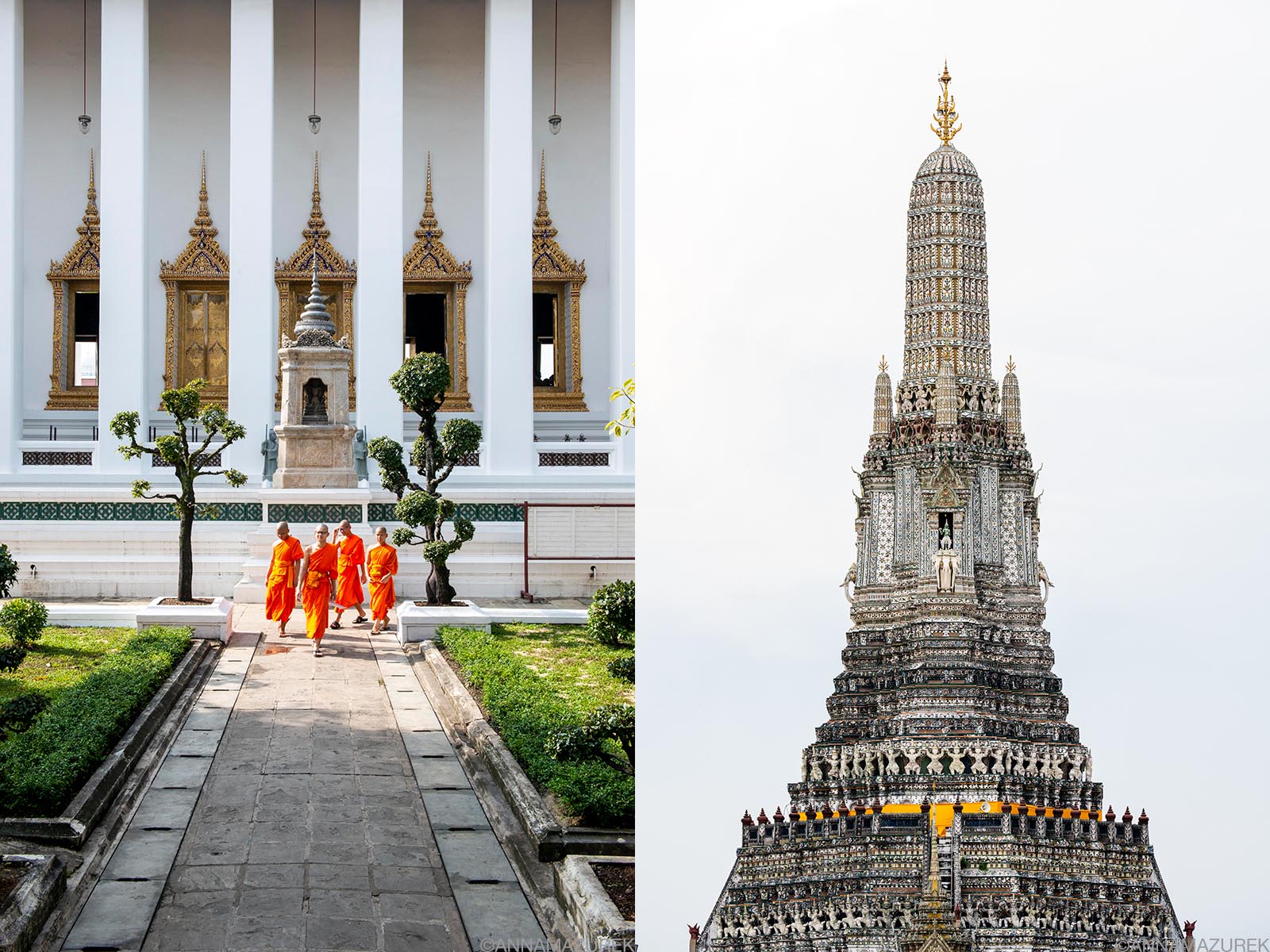 Left: Monks at Wat Suthat, one of Bangkok’s most stunning temples; Right: The 82-meter-high Wat Arun photographed from across the Chao Phraya River.
The Best Things to Do in Bangkok
The Grand Palace, the former royal residence, is a must for your first trip. One of the highlights is the stunning golden 1782 temple complex of Wat Phra Kaew, home to the Emerald Buddha, the most revered image in Thailand that dates to the 13th and 14th centuries. (Admission: 500B/$14 USD) Consider booking online through Klook to skip the lines. Cover your knees and wear long sleeves or you’ll be forced to rent clothing.
Wat Pho is near The Grand Palace and home to the largest reclining Buddha in the city. (Admission: 100B/ $2.80 USD)
Wat Arun. Take a boat across the river from the Grand Palace to visit the 82-meter-high Khmer-style tower of this grand Buddhist temple complex located on the Chao Phraya River. You can no longer climb to the top sadly. On your right after the ticket booth, you’ll see two giant guardian statues by a temple—Phaya Yak Wat Chaeng, which has a courtyard surrounded by Buddha statues that are lovely to photograph. (Be warned the temple is now overflowing with people dressing up in traditional clothing to take photos. Arrive early to beat the madness!) The best photo spot of the temple is across the river, which you can get to easily on a water taxi for five baht that leaves right by the temple’s entrance.
Traveling in Southeast Asia
Read my guides to Thailand, Chiang Mai, Vietnam and Singapore!
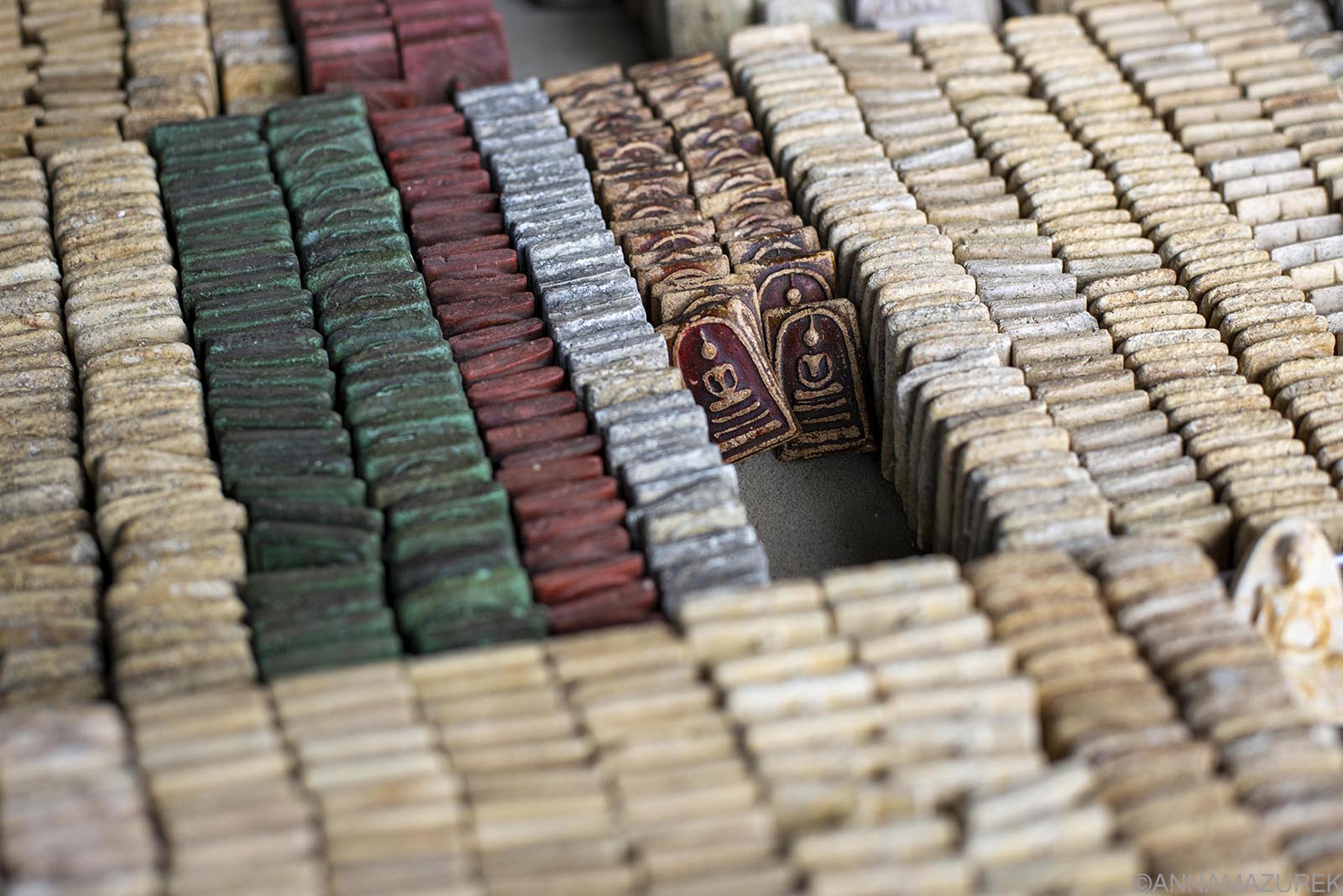 In Thailand, there is a different Buddha for each day of the week. Saturday is the naga Buddha in this image. These protective amulets are often worn as necklaces.
The Amulet Market is another great spot to hit if you’re by The Grand Palace. The market is a series of covered stalls selling amulets, protective talismans and Buddha statues. These trinkets are highly sought after by monks, taxi drivers and people in dangerous professions. I have bought several from here that I made into necklaces.
Jim Thompson House: This is the best thing in Bangkok. The house/art museum is the former home of American silk trader and antique collector Jim Thompson. The complex consists of six Thai-style houses moved from other parts of Thailand to the current location, which is within walking distance from the MBK center and the BTS Skytrain National Stadium stop. His art collection includes Buddha sculptures dating back to the 8th century along with paintings and porcelain. The art is what makes this place stunning. Photography is not allowed inside the houses. (Admission: 200B/$6 USD)
Wat Suthat holds one of the highest ranks of royal temples in the country. The photogenic courtyard is lined with Buddha statues, which is why it’s one of my favorite temples to photograph in Thailand! (Admission: 100B/$3 USD)
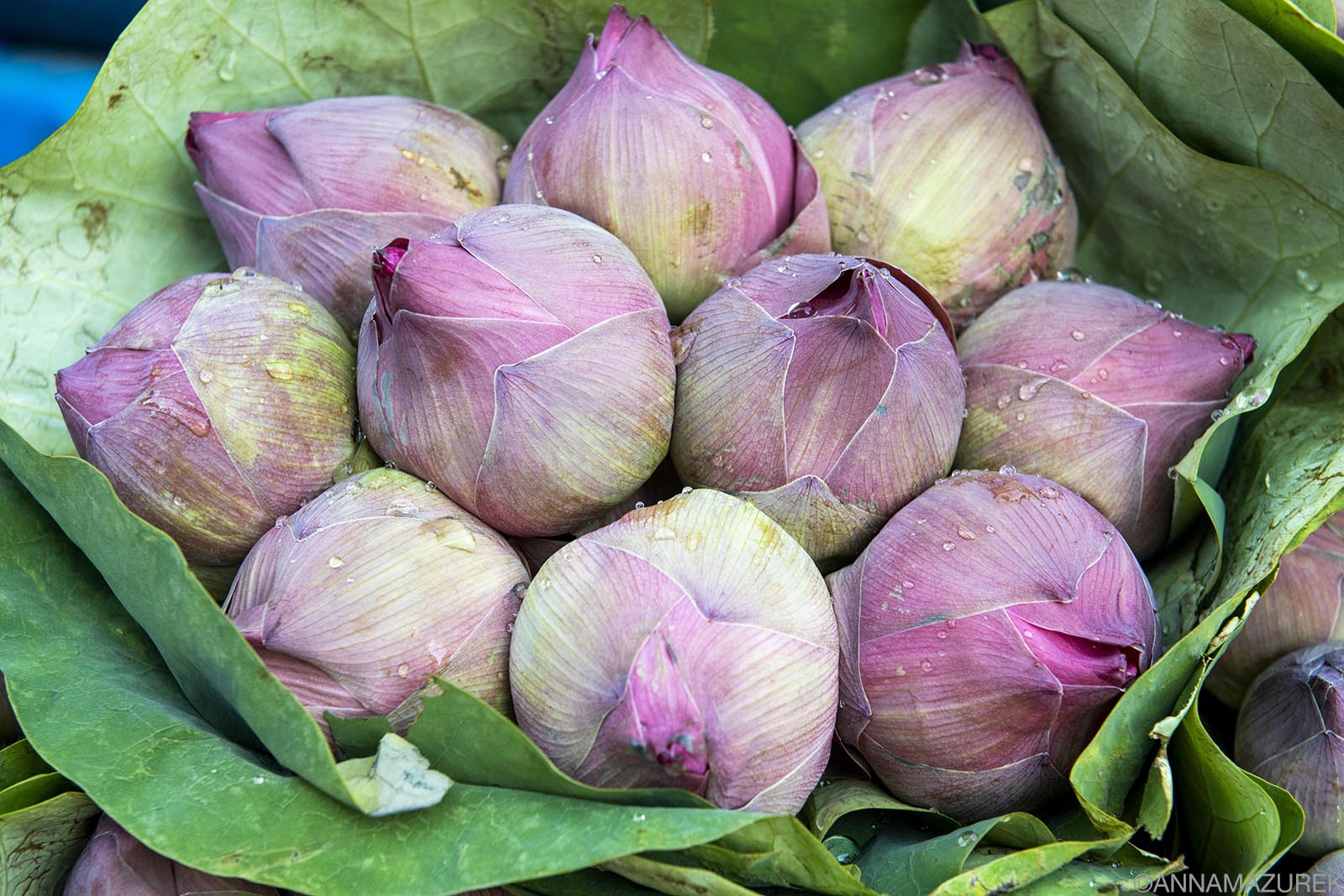 Lotus flowers at Chinatown’s bustling 24-hour flower market, Pak Khlong Talat.
Pak Khlong Talat (Bangkok’s Flower Market): One of my favorite photo spots in Bangkok is the flower market in Chinatown, which doubles as the city’s largest vegetable market during the day. It was once a street market but now resides in a giant warehouse lined with stalls overflowing with orchids, carnations and women stealthy making temple offerings and good luck charms. It’s open 24 hours, but I prefer to go at sunrise to photograph the fresh flowers, which are delivered late at night. Klook offers guided tours if you’d rather not go solo
Wat Saket And The Golden Mount is a golden chedi located on the only hill in Bangkok. It’s worth climbing the 320 stairs to the top and spending some time exploring the sprawling complex. (Admission 50 Baht/$1.50 USD)
Giant Buddha at Wat Paknam Phasi Charoen: This 230-foot-tall Buddha was completed in 2021 on the outskirts of Bangkok. It’s a 15–20-minute walk from the BTS (Wutthakat station) and MRT stations (Bang Phai or Tha Phra stations). (Be warned –it’s covered in scaffolding as of November 2024.) There’s a great view from the Tha Phra MRT platform but often that end of the platform is closed.
Erawan Museum: A 14-story statue of Erawan, a mythical three-headed elephant known as Airavata, is one of the main attractions, known for its colorful interior staircase. The museum was the brainchild of antique collector Lek Viriyapant, who built the structure to house his collection but sadly passed away before it opened in 2003. It’s a bit of a trek to get here on the BTS (Chang Erawan Station (E17) exit 2), but I enjoyed my visit because I love Buddhist art. The grounds are lush and great for photos as well. I recommend visiting in the morning to avoid the crowds. Tickets are normally 400 Baht, but I bought mine almost half price on Klook.
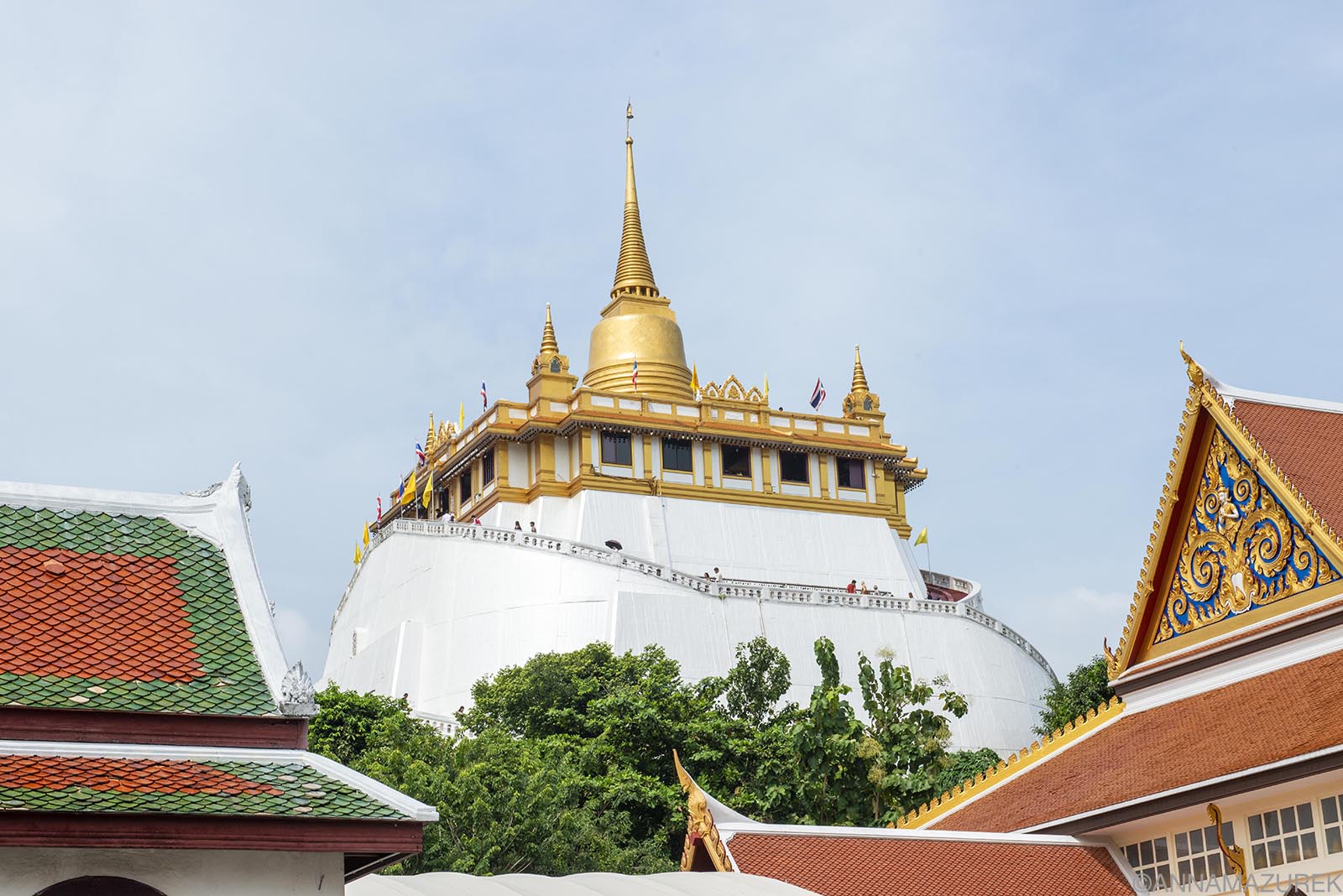 The Golden Mount Chedi is located on Bangkok’s only hill.
Where to Stay in Bangkok
Always choose accommodation near one of the train lines to make it easy to get around. I like to stay near the Siam area because it’s central but have also enjoyed staying near Lumphini Park.
Hotels: The Holiday Inn Express Siam ($88 USD/night) by the National Stadium BTS is my go-to when I need to work because it’s a great location with clean rooms, free breakfast and a gym. If you want to splurge, I recommend VIE Hotel Bangkok ($188 USD/night).
Hostel: I stayed at Bed Block One Hostel ($16 USD/night) for years and loved how close it was to Siam, Ratchathewi BTS station and the airport train
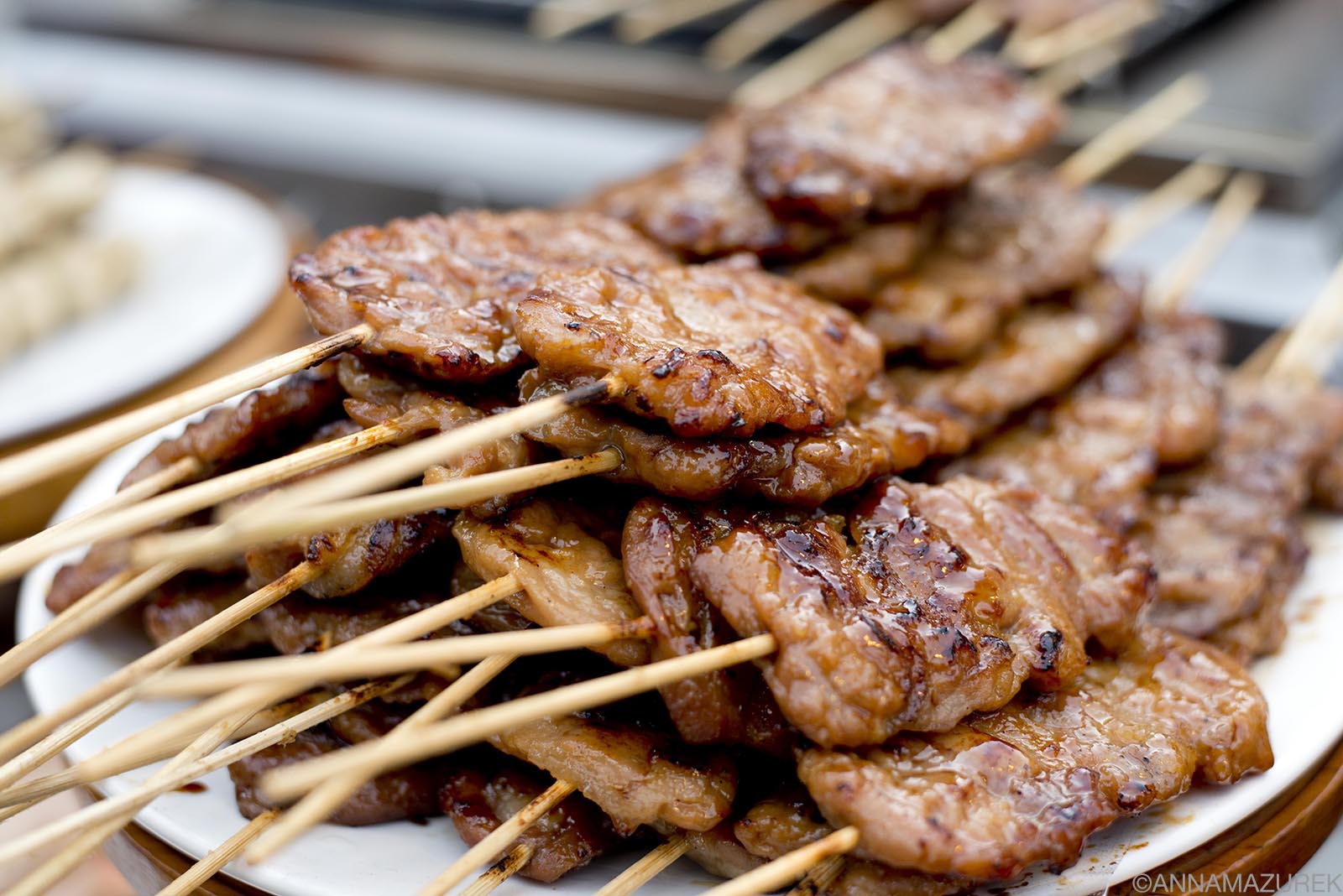 Moo ping, grilled pork skewers with a sweet marinade, at Chatuchak Weekend Market.
The Best Places to Eat and Shop in Bangkok
Chatuchak Weekend Market is Thailand’s largest market and my favorite place to shop. The sprawling complex is separated into 26 sections ranging from local artists to trendy boutiques to potted plants. The entire market is open on Saturdays and Sundays from 9 a.m. to 6 p.m. and is close to both the BTS Skytrain (Chatuchak Park stop) and MRT (Kamphaeng Phet stop). Early birds beware—the shops are never all fully open until at least 10 a.m.
Mall Food Courts
No one does malls as well as Thailand. The food court at MBK, a sprawling multi-level maze-like shopping mall in Siam, is the best. The food court is called Food Legends and is hidden on the sixth floor behind all the chain restaurants and vendor stalls. It consists of a series of side-by-side food stalls serving everything from curry to papaya salad with most meals costing less than 100 baht ($3 USD). (Don’t get it confused with the restaurants on the fifth floor, which is more obvious from the escalators than this hidden spot.)
To buy food, you have to put money on a meal card, which you use to pay for your food. Turn in your card before leaving to get a refund of any unused money. You’ll see the card booth as you enter.
Both the Terminal 21 and Siam Paragon shopping malls also have food courts. The food court is located on the top floor of Terminal 21 and the bottom floor of the Paragon behind all the normal restaurants. Both use a similar meal card system.
Thong Lo Neighborhood
If you are a foodie, then this is your neighborhood. Khao Jao is great for no-frills, authentic Thai food with high spice levels. Sit and Wonder is a hidden spot with a great atmosphere and delicious Thai food! Roast is a good treat if you’re craving Western food.
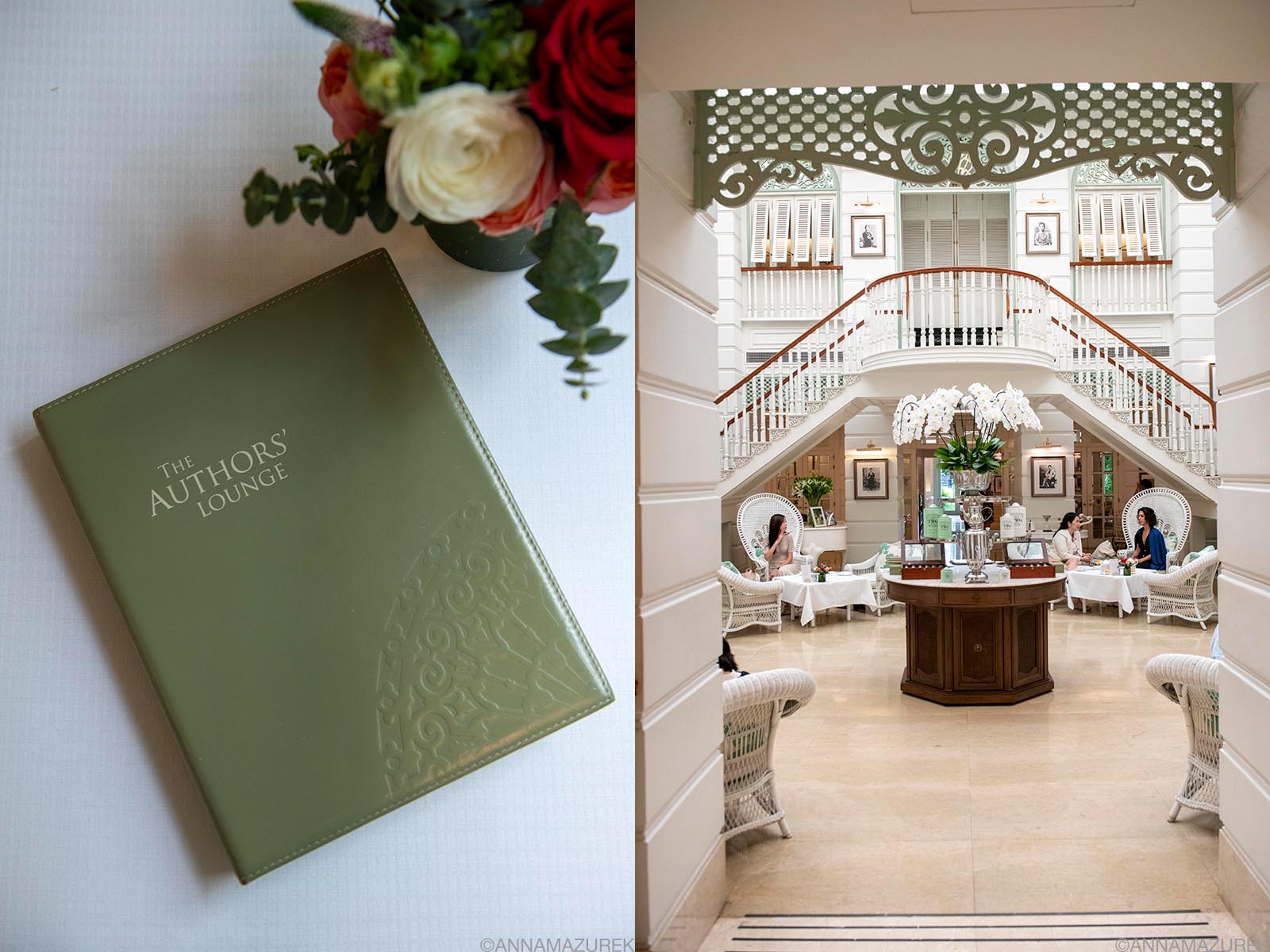 Looking to splurge? Treat yourself to the seasonal high tea at the Arthur’s Lounge at the Mandarin Oriental Hotel in Chinatown.
High Tea at the Arthur’s Lounge
Located on the banks of the Chao Phraya River, the historic Oriental Hotel was a haunt for famous writers such as Graham Greene and W. Somerset Maughan during the early 19th century. Now, the five-star hotel, the Mandarin Oriental Hotel, is part of the Mandarin Group and offers seasonal high teas daily in the light-filled atrium of the Arthur’s Lounge lined with wicker chairs. I thought it was a fun experience to get dressed up and treat myself. Cost was roughly $50 USD. Reservations recommended.
Craft Beer in Bangkok
While there are a bunch of glitzy pricey rooftop bars in Bangkok, I’m a big fan of the craft beer spot called Brewski, located on the top floor of the Radisson Blu Plaza Hotel near the Phrom Phong BTS stop. It’s a chill vibe with Thai and foreign beers on tap and tasty pub food. Don’t miss their BOGO deal for happy hour from 5 p.m. to 6 p.m. daily.
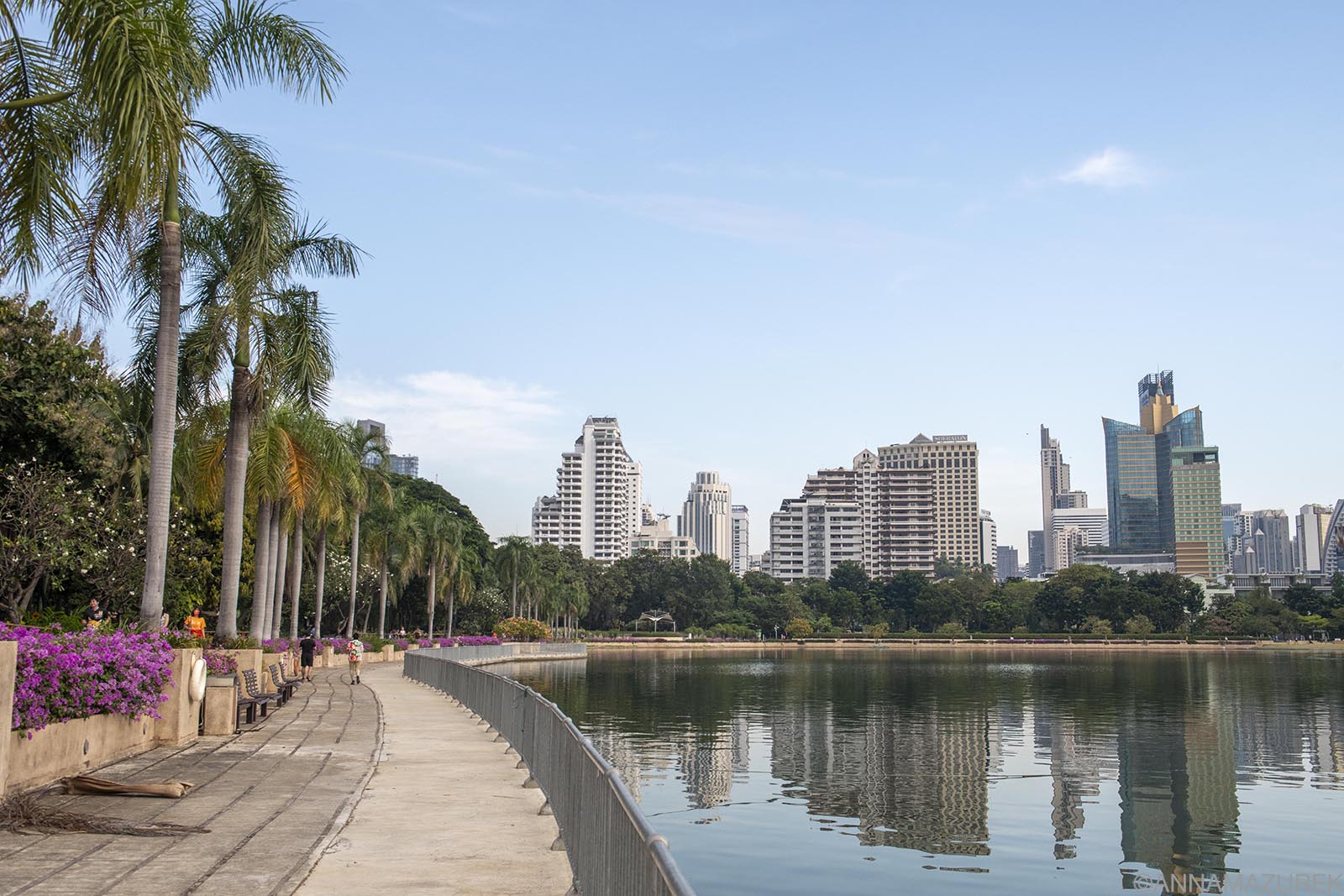 Benjakitti Park’s four lakes can hold a million cubic liters of stormwater. The lakes and wetlands naturally filter polluted water and act as a sponge during monsoon season.
The Best Parks in Bangkok
Lumpini Park is Bangkok’s oldest and largest green space covering 58 hectares. Rent a paddleboat for a loop around the artificial lake or go for a run along the trails between the well-manicured lawns. There’s usually always a Tai Chi class, too.
Another favorite is Benjakitti Park, a 102-acre park built on the site of a defunct tobacco factory with the former buildings now doubling as sports facilities. The natural space is mostly wetlands, frequented by birds, bats and monitor lizards, intersected by a series of elevated walkways. The park acts as a green lung for the city and works like a sponge during monsoon season rains. A flower-lined walking track circumnavigating a pond across the street from a series of skyscrapers is a great space for running or walking.
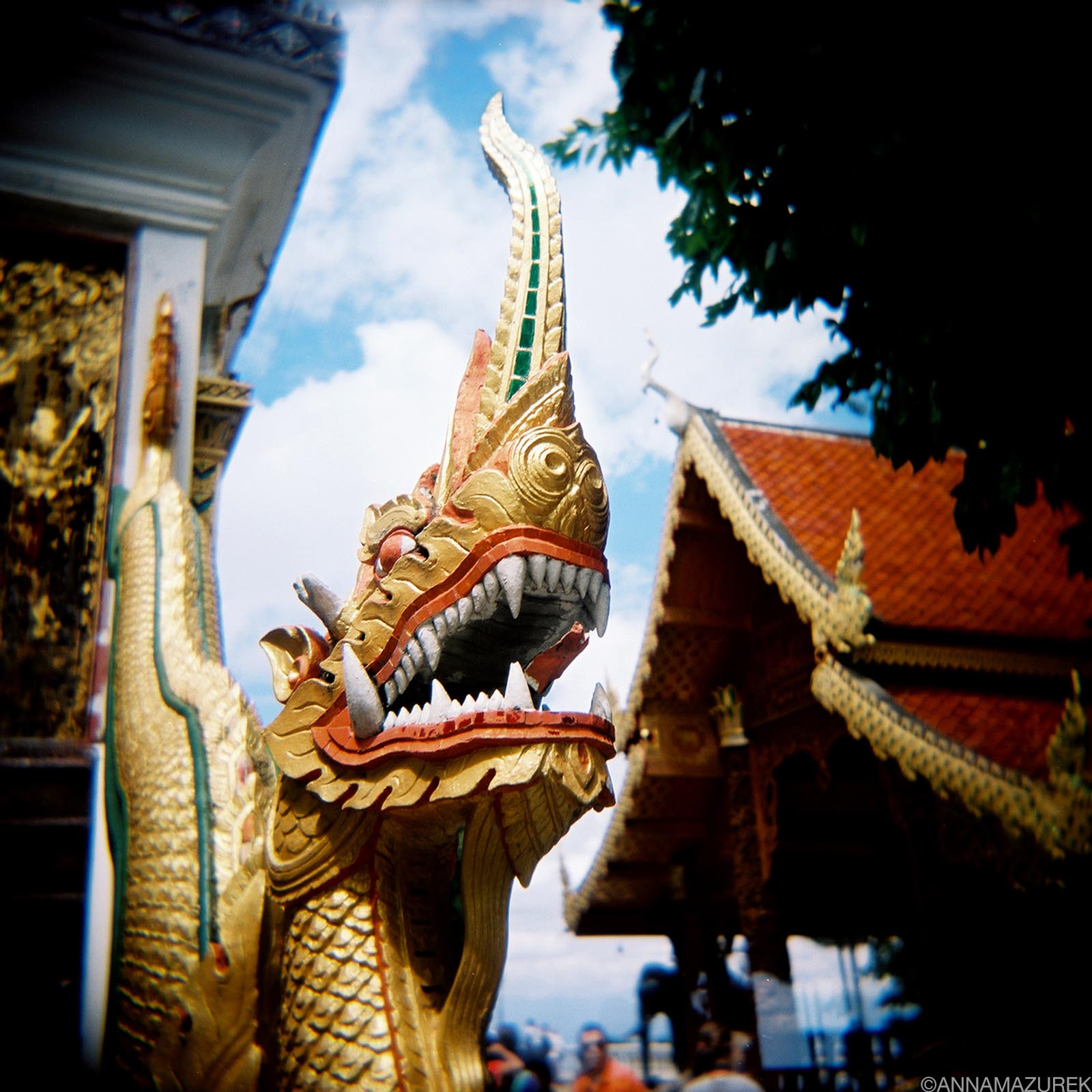 A naga, a mythical serpent, adorns the stairway of a temple inside The Grand Palace
Bangkok FAQ
Where’s the best place to buy a SIM card in Bangkok?
Do NOT buy a SIM card at the airport because they are ten times the price of an eSIM or local SIM. The easiest thing to do is buy a Thailand-specific eSIM card from Airalo that will work instantly when you arrive. If you are traveling to multiple countries in Southeast Asia on a short trip, then consider one of their Asia Regional eSIM cards. (Both the country-specific and regional eSIMs have worked wonderfully for me and even have a mobile hotspot option that’s critical for me because I’m always working remotely.)
Keep in mind it’s always cheaper to buy a country-specific eSIM than a regional one. Be sure to join the free Airalo Loyalty Program to earn 5% cash back for every purchase, which can be redeemed on future purchases. For more about eSIM cards, check out this post about the pros and cons of eSIM cards!
If you are staying for a month or more in Thailand, go by an AIS store and buy a local SIM or eSIM card for the cheapest deal. (AIS is Thailand’s largest mobile network operator.)
Do you need travel medical insurance for Thailand?
Yes, travel medical insurance is one of the most important things to purchase for any trip abroad, especially Thailand. It covers all the things that could go wrong from injuries to travel delays so that you don’t have to worry and can focus on traveling!
I use SafetyWing’s Nomad Insurance, which offers $0 deductible travel medical insurance coverage for over 180 countries for people aged 69 and under when traveling outside their home country. The best part is that it only costs a few dollars a day! If you get sick or injured abroad, you can visit any hospital or doctor.
Other benefits of Nomad Insurance include coverage for lost checked luggage, travel delays over 12 hours, motor accidents (if properly licensed, wearing all safety equipment and not intoxicated) and injuries from sports or leisure activities. You can even add adventure sports, electronics theft and U.S. coverage (for non-residents) to your policy.
If you’re abroad for 90 days, you can get 30 days of home-country coverage. (For the U.S. residents, it’s 15 days.) For more details about my experience using SafetyWing in Southeast Asia, read my SafetyWing Review.
Bangkok Transport Tips
Subway and Skytrain
The cheapest and fastest way into the city from either airport is to take a train. Don Mueang International Airport is connected to the city by a 17-minute train from Krungthep Apiwat Station.
From Suvarnabhumi Airport, take the Airport Link Train, which connects seamlessly to the BTS Skytrain. Some BTS stations are located near MRT stations. Elevators are at stations but not on all sides of the road. There’s always an escalator going up but sometimes, you might have to carry luggage down a set of stairs.
There are multi-trip passes available for both the BTS Skytrain and MRT subway individually. The MRT now lets you tap credit cards FINALLY but not the BTS.
Taxis are ALWAYS cheaper than auto rickshaws/tuk tuks. Taxi drivers rarely want to go by the meter anymore so expect to haggle. It usually takes me three taxis to get one to take me where I want to go at the meter rate. (Sundays are their day off so expect to pay exorbitant prices.) There are motorcycle taxis on most street corners that will take you nearby for a small fee. You’ll see the drivers wearing orange vests hanging around big intersections.
Grab, the rideshare app, does work in Bangkok, but I’ve really struggled to ever get one to pick me up in the Siam area without canceling because of traffic.
Where is the best English-speaking salon for a haircut in Bangkok?
I’ve been going to Shingo at Sensui Salon in the Sukhumvit area for over a decade. The owner, Shingo, is Japanese and speaks perfect English—he even lived in London for a while. I message him on the Facebook page to make my appointments.
Where is the best massage in Bangkok?
I love Nature Thai Massage on Soi 5 in the Siam area. There is a 20% discount for all appointments before 5 p.m. I usually do an oil massage that comes in a private room.
How to Snag the Best Hotel Deals with Mobile Discounts
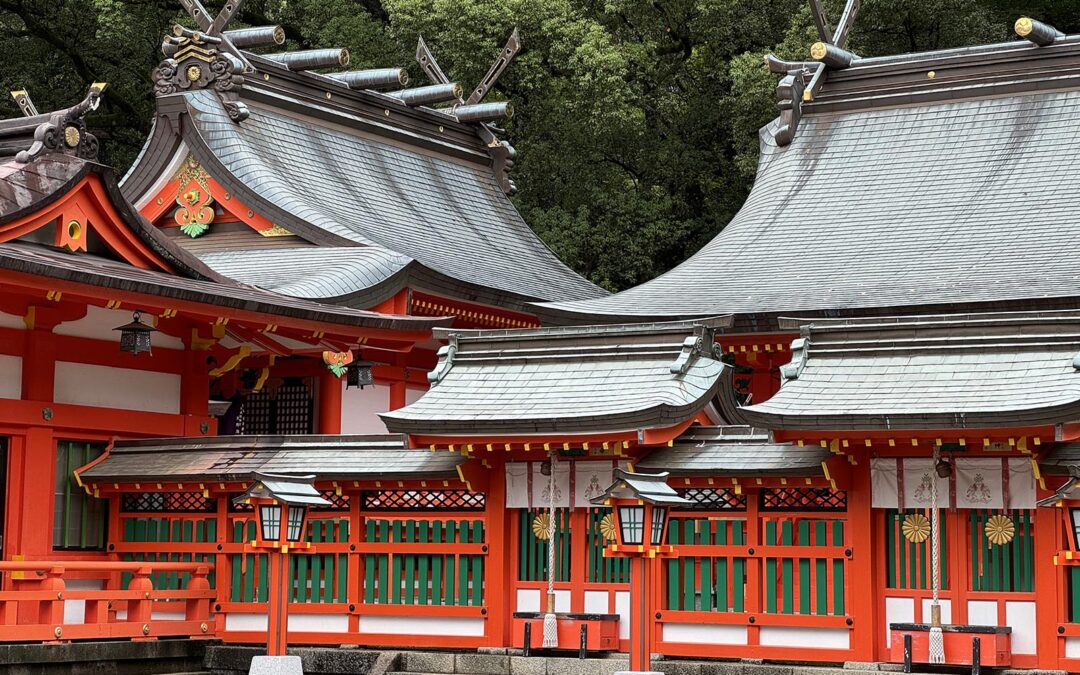
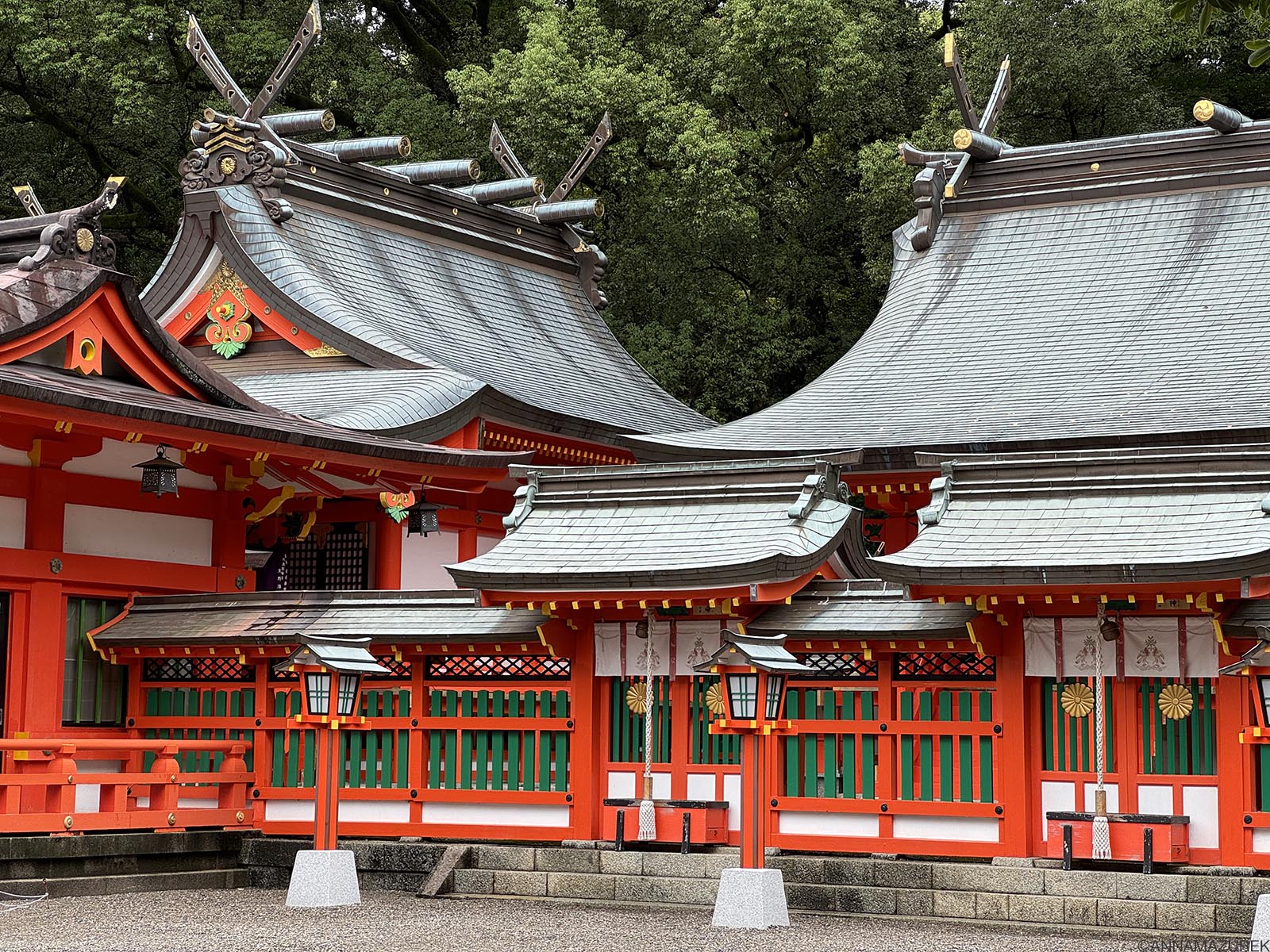 The Kumano Hayatama Taisha in Shingu, Japan is one of the three grand shrines I visited on my Kumano Kodo trek.
Accommodation and flights are often one of the biggest travel expenses. On my recent six-week trip to Japan (a combination of work and personal travel), I learned some new money-saving tricks that I wanted to share about how to find the best hotel deals.
(AFFILIATE DISCLOSURE: Please note that some affiliate links are used in this post. If you make a purchase, I earn a small commission at no cost to you, which goes toward blog maintenance costs. I only recommend products and companies I truly love and use.)
Hotel Booking Tips: The Best Mobile Hotel Deals
Booking hotels on mobile apps like Expedia saved me 15-30% on hotels with its mobile pricing. For example, I booked a room at the Smile Hotel in Okayama, Japan on Expedia’s desktop for a Saturday night stay about two weeks in advance for $96. Five days before my stay, I happened to look up the same hotel and date on the Expedia mobile app, and it was nearly 30% cheaper—$69.05! I booked it instantly and canceled the more expensive one. (Now, I’m a bit obsessed with finding the best deal so I often price check rates for refundable bookings when I’m stuck in a grocery store line or waiting for my luggage in an airport baggage claim.)
Fast forward a few days later, I got stranded in Japan because a typhoon delayed and then canceled my Taiwan trip. Since I enjoyed my stay at the Smile Hotel in Okayama, I stayed loyal to the brand. (Smile Hotels have simple, spotless rooms in convenient locations, which I highly recommend if you’re traveling to Japan anytime soon.) I strictly only looked up hotel mobile rates on Expedia, which saved me at least 15% each time and were even cheaper than my previous booking! I booked rooms for $36-50/night after taxes in both Okayama and two Osaka locations by Shin-Osaka and Tennoji train stations. The rates were even cheaper than booking directly through the hotel’s website, which is normally the best place to book. And, I even stayed over the weekend for these cheap rates!
Important note: The U.S. dollar is strong against the Japanese yen currently so it’s much more affordable for Americans to travel now. I was spending around $80-100/night in bigger cities or remote locations before I discovered this hack!
The best part of this trick is that you still earn rewards for booking these mobile deals! The One Key rewards I earned from Expedia for my bookings were easily applied to my next booking, which was great because I was booking new hotels every two days waiting to see what this typhoon would do!
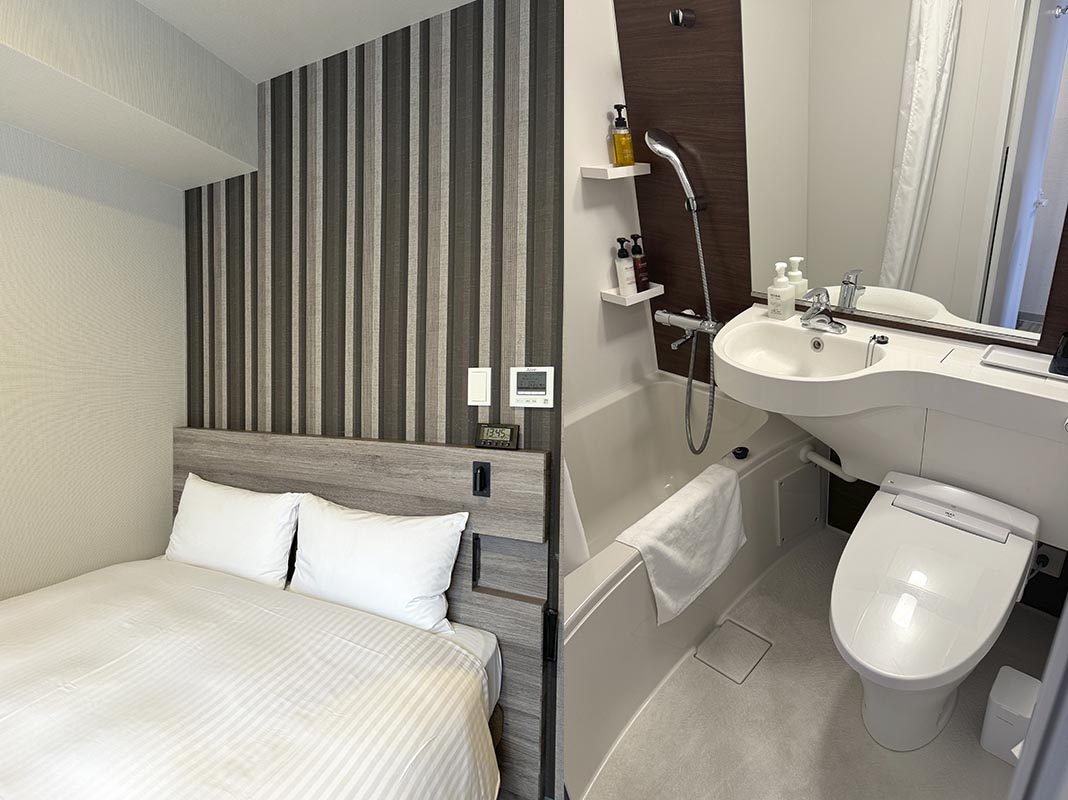 I booked rooms at three Smile Hotel locations in Japan for $36-$50 a night on my trip in September. The hotel brand has clean rooms in convenient locations withing walking distance of major train stations.
How much cheaper are mobile hotel rates?
On average, it is 10-30 percent cheaper than desktop prices. Booking.com requires participating hotels to offer at least a 10% discount.
Why are mobile hotel rates cheaper?
There’s a higher cost to get desktop users to book—paying for ads and keywords—whereas mobile users are easier to convert to a sale. Booking.com says 50% of its traffic is from mobile. (The same article says that two-thirds of those bookings are made by millennials who leave more reviews than other groups.) Some hotels even offer lower rates strictly to mobile users based on these high usage statistics.
It’s always worth double-checking desktop rates, but I’d advise doing it without logging into the website. I had one instance where it seemed like the mobile app changed to reflect the desktop price after I logged in online.
If the “mobile” rate is a good deal and there’s free cancellation, I often just book it on the spot. Then, check the desktop site later to verify. Keep in mind that just because the app claims it’s a “mobile only” deal doesn’t mean that it actually is a better rate. Do your homework.
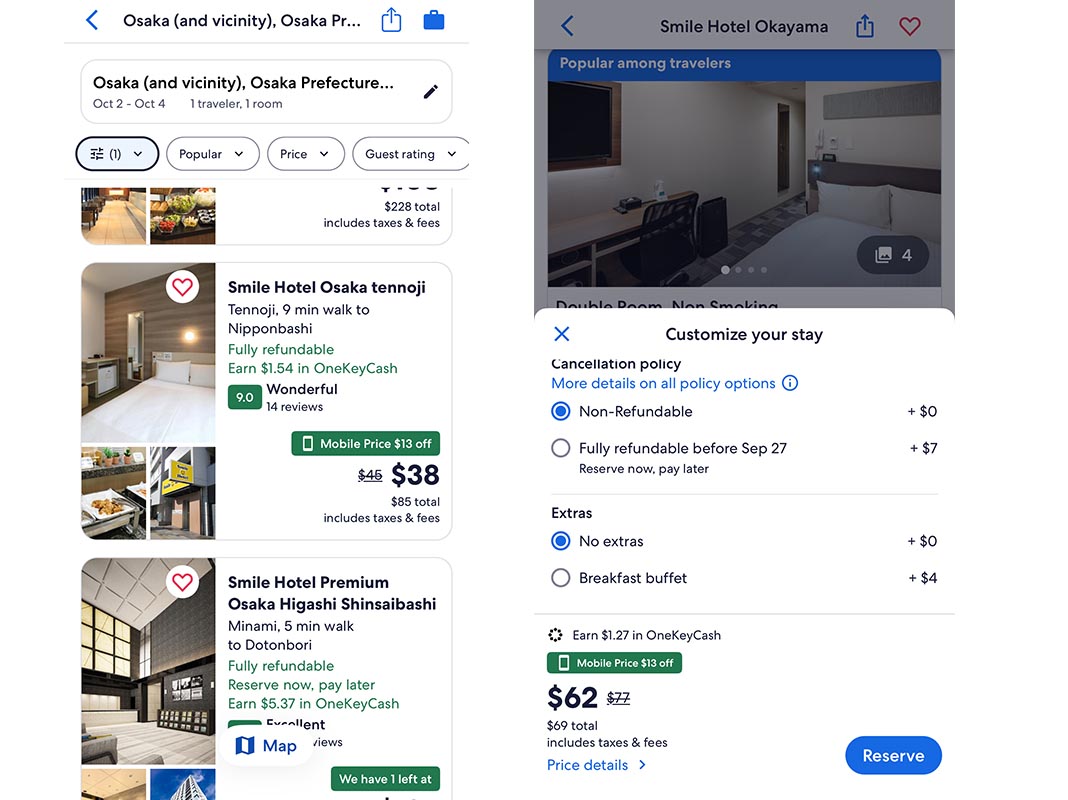
The Expedia’s mobile rates show up as a green icon when using the app.
What is the best travel app for hotels?
Honestly, I check a variety of apps along with the hotel’s website to compare. My go-to apps are Expedia, Booking.com and Hotels.com. I used Booking.com for my Kumano Kodo hotels and Expedia for all the big cities but did find a cheaper deal on Hotels.com for my hotel (Iroha Grand Hotel) in Nara, Japan. (In Tokyo, I loved this hotel!) I don’t really have any loyalty between the brands. I simply book the cheapest option with the most flexible refund policy.
Loyalty programs and rewards are also important and can help save you more money. Since I’ve finally achieved Booking.com’s highest tier (Genius Level 3), I automatically get 20% off many bookings and even scored a simple room for $26 in Shingu, Japan!
Looking for more Japan travel tips?
Check out my Instagram highlights for a detailed story on budget trips for Japan travel and my hike along the Kumano Kodo, the sacred UNESCO-designated pilgrimage trek.
#ClaimYourAdventure with Flexible Travel Medical Insurance
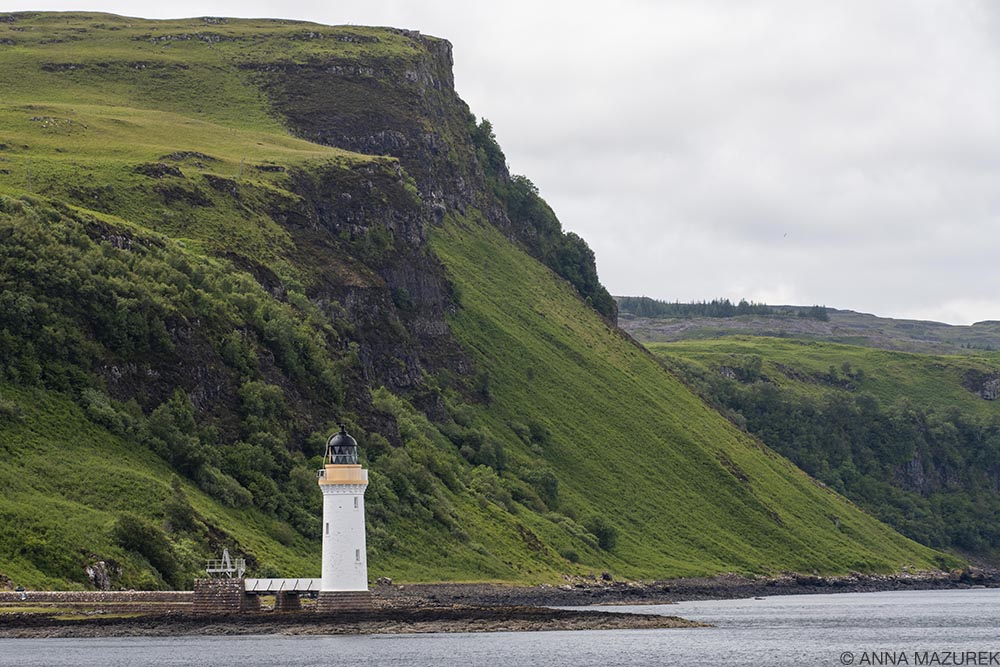
Tobermory Lighthouse on the Isle of Mull, Scotland.
I live a very unconventional life—I travel most of the year for either work or fun. I am part vagabond, nomad and business traveler. Often, I’m gone for months and never quite know exactly when I’ll be flying back to the U.S. My life is a series of one-way flights, which makes it difficult to find flexible travel insurance since I never really know when my trip will end exactly. I’m a huge fan of SafetyWing’s flexible policies and monthly travel insurance options. They recently launched their new Nomad Insurance 2.0 with a lightning-fast claims process and new add-ons. Keep reading for the benefits of flexible travel insurance and #ClaimYourAdventure with SafetyWing!
Why do you need travel insurance?
Travel insurance covers all the worst-case scenarios—the flight delay that left you stranded in Istanbul for the night or the bout of food poisoning that hits a few hours before your flight home from Mongolia. Both are true stories from my travel adventures and not fun memories. I ALWAYS buy travel insurance for every trip, which only costs a few dollars a day no matter what brand you purchase.
Who is SafetyWing?
SafetyWing is a fully remote Norwegian startup based in California. It is run by nomads and expats providing insurance for budget travelers and nomads since 2018. (You don’t have to be a nomad or a budget traveler to use their insurance. It’s available to everyone under age 69.)
Why is flexible travel insurance important?
Travel requires a lot of planning, which can be exhausting. Thankfully, SafetyWing’s insurance policies help make things easier. Not all travel insurance companies cover one-way flights. If I don’t have a return flight booked, I always buy a recurring plan. SafetyWing offers reoccurring plans that renew monthly and can be stopped at any time. Then, the minute I get back in the U.S., I cancel the plan, and they provide a pro-rated refund. (Please note they currently offer U.S. coverage on plans for non-U.S. residents only. The reason I wait until I return to the U.S. to cancel is to ensure all my travel is completed with no delays.) SafetyWing’s customer service is 24/7, and you ALWAYS get a real human. It just takes a couple of minutes to cancel, and the refund shows up quickly.
If I know my set travel dates, I often just buy a policy for the entire time and pay upfront in full. I’m currently in Europe for three months mostly for work with a bit of personal travel. Since my travel dates are set, I paid in advance for the entire plan. If there’s even a chance I might extend my travel, then I’ll opt for a monthly travel insurance plan, which is what I’m doing for the fall. (In August, I’m heading to Asia for five months. I know I’ll be back in late February or March but will not book my return flight before I leave.)
Forget to buy travel insurance before you depart for your trip? One of the other great perks of SafetyWing policies is that you can buy it while you are traveling. Since I work for a travel company that covers me when I’m working. When I have a few days in between contracts, I’ll wait to buy policies until the eleventh hour. They offer same-day start dates. You can even buy policies if you’re already abroad and don’t know exactly where you are traveling.
SafetyWing Travel Insurance Options
SafetyWing offers two different times of travel insurance with global coverage. Their Nomad Insurance is travel medical insurance for people outside their home country. They recently added policy add-ons for extra coverage options include adventure sports coverage, electronics theft, and U.S. coverage (for non-U.S. citizens or residents). (U.S. residents do get 15 days of home country coverage for every 90 days of travel abroad as part of the policy without this add-on.)
One of the best benefits of SafetyWing is that they have 24/7 customer support with a REAL human! (I can vouch that they are excellent at assisting and will follow up with you afterward!) Check out the full details here!
What does SafetyWing Nomad Insurance 2.0 cover?
While it’s important to always read the full insurance policy, these are covered by SafetyWing. Each policy has a $250,000 USD max limit and a $100,000 USD max limit for US residents over 65.
- Emergency Accident & Sickness Expenses.
- Emergency Evacuation & Repatriation. (Evacuation to a better-equipped hospital when needed is included with a $100,000 USD lifetime max.)
- Trip Cancelation, Delay or Interruption. (Benefits kick in usually for delays after 12 hours. $100/day for two days)
- Baggage Delay & Damage. ($500/item with a $3,000 policy maximum)
- Injuries from leisure sports and activities.
- Motor Accidents. You must be properly licensed, not intoxicated and wearing safety equipment to be covered.($250,000 US max limit)
- Continued coverage in your home country after 90 days abroad. (30 days for non-U.S. residents and 15 for U.S. residents.)
- For more details, read the full policy on their website.
What’s not covered?
SafetyWing doesn’t cover pre-existing conditions, cancer treatment, lost or stolen personal belongings, trips that were canceled before you left and high-risk or professional sports activities.
Purchasing Process with SafetyWing
It just takes minutes to fill out the form online including your age, home address and countries you’ll be visiting. Their chat box makes it easy to ask questions and talk to a real human 24/7 within minutes. Their customer service can easily answer any questions quickly. They are also great about following up when needed. You can pay monthly or in full for policies. You can even set policies to auto-renew. When you cancel a policy you’ve paid for, they will give you a pro-rated refund.
How do you file a claim with SafetyWing’s Nomad Insurance 2.0?
Filing a travel medical insurance claim may feel overwhelming but it doesn’t have to be thanks to SafetyWing’s new Nomad Insurance claims. Fill out the simple new form in as little as five minutes and get reimbursed within 2.8 days!
- Type of Claim: Choose medical or non-medical claims (stolen electronics, travel delays, natural disaster evacuation)
- Medical Information: For medical claims, enter the location, date of service and total cost for the claim. The next two questions ask about preexisting conditions and if you’re covered by any other form of insurance.
- Personal Information: Enter your contact information and passport number
- Reimbursement: Add your bank account details and how you’d like to be paid for the claim.
- Upload Documents: This is one of the most important sections so be sure to have all of your documentation together before you leave the doctor’s office. A copy of your medical report (doctor’s notes about your symptoms, diagnosis and treatment.) Invoices and receipts to show the breakdown of the cost of the bill are also required. I recommend using the free Genius Scan app to make a PDF that can be exported easily.
- Review and Submit: Check over the information you have entered to ensure it is correct, especially your bank account information. This ensures the claim can be paid ASAP! You can always check your claim status anytime on the website.
If you have any questions about claims or buying a policy, SafetyWing’s 24/7 support can connect you with a REAL human instantly!
*Please note that some affiliate links are used in this post. If you make a purchase, I earn a small commission at no cost to you, which goes toward the cost of maintaining this blog. If you would like to support this blog and are ready to make a purchase, these links are one way to show your support. I only recommend products and companies I truly love and use. Please email me with any questions.
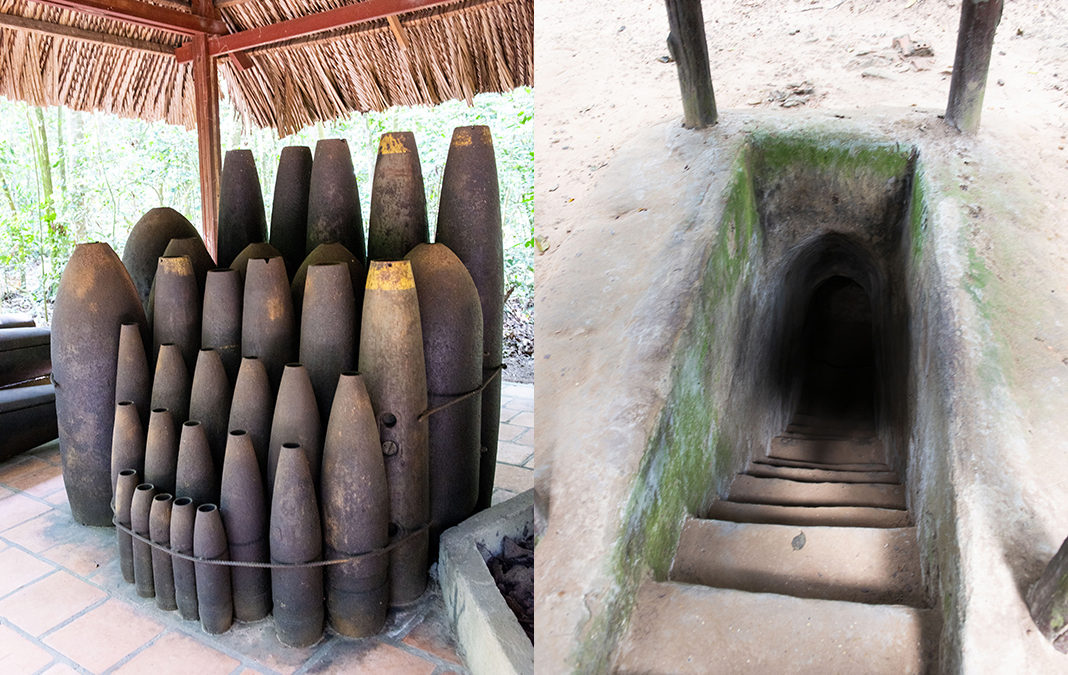
How to get to the Cu Chi Tunnels (Ben Douc) by Public Bus
(Please note this post was written in 2019 but some readers just did this trip in June 2024 and confirmed the bus numbers and route are the same!)
Why visit the Cu Chi Tunnels?
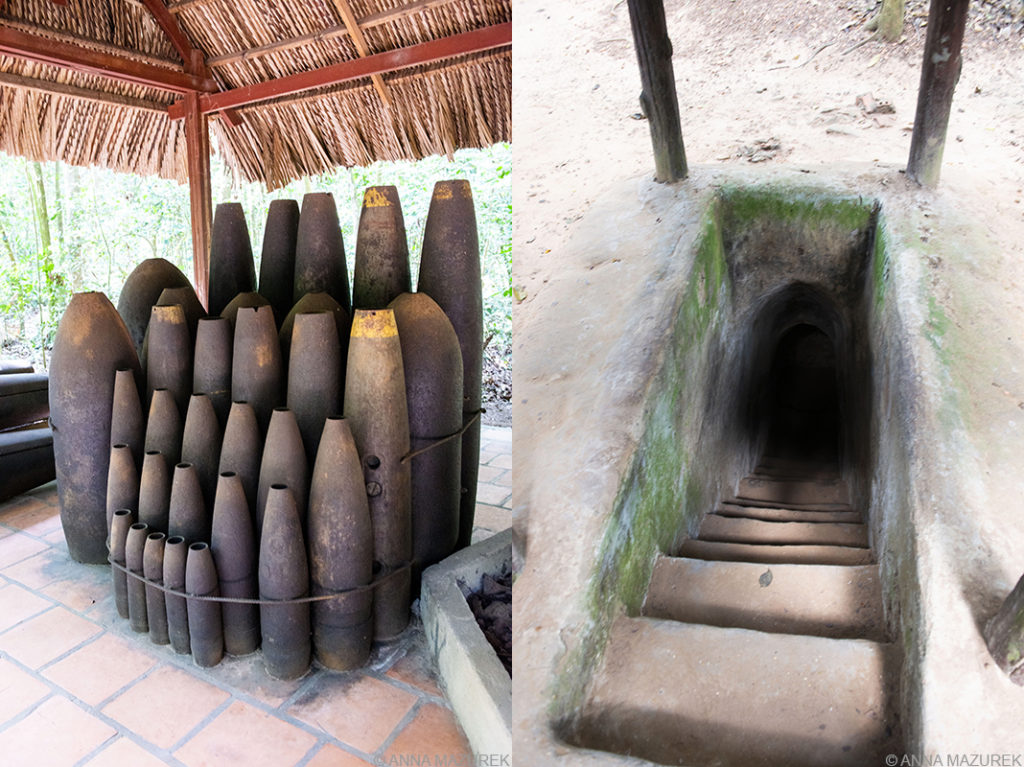
Cu Chi is a rural area about 30 to 40 km from Ho Chi Min that’s famous for a legendary spiderweb of tunnels used in the 1960s by the Viet Cong to control the area during the Vietnam War. There are two sets of tunnels: Ben Dinh and Ben Duoc. Ben Dinh is the most touristy one because it’s easier for tour buses to reach it. Ben Duoc is the best one in my opinion because it’s not touristy. There were only a handful of people when we went.
(I’ve found conflicting sources that state that Ben Dinh was constructed only for tourists and Ben Douc is part of the real tunnel network. I can’t find a reliable source to verify this. Lonely Planet says that Ben Douc was widened for tourists but is less touristy. (There are stairs going into some of the tunnels, which clearly can’t be original.) Once you are inside the tunnels, they are pretty tight!
While it’s easy to find tours to visit Ben Dinh, there aren’t many tours going to Ben Douc. I recommend taking the public buses (they have air conditioning!) to Ben Douc for a more authentic experience without the crowds!
Logistics:
Time: 6-8 hours
Total Cost:$5.15 USD
Bus – 32,000 dong roundtrip ($1.37 USD)
Entrance fee – 90,000 dong ($3.78 USD)
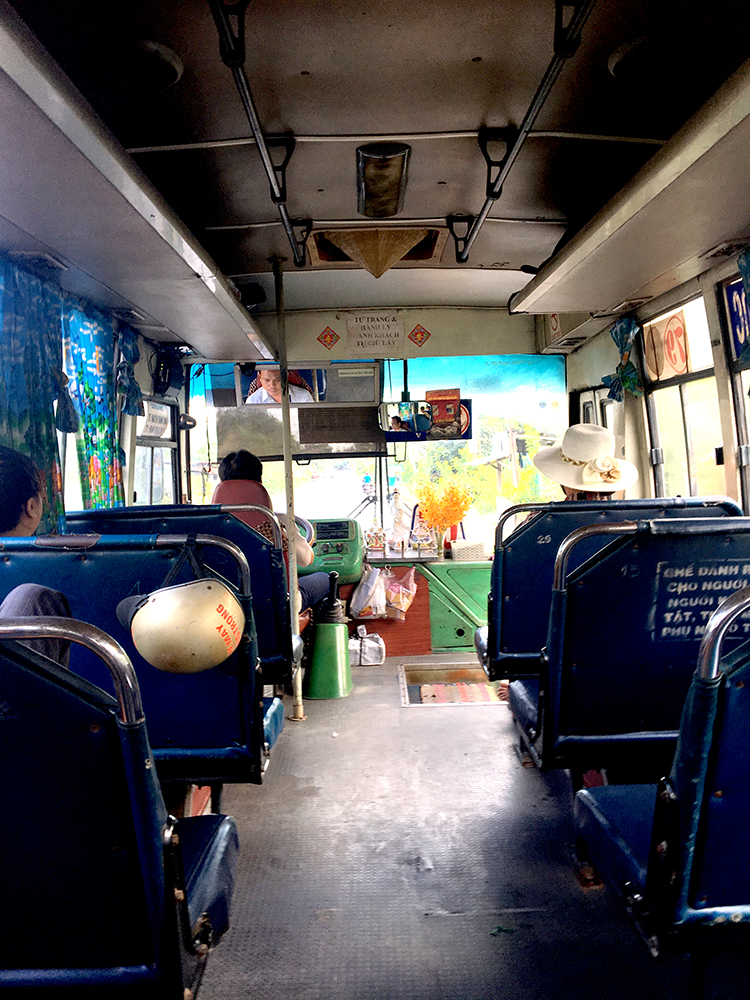
Bus Route to Ben Douc Tunnel From Ho Chi Minh City
First, take Bus 13 from Ho Chi Minh (Cong Vien 23/9 bus terminal in District 1). This station is just past the September 23rd park. It’s large so you can’t miss it so keep walking if you don’t see it yet. Here’s the address on Google Maps: 210Bis/, 7 Nguyễn Trãi, Phường Phạm Ngũ Lão, Quận 1, Hồ Chí Minh, Vietnam.
Take the bus to the end of the line, which is the suburban district of Cu Chi. Depending on traffic, it can take 1.5-2 hours. (Cost: 10,000 dong each way)
From Cu Chi, take Bus 79. Ask the driver to let you off at Ben Douc. (There will likely be a few other travelers on the bus so you won’t be alone. Plus, the driver knows that’s where all the foreigners are going.) This takes about 30-45 minutes. (Cost: 6,000 dong each way.)
Both buses had air conditioning! The total cost of both buses was $1.37 USD.
From the bus stop, follow the signs to the entrance. You’ll have to walk a little further to where the tour starts. The entrance fee is 90,000 dong ($3.78 USD). This is a really short walk – 10 minutes or so.
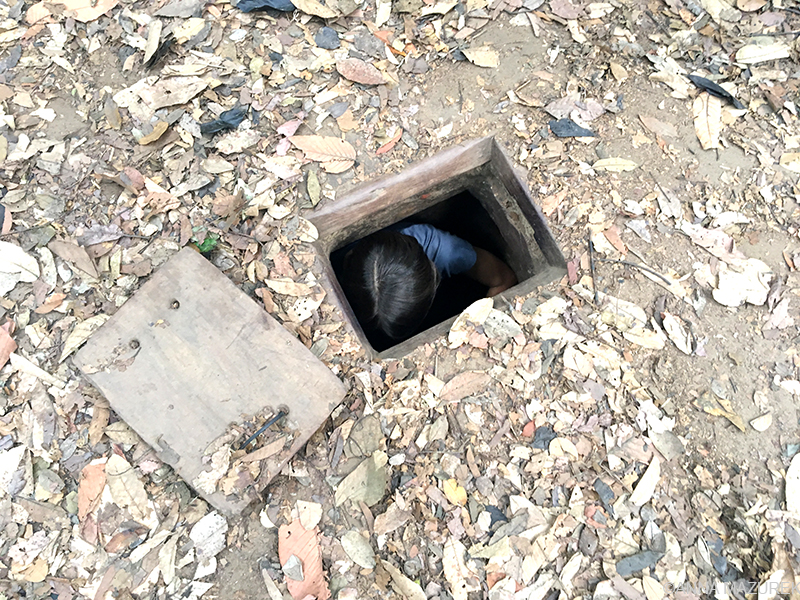
Ben Douc Tour Information
We did an English tour, and there were about 10 people on our tour. The tour follows a trail through the woods so it’s an easy walk to the different tunnels and displays. First, they show you a propaganda video. There are a lot of displays of the traps and models of how various rooms were used in the tunnels. The first tunnel is really short but worth doing. There are a few other tunnels you can go through and a 30-meter-long one at the end. If you’re claustrophobic, avoid the long one. The tunnels are tight – you’re hunched over most of the time. My backpack was in the way a bit, but the guide said not to leave it outside for safety reasons.
By the bus stops, there are a few small shops and a restaurant by the entrance. (Bring water and snacks with you since prices are higher here!) There are technically two roads to the entrance. We got dropped off at the farther entrance and walked back to the lower entrance. (See map at bottom of the post.) There are several old helicopters and tanks near this entrance on display. We only waited about 10 minutes for the return bus. I heard the last bus was around 7 p.m. but can’t verify that. Be sure to ask when you get off the bus!
How long does it take to get to the Chu Chi Tunnels from Ho Chi Minh City?
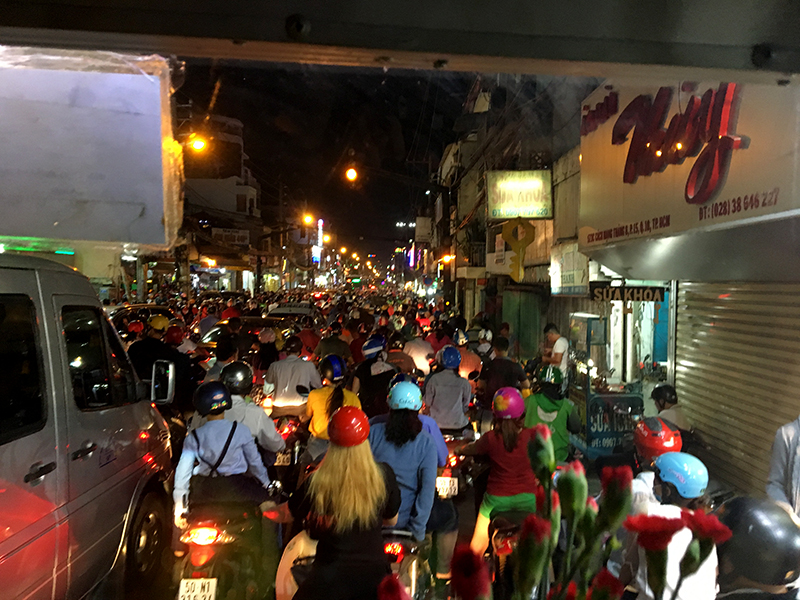
We left about 10 a.m. and got back around 5-6 p.m. We got stuck in the worst traffic I’ve ever seen in my life on our way back. We sat still for about 30-45 minutes. We thought about walking but motorbikes were driving on the sidewalk so there was no point in trying to walk! (Check out the video in my Instagram story on Vietnam to see it!) I’d recommend going earlier in the day and getting back earlier.
Overall, it was one of the best days I had in Vietnam. It was a great way to escape the chaos of HCMC and avoid the mainstream tourist trail. It felt like a much more authentic visit. Plus, the bus was fun and a great way to see the area!
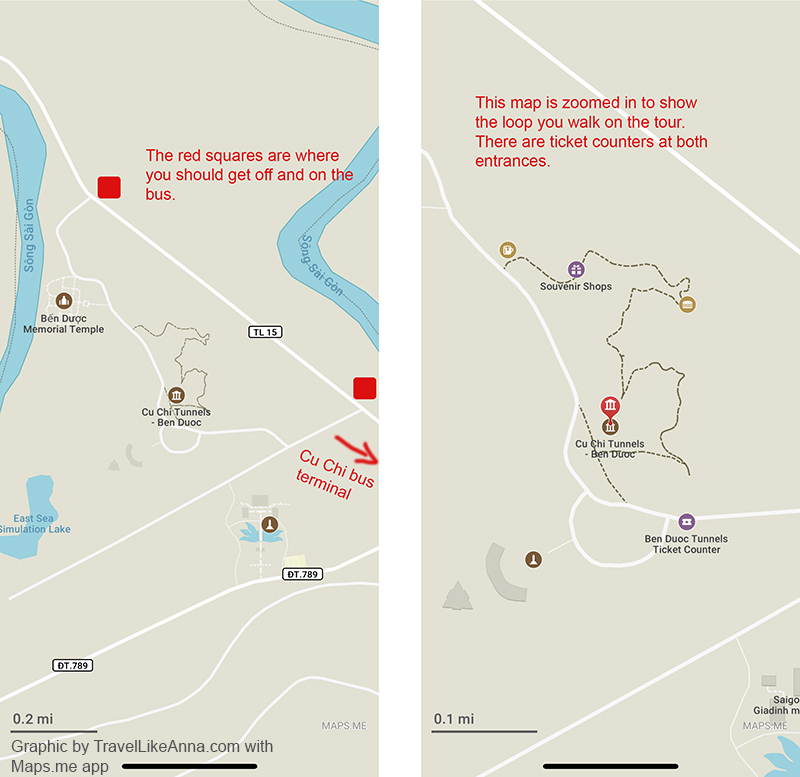
Download Offline Maps
I recommend downloading the free Maps.me app and saving the Vietnam map offline. I marked the Ben Douc tunnels on the map and followed our route so I knew when to get off. As long as you load the map BEFORE you start the trip, then it will still update even if you don’t have service. (The driver made sure to tell us where to get off. You won’t miss the stop even if you don’t have it on your phone because the driver’s are looking out for you!)
For more information about Vietnam, check out my guide about the best places to visit in Vietnam!
I Visit Singapore Every Year – Here are the Best Things to Do
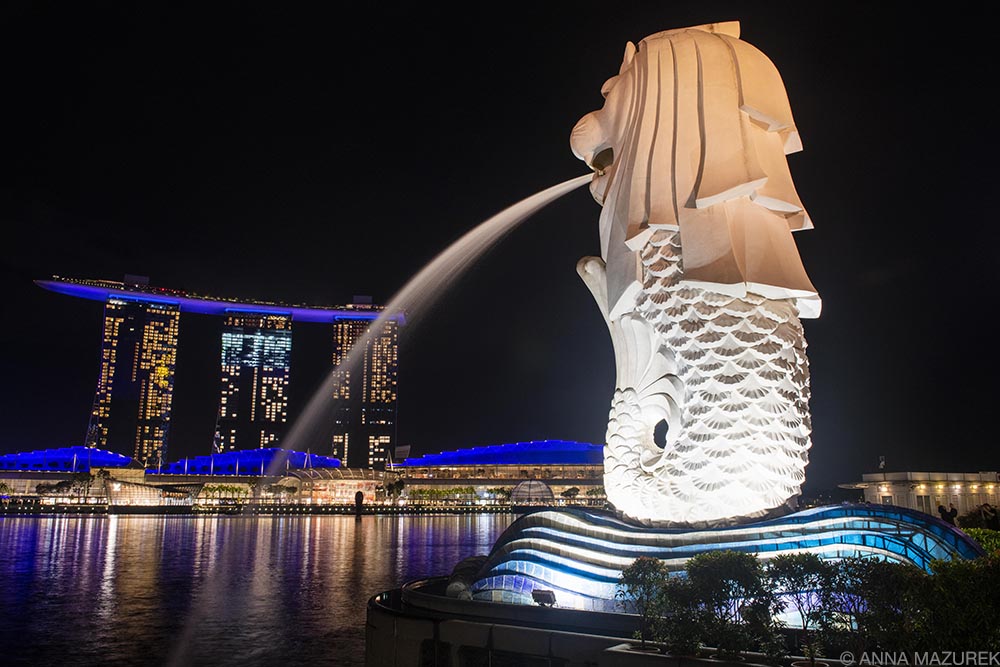
The iconic 8.6-meter Merlion statue is an icon of the Singapore skyline along with the Marina Bay Sands hotel across the bay.
Why visit Singapore?
Singapore is a sleek tropical metropolis of high-rise buildings, shaded walkways and spotless public transport with elevators and escalators at each stop. It is essentially the New York City of Asia, except that it’s safer, cleaner and more efficient to explore than the Big Apple. Unlike NYC, every single train station has elevators and escalators to ALL platforms—a traveler’s dream! (Can you tell I have PTSD from dragging my suitcase up endless stairs in the NYC subway?) After a decade of visiting, I decided it was time to write my own post about things to do in Singapore.
Affiliate links are used in this post. If you make a purchase, I earn a small commission at no cost to you, which goes toward the cost of maintaining this blog.
Is Singapore a Country?
Yes, Singapore is a country and city-state in Southeast Asia. It declared independence from Malaysia on August 9, 1965.
The former British colony is a cultural melting pot with an ethnolinguistic population comprised of 75% Chinese followed by Malays and Indians. While the constitution lists four main languages (English, Malay, Tamil and Mandarin), everyone speaks English, and many locals speak two or more languages. This cultural fusion also means the food is top-notch. (Hello dim sum!)
One of the big surprises about this island nation is the amount of greenspace—47% of Singapore is parks and gardens. The public transport is efficient and affordable making exploration a breeze. Singapore is impeccably clean and extremely safe. It’s the only country in Southeast Asia where you can drink tap water!
While Singapore has a reputation for being expensive, there are plenty of ways to explore the city-state without draining your bank account. It also has the nicest airport in the world so it’s a great place for a short visit to break up a long journey!
I’ve been to Singapore over a dozen times in the last decade and visit at least once a year. (I was just there a few weeks ago!) Scroll down for my Singapore travel guide including a section on the best things to do in Singapore without breaking the bank.
Plan Your Trip
Currency: Singapore Dollar (SGD)
When to Go: Anytime. The climate is fairly consistent (hot with a chance of rain) but June and July are often the hottest months.
Travel Insurance: Protect yourself with SafetyWing travel medical insurance to cover accidents and travel delays.
Mobile eSIM Card: Get seamless connectivity worldwide with Airalo minus the hassle of physical SIM card.
The Best Free Things to do in Singapore on a Budget
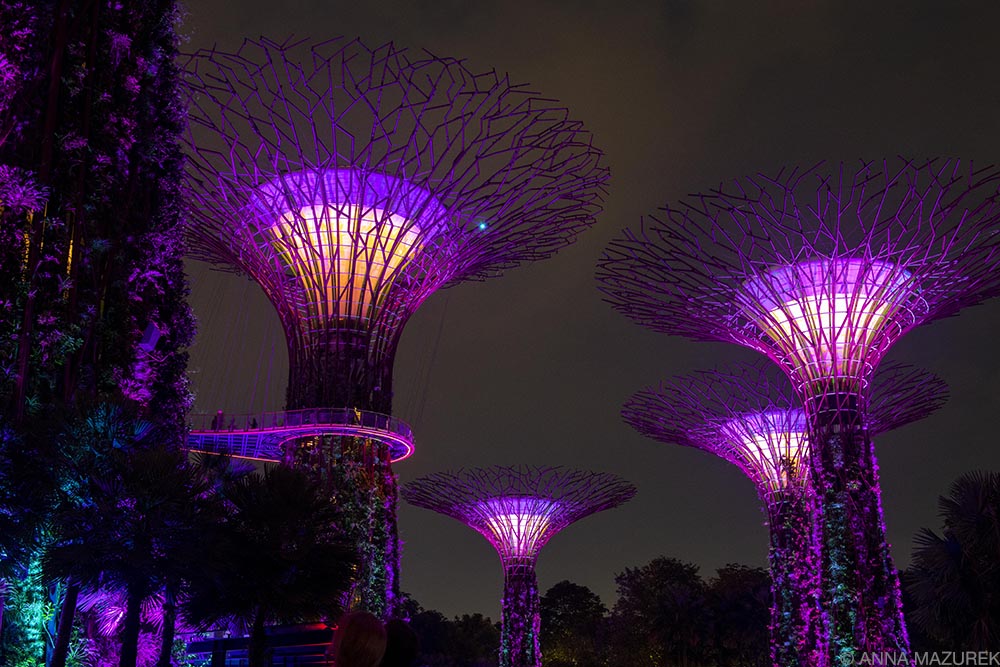 There’s a free light and sound show nightly in the Supertree Grove at Gardens by the Bay in Singapore.
Merlion Park is home to the country’s unofficial mascot, an 8.6-meter-tall white statue of a Merlion, a creature with the head of a lion and the body of a fish, that doubles as a fountain. (Legend says an Indonesian prince came ashore and thought he saw a lion.) The name Singapore means “Lion City” in Sanskrit. It’s a great place to get photos of the skyline and Marina Bay Sands.
Gardens By the Bay is a must-visit green space comprised of three gardens and the famous Supertree Grove of metal tree-like structures that serve as vertical gardens. (While the gardens themselves are free, the two indoor gardens and the short walkway in the Supertree canopy are paid.) Stop by for one of the free sound and light shows, known as Garden Rhapsody, nightly at 7:45 and 8:45 p.m.
Marina Bay Sands is a three-towered hotel with a large cruise-ship-shaped structure spanning the top of the building, which looks like it belongs on the Vegas Strip. You can walk through the hotel at any time and most likely will have to in order to reach the Gardens by the Bay. It’s worth a splurge to have a drink on the rooftop bar for the view. There is also an attached mall.
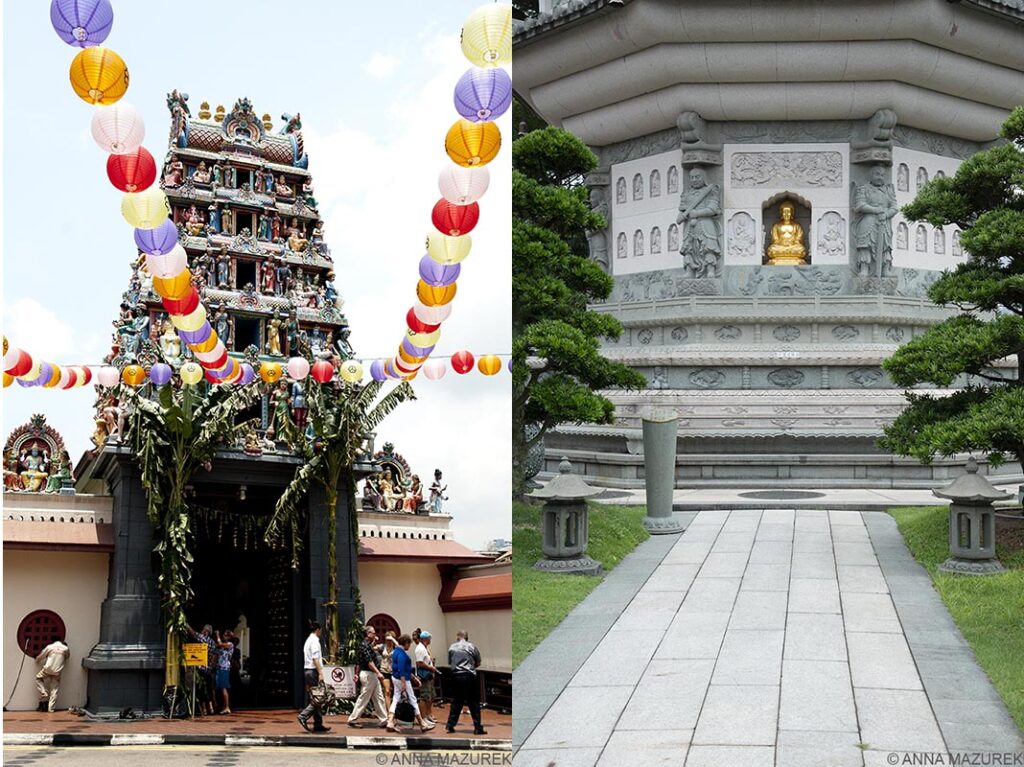 The colorful Hindu Sri Mariamman Temple, left, and teh Lian Shan Shuang Lin Monastery in Singapore are both free to visit.
Stroll through Chinatown and stop at the photogenic Buddha Tooth Relic Temple and Museum and the colorful Sri Mariamman Temple, the country’s oldest Hindu temple built in 1872. The Lian Shan Shuang Lin Monastery is a beautiful Buddhist temple complex located away from downtown and the central tourist areas.
Haw Par Villa is a Buddhist hell park. Yes, you read that right. It’s a unique, interesting and slightly scary outdoor theme park with over a 1,000 statues. Admission is free.
Mustaffa is a six-story mall in Little India filled with literally everything imaginable. It’s an eye-opening experience to walk around the complex.
The Jewel at Changi Airport is home to the world’s largest indoor waterfall, the HSBC Rain Vortex. Located before airport security, The Jewel is a shopping mall portion of the airport connected by trains or walkways to the terminals.
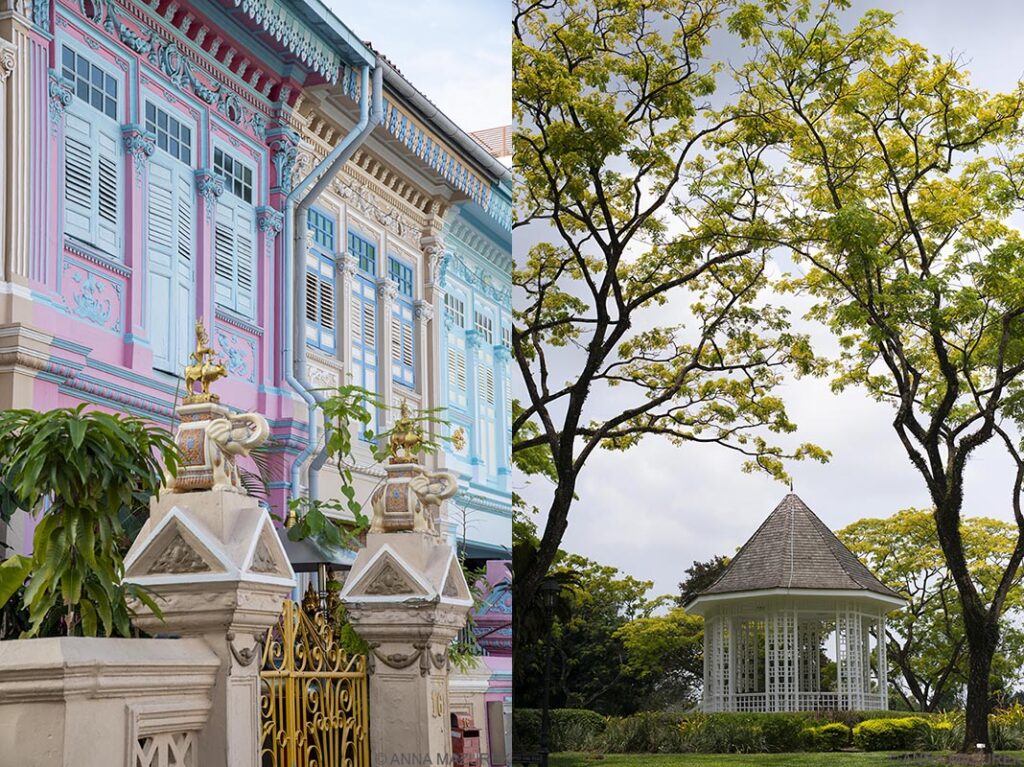 The Peranakan terrace houses on Jooh Chiat Road, left, and the Singapore Botanic Gardens, right, are two of the best photography spots in Singapore. Both are free to visit.
The Peranakan terrace houses on Joo Chiat Road are a series of colorful historic shophouses. (The term “Peranakan” is often used to refer to someone with both Chinese and Malay origins.) These homes are privately owned and not open to the public. For the best photos, visit in the morning. (Set your Google Maps to 19 Koon Seng Road or 287 Joo Chiat Road, which are both in the same block.)
Singapore Botanic Gardens is a UNESCO World Heritage site that’s home to the National Orchid Garden. (I got dragged here by a South African boy I had a crush on back in 2013 who loved orchids and was surprised at how lovely it was!)
Haji Lane is one of the country’s narrowest and most colorful streets filled with shops and restaurants. It’s a great photo spot.
The Best Parks, Walks and Nature Reserves in Singapore
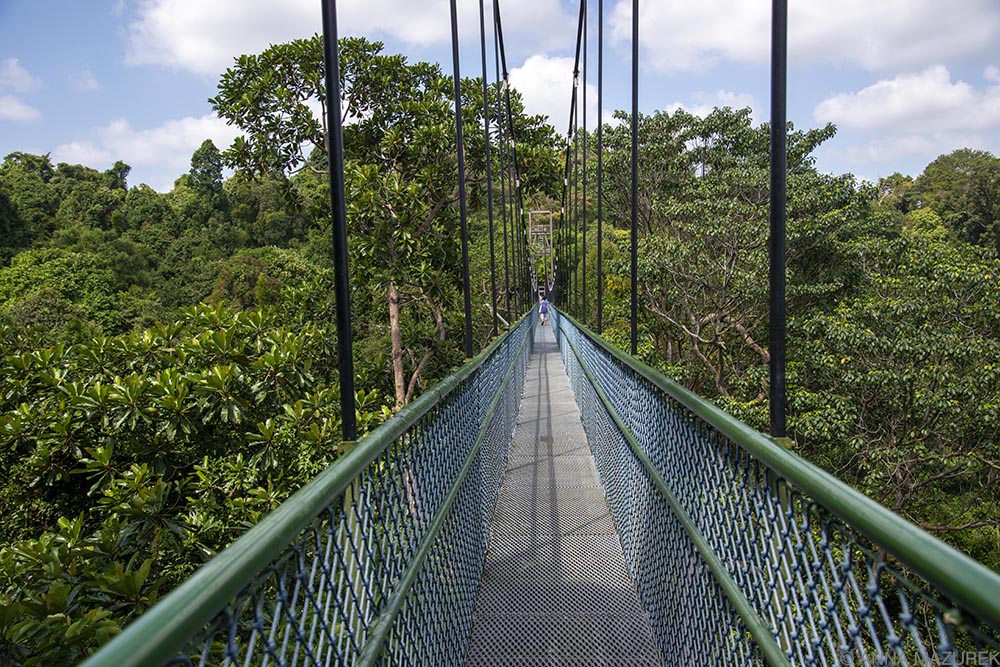 The TreeTop walk at MacRitchie Reservior is located in Central Catchment Nature Reserve, one of Singapore’s four nature reserves.
I love walking through Singapore’s plethora of parks and nature trails. (Over 47% of the island is green space!) Set out early to beat the heat. All of these trails are easily accessible from public transport.
Central Catchment Nature Reserve is home to the MacRitchie Reservoir, the largest in Singapore, and home of the famous Treetop Walk featuring a 25-meter suspension bridge and over 20 kilometers of trails.
The Southern Ridges is a 10-kilometer trail with a series of bridges including Henderson Waves, the highest bridge in the country and a series of bridges making up the forest and canopy walk. It’s best to start the trail at the Harbour Front MRT station so the final portion is downhill. Here is a map.
Fort Canning Park was home to the country’s first rulers due to its hill-top location. It later became the site of the British Government, a fort and the first botanic garden. Take a self-guided walk of the main attractions including nine historical gardens, sculptures and a Fort Gate, the only remains of the colonial fort. Instagramers will love the Fort Canning Tree Tunnel—be prepared to line up if you want a shot.
Since there are 350 parks and even more greenspaces, I can’t name them all. A few other notable ones are Labrador Nature Reserve and Bukit Timah Nature Reserve. Both are free and easily accessible by public transport. For more details on parks, visit https://www.nparks.gov.sg.
The Best Beaches in Singapore
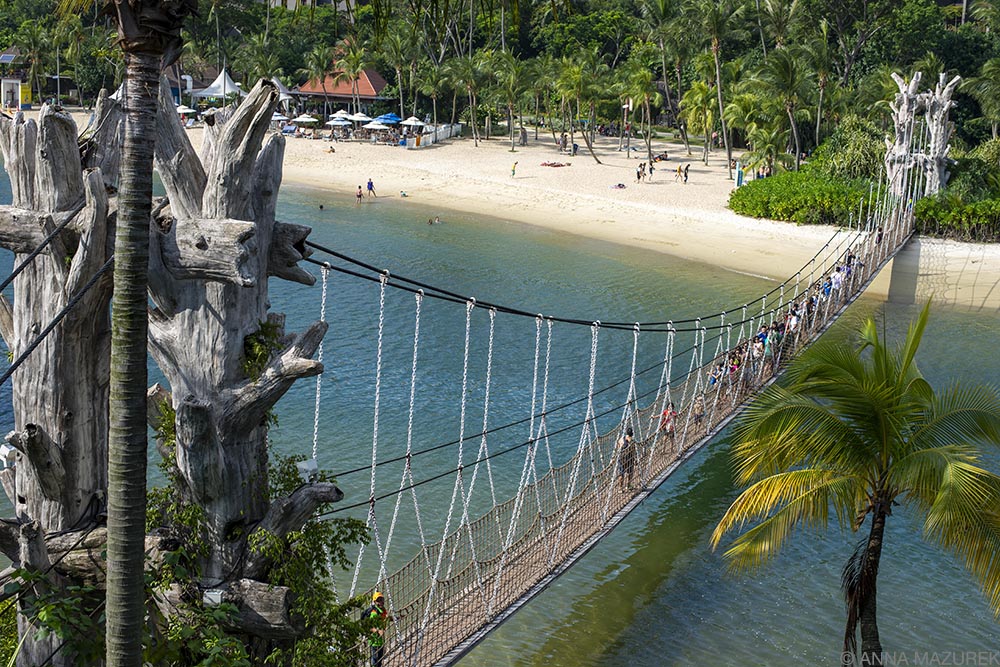 Sentosa Island is Singapore’s more popular beach destination with three man-made beaches (Siloso Beach, Palawan Beach, and Tanjong Beach).
Fun fact: The majority of the beaches in Singapore are manmade. One of the most popular beach destinations is the island resort of Sentosa, which is home to Universal Studios and the aquarium. For those looking to avoid Sentosa, the next best option is Changi Beach, a narrow strip of white sand in Eastern Singapore that doubles as a park with running and cycling lanes.
The Best Museums in Singapore
Singapore has some excellent museums, but they are not free for foreigners except on special occasions during festivals and large events. I particularly enjoyed the Peranakan Museum, which digs into the culture of Southeast Asia’s Peranakan communities. I really think it’s a must-visit in terms of understanding the culture. The National Museum of Singapore, founded in 1849, is another great spot. (FYI: I don’t like zoos or theme parks, so you’ll never see those in one of my blog posts. Singapore has both.)
Where to Stay in Singapore
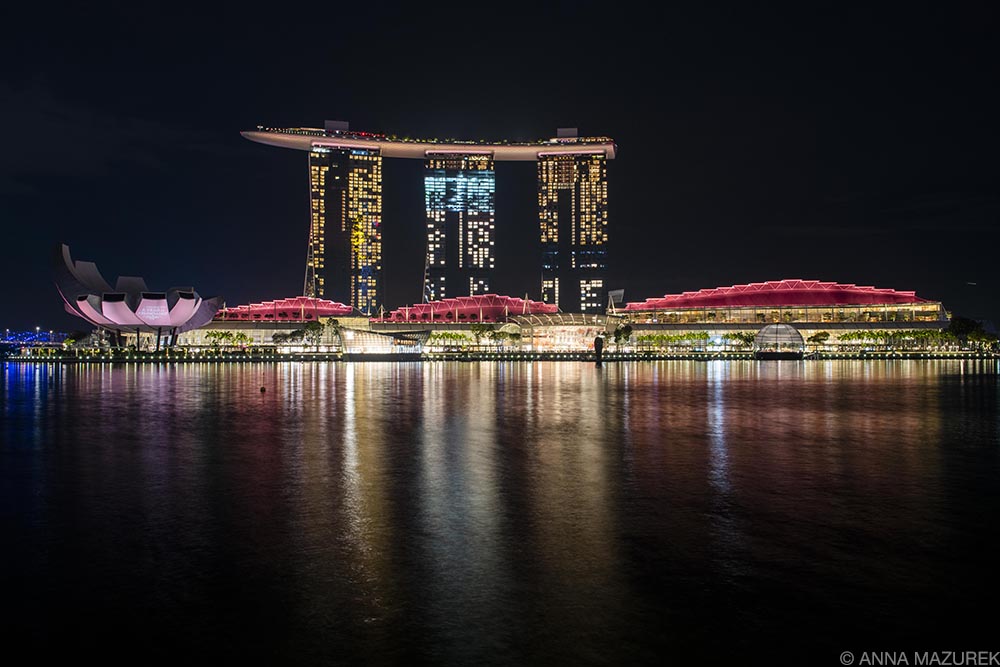
There is a free nightly light, water and sound show outside Marina Bay Sands that lasts 15 minutes. Shows are at 8 p.m. & 9 p.m. daily with an additional show at 10 p.m. on Friday and Saturday. Check out details here.
Accommodation is where Singapore gets expensive. The cheapest areas are Little India, Chinatown and Joo Chiat. Hostels will run around $30-40 SGD ($22-29/USD) and hotels will start around $200 SGD ($148 USD). I’ve most often stayed with friends, and the hostels I’ve tried haven’t been not worthy of mentioning.
For Singapore hotels, I really like 30 Bencoolen—it’s a modern, safe and clean hotel just steps from the Bencoolen MRT. (Plus, it has a pool, gym and laundry machines.) I really love the location of 30 Bencoolen because it’s only a 20–30-minute walk to Chinatown or downtown.
If you’re looking to splurge or cash in points for a luxury stay, then the most iconic hotels are Raffles Singapore, Fullerton Bay Hotel and Marina Bay Sands.
The Best Places to Eat in Singapore
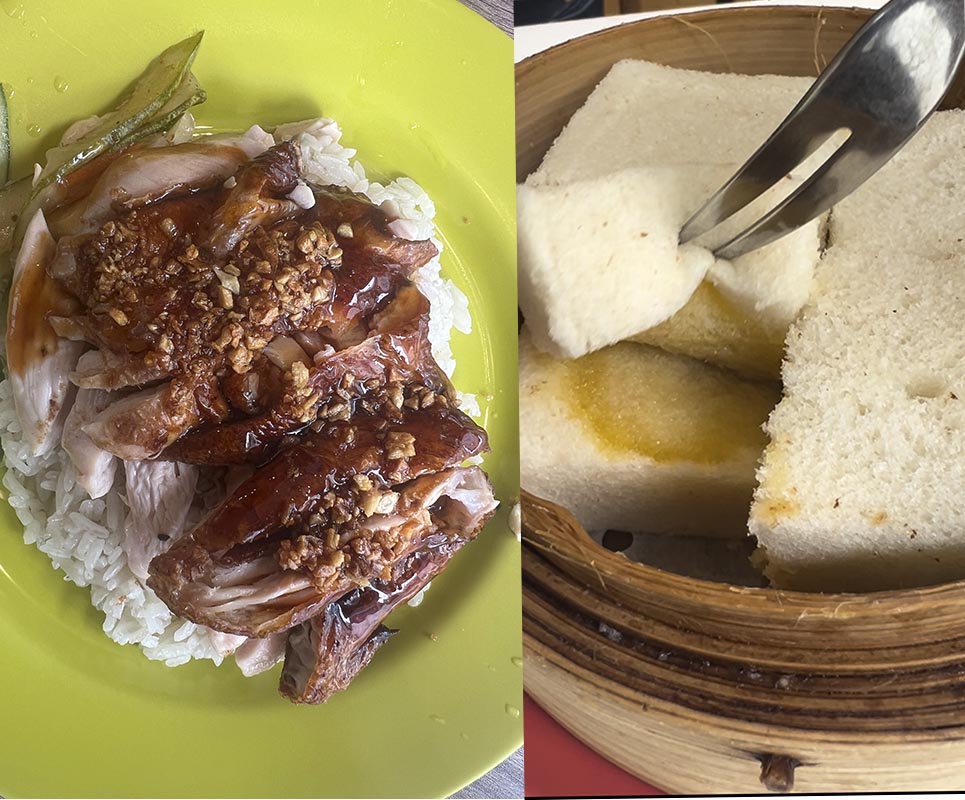 Chicken rice, left, and kaya toast, right, are must-try Singaporean classics.
The cheapest places to eat in Singapore are hawker centers, a mixture of a community center and a food court wrapped into one. Classic Singapore dishes available at most hawker centers include Hainanese chicken rice (poached chicken with seasoned rice), kaya toast (toast with kaya, a coconut jam made with pandan), carrot cake (a radish omelet fried with garlic and no carrots), Laksa (spice noodle soup usually made with seafood).
Here are my favorite spots to eat in Singapore:
- Ya Yun Kaya Toast serves up a steamed rendition of a Singaporean classic—kaya toast—and other breakfast treats.
- Swee Choon Tim Sum Restaurant is my favorite dim sum spot. It’s huge, but there’s always a line that moves quickly. Cash only.
- Tiong Bahru Bakery is a French-style bakery for breakfast and lunch specializing in homemade croissants. Their granola is also tasty. There are multiple locations, but I really like the patio at the Fort Canning Park location.
- Tim Ho Wan is a Hong Kong chain, but their barbecue pork bao is some of the best. Skip the long line to eat inside and order from the to-go window.
- Chinatown Complex Food Center and the Maxwell Food Center are two well-known hawker centers in the Chinatown area.
The Best Craft Beer Bars in Singapore
Singapore has a bustling craft beer scene. Alcohol is not cheap in Singapore so seek out Happy Hours for a good discount. Beer is normally $16+ SGD ($12 USD) outside of happy hour. Consider buying any booze you’d like, including craft beer, from duty free at the airport. Here are my favorite spots to grab a pint:
- The Beer People Co. is a fairly new watering hole that has over 150+ bottles and cans of craft beer with a large selection of both local and Asian beers. They have happy hour and also serve up Thai food. It’s currently my favorite spot!
- Smith Street Taps is a 20-tap craft beer stall in the Chinatown Complex Food Center. It’s on the second floor of the open-air hawker center and feels like you’re drinking beer in a parking garage with a dive bar vibe that I love. It’s a must-visit opened by two of the countries craft beer pioneers.
- Tap has the cheapest craft beer in town with a $7-8 USD price range on 20 different taps. They serve food and have three locations.
- Druggists is a hip bar and eatery with a good variety of craft beer but a bit more pricey than the other locations mentioned.
Singapore FAQ
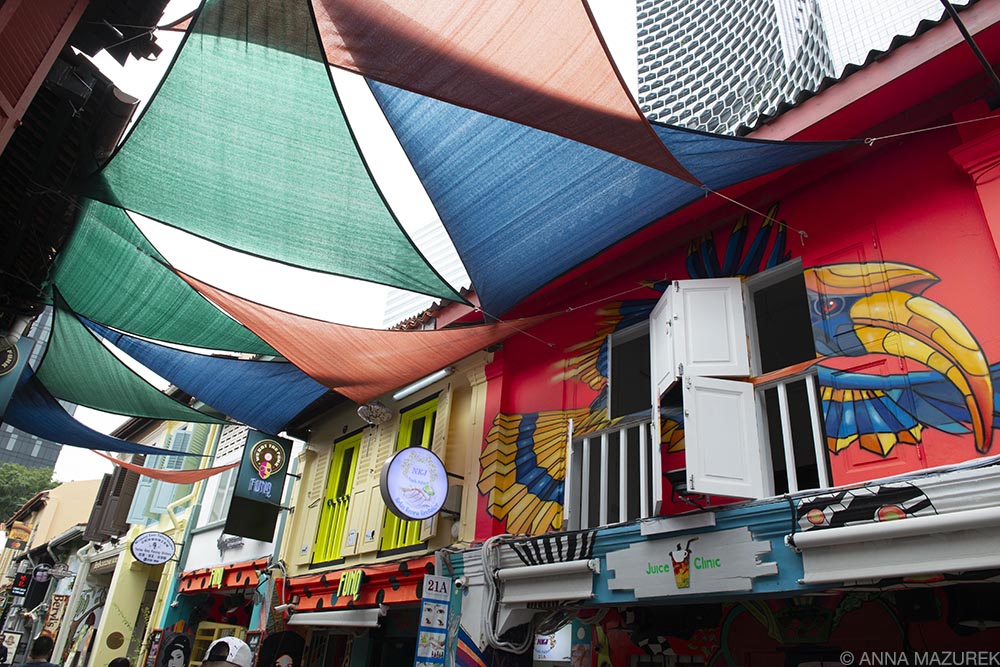 Colorful Haji Lane is a great shopping and dining hotspot in Singapore. It’s all next to the Sultan Mosque that’s open to visitors.
Do you need travel medical insurance for Singapore?
Yes, travel medical insurance is one of the most important things to purchase for any trip abroad. It covers all the things that could go wrong from injuries to travel delays so that you don’t have to worry and can focus on traveling!
I use SafetyWing’s Nomad Insurance, travel medical insurance coverage (with no deductible) for over 180 countries for people aged 69 and under when traveling outside their home country. The best part is that it only costs a few dollars a day! If you get sick or injured abroad, you can visit any hospital or doctor.
Other benefits of Nomad Insurance include coverage for lost checked luggage, travel delays over 12 hours, motor accidents (if properly licensed, wearing all safety equipment and not intoxicated) and injuries from sports or leisure activities. You can even add adventure sports, electronics theft and U.S. coverage (for non-residents) to your policy.
Does Singapore have public transport?
Singapore has an excellent public transport network of underground trains (MRT) and buses. You can get anywhere in the city in roughly 30 minutes, except the airport or the far west of the island. MRT fare is $1-3 USD a ride. (It cost me $2 USD from the airport to the Bencoolen MRT stop.) Simply use a contactless bank card to tap and go to avoid standing in queues. You can also buy passes.
Does Singapore have Uber?
No, there are taxis and Grab, the dominant rideshare company in Southeast Asia that works the same as Uber.
What is the cheapest place to get a SIM card in Singapore?
Avoid buying an overpriced SIM card at the Singapore airport, which ranges from $30-50 SGD ($22-37 USD!!!). Consider buying an e-sim from Airalo that will work instantly upon arrival. If your phone doesn’t have eSIM, then go into a 7-Eleven in town and buy one at a fraction of the cost ($14 SGD/$10 USD). Yes, e-SIM cards will work in Singapore, but you’ll likely have to buy a regional package through Airalo instead of an individual country.
For more, check out my guide to the Pros & Cons of eSIM cards!
How many days do you need in Singapore?
Give yourself two days to explore the marina and Chinatown and another if you want to visit any of the greenspaces. It’s easy to fill up a week if your budget can afford it. Singapore’s Changi Airport is the nicest airport in the world, so it’s a great stopover point to break up a long journey!
Is chewing gum illegal in Singapore?
Yes, chewing gum is banned in Singapore. Why? When the public trains system was first implemented, kids were putting gum on the door sensors which made the trains inoperable, which led the government to outlaw gum among other cleanliness concerns. While this might seem like an extreme reaction, it means the sidewalks are SPOTLESS—no nasty gum splotches anywhere. I think it’s the cleanest city in the world. Check out this BBC story for more details.
Does Singapore have strict laws?
When you land in Singapore, the pilot makes an announcement and says the penalty for drug trafficking can be death. Just don’t break their laws—which are standard worldwide laws because you should NOT be doing illegal things anyways—and you’ll be fine. To avoid fines, avoid littering, jaywalking, spitting and urinating in public.
Can you drink alcohol in public in Singapore?
Yes, you can drink alcohol in public places depending on the time. Drinking alcohol in public in Singapore is not allowed between 10:30 p.m. and 7 a.m. after a riot in Little India in 2013. There are additional restrictions in specific parts of town on weekends. For more details, check out this news story.
Antarctica Cruise Packing List
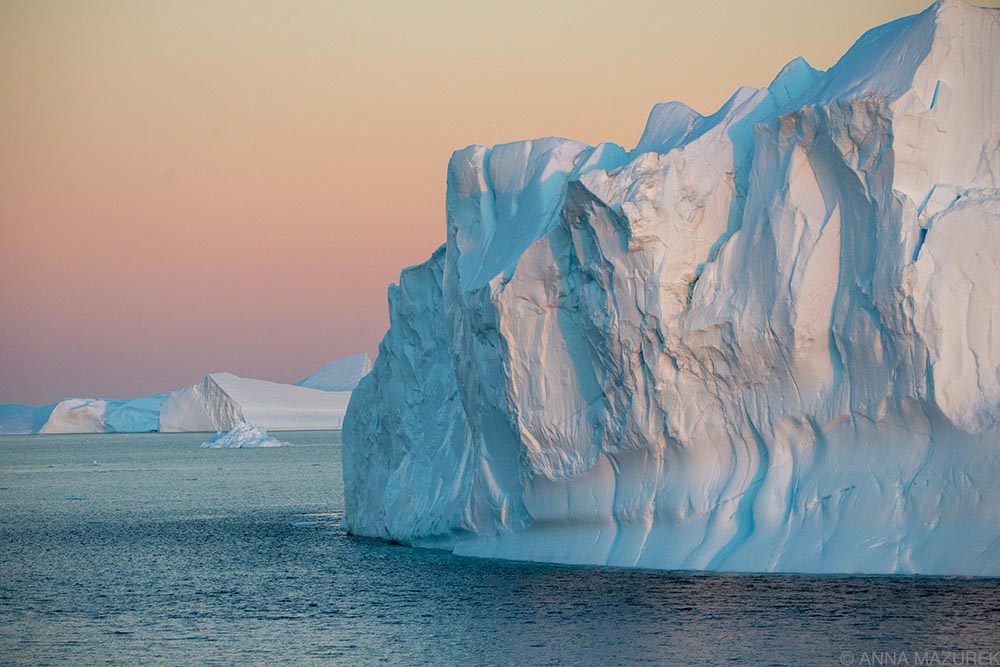
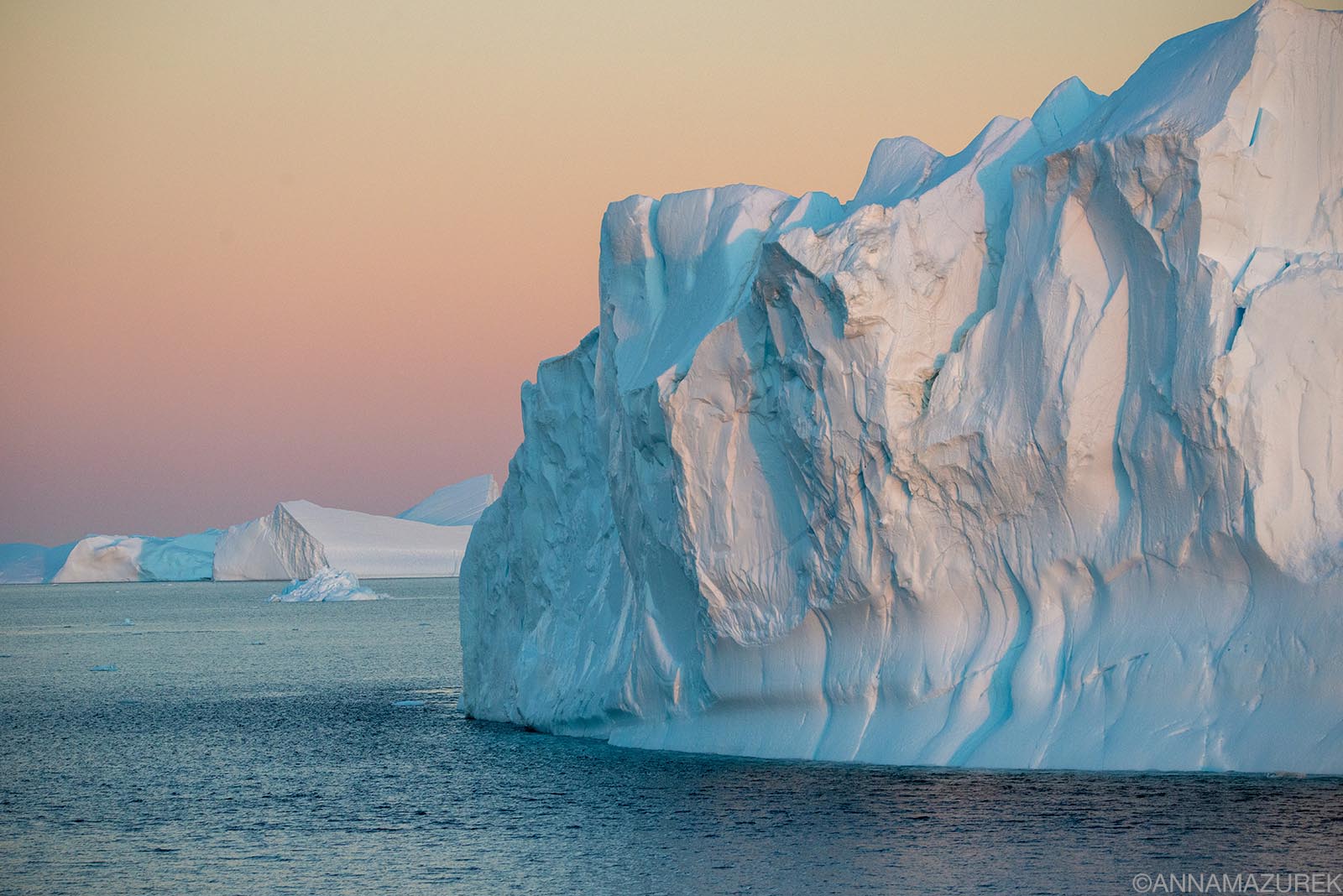 Icebergs in the Gerlache Strait at sunset in Antarctica.
Antarctica is the ultimate adventure—the wildlife and scenery are unbelievable. Deciding what to pack for an Antarctica trip is almost as important as when you go.
If you’ve got an Antarctica cruise coming up or are looking at booking one, here is a complete Antarctica cruise packing list. From boots to gloves, I’ve compiled a detailed list of what to pack for Antarctica. (For a little pre-trip inspiration, check out my Antarctica photo post with images of the month I spend there for work.)
Affiliate links are used in this post. If you make a purchase, I earn a small commission at no cost to you, which goes toward the cost of maintaining this blog.
What to Pack for an Antarctica Cruise
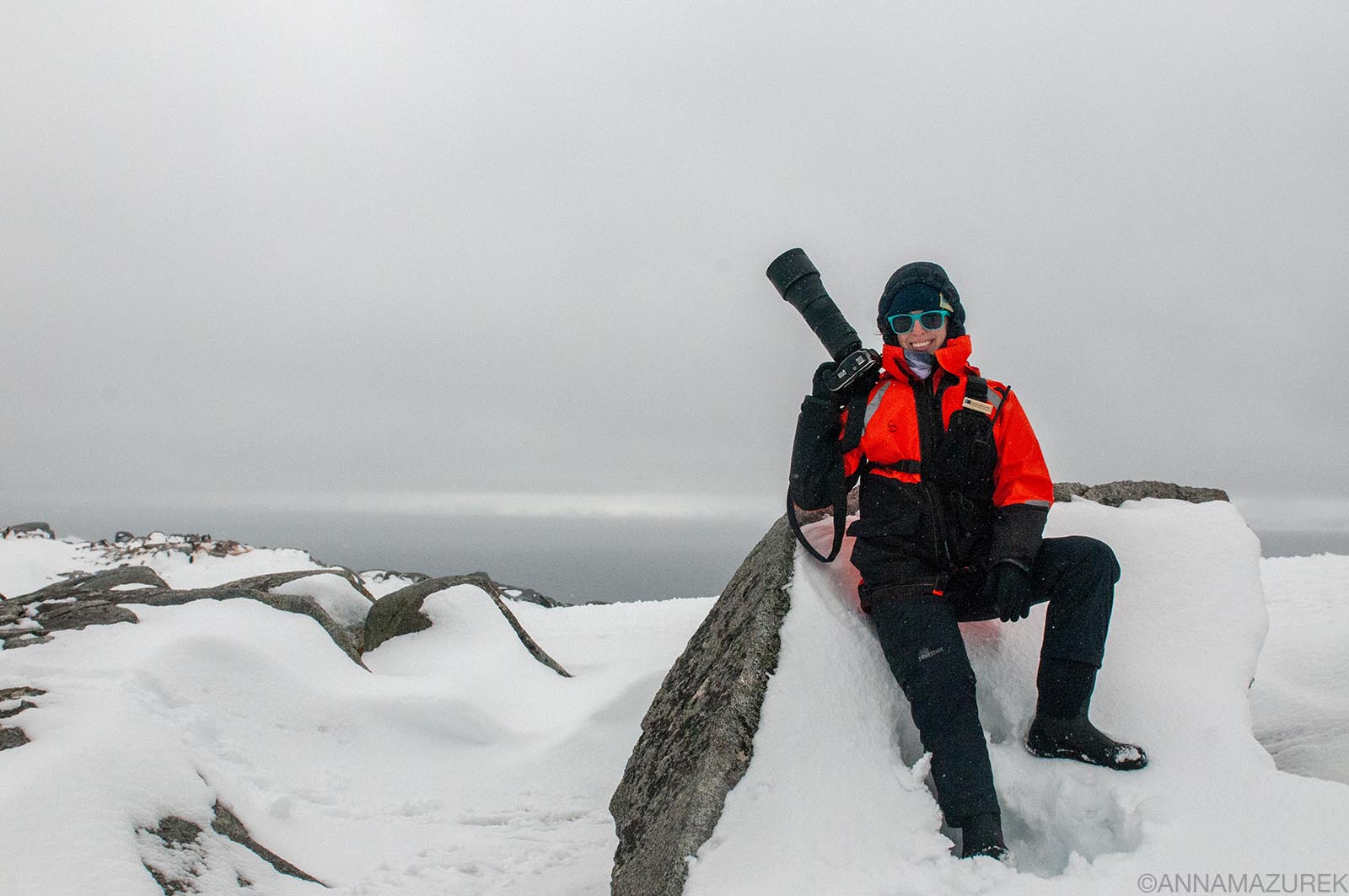 I’m wearing a float coat in this photo, which doubles as a life jacket. Underneath, I’ve got on an ultralight down jacket, two thermal tops, one tank top, two pairs of thermal bottoms, rain pants, two pairs of wool socks and waterproof boots. Also, I’m wearing a fleece buff, fleece hat with ear warmers and waterproof gloves.
I packed terribly, so I want you to learn from my mistakes when packing for your Antarctica cruise. Most days the weather was right around freezing, give or take a few degrees. Some days the sun was shining, and other days, it was pouring snow. I am very cold natured so keep that in mind when reading this list!
Biosecurity in Antarctica
Waterproof and water-resistant are not the same thing. Everything you pack for Antarctica should be waterproof. Due to biosecurity reasons (to prevent invasive plant species), you must wash off your boots and vacuum all your clothing before your first shore landing. Then, you must wash and sanitize your boots or anything that touches the ground between landings, which is so much easier when you have waterproof clothes/bags.
Antarctica Cruise Packing List
- Waterproof hooded raincoat: If you’re takinga cruise, they will most likely give you a warm insulated jacket. If not, you’ll want a very warm waterproof jacket or one you can put warmer layers under. I’m a big fan of Marmot’s rain gear, which can be used as a shell to layer under. Buy a size bigger than normal if you plan to layer under.
- Insulated Boots: These need to be waterproof, insulated and knee-high. I recommend either Muck Boots or Boggs. You can possibly rent these through your cruise company.
- Waterproof pants: These need to be wide enough to go OVER your boots. I recommend pants that have a full zip along the leg, which makes them easier to take on or pull off. I typically buy Marmot’s pants. Buy a size bigger than needed so you can comfortably wear layers under them.
- Ultra-light hooded down jacket: This saved me! If your outer jacket isn’t not insulated, then add a fleece over this. I wore a Uniqlo lightweight down jacket under a Columbia fleece. Since Uniqlo doesn’t make the same style I have, I recommend Patagonia’s Nano Puff or Nano-Air hooded jackets.
- Thermal tops: Packing three or four thermal long-sleeve tops. I layered two of these tops most days. I like these Patagonia Capilene and Columbia Omni-Heat styles, which they make for both women and men.
- Thermal bottoms: Pack 2-3 pairs. I wore a pair of Patagonia Capilene thermals underneath a pair of fleece-lined leggings every day. (My fleece-lined leggings were discontinued from Athleta but these Arc’teryx Essent Warm ones are similar.) Some days I put a pair of fleece jogger sweatpants over them. Then, my waterproof pants on top.
- Merino Wool Socks: Pack at least four pairs. I wore two pairs most days. I find Darn Tough socks to be the most comfortable and love their lifetime warranty.
- Gloves: Pack 2-3 pairs. I love the Seirus Soundtouch Xtreme All Weather Gloves but also had a pair of lightweight gloves and a pair of wool ones as a backup. Make sure you can operate your camera or phone with any gloves you buy.
- Fleece buff: I had two of the Buff brand ones just in case one was wet.
- Hat with ear covers or flaps: An insulated warm beanie hat is critical for colder days—consider adding ear warms on top of your beanie! For sunny days, I wear a Columbia water-resistant baseball hat (similar to this one) with ear warmers over it to keep it from blowing off in the wind or on a zodiac ride.
- Sunglasses and ski goggles for snowy Zodiac rides (I was so jealous of everyone who had googles.)
- Sunscreen and Chapstick with SPF: You will get sunburned in Antarctica. I really love Sun Bum’s natural SPF chapstick and matte face SPF because it doesn’t leave your hands greasy, so there’s less chance of SPF getting on my camera.
- Dry bag backpack: The most common brand I saw was Overboard. I took a normal backpack with a rain cover, which was a huge mistake.
- Lightweight dry bag for your camera and phone: I used a 13-liter Sea to Summit for my camera with wide lens and kept my phone in this one-liter Sea to Summit dry bag in my jacket pocket. My second camera body with the zoom lens was on my backpack.
- Hiking poles or walking stick: Your cruise ship might have these, but they are really helpful in the deep snow.
- Hand and foot warmers: Two pairs for each day of the trip, excluding sea days. While the easiest thing to buy are the disposable Ignik Brand, consider a more environmentally-friendly rechargeable hand warmers.
- Meclizine Sea Sickness Medicine: We had 20-foot waves on the Drake Crossing, which is an average crossing. Most ships will provide these but consider taking the medicines that work best for you.
- Nuun electrolytes: Hydration is important, especially after being in the sun all day or dealing with rough seas. Nuun is my favorite brand because they are low sugar and taste great. (I like the lemon-lime flavor.)
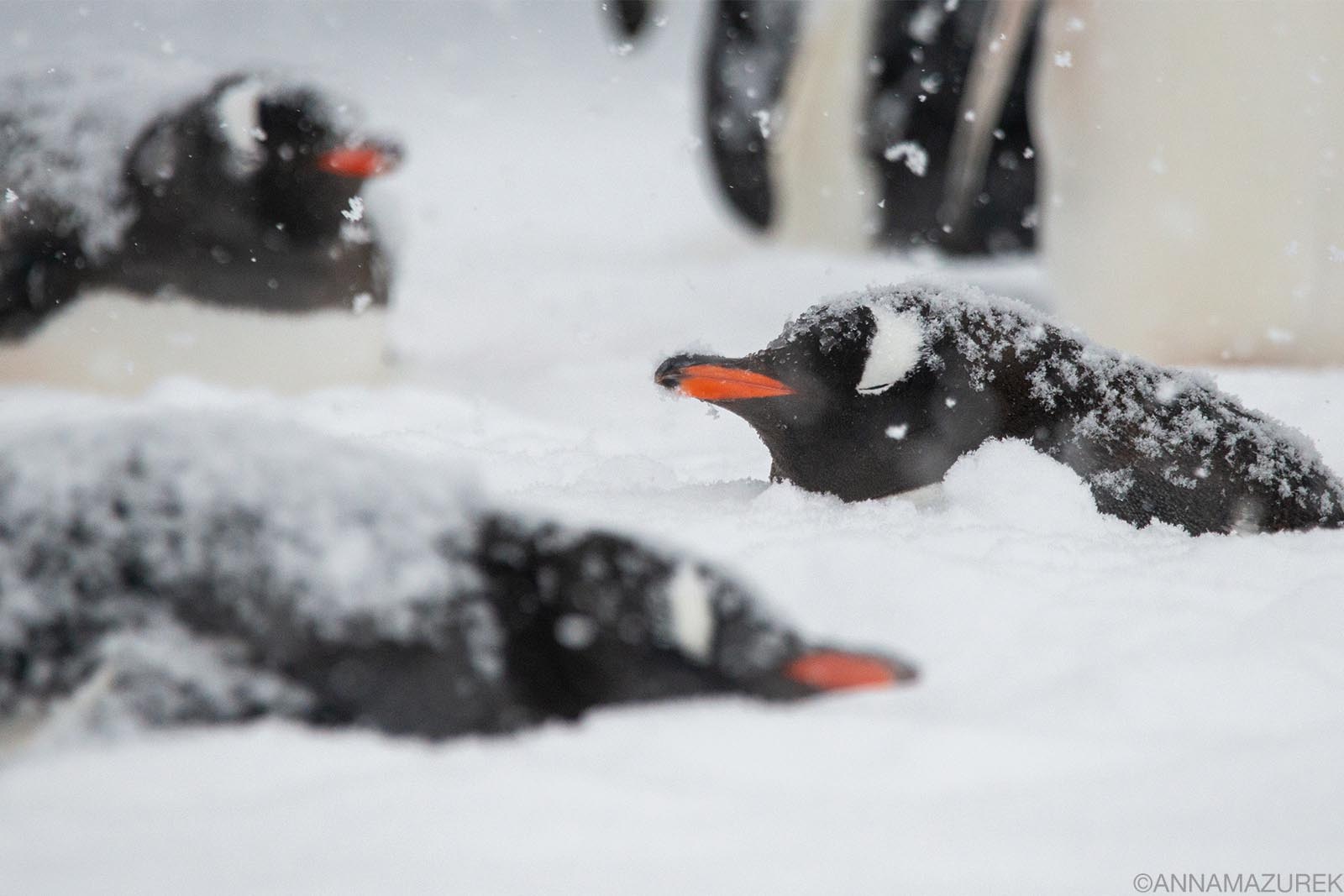 Gentoo penguins swimming near Useful Island, Antarctica.
The Best Camera Gear for Antarctica
Due to IAATO rules, you can’t get closer than 15 feet to penguins and other animals. You need at least a 500-600mm lens for wildlife shots. I recommend having two camera bodies—one with a wide lens and another with a zoom, so you aren’t changing lenses in the extreme weather. (Consider renting gear through LensRentals.com. I’ve used them before for many shoots.) There’s really no need to bring a tripod.
- Wide angle-lens (Recommended: 24-70 mm f/2.8)
- Zoom 500-600mm: I bought this Sigma Nikon 150-600mm lens because it was the lightest weight zoom I could find. While it was very sharp, the focus was very slow. I’d almost recommend shooting a Nikon 70-200 with the 1.4x teleconverter and/or a Nikon 500mm prime because the focus is faster. You can rent these cheaply from LensRentals.com.
- Rain covers: I recommend the LensCoat RainCoat in both the large and small sizes.)
- Camera Dry Bags: I used this lightweight Sea to Summit bag for one camera body with a wide-angle lens.
- Circular polarizing filter: This really helps with reflections and reducing glare on the water and snow.
- I highly recommend the PeakDesign’s Slide camera straps, wrist straps or Capture clip that attach to your backpack strap.
Best Time to go to Antarctica
The best time to take an Antarctica cruise is from November to March. Based on what you want to see or do, consider the following:
Penguins: They will be nesting early in the season and have eggs by mid-December usually. Some will start hatching at the end of December. January and beyond is the best time to see chicks in their fledgling stage, where they look like little feather dusters. If you want to see baby penguins, go in January to be safe.
Whales: February and March are when whale numbers are at their peaks. The January trips that ran after my December trips saw a very large number of whales. (We saw a good number of killer whales in December, along with some humpbacks.)
Fast Ice and Snow Activities: There’s always more snow earlier in the season in November and early December. If you want a chance to see fast ice (sea ice that’s fastened to the coastline) and walk around on it, going earlier in the season (November to mid-December) is your best chance. Sometimes, you can still find it in January, but it’s never guaranteed.
Related Posts
Travel Guides, Budget Tips & Expert Interviews
Let's Be Friends
ALL CONTENT © 2026 ANNA MAZUREK | TERMS OF SERVICE | PRIVACY POLICY
This site includes affilate links. We may earn a commision on any purchases made.
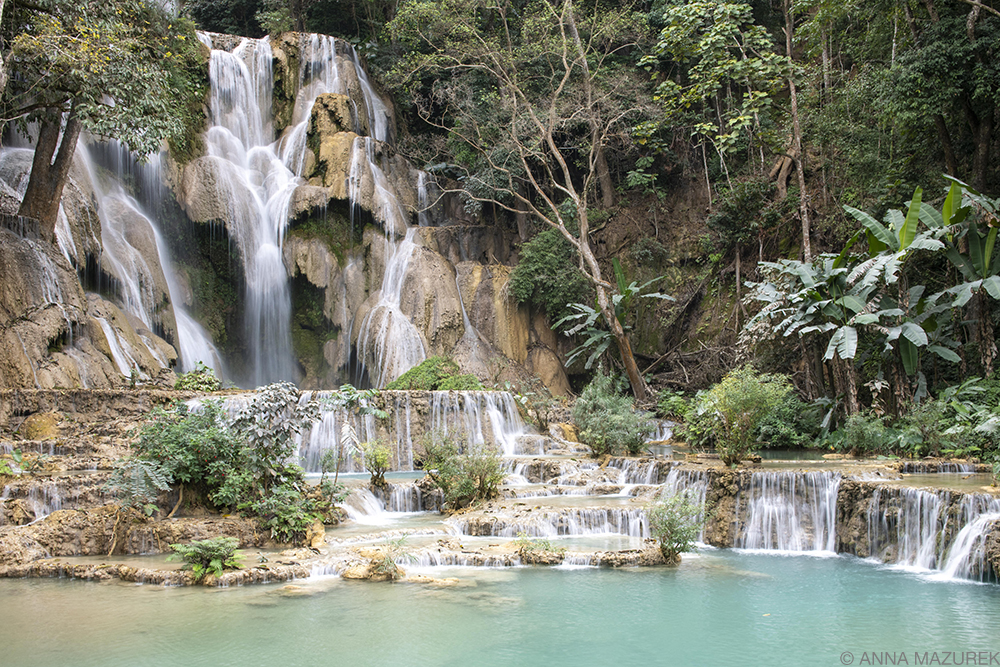
Best of 2023
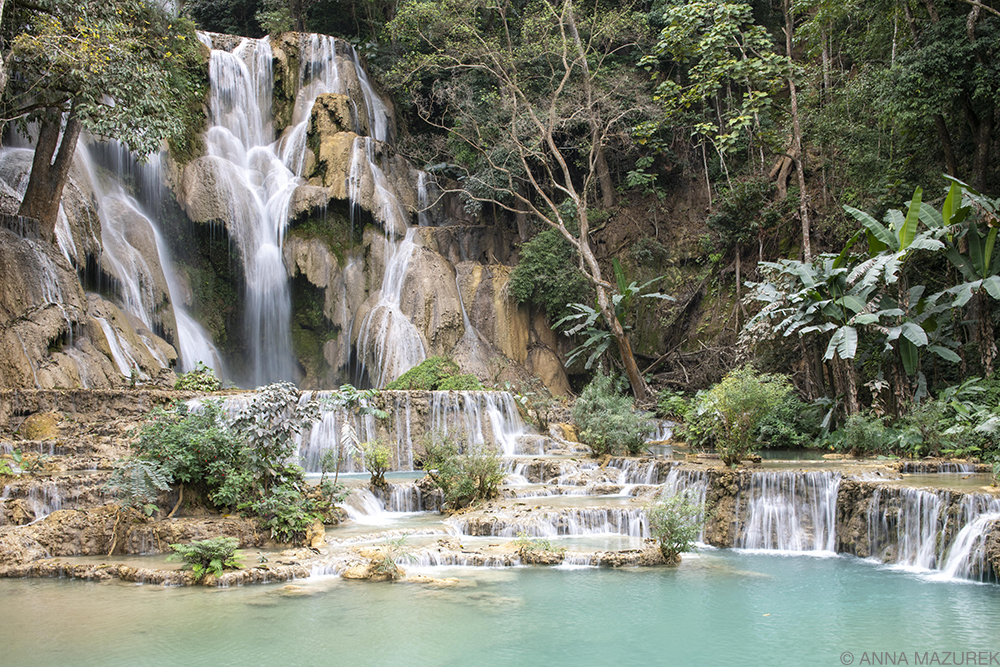 A long exposure shot of Kuang Si waterfall outside of Luang Prabang, Laos
I kicked off 2023 in Sydney, Australia and will be ringing in 2024 in Thailand. In the last 12 months, I’ve been to 22 countries, which is why I took the last two months to sit still in Chiang Mai, Thailand to recharge. Reflecting on the year is always an exercise in gratitude for the beauty and diversity of the world and my experiences.
People often say I’m “lucky” because I get to travel for a living, which I wrote about in an old post. I’ve always found that slightly offensive because it devalues all the hard work, persistence and sacrifices I made to build this life. (If you’ve read my book, you know 2010 Anna was working three retail/service industry jobs and barely making $20/30K/year.) A friend recently had a slight turn of the phrase that I loved: I am lucky—lucky I found the courage to put in the hard work, quit jobs that didn’t align with my career goals, make the decisions and sacrifices (like the time I rented my friend’s living room for $230/month to save money for my first South America trip) it took to build this life. Bravery is often mistaken for luck.
Every year I share a recap of my favorite adventures and photographs of the year. I am lucky that I was brave enough to make these trips happen. From Laos to Corsica, here are my best travel photographs from 2023!
I’ll be hitting the road in early January to three NEW and exciting locations. Follow along on Instagram for updates. There will be ruins and a gnome.
Luang Prabang, Laos
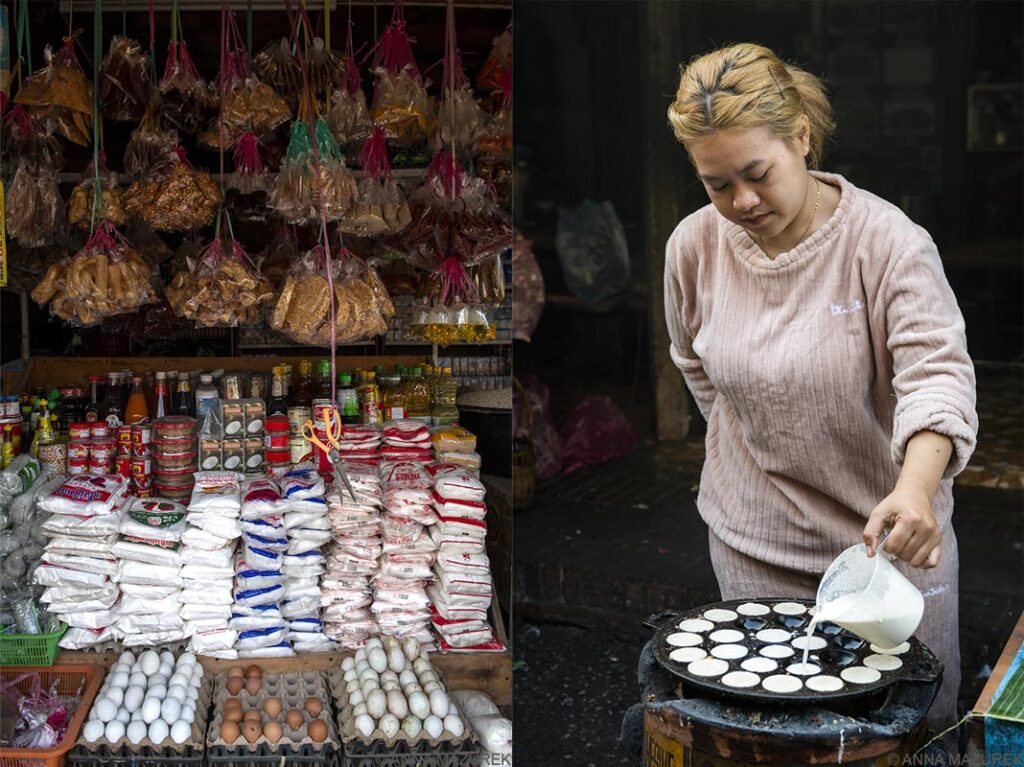 Left: A roadside shop on the road to Wat Xiang Mine across the Mekong River from Luang Prabang. Right: A woman cooks pancakes at the Luang Prabang, Laos morning market.
Nestled on a peninsula on the Mekong River, the entire city of Luang Prabang, Laos is a UNESCO world heritage site. It’s been one of my favorite cities since my first visit in 2009. In January, I went back to visit for the first time in almost a decade, and the city is still intoxicating. It’s small enough to explore on foot but with enough attractions to keep you busy. Thanks to being a former French colony, it’s got the best wine and croissants in Southeast Asia. One of my favorite things to do is walk through the local morning market with my camera, which is where these photos are from. Street photography is one of my favorite things in Asia. For more about Luang Prabang, check out the Instagram highlight on Luang Prabang.
Cibolo Creek Ranch, Texas
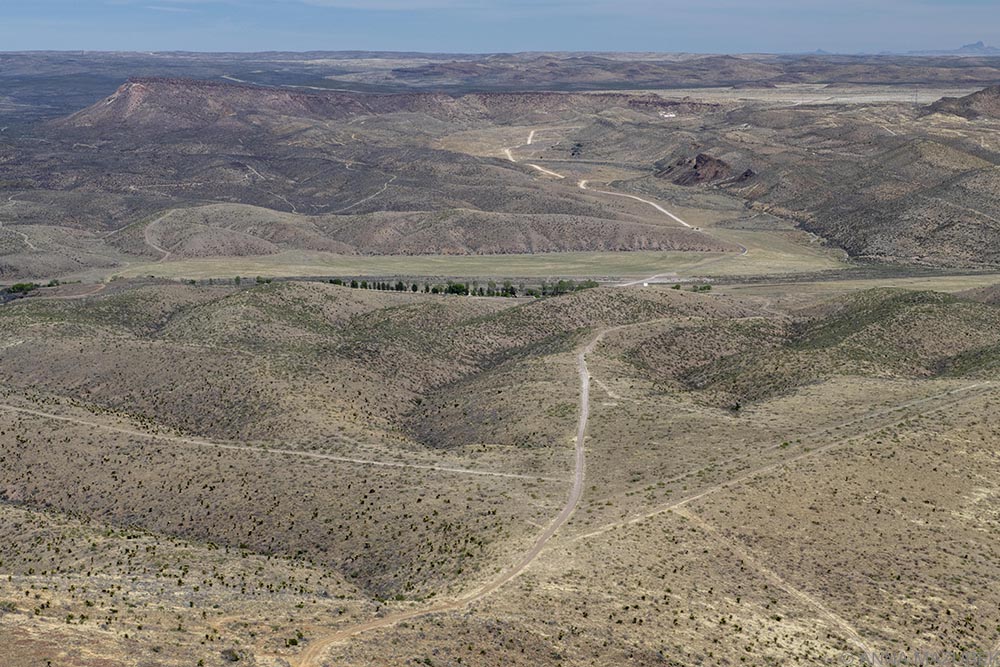 The view from one of the highest points at Cibolo Creek Ranch outside of Marfa where I went on a trip for a travel story.
In March, I did a big West Texas road trip with a two-night stop at Cibolo Creek Ranch for a travel story. The five-star resort is one of the oldest ranches in Texas covering 30,000 acres across the Chinati and Cienega mountains in the Big Bend Region, 32 miles south of Marfa. For this story, I wrote an in-depth piece on the history of the ranch and its amenities. My favorite part of the visit was the llamas and the scenery. There’s nothing like the vast openness of a West Texas landscape. For more details, check out my Instagram highlight about my visit.
The Wave Hike, Arizona
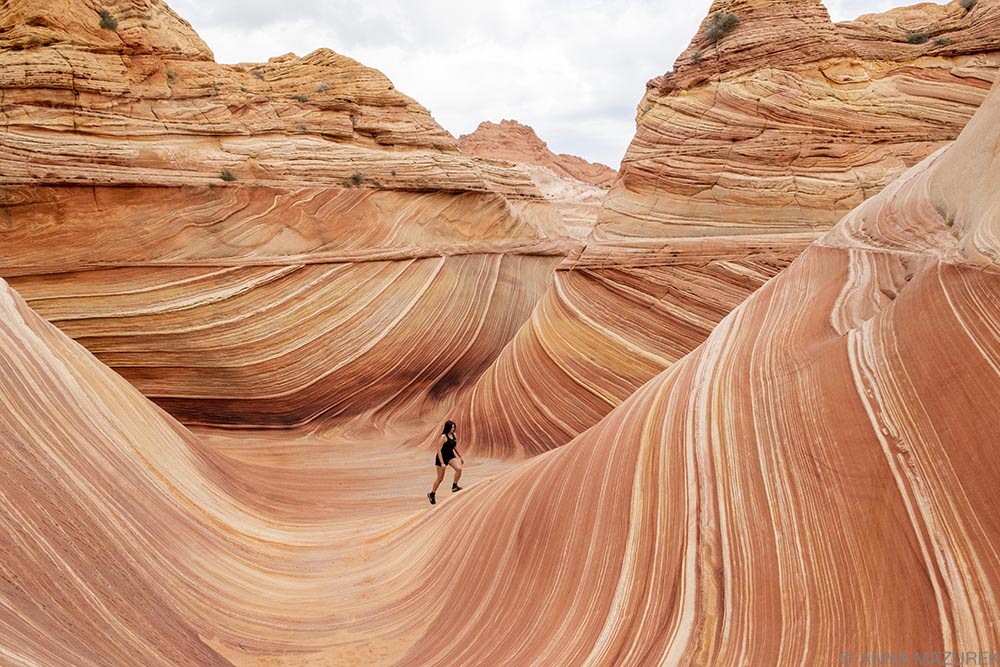 One of the hardest hiking permits to get is The Wave (Coyote Buttes North) in the U.S. In addition to the 48 advance permits, there are 16 daily permits given out each day.
It took FIVE years for my hiking friend group to FINALLY win the lottery to hike The Wave, an epic sandstone rock formation in Coyote Buttes North in Arizona. The lottery is limited to 64 people daily. (You must apply online three months in advance (48 spots) or enter the daily lottery (16 spots) on mobile devices within a certain geofence.) We did the 6.4-mile roundtrip hike in May, and the scenery along the entire hike was stunning. We were worried The Wave would feel crowded, but we had the entire place to ourselves for half an hour. The handful of other people we passed were very polite about not being in our photos. The hike was completely worth the effort to get the permits. The best part was that this adventure reunited our friend group from across the world—I even flew back to the U.S. from Italy for the hike! (For more details, check out my Instagram highlight about the hike!)
Azores Islands, Portugal
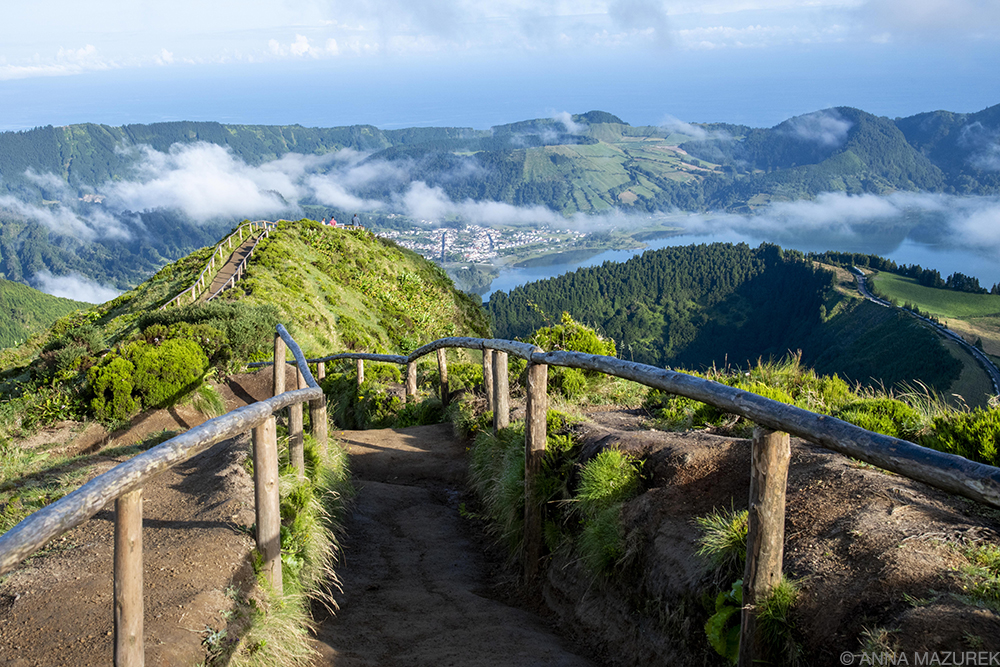 Miradouro da Vista do Rei is a short trail with a stunning views of Lagoa Verde and Lagoa Azul on Saõ Miguel island in the Azores.
I actually went to the Azores twice this year, which is surreal. I went for work in April and then, again in July with friends for a hiking trip. The archipelago is an autonomous region of Portugal comprised of nine islands that are only a five-hour flight from Boston and roughly two hours from mainland Portugal. We divided our trip between Saõ Miguel, the largest island, and the third largest island, Terceira, because they were the easiest islands to get flights to/from and find rental cars/accommodation. (If you’re planning to go to the smaller Azores islands, book your accommodation and rental cars at least four months in advance.) The volcanic islands are known for the year-round spring-like climate and lush hiking trails. (For more details, check out my Instagram highlight about our hikes!)
London, England
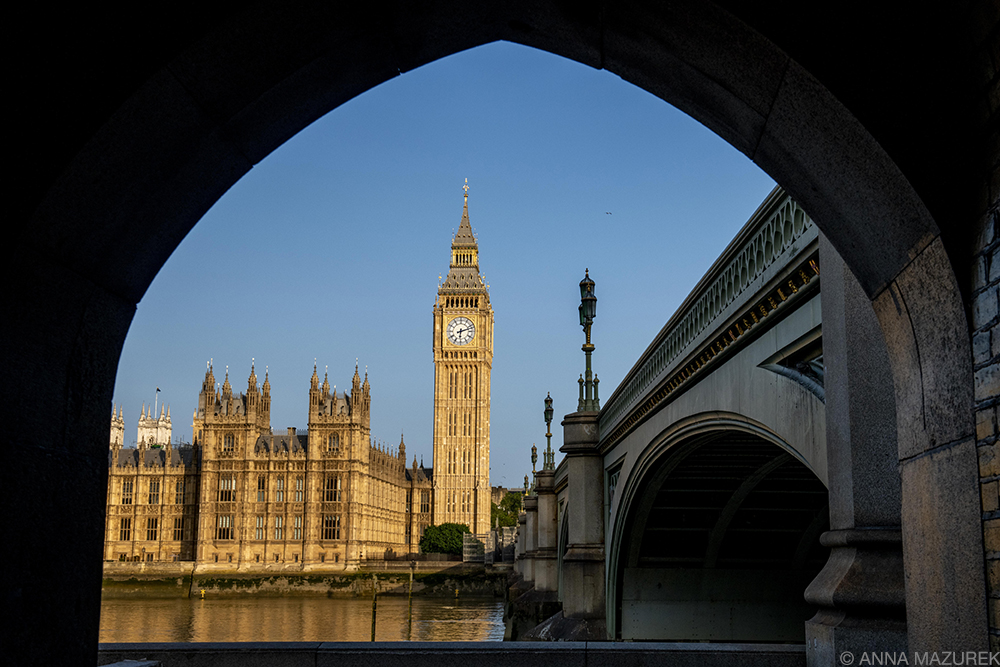 A view of Big Ben from across the River Thames.
After a three-year restoration project, the scaffolding was removed in 2022. This summer I went back to visit for the first time since it was removed so I got up at sunrise for a fun shoot. It was my first time seeing the famous clock since my first visit to England in 2002 when I was studying abroad. Back then, I was shooting a film camera that put the date automatically on all my images so glad to shoot it again this time! This image was shot in the arch of a walkway on the other side of the Westminster Bridge.
Bonifacio, Corsica
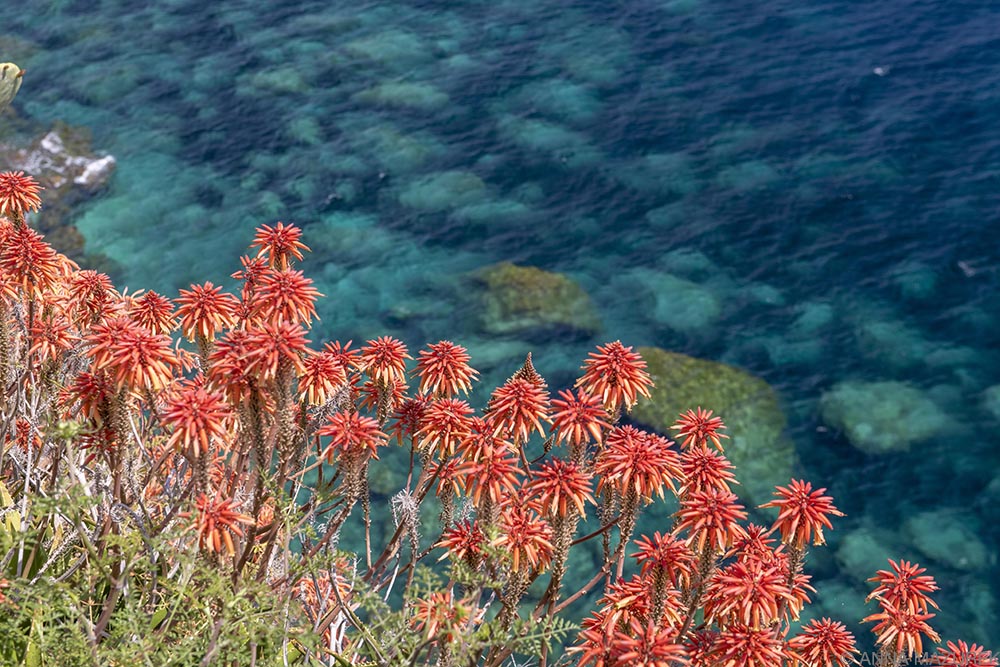 A view of the turquoise waters of the Mediterranean from the fortified citadel of Bonifacio, Corsica.
I fell in love with the French island of Corsica this summer while working in the Mediterranean. Bonifacio, a coastal town on the southern tip of the island famous for a medieval clifftop citadel, was my favorite stop. The entire island is a hiker’s dream. I literally can’t wait to go back to hike. This image was shot from the eastern edge of the citadel walls.
Northumberland, England
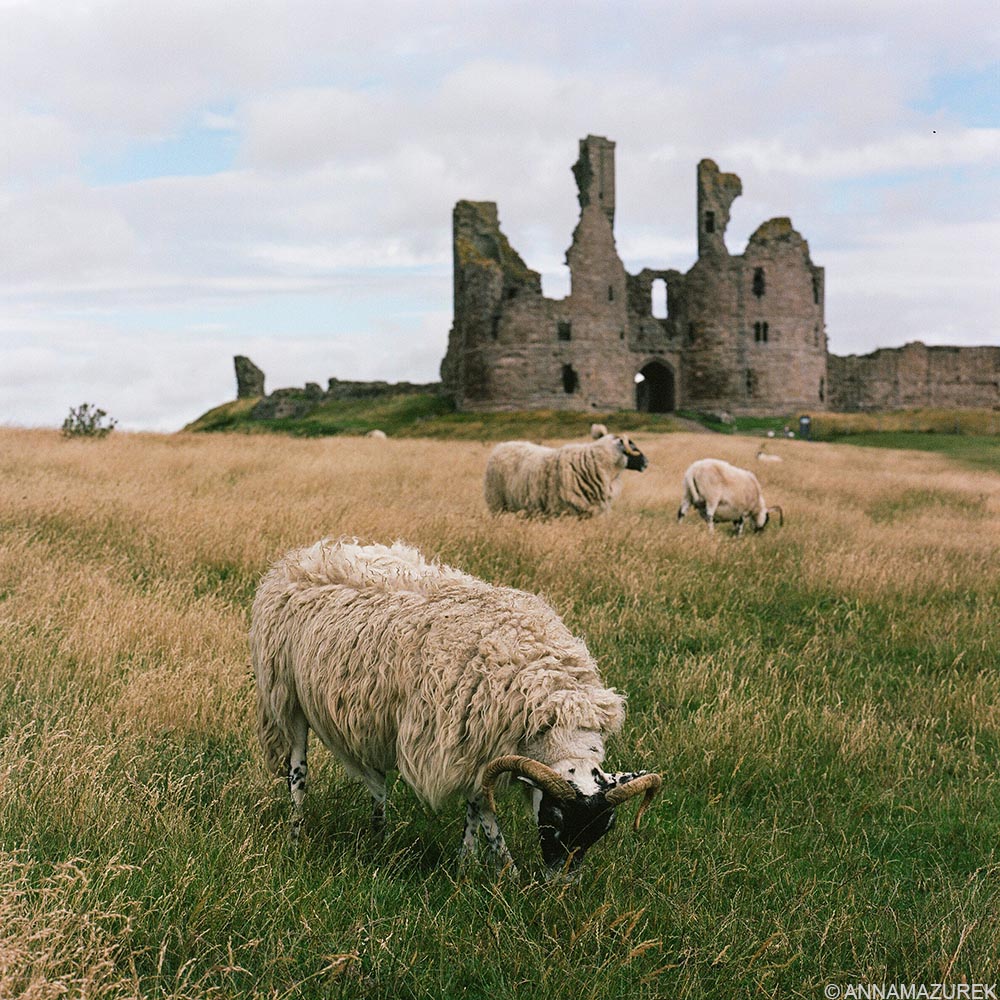 Dunstanburgh Castle, England shot on Kodak Portra 120 film (ISO 400) on a Hasselblad.
When I visit my friend Fran in Northern England, I always borrow her dad’s Hasselblad film camera. I took three rolls of Kodak Portra film. Fran and I took a road trip to Northumberland located on England’s east coast just north of Newcastle. It was once the largest kingdom in the British Isles and is famous for a collection of castle ruins. And, you know I never pass up a chance to photograph ruins! My favorite castle was the coastal 14th-century Dunstanburgh Castle that’s only accessible by foot along a two-mile path through fields filled with sheep and cows. My favorite part about England is the public footpaths across the country that often go through private lands. It’s such a fun adventure to walk through these rural trails and hop through fields. For more details, check out my Instagram highlight about my visit.
Isle of Mull, Scotland
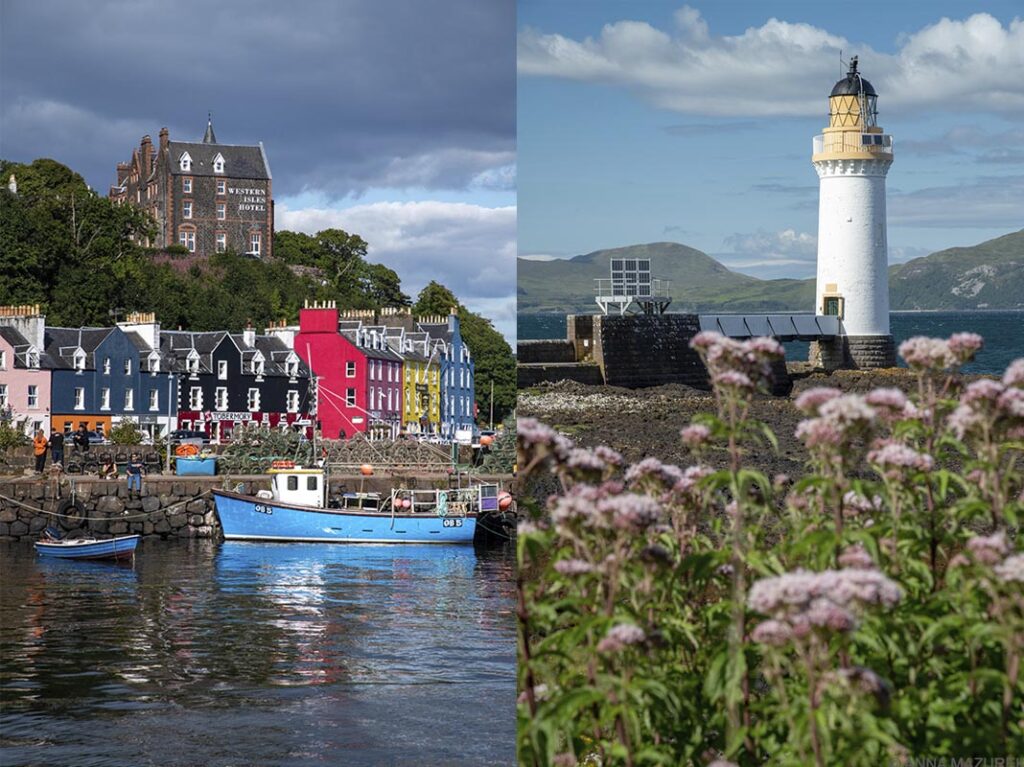 Left: The colorful port of Tobermory on the Isle of Skye. Right: The Tobermory Lighthouse, which is just a short walk from town.
For the first two weeks of August, I explored the Scottish Highlands and islands including the Isle of Mull, which has the most colorful harbor in Tobermory! (This was a work trip. One of my freelance jobs is teaching photography for a luxury travel company.) It’s one of my favorite little towns of the trip with cute shops and the best little homemade ice cream shop on the water. The lighthouses along the islands are so strikingly beautiful for photographs.
Vanuatu Water Music & Sand Drawing
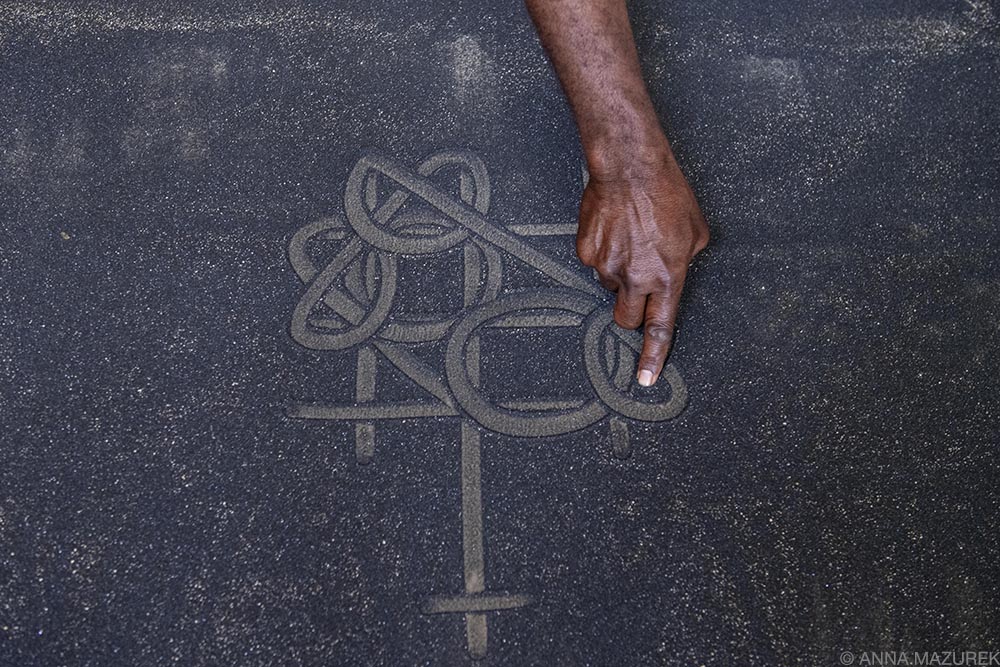 Sand drawing on the island of Espiritu Santo in Vanuatu.
The sand drawings of Vanuatu are listed on UNESCO’s list of Intangible Heritage. These complex drawings are traced continuously with one finger in an elaborate pattern that tells a story. It’s one of the most unique forms of communication I’ve ever witnessed.
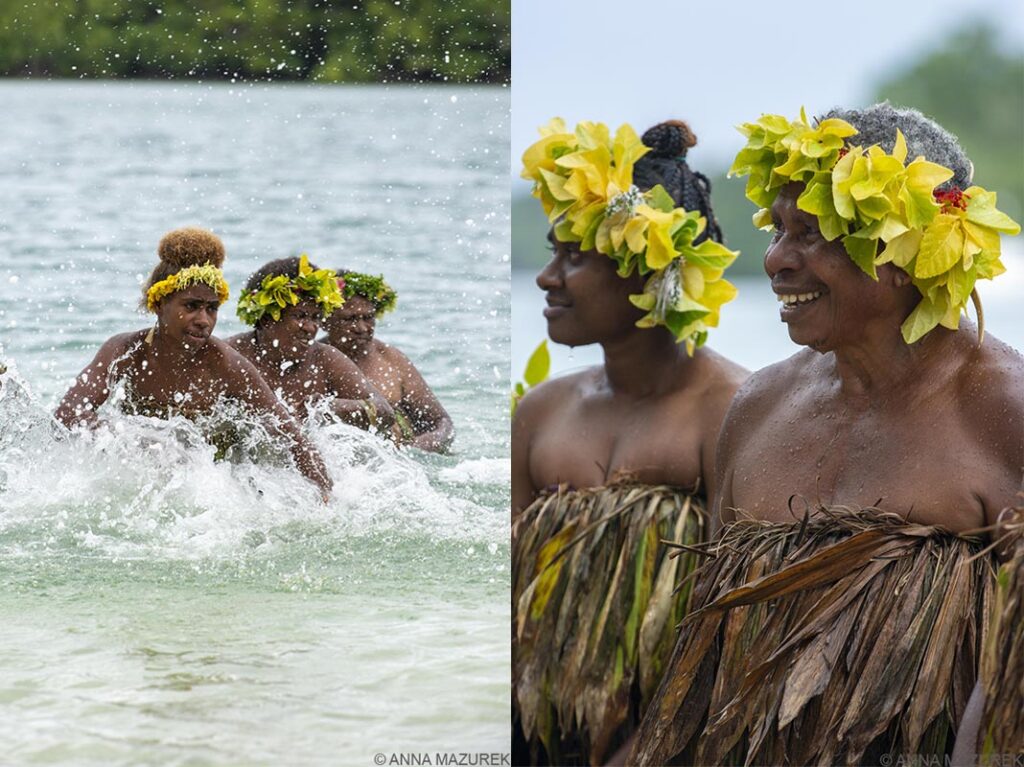 Ëtëtung, Vanuatu’s women’s water music
Another fascinating aspect of Vanutu is the women’s water music, known as Ëtëtung. The women combine their vocals and use only their hands to splash, slap and skim the water in a rhythmic pattern. It’s a visually and acoustically astounding performance.
Alfred the Gnome’s best photos of 2023
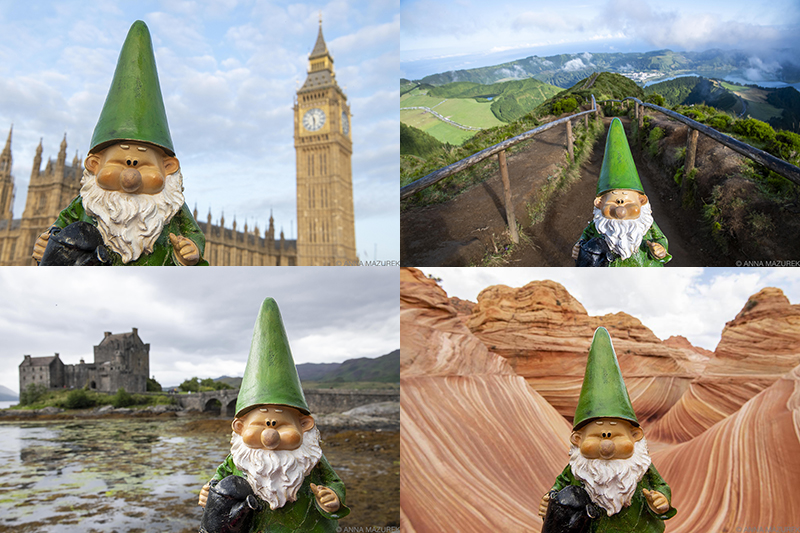
If you’re interested in a print of the landscape or gnome images above, shoot me an email (Anna at TravelLikeAnna.com) with Photo Print in headline).
Happy New Year and Safe Travels in 2024!
13 Best Travel Gifts
Alfred the Gnome loves being part of my annual travel gift guide!
Since I’m on the road almost full-time, I’m always trying out new travel gear and clothing. I’ve collected a list of my favorite travel items that I’ve discovered this year that have made my life easier to help you find the best travel gifts. Several of these were suggestions from friends and other travelers that I wish I’d bought years ago!
Here are 13 of the best travel gifts (big and small) to help you find the perfect gifts for friends and family. Feel free to add these to your own Christmas list before you send it to Santa!
1. Peak Design Phone Cases & Accessories
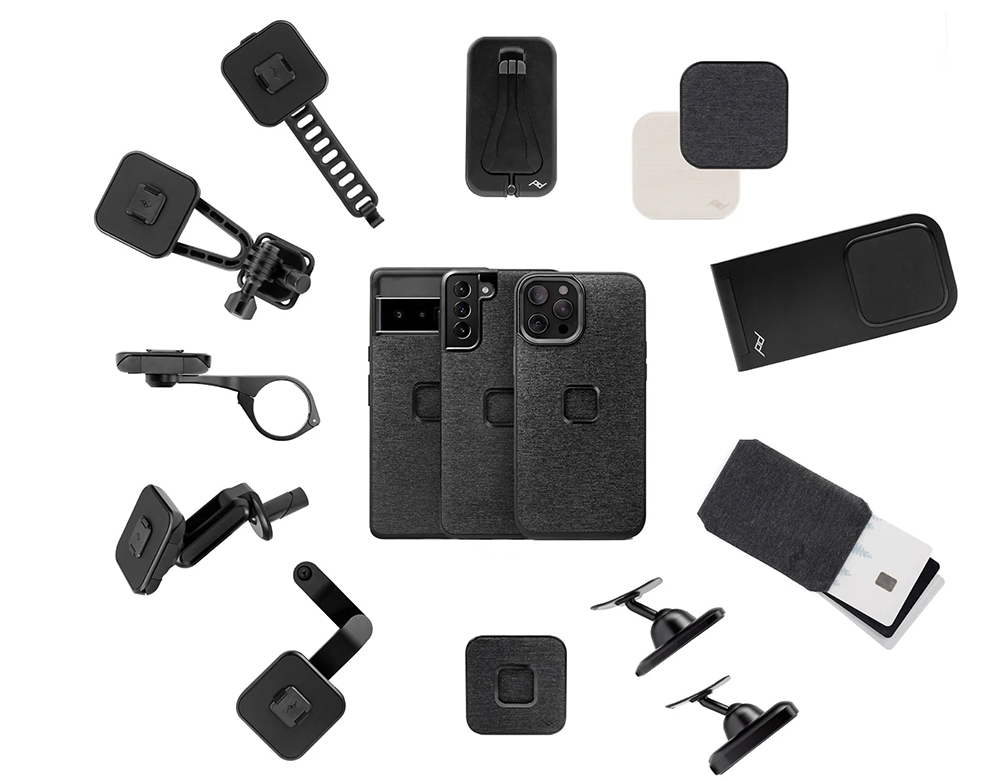
Peak Design makes mobile cases and accessories for all phone types including Apple, Android and Pixel. Photo courtesty of PeakDesign.com
2. Nord VPN for Online Security

While this isn’t a physical product, Nord VPN is one of the most important things I use because it allows me to stream Disney+ in Thailand. 😊 All jokes aside—a VPN offers privacy protection while you are traveling both at home and abroad when connecting to public Wi-Fi at airports, hotels, etc. I’ve used NordVPN for years because it’s the fastest and most trusted VPN. VPNs are excellent for streaming movies or checking your bank accounts on both your computer and phone. It shields your IP address to protect your privacy and location while also offering secure data encryption. There is a 65% off Black Friday sale!
3. Goodr Sunglasses


I love bright Wayfarer-style sunglasses so much that they’ve almost become my trademark. For years, I would buy them every time I saw them. When my stash hit rock bottom this year, a friend suggested Goodr, an online company that makes fun colorful and affordable ($25) quality sunglasses with style names like Flamingos on a Booze Cruise and Gold Digging with Sasquatch. Originally designed for runners, these polarized, no-slip (even when you’re super sweaty) and no bounce styles come in any color from teal (my fave!) to plain black in three different head sizes.
The carbon-neutral company offers 30-day free returns and a one-year warranty. I scratched my sunglasses, and they just replaced them no questions asked this year! Their marketing is genius—their witty customer service emails and packaging are all hilariously written by their cartoon flamingo mascot named Karl. You can buy them online at Amazon, Goodr.com and REI, who sells their line of National Park inspired shades. No matter what style you choose, these will be one of the best travel gifts of the year!
4. Taco Cat Goat Cheese Pizza Card Game


This game is the most fun card game I’ve played in ages and perfect for travel. My friend’s kids got me into it this summer, but it’s a ton of fun even for adults. It travels well! Taco Cat Goat Cheese Pizza would be a perfect stocking stuffer. It’s on sale for only $5.99 on Amazon! The name alone makes this one of the best travel gifts!
5. Salomon OUTpulse Mid GORE-TEX Hiking Boots
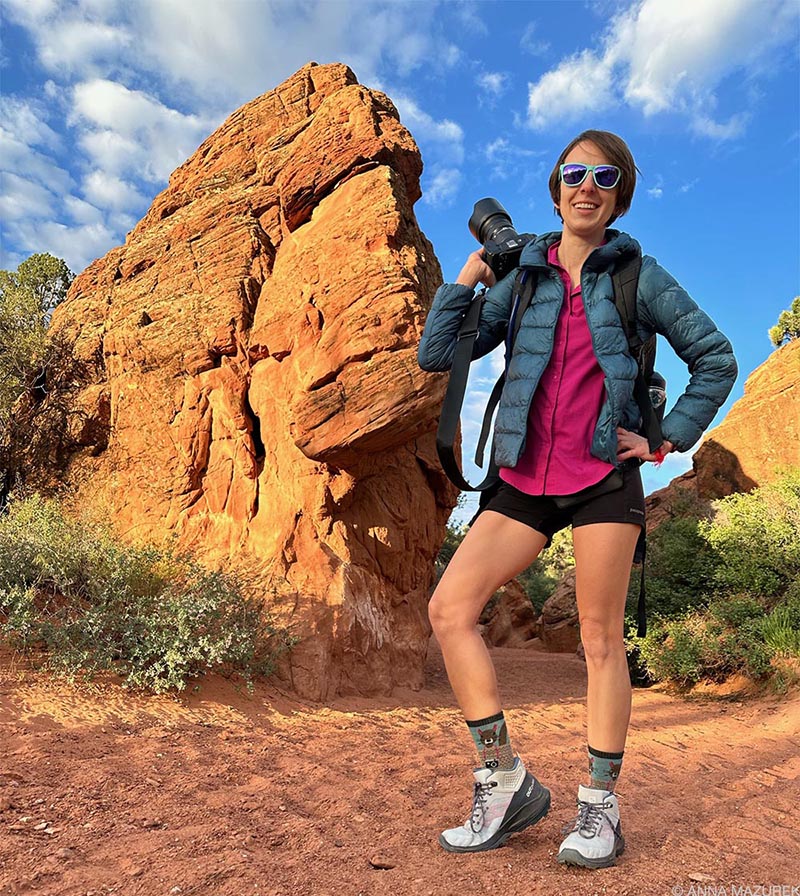 I broke in my new Salomon hiking boots at The Wave this spring. I’m also rocking my favorite squirrel Darn Tough socks!
6. Oboz BFCT O Fit Plus II Insoles


The secret behind the perfect fit with my Salomon hiking boots was adding removeable Oboz foot insoles. These fit my
arch perfectly, and I no longer have tired feet after long hikes. Trust me, I really didn’t want to spend more money and buy inserts, but these literally made a difference. These are $35 at REI!
7. Patagonia Quandary Brimmer Sun Hat
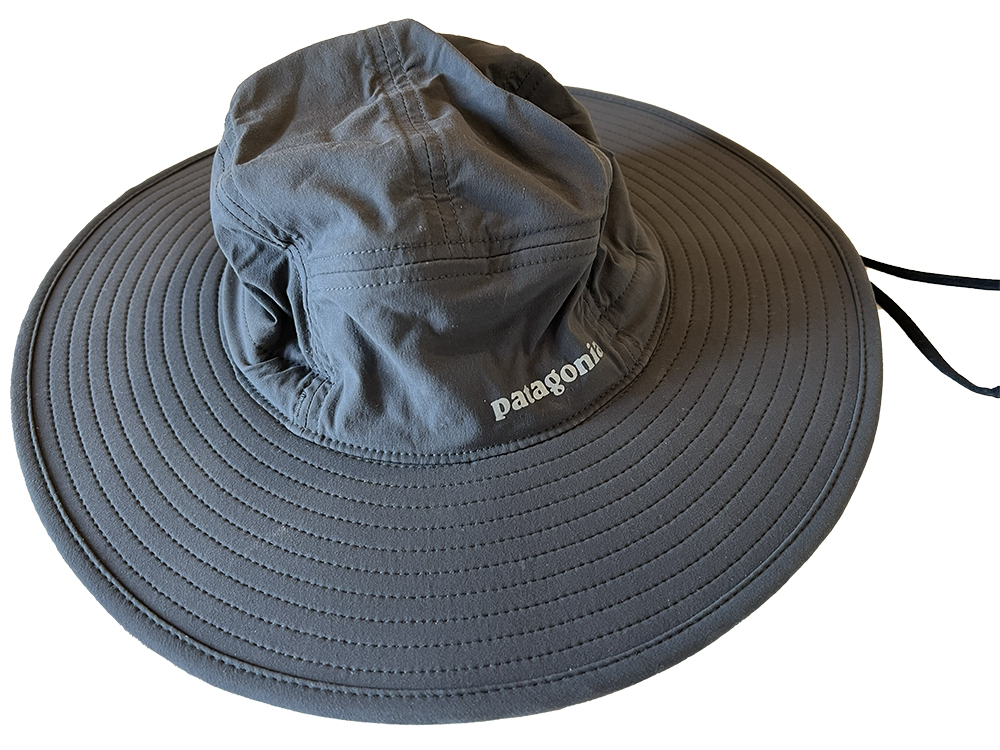 The Quandary Brimmer Sun Hat packs easily and keeps both the sun and rain off my face.


Last week, I lost my luggage again for the third time this year so clearly, I have to put AirTags, a tracking device made by Apple, back on the list. I was able to track when my bag made it to Bangkok from Singapore and could even see the delivery truck a few blocks away from my hotel. I have one in my main suitcase and one with my camera. A four-pack is 20% off on Amazon now! These are literally the best travel gift you can buy yourself.
9. Darn Tough Mirco Crew Socks


10. Women’s Capilene® Cool Daily Hoodie UPF
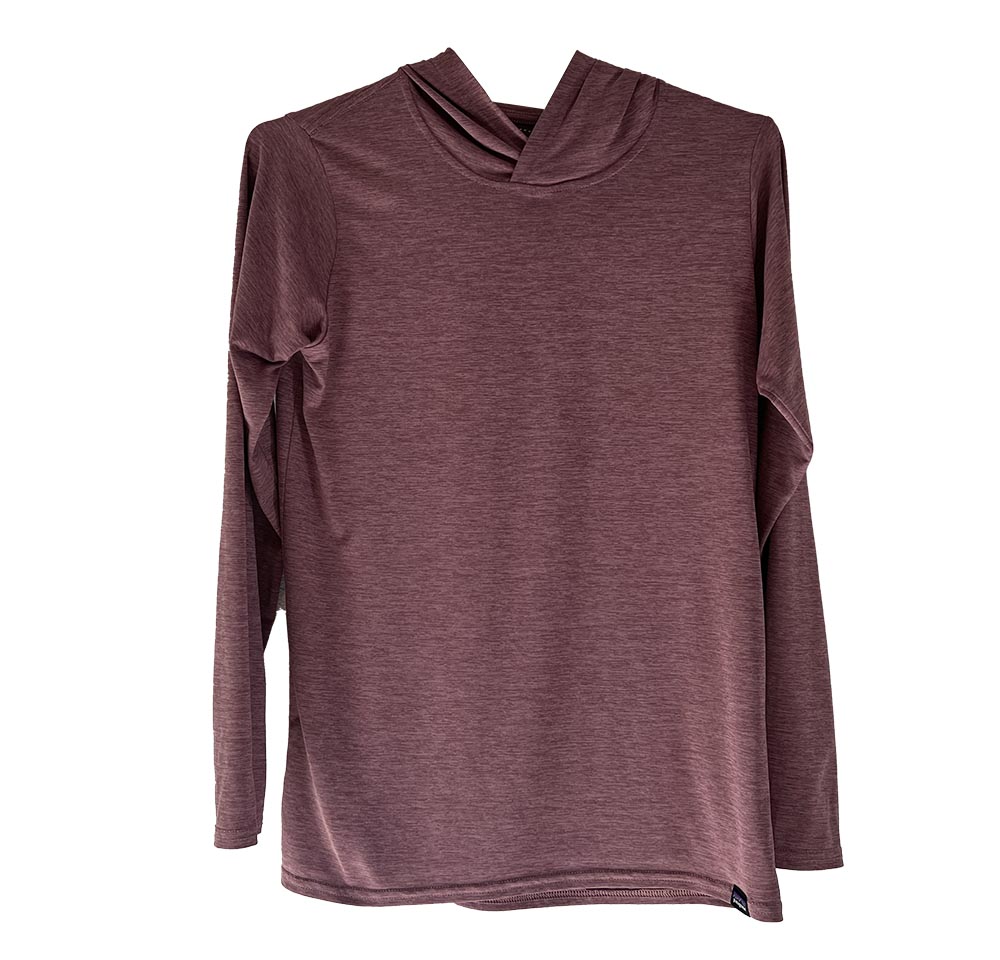
Patagonia’s Capilene® Cool Hoodie with UPF is one of my go-to shirts now.
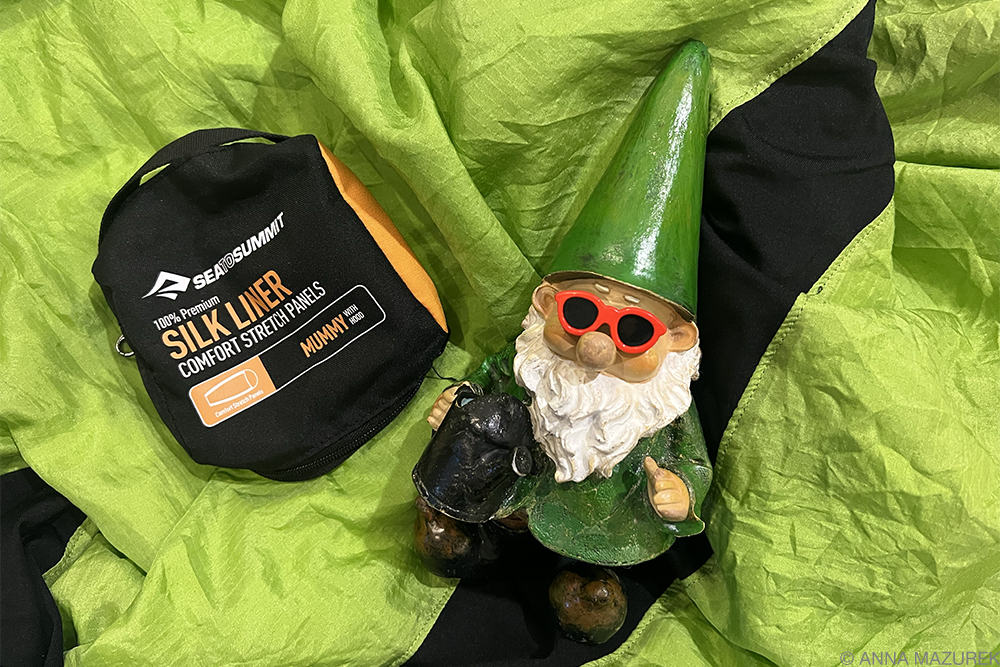
11. Sea to Summit Premium Silk Travel Liner
12. Mountain Hardwear Crater Lake Hoodie


13. Patagonia UPF Sun Gloves
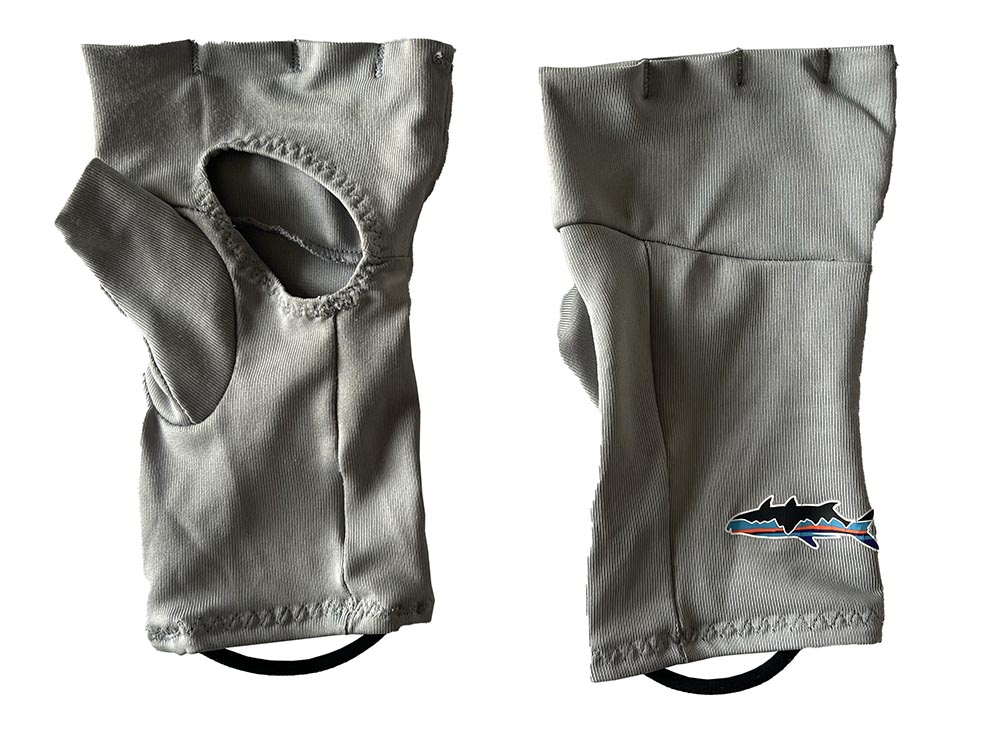
These Patagonia sungloves are the perfect length to cover the wrist and are easy to take off.
Your hands and neck show the most age so I’ve started wearing UPF gloves when I drive long distances, snorkeling or just out in the sun taking photos all day for work. I tried a pair from Uniqlo, which are fine for driving but useless elsewhere. These Patagonia UPF gloves are short and cover a bit of the wrist but have a cutout in the palm for airflow. I wore these almost every day on my recent Melanesia work trip.
If you’re buying something online anyway, go through Rakuten.com and use their link to the store’s website to get cash back. The percentage (1-20 percent usually) varies by retailer and the amount you earn can be directly deposited into your PayPal account. This is similar to shopping through your credit card’s “shopping mall” to get extra points. I just started using this for booking my accommodation when I travel through Booking.com and other online shopping including Amazon! You get $40 just for signing up with this referral link. PLUS, they give HUGE cash-back amounts during Thanksgiving weekend!
Travel Safety Tips: What to Pack
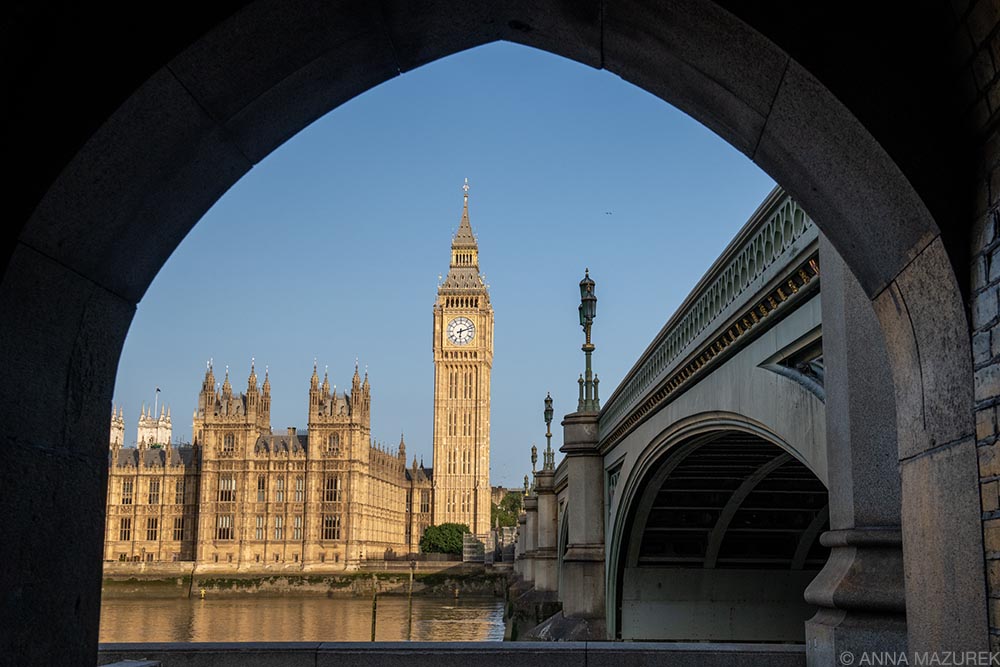
In July, I photographed Big Ben in London. The iconic structure spent five years covered in scaffolding for a reconstruction project.
As a woman who travels solo most of the time, I am always thinking about my safety. I wanted to share a few tips for things to pack for safety along with how to stay safe online. I’m currently typing this from the airport and have every single one of these items with me.
- Pack a rubber doorstop. (I have a lightweight one just like this in my checked bag.) I put this on the inside of every hotel, Airbnb, or apartment door. This prevents or at least makes it extremely difficult for anyone to open the door from the outside. It’s a travel-friendly alternative to a door stopper bar.
- Pack a keychain-size pepper spray. Whether I’m in Austin or Chiang Mai, I’ve always got a small bottle of pepper spray in my purse. While I took every self-defense class they offered in college including one on pepper spray, I never bought one until my 2015 South America trip. A friend I met was robbed/kidnapped in Peru and the pepper spray helped her and her boyfriend get away. To travel with it, it must have a safety latch and be in your checked bag. I put mine in a small Tupperware box. Important note: Pepper spray is illegal in England and many places in Europe. I didn’t know that until this summer when I noticed signs as I boarded the Eurostar train. This is the exact pepper spray that I carry.
- Put an AirTag in all your bags. I have one in every one of my bags and even my car. (I park my car for long periods of time, and I’m always scared it’ll get towed when I leave it in Austin.) This is tremendously helpful for lost luggage or even potentially locating stolen items. (The police got a friend’s stolen car back because they were able to track their iPhone that was in the car.) I recommend getting a four pack of AirTags.
- Use a VPN on your computer and phone. A VPN offers privacy protection while you are traveling both at home and abroad when connecting to public Wi-Fi at airports, hotels, etc. I’ve used NordVPN for years because it’s the fastest and most trusted VPN. VPNs are excellent for streaming movies or checking your bank accounts. It shields your IP address to protect your privacy and location while also offering secure data encryption. (Pro Tip: It’s also good if you happen to be in a country where Disney+ or any streaming service isn’t available. With a VPN you can use a U.S. IP address for streaming services regardless of your location.) Check out NordVPN here!
- Buy a stainless-steel water bottle. There are two reasons for this so hear me out. It’s easier to sanitize a stainless-steel bottle with boiling water when traveling in places where you can’t drink tap water than a plastic bottle that might melt. (I once got a very bad case of food poisoning in Mexico because I wasn’t washing my plastic Nalgene properly because I was scared of the local water. Learn from my misery.) The second reason might sound silly but as a solo female traveler, I’m always thinking of items I can use in self-defense to get out of an unsafe situation with another human or an animal attack. Thankfully, I haven’t had to do that, but I imagine it would hurt like hell to get hit with a stainless-steel water bottle. I prefer Klean Kateen over Yeti because Yeti’s bottles are way too big and heavy for hiking or most backpack side pockets. I recommend a 16-ounce insulated bottle.
6. Buy travel insurance. While my whole life is built on adventure, I don’t make any compromises with my health—I ALWAYS have travel medical insurance when I’m abroad. (Check out my in-depth travel insurance blog post here.) My go-to company is SafetyWing Nomad Insurance which offers coverage in over 175 countries. Their new Nomad Insurance 2.0 health plans have even more benefits with coverage included for adventure sports, theft of electronics and 30+ adventure sports like scuba diving and quad biking. As someone who’s had their iPhone stolen and travels with a carry-on full of camera gear, I’m excited about these new benefits especially the coverage for electronics. (Please note that these additional benefits aren’t currently available for U.S. residents but will be in the coming months.) Buy SafetyWing Nomad Insurance here.(AFFILIATE DISCLOSURE: Please note that some affiliate links are used in this post. If you make a purchase, I earn a small commission at no cost to you, which goes toward the cost of maintaining this blog. If you would like to support this blog and are ready to make a purchase, these links are one way to show your support. I only recommend products and companies I truly love and use.)
Related Posts
Travel Guides, Budget Tips & Expert Interviews
Let's Be Friends
ALL CONTENT © 2026 ANNA MAZUREK | TERMS OF SERVICE | PRIVACY POLICY
This site includes affilate links. We may earn a commision on any purchases made.
What to do about Lost Luggage & Broken Suitcases
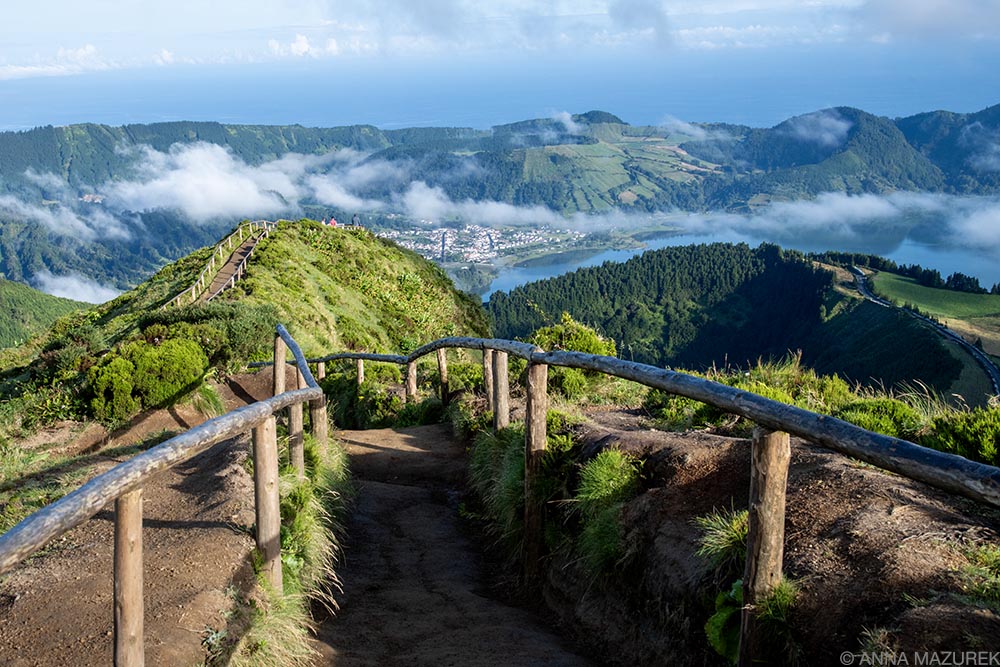
Miradouro da Grota do Inferno on São Miguel island in the Azores, Portugal.
[I’m back after a summer break—my blog was cloned by a scammer in late June so I was trying to get that resolved before I started posted again.]
2023 has been the year of luggage woes for me. After more than two decades of travel, my luggage was lost for the first time. I knew my time was coming. (It inspired me to write a post about what to do if your checked baggage is lost so you can benefit from my misfortune.) The first time my luggage was just left in Dallas overnight on my way back from Asia in March and arrived the next morning—the best-case scenario.
Fast forward to July in Europe – London Heathrow had a massive malfunction with their Terminal 5 luggage sorting system, and my bag got stranded. I arrived in Lisbon for a short two-night stint before my flight to the Azores for a seven-day hiking trip. Of course, ALL of my hiking gear is in my checked bag – hiking boots, hat, camelback, etc.
Before I dig into the details of my luggage fiasco, I wanted so share some tips to help you in a similar situation:
What to do is your checked luggage is lost or delayed
- Always use an AirTag to track your bag. I recommend putting an AirTag in every checked bag and I even keep them in my carry-on bag with my camera gear. Buy a four-pack of AirTags for discount pricing! (affiliate link)
- Always keep your baggage tag receipt. Even better, take a photo of it when you check-in.
- File a report directly at the airport. It complicates things tremendously if you try to file one after leaving the airport. You’ll be given a reference number for tracking that you’ll need to keep.
- Keep all receipts for any toiletries or clothing purchased. Don’t go overboard with purchases. There is often a daily dollar or item limit for what you can claim.
- Call the airline if the status of your missing bag isn’t updated online. I did this to clarify I couldn’t pick up my bag in Lisbon for a week so they didn’t think it was abandoned.
- Get written proof that you picked up your bag. You’ll often need this to file for reimbursement, especially with credit cards that pay a daily amount for expenses. (Chase pays $100/day per person for a max of $500.)
Now, back to my luggage fiasco….
An airline representative was passing out papers with QR codes linking to the missing baggage form when we arrived, which I filled out instantly. I selected that I’d pick it up at the Lisbon airport. Since I was island-hoping in the Azores, it seemed too complicated to get it sent there. Plus, British Airways doesn’t fly there. (Luckily, I did have a few pieces of clothing in my carry-on. I try to always have a change of clothes but airlines have gotten stolen strict on carry-on bag weight that I normally just have only my camera gear in my carry-on.) I bought a few toiletries, pieces of clothing and borrowed a pair of hiking boots from a friend. While airlines are supposed to provide reimbursement for clothing and toiletries, I didn’t go crazy with buying things because I wasn’t sure how much of a hassle it would be to get reimbursed.
Thankfully, I had an AirTag in my bag, so it was easy to track. British Airways’ antiquated system didn’t update for days–it said it was trying to locate my bag when it was already in Lisbon per my AirTag. Of course, it made it to Lisbon five hours after I left for the Azores!
When I flew back to Lisbon after my Azores trip, I picked my luggage up at the airport, which was another fun venture with a grumpy staff member of a third-party service. I made sure to get proof that I picked up my bag to use for my reimbursement claim. Afterward, I went online to file for reimbursement for the things I bought. The form was very tedious because every item must be listed individually.
After a month with no response, I followed up with the airline and decided to go ahead and file a claim with my credit card since it didn’t seem like British Airways was going to reimburse me. I bought the flight with my Chase Sapphire Reserve card, so I filed a claim through their system, which is operated by a third party (eclaimsline.com). The website was tricky and had trouble loading. I tried three different web browsers across multiple days before finally getting it to load for me to fill out another tedious form where I had to itemize everything and convert the currency to USD. Every airline in the world was listed in the dropdown menu except British Airways so the form kept giving me an error at first before I finally found an “other airline” option buried in the list. I had to include the claim number I’d filed with British Airways, upload proof my luggage was delayed, receipts of the items I purchased, my credit card statement proving I’d bought the ticket with my Chase card, proof I’d gotten my luggage back, etc. Both this form and my British Airways form asked for direct deposit for my bank account. This Chase benefit has a limit of $100/day per person with a $500 limit and was very specific about how many electronics chargers (one per device) they would cover.
Naturally, two days after I did this, British Airways responded with an apology and said they’d deposit the reimbursement soon, which they did in two days for $73. Of course, I heard back from my credit card claim right after that, and they also said they were reimbursing me, but nothing has been direct deposited. I possibly might get double paid for the claim, which honestly just makes up for the time it took to fill out the forms and find all the required documents! After reading this story from The Points Guy, I didn’t have high hopes for my Chase claim but was very surprised I at least got a response so quickly. I’d had a good experience with them paying for a canceled trip in 2019, which I wrote about in this blog post here.
(I also had travel insurance. If the airline or my credit card had not paid, then I would have filed with them. I pay a high annual fee for my credit card so that’s why I filed with them instead of my travel insurance first.)
Does travel insurance cover lost checked luggage?
It depends on the policy and the brand. I recommend Safety Wing Nomad Insurance. Their plans cover lost luggage and pay up to $500 per item, which is not subject to the plan’s $250 deductible. Safety Wing’s travel medical insurance policies cover people (including children) all over the world even when they are outside their home country. Other benefits include travel delay, emergency response, natural disasters and personal liability. Currently, I always use Safety Wing for my travel insurance because it just makes it easier for me to travel to the world knowing I can get coverage anywhere and at anytime. For more about travel insurance, check out this post.
Broken Suitcases & Suitcase Warranties
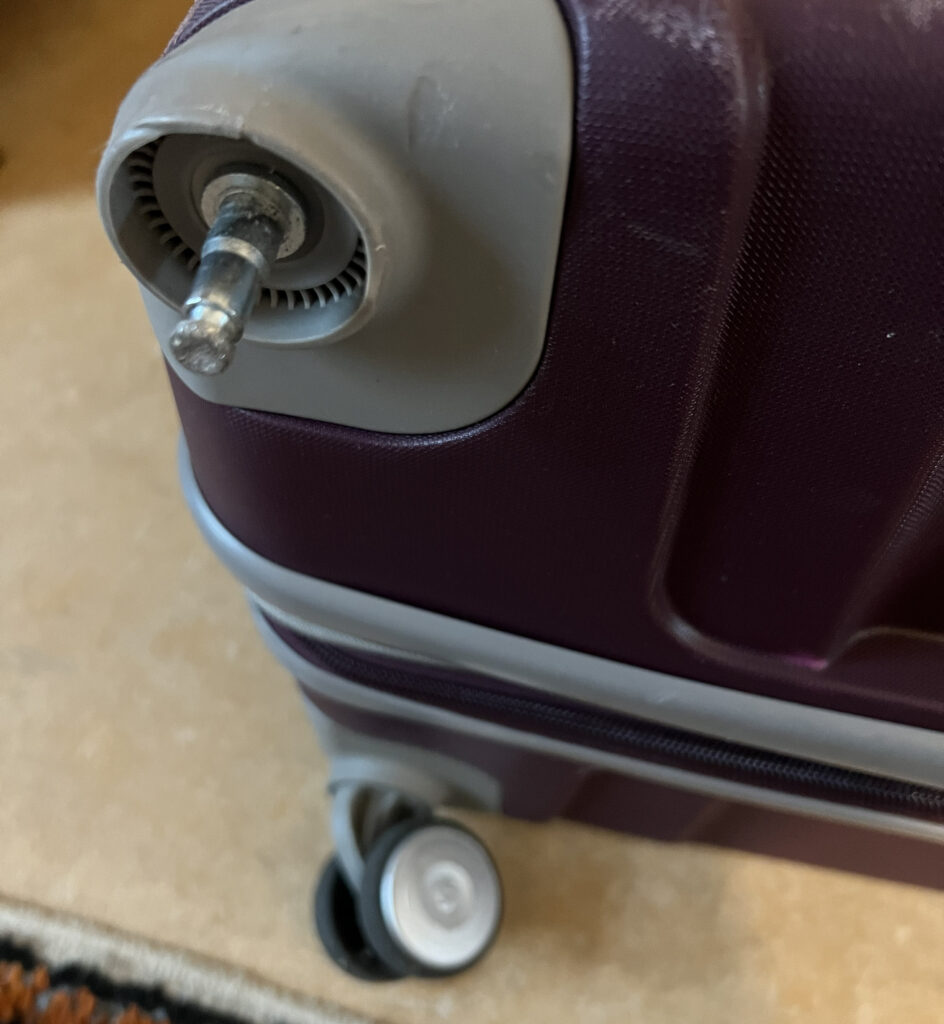 My brand new suitcase was missing a wheel after a SAS Airlines flight in Europe.
While I’d been lucky to not be cursed with lost luggage until this year, I’ve been plagued with broken suitcases for years. There was the time that early 20s Anna thought it would be smart to slide her suitcase down a staircase to avoid carrying it. The zipper on the front pocket of the soft-sided suitcase popped off. I was broke so I just duct taped the suitcase shut for the next two months of my trip.
Then, I was cursed with broken wheels – often caused by sketchy sidewalks. In 2019, I went through three suitcases in six months. When one would break in the middle of a multi-month trip, I’d buy a new one wherever I was. The new one was often subpar to the one of broken and made me realize that I just needed to suffer with the broken one.
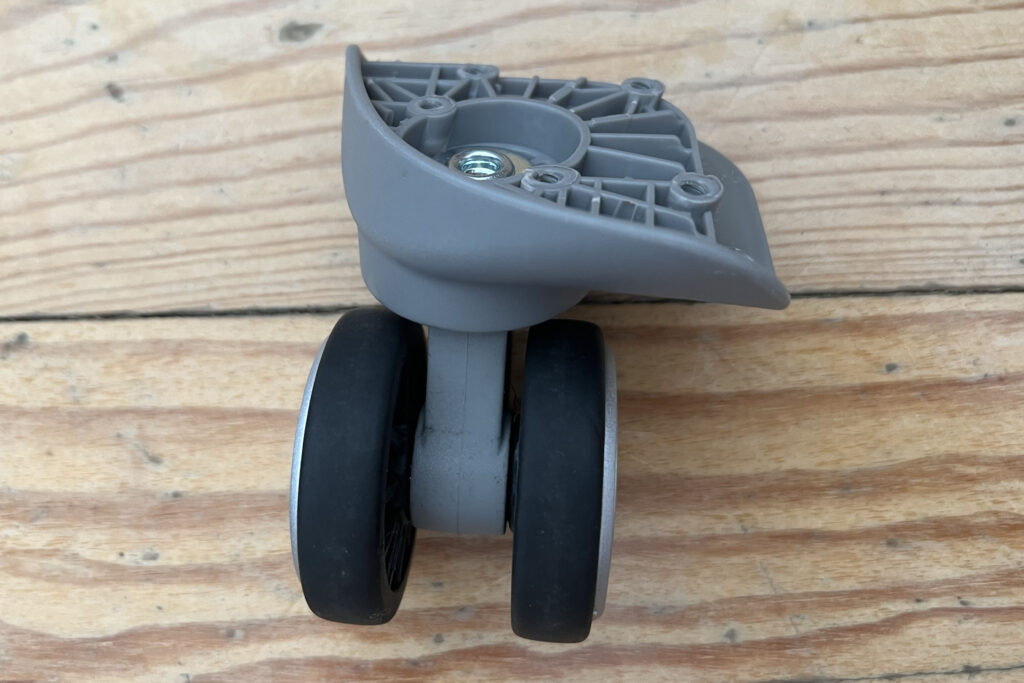 Suitcase wheels that have dual wheels on each individual wheel are stronger and more durable than single wheels. (This is a photo of the replacement parts Samsonite sent me to repair my broken wheel that the airline had ripped off.)
TIP: Always buy a spinner suitcase with wheels that have two wheels per wheel. They are much sturdier and last longer.
Suitcase warranties have been mostly worthless to me because it’s not a quick fix when I’m in the middle of a multiple-month trip. Suitcase companies often want you to take it to an inconveniently located repair center or deal with lengthy paperwork.
When I flew from Athens to Copenhagen in June on SAS Airlines (good airline aside from luggage drama), my suitcase arrived missing the back left wheel. I had literally just bought the suitcase in April at the Samsonite outlet in Texas for $180.
I filed a claim with the airline, which was a tedious two-step process that yielded no results. Since I could still roll the suitcase if I did it a certain way, I just dealt with it and researched all public transport to ensure there were elevators.
After emailing Samsonite directly twice and never getting a response, I called a Samsonite repair center in San Antonio to ask if they sold extra wheels. The friendly guy on the phone asked me to email photos because the numbers on the suitcase tags were worthless. He had the wheels in stock and shipped them to a friend who was meeting me in Lisbon. Without even asking for proof of purchase, he sent the wheels for free to my friend! When I got my suitcase back, I was able to swap out the wheel with a screwdriver – very simple! Moral of the story: Call a repair center directly for parts instead of going through company website.
Are expensive suitcases like Away worth the price?
It depends on where you live, how often you travel and how long you travel. For example, Away’s website says it will provide a replacement kit under their lifetime warranty but likely will only ship to the US or UK, which are the only places it ships its products. For the average person going on short trips with a homebase in one of those countries, then it would possibly be worth it. I have friends who swear by Away bags. If Away sent me a free bag, I’d be willing to try it but just can’t justify the cost since I’m abroad too frequently for long periods. Plus, I have a Target brand carry-on suitcase that was a $100 last-minute purchase that’s been going strong for two years. I’ve never wanted to spend a lot on fancy luggage because I’m often abroad for months making it hard to get it repaired or get spare parts. That’s why I can’t justify the cost.
[AFFILIATE DISCLOSURE:Please note that some affiliate links are used in this post. If you make a purchase, I earn a small commission at no cost to you, which goes toward the cost of maintaining this blog. If you would like to support this blog and are ready to make a purchase, these links are one way to show your support. I only recommend products and companies I truly love and use. To show your support for the blog, check out the resources page.]