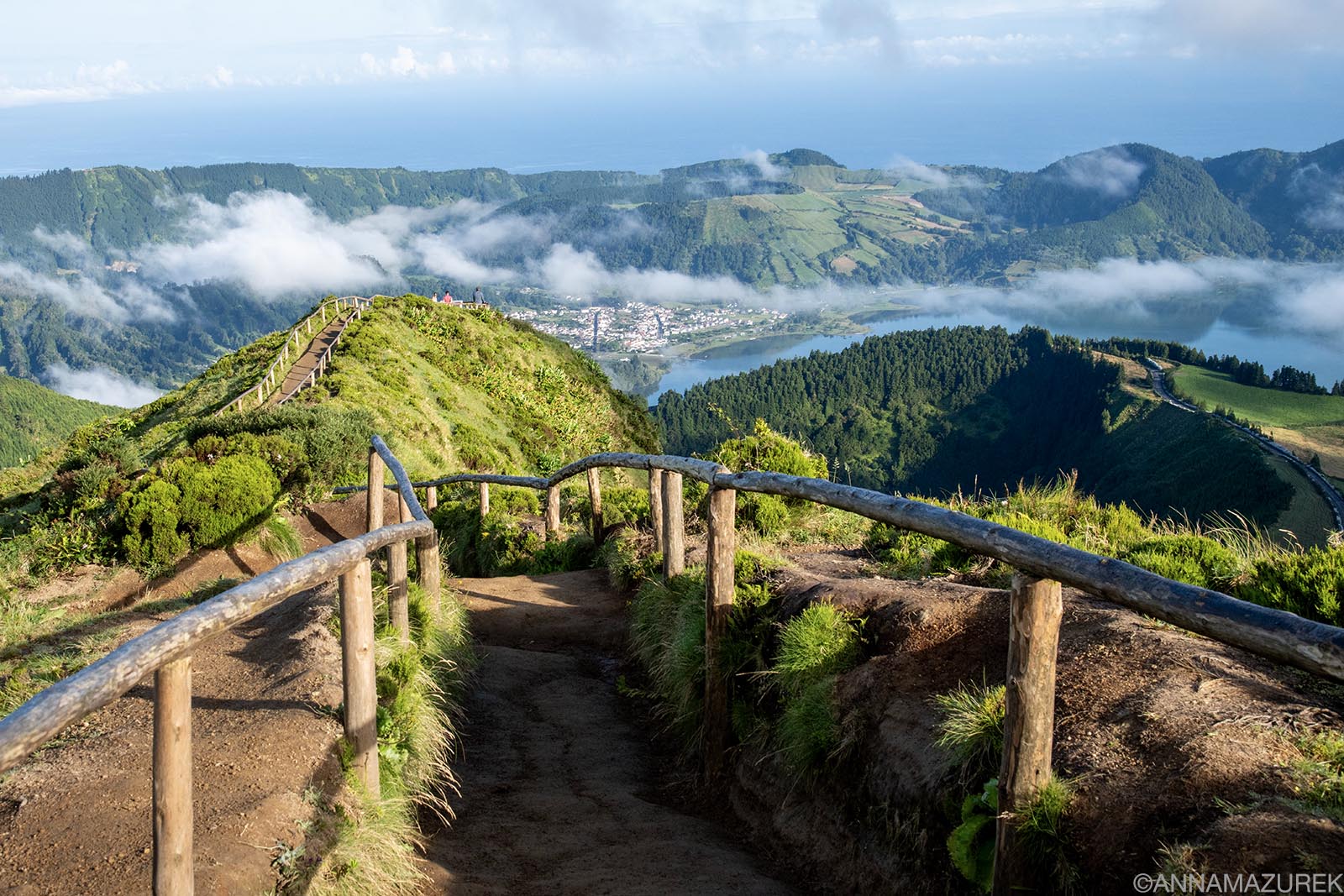
 The short walk to Miradouro da Grota do Inferno is São Miguel’s most scenic viewpoint.
The Azores is a nine-island Portuguese archipelago located in the middle of the Atlantic Ocean between Europe and North America, known as Europe’s Hawaii for its mild climate and lush volcanic landscape. From epic hikes with jaw-dropping waterfalls to whale watching and soaking in thermal springs, these volcanic islands are worth a visit.
Half of Portugal’s cheese comes from the happy Azorean cows who live in a patchwork of endless green fields lined with volcanic rock fences. Each island has its own cheese and queijadas, dense egg tarts with varied fillings, which I highly recommend tasting.
Over the past three years, I’ve done an extensive amount of travel in the Azores and have visited (and hiked!) all nine islands. For hikers, the Azores provides excellent online trail maps and clearly marked trails. I’ve linked to the official trail maps for all hikes mentioned below.
The hardest part of planning is deciding the best places to visit in the Azores. Keep reading to decide which islands to visit, how far in advance to book and the best things to do in the Azores.
Affiliate links are used in this post. If you make a purchase, I earn a small commission at no cost to you, which goes toward the cost of maintaining this blog.
São Miguel
Best for hot springs, lakes & widest activity range
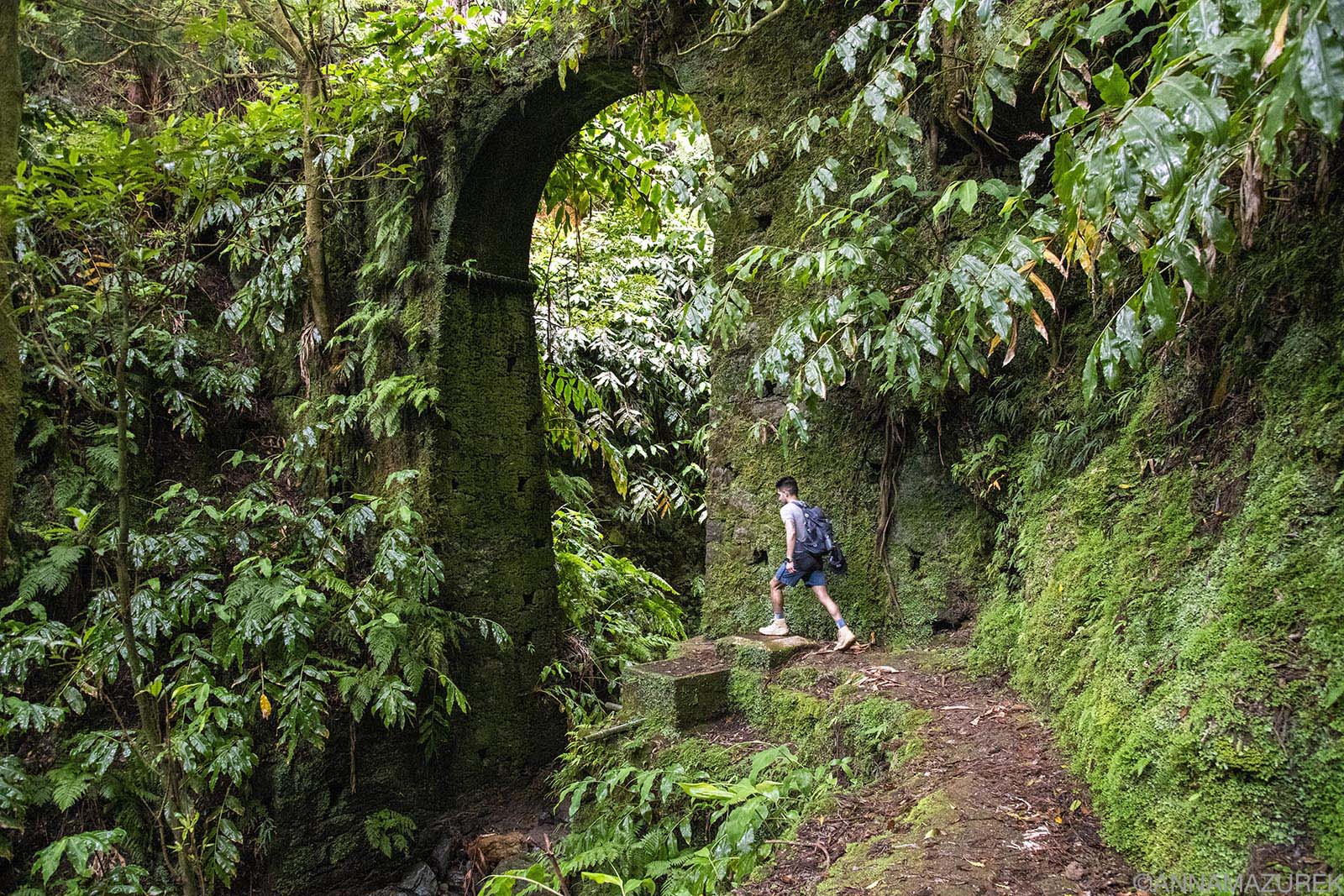 The Janela do Inferno hike is a photogenic series of stairs and tunnels.
Why Go: Easy-to-reach from Lisbon with whale watching, scenic lakes, lava tubes and hot springs
Where to Stay: Hotel Marina Atlântico in Ponta Delgada
How Long: 3-7 days
São Miguel is the largest island and the easiest to reach from Lisbon—a one-stop shop for the most impactful landscapes, ranging from lava tubes to scenic lakes and hot springs. One of my local guide friends calls the island a “volcano Disney park.” You can easily spend a week or 10 days here and never run out of things to do. It’s the best Azorean island (after Pico) for whale watching outings.
Sete Cidades, contrasting blue/green twin lakes in a dormant volcano, is one of the main draws. While you can hike the crater rim, the most scenic viewpoint is Miradouro da Grota do Inferno, a short walk best visited early before the crowds arrive.
There are over 30 official hiking trails, but my favorite São Miguel hikes are the Janela do Inferno, an easy scenic 4.7-mile trail with a series of tunnels, and Fogo Lake, a 6.8-mile hike along stone levadas to the island’s highest lake. Don’t miss Gruta do Carvão, lava tubes near Ponta Delgada.
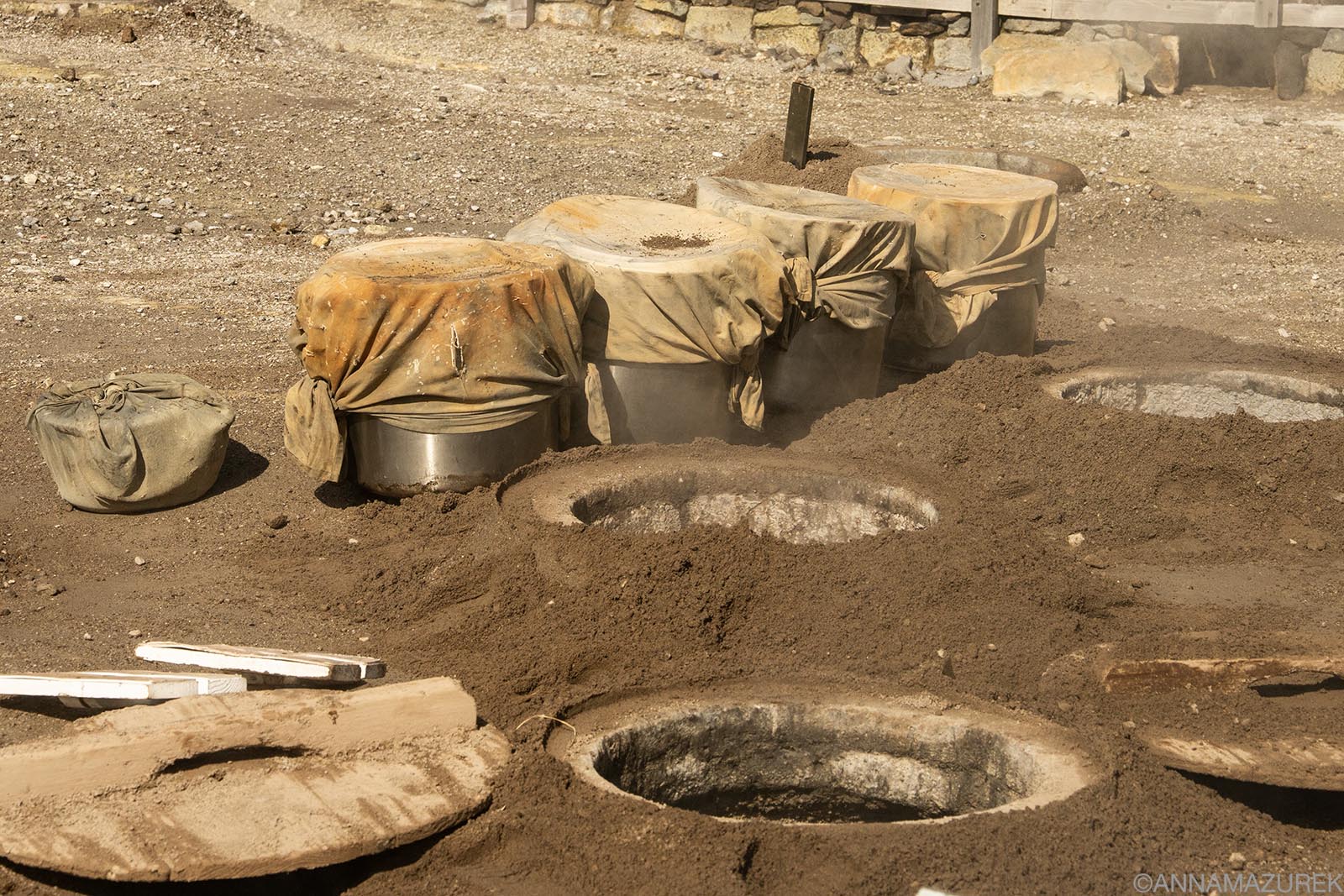 Cozido is a traditional Azorean dish of meat and vegetables cooked underground in pots with geothermal steam at Furnas Lake.
No trip to São Miguel is complete without a soak in the volcanic hot springs at Furnas. While I recommend visiting Parque Terra Nostra, a sprawling 30-acre botanical garden with a geothermal pool, I find the pools and modern facilities at Poça da Dona Beija to be more relaxing and less crowded. (Tip: Wear a dark bathing suit because the water will stain light colors.)
The Furnas Lake is a nice stroll, but be sure to arrive at the Caldeiras da Lagoa das Furnas around 11:30 a.m. to see people digging up traditional cozido pots, a signature Azorean dish with meat and vegetables cooked with geothermal steam underground. To sample it yourself, make a reservation at Resturante Tony’s or visit as part of a Furnas day tour. (To be honest, I don’t care for the dish, but some people love it.)
But, I do love the traditional queijadas from Queijadas do Morgado and the gelato from La Gelateria in Ponta Delgada.
Terceira
Best for history, lava tubes & natural swimming pools
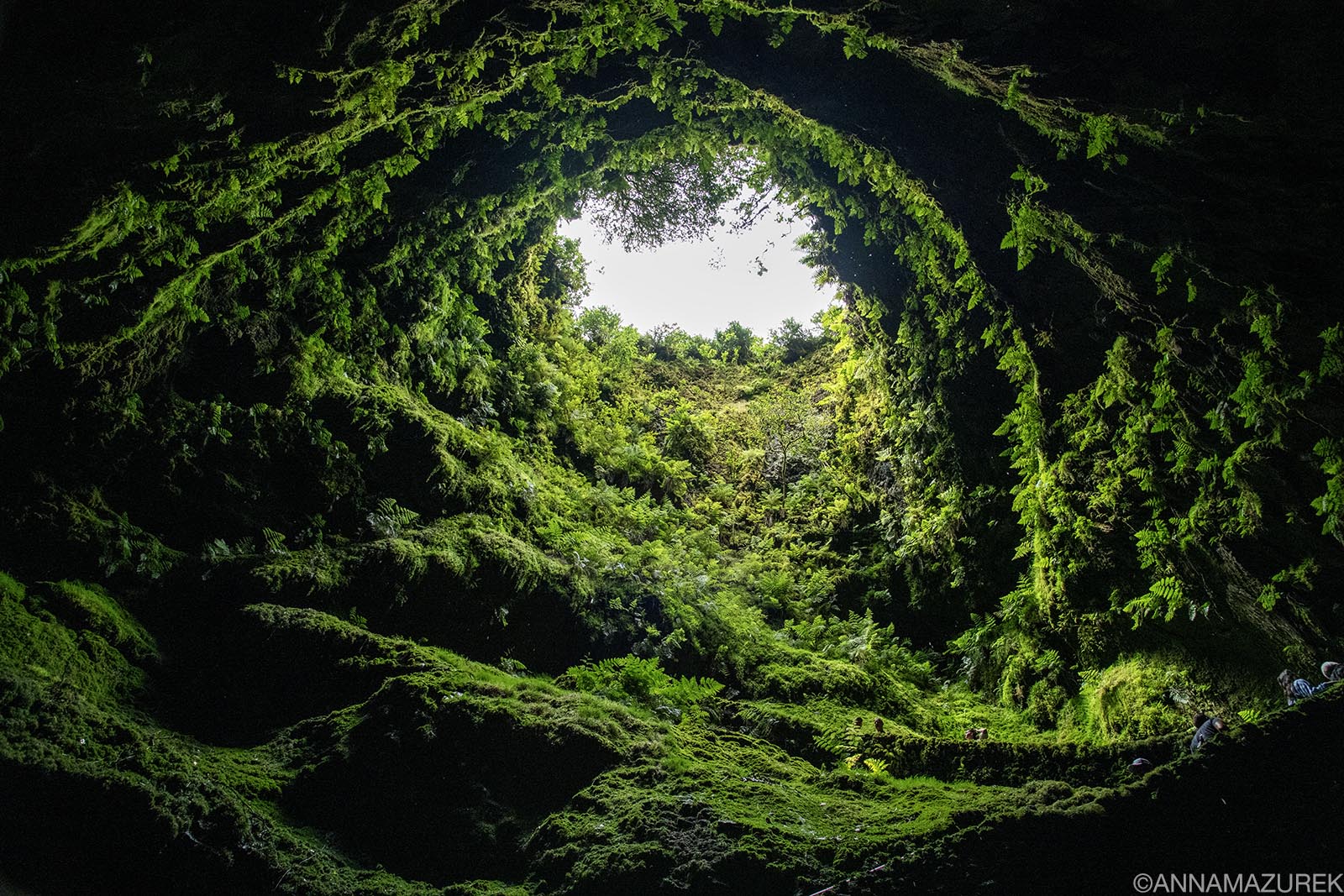 The vertical lava tube of Algar do Carvão on Terceira island is the most awe-inspiring.
Why Go: Portugal’s first UNESCO site, bullfighting, vertical lava tube and natural ocean swimming pools
Where to Stay: Hotel Cruzeiro in Angra do Heroísmo
How Long: 3 to 5 days
Terceira, the third-largest Azorean Island, is home to Portugal’s first UNESCO site, the town of Angra do Heroísmo, an obligatory port of call for ships from the 15th to 19th centuries protected by two 400-year-old fortresses. The city is the best hub for exploring the island.
Algar do Carvão, a vertical lava tube, is the archipelago’s most impressive. The best hikes in Terceira are Mistérios Negros, a hard 3.2-mile circular route; the hydrangea-lined cliffs of Rocha da Chambreand, and the ocean views from the easy Baías da Agualva.
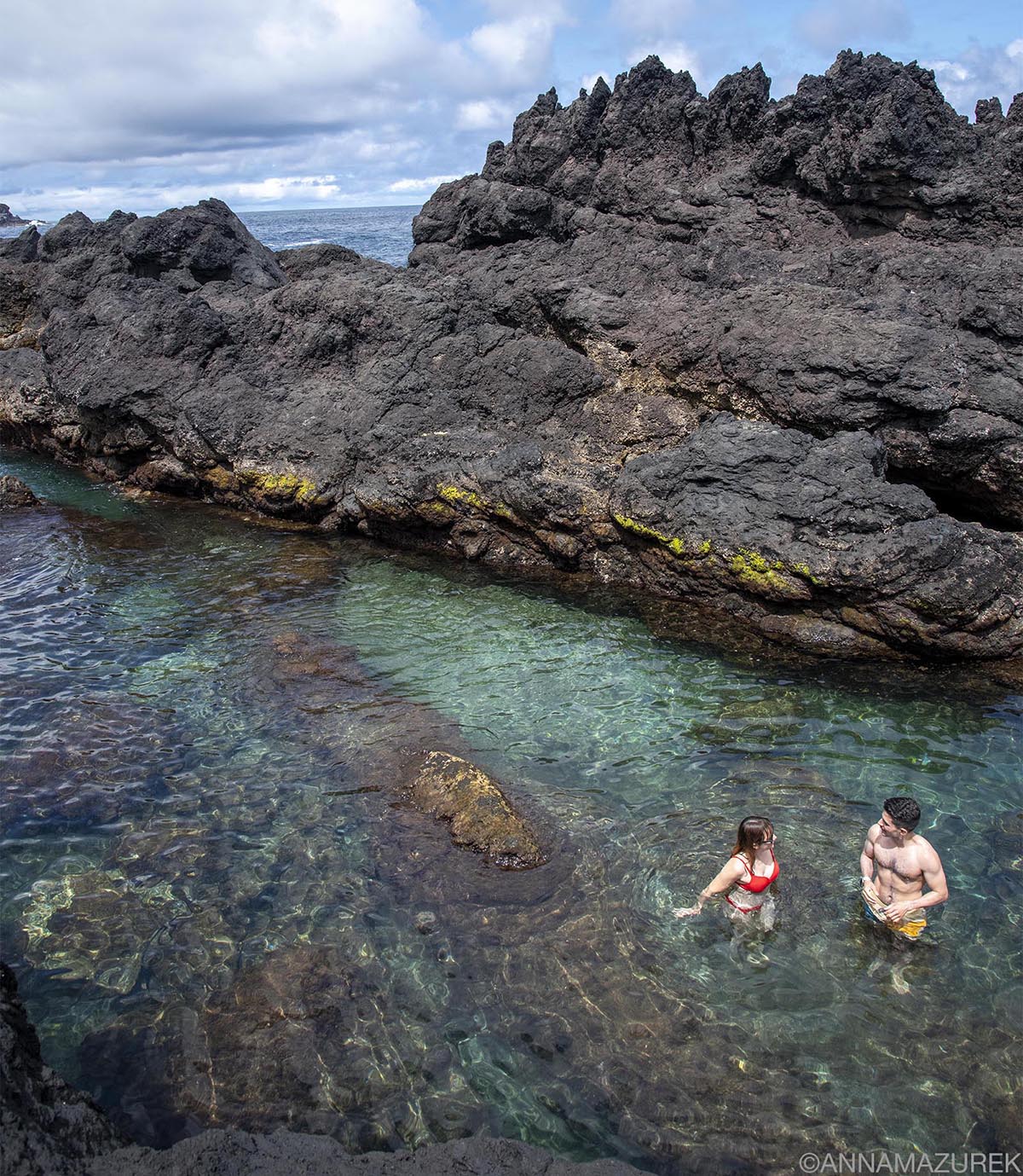 Piscinas Naturais Biscoitos is one of Terceira’s refreshing ocean swimming holes.
I highly recommend going for a post-hike dip in the Piscinas Naturais Biscoitos, natural rock ocean swimming holes. Visit the island in summer to witness the ancestral bullfighting. Bulls actually run through the streets!
The island is one of the easiest to reach (after São Miguel) from Lisbon and has a plethora of accommodation options. The craft beer scene is also solid.
Pico
Best for whale watching & wine
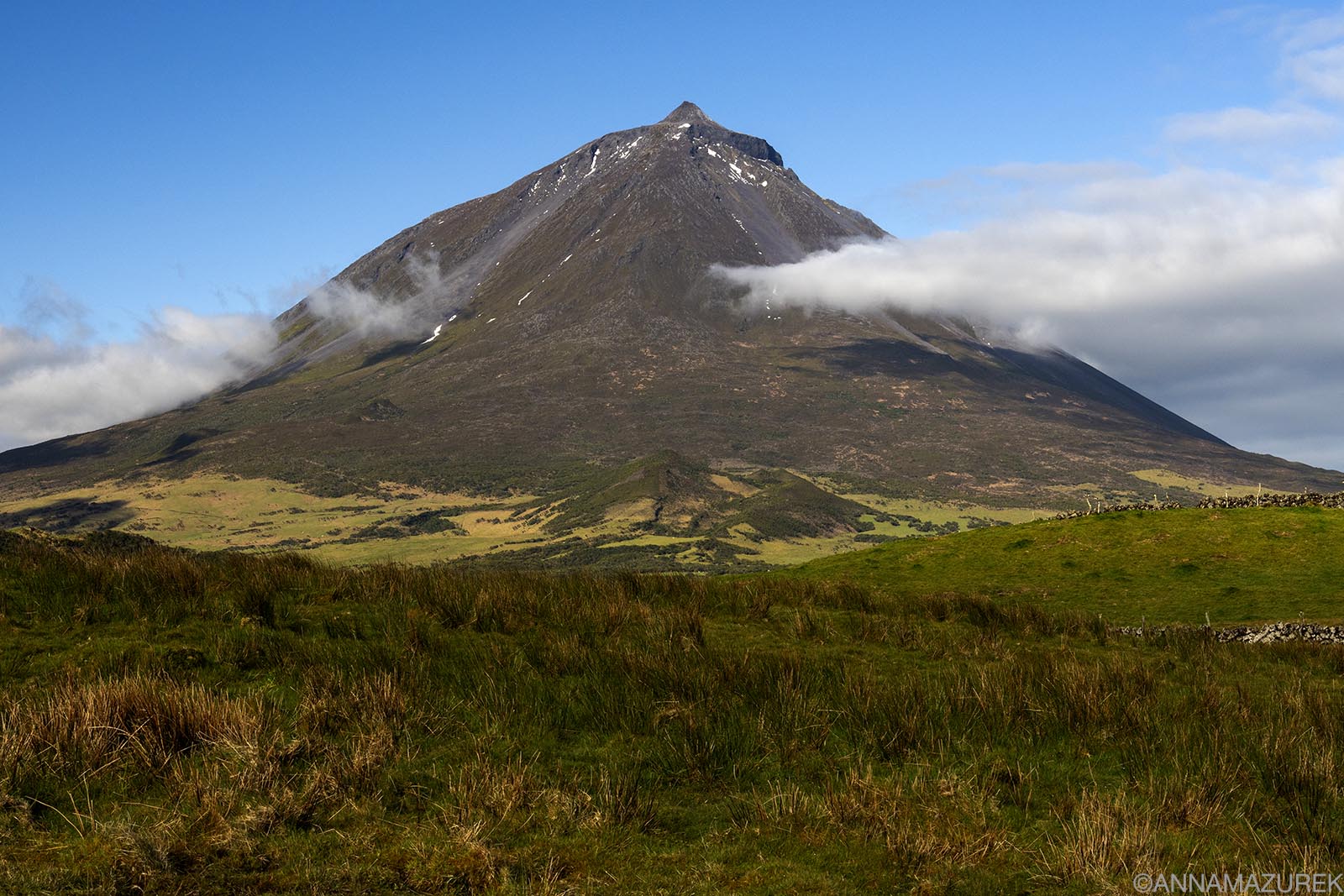 Pico Mountain (7,713 feet) is the tallest peak in Portugal and a popular hike (permits required!) on Pico Island.
Why Go: Hike Portugal’s tallest peak, whale watching and sipping wine grown in lava rock vineyards
Where to Stay: Whale’come AO Pico or Casa do Brasão in Lajes do Pico
How Long: 3 days
Pico is one of the three triangular islands, including Faial and São Jorge, which are connected by frequent short ferries on the Atlantico line. The island’s namesake and biggest attraction is the 7,713-foot Pico Mountain, Portugal’s tallest peak. The hike is a challenging climb, taking roughly 6-to-8-hours roundtrip. Only 320 people are allowed each day and advance permits are required.
Pico’s vineyards literally grow out of lava rock, making it one of the world’s most unique landscapes and a UNESCO World Heritage Site. I’m a big fan of the white and rosé from Azores Wine Company. Book ahead for tastings.
A whale watching tour is a must for anyone visiting Pico. For a deep dive into the history of the local whaling industry, visit The Whaling Industry Museum, housed in a former whaling factory in Lajes do Pico. The factory was the largest sperm whale processing facility in the Azores and operated from 1946 to 1981.
Faial
Best for sailing culture
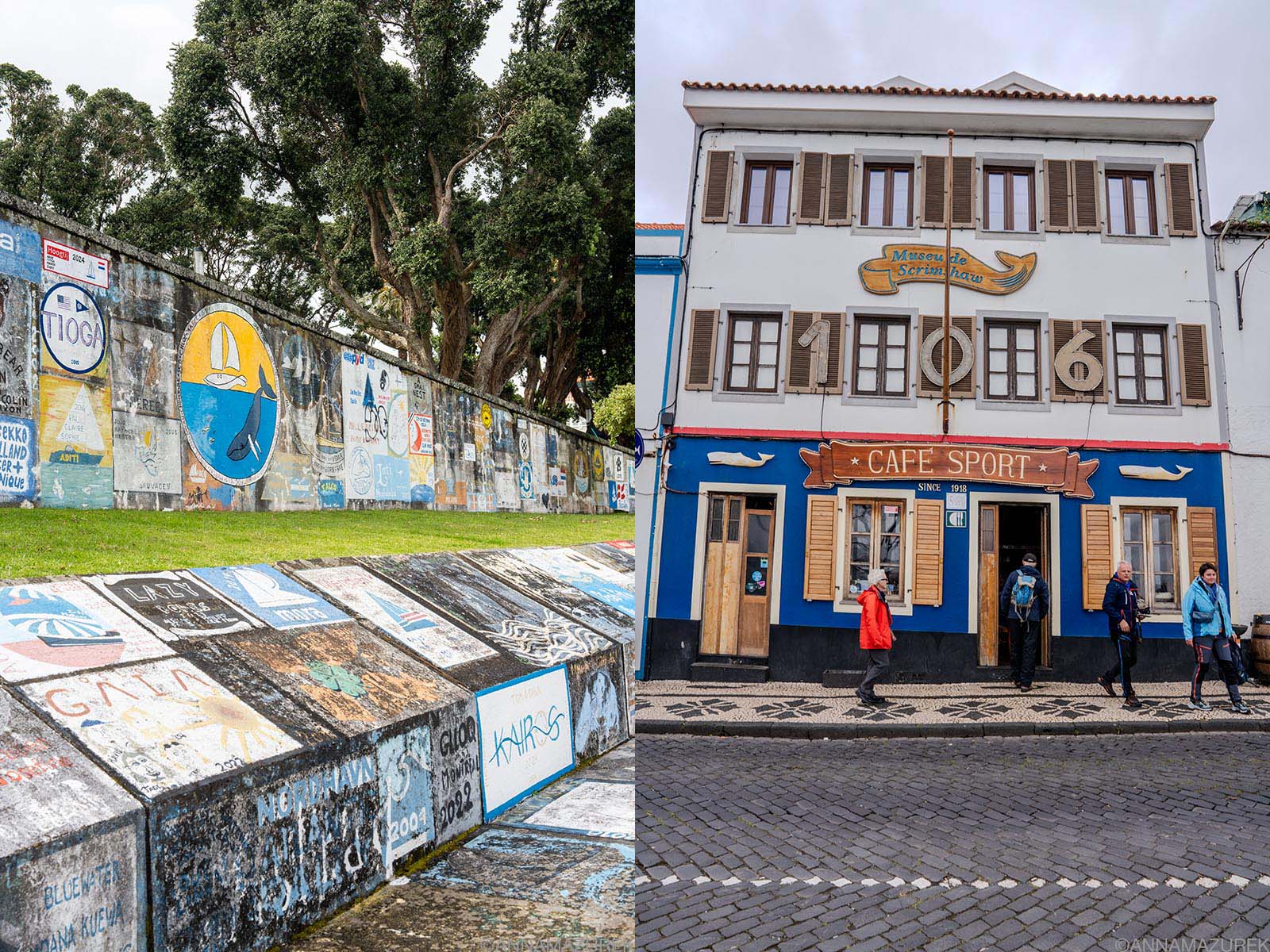 Horta is the capital of the sailing culture with “sea art” along the marina and gin and tonics from a historical Peter Café Sport.
Why Go: Sailing culture and otherworldly landscapes
Where to Stay: Casa da Baía in Horta
How Long: 2-3 days
Faial is the sailor’s island—it is either the first or last stop for boats crossing the Atlantic—and has the strongest presence of sailors and maritime culture in the archipelago. The marina at Horta is an open-air museum of “sea art” painted by sailors for safe passage or to come their journey before having one of the famous gin and tonics at Peter Café Sport, a local watering hole that’s been welcoming seafarers since 1918. (The upstairs has an impressive scrimshaw (carved whale teeth/bones) museum.)
For food and drinks, I like Oceanic Cafe (great bar, too) or Restaurant Atlético. The homemade ice cream at Gelados do Atlântico is another favorite.
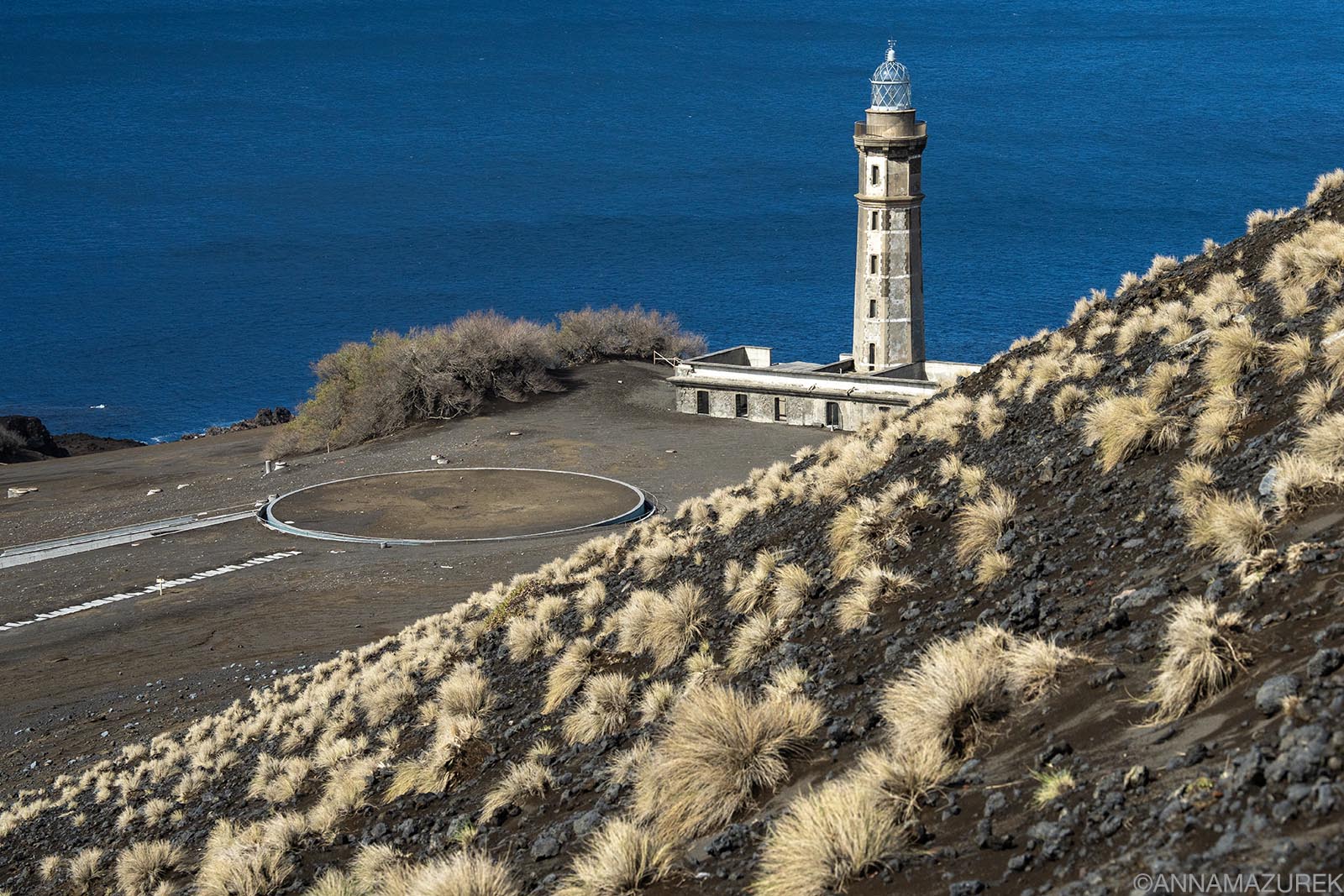 My favorite place in the Azores is hiking to the ruins of the Capelinhos lighthouse, a result of a 13-month eruption in the late 1950s.
If you’re up for a challenge, the 12- mile Dez Vulcões (10 Volcanoes trail) hike is a must. (Shorter variations are an option, too.) The trail ends at the ruins of the lighthouse of Capelinhos, which was destroyed during the 13-month eruption in 1957-8 that added roughly 617 acres of land to the island. The otherworldly landscape is one of my favorite places in the Azores. Be sure to climb the lighthouse, and visit the fantastic interpretation center.
São Jorge
Best for extreme hikes & cheese
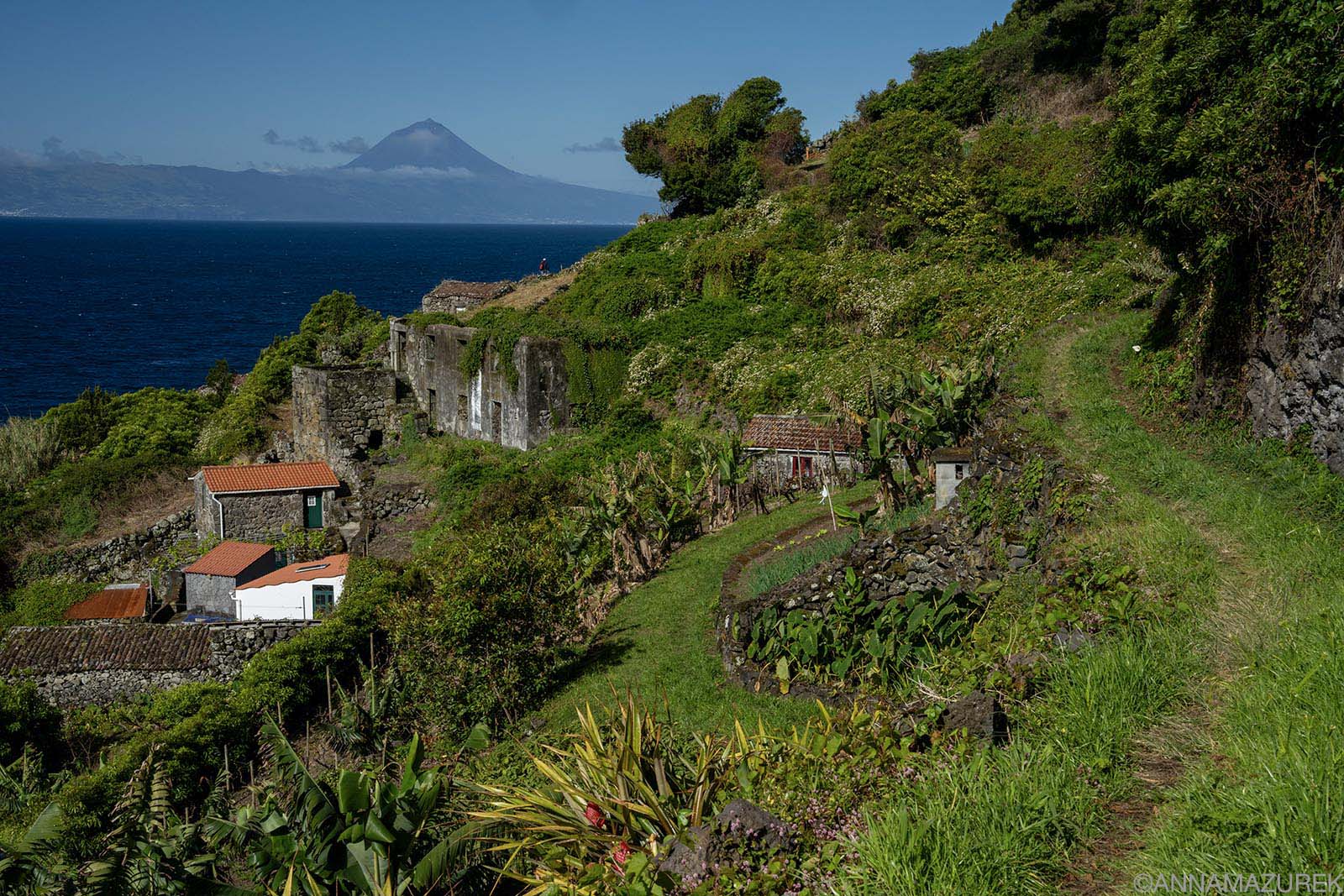 The steep cliffs of São Jorge with Pico Mountain in the background.
Why Go: Extreme hikes & cheese tastings
Where to Stay: Hotel Sao Jorge Garden in Velas
How Long: 2-3 days
São Jorge, famous for cheese, is often called the dragon island for its narrow shape and jagged, steep cliffs. All the hikes are extreme—straight up or down. You can even hike the 34.7-mile-long island end-to-end on the Grand Route (trails GR01SJO and GR02SJO). Portuguese surfers flock to Santa Cristo, accessible only by foot or quad bike.
The sleepy town of Velas is the ferry port from Faial and Pico, and the best hub for accommodation. For a good meal and cheese, I like Alcatra Rustica Sao Jorge (located in center of island off main road). Coffee-lovers shouldn’t miss the house-grown espresso at Café Nunes.
No visit to São Jorge is complete without tasting the cheese, originally made famous by sailors for its longevity and taste (mild yet buttery). Tour one of the three active cheese manufacturers on the island: Uniqueijo, Finisterra and Lourais.
Graciosa
Best for solitude & epic lava cave
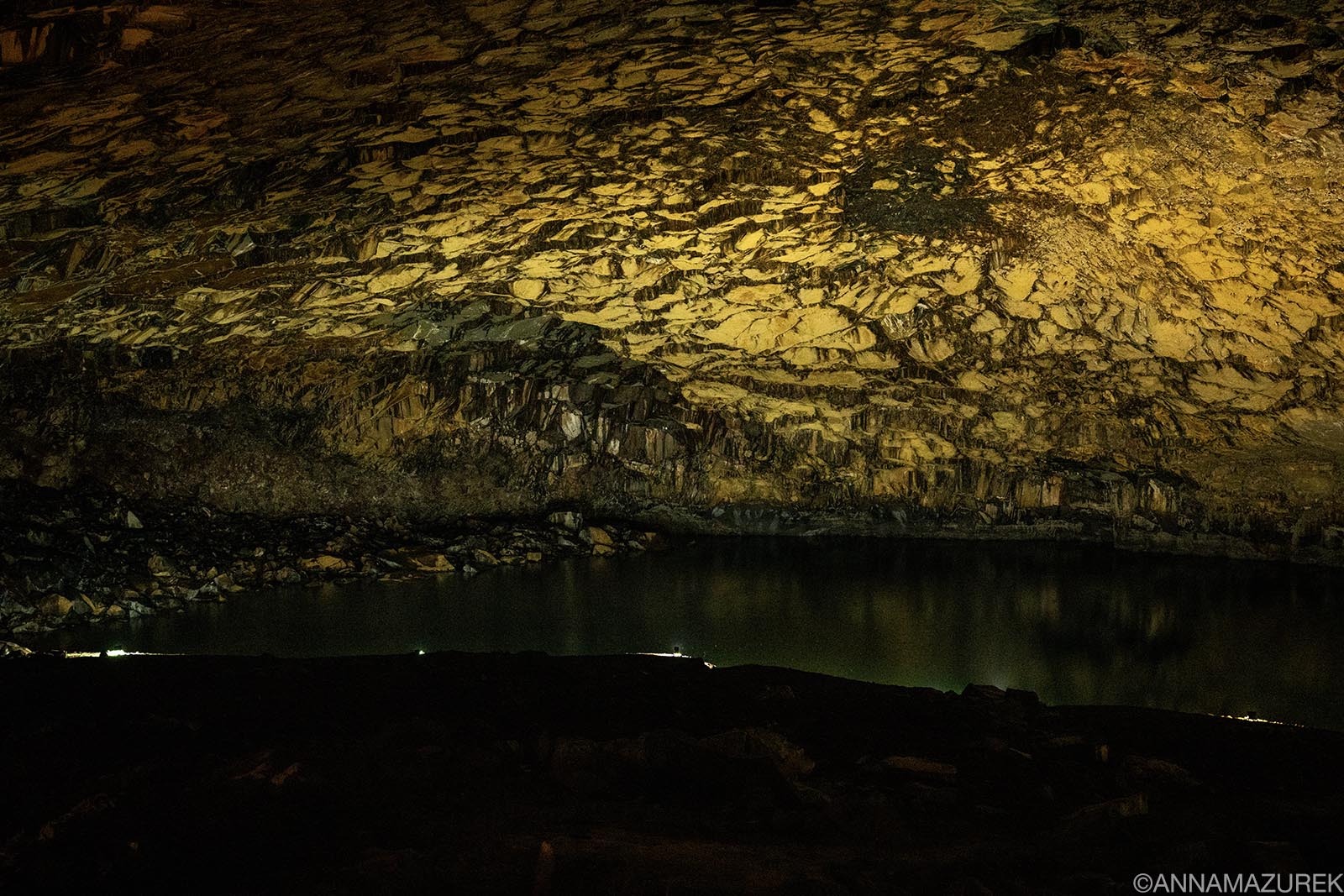 The lava cave of Furna do Enxofre on Graciosa island.
Why Go: Least crowded island with largest volcanic dome in Europe
Where to Stay: Praia or Santa Cruz da Graciosa
How Long: 2 Days
Graciosa is the second smallest and the least visited Azorean island, making it the best place to escape crowds. School buses double as tourist transport around the school schedule!
While the entire island is a UNESCO Biosphere Reserve, the highlight is Furna do Enxofre, a lava cave housing the largest volcanic dome in Europe. It’s worth the 183-steps to walk down (and back up!) to see the lake inside the cave.
While the island has mild slopes, it’s still fun to hike or bike the 405-meter-high Caldeira da Graciosa. The famous red-roof, Dutch-style windmills, many of which are rental accommodation, are another highlight. The queijadas from the nearby Queijadas da Graciosa Factory are tasty. Locals call Graciosa “the 15-minute island” because everything is 15 minutes away from everything else, from hot springs to surf spots.
Flores
Best for waterfalls & wild nature
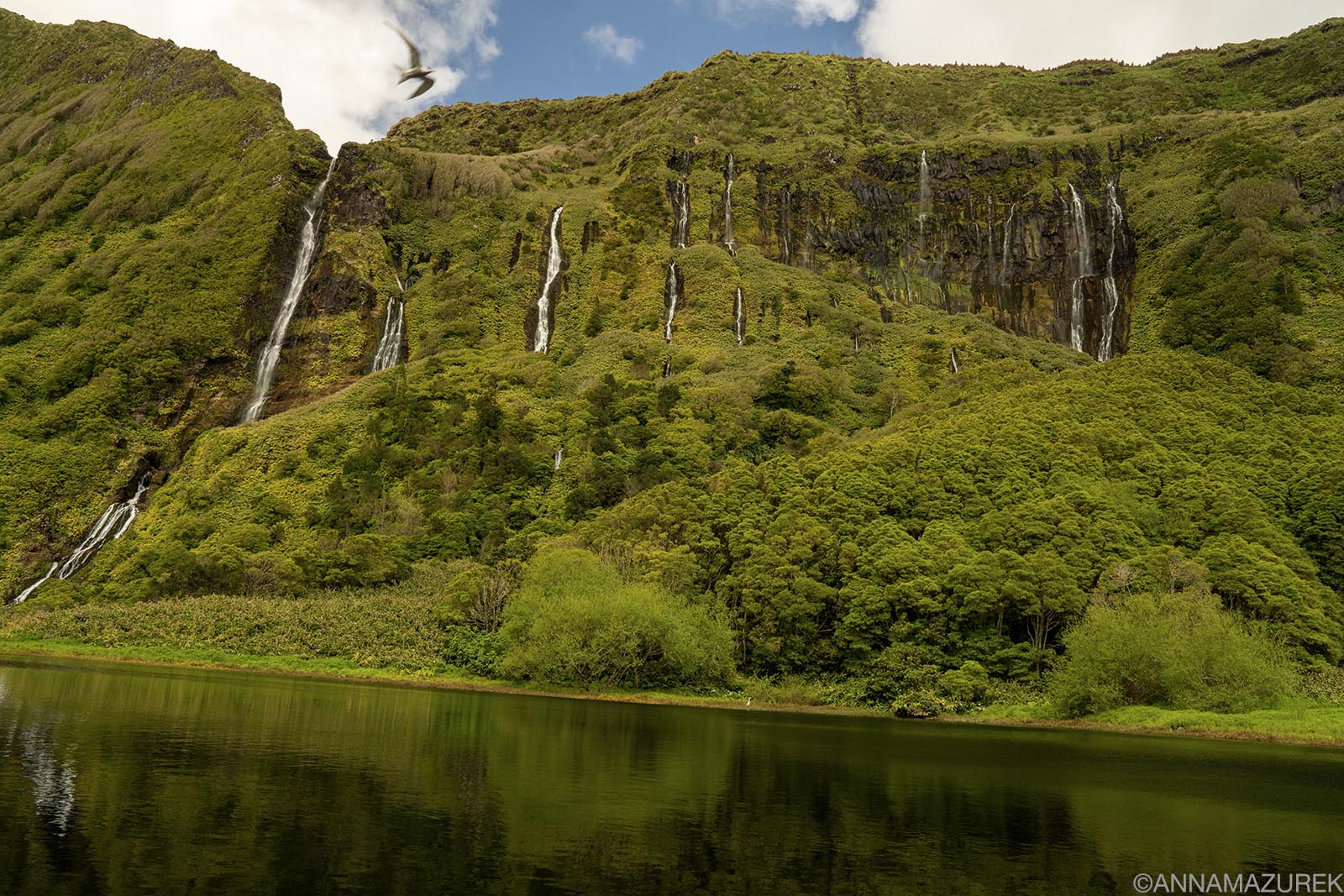 Flores is home to the most stunning landscapes in the Azores, including Cascata da Ribeira do Ferreiro, a series of waterfalls cascading into a lake.
Why Go: Untouched Nature & Waterfalls
Where to Stay: Villas do Mar in Fajã Grande
How Long: 5 Days, including day trip to Corvo
Flores is the magical wild island and yet another UNESCO Biosphere Reserve. (It’s the furthest western island in the Western Group that includes Corvo.) If I had to pick a favorite Azorean island, it would be Flores.
The landscape on the west coast is the most beautiful in the Azores, thanks to Cascata da Ribeira do Ferreiro, a series of a dozen waterfalls cascading into a natural amphitheater. It’s a 20-minute uphill hike from the road but best seen as part of the longer eight-mile Lajedo to Fajã Grande hike that meanders through a ghost town and epic viewpoints.
Other highlights include Baía da Alagoa, a photogenic bay with rocky outcrops accessible via a short trail, and Rocha dos Bordões, a vertical set of basalt columns. Book ahead for the duck at Maresia Restaurant in Fajã Grande. It was so delicious we went twice!
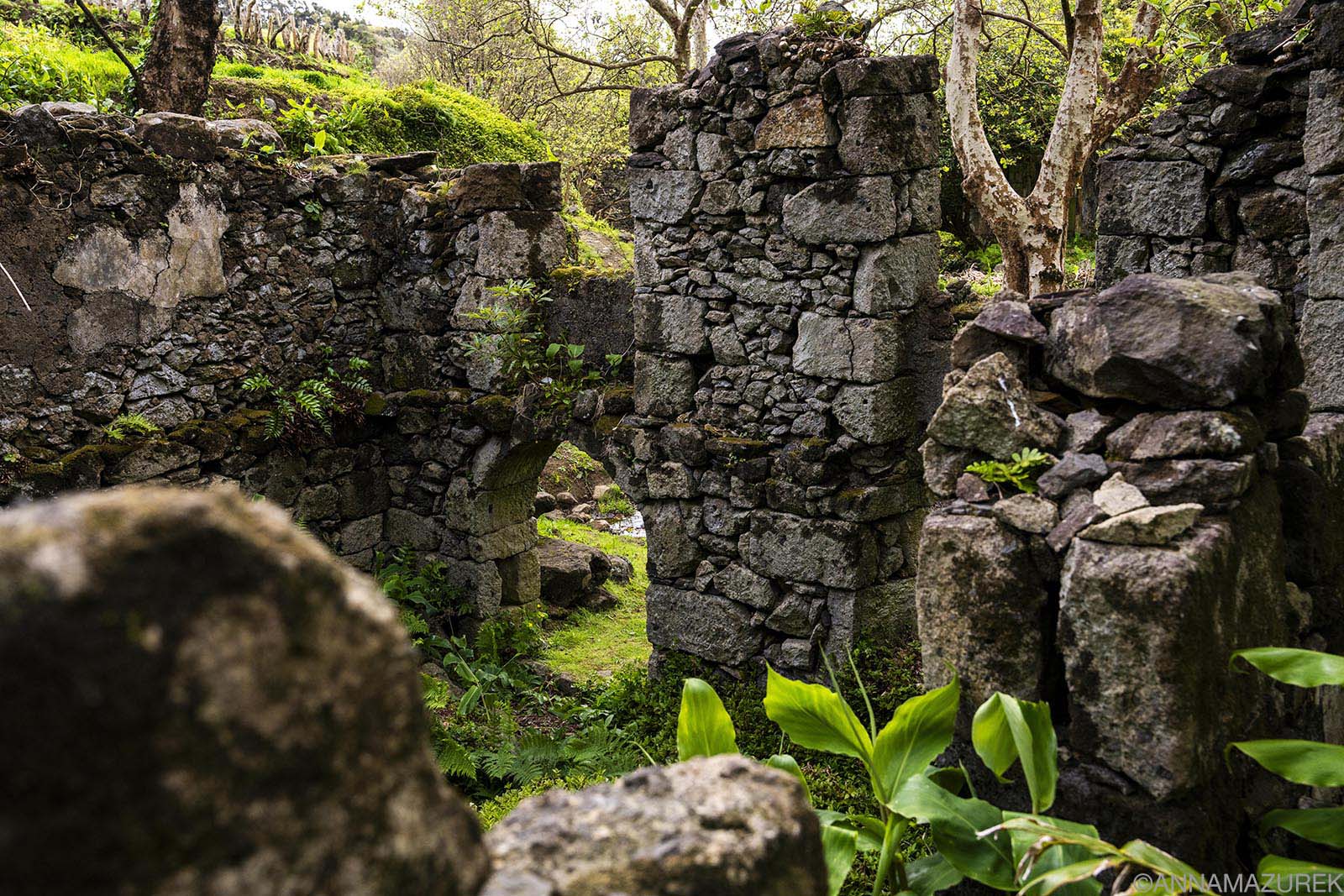 The ghost town of Caldeira do Mosteiro is on the Lajedo to Fajã Grande hike but can also be visited by car.
I found the seven volcanic crater lakes to be underwhelming, but the final view of Fajã Grande at the end of the Miradouro das Lagoas to Poco do Bacalhau trek was worth the effort. Please note that stage 2 of the Grand Route trail closed in July 2024 due to fallen rocks and trail disintegration. It was still closed in May 2026 and unlikely to reopen anytime soon.
The two museums in Santa Cruz, Fábrica da Baleia do Boqueirão, a former whaling-factory, and the Flores Museum housed in a 17th century church, were fantastic. All public museums in the Azores are free on Sundays.
Flight cancellations and delays are common when visiting Flores and/or Corvo, so plan a night or two in Lisbon as a buffer between any international flights. We got stuck in Terceira for a night due to a flight cancellation. I highly recommend travel insurance.
Corvo
Best for staying off-the-grid
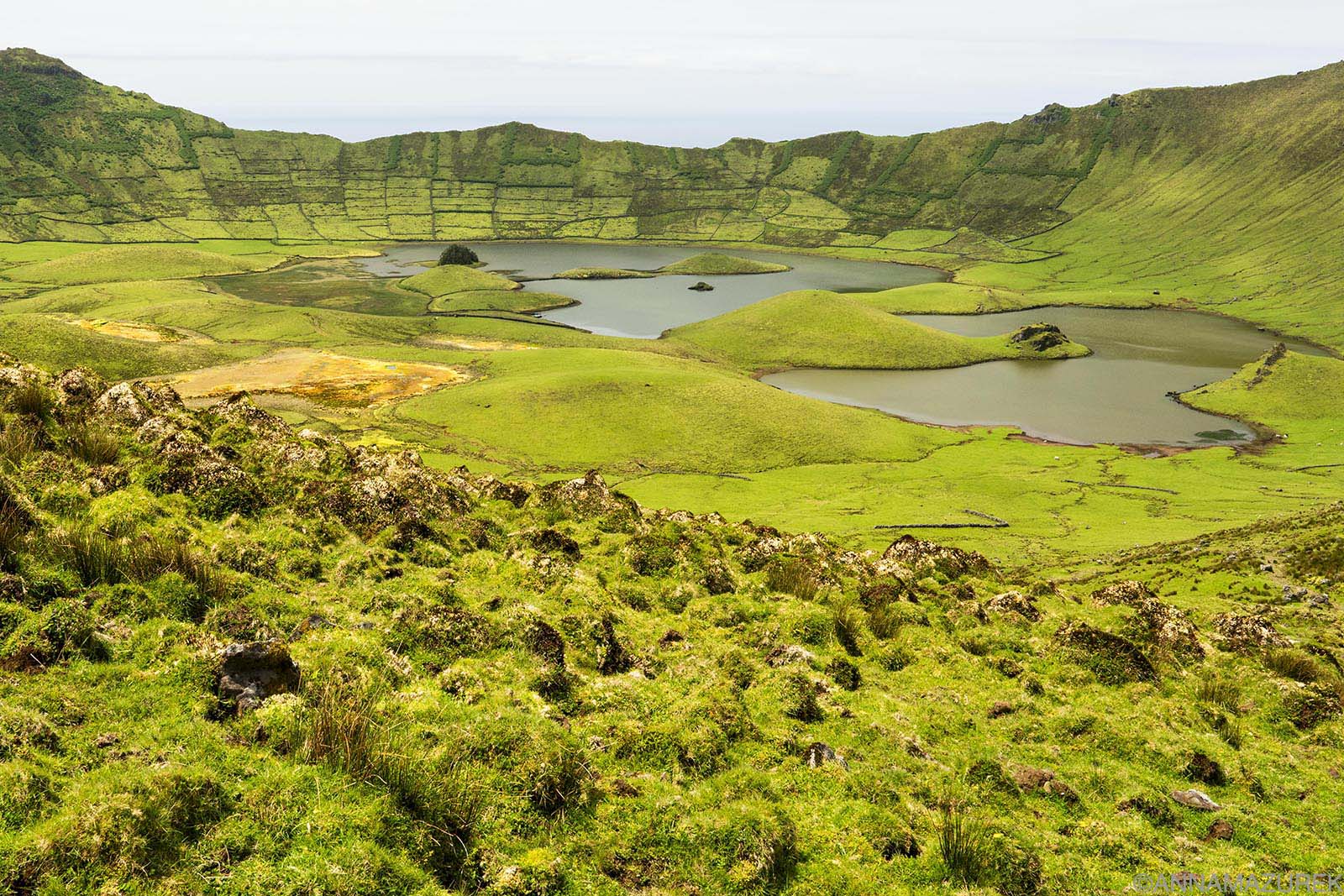 The Corvo Caldera is 1.42 miles in diameter and 1,000 feet wide. It’s a popular hiking spot shared with grazing sheep and cows.
Why Go: Most impressive volcanic crater in Azores
Where to Stay: Joe & Vera’s Villa in Vila do Corvo
How Long: 1 or 2 days
The entirety of Corvo, the smallest Azorean Island, is a UNESCO Biosphere Reserve and home to the archipelago’s most beautiful volcanic crater. While it can be visited easily on a day trip (weather permitting!) from Flores, it’s worth staying longer.
Hiking the caldera (trail PRC02COR) is the main attraction. While you can hike to the caldera (all uphill!) from town, it’s best to take a taxi (20 Euro RT for two people) to the trailhead then hike back. When you get to the trailhead, walk up to the radio tower for an aerial view, then walk back down to take the official trail down into the crater. The island’s second trail is the 6.4-mile trek, Cara do Índo, from the caldera (mostly downhill) back to Vila do Corvo.
The island only has one village, Vila do Corvo (population 430), with two restaurants and limited accommodation, so book ahead for meals and rooms. There is free camping park near Praia da Areia beach.
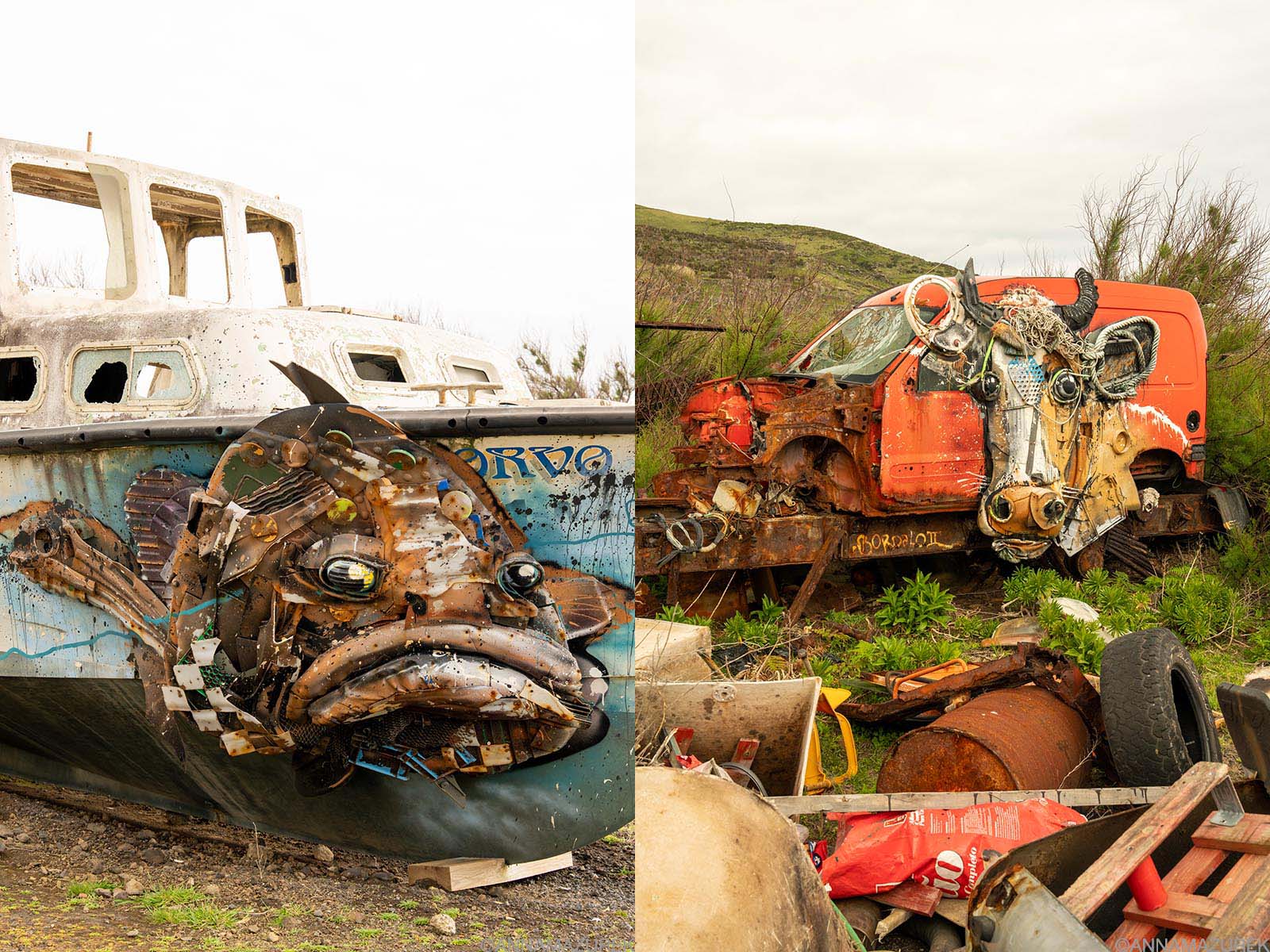 Famed Portuguese street artist Bordalo II has three sculptures on Corvo.
Bordalo II, a famous Portuguese street artist known for creating large installations out of trash, has three sculptures on Corvo: Mero, a grouper fish on the side of an old boat; Cagarro, a Cory’s Shearwater (migratory seabird) on a building; and a cow (my favorite) on the side of an old car in a junkyard.
There’s an airport with limited flight connections to Flores, Faial and São Miguel. We took the Atlântico Line ferry from Flores but left a night early due to incoming bad weather on a private open-air zodiac-style boat booked through our helpful taxi driver, Lourenço, who runs a tour agency called Paralelo 39. I highly recommend booking through him. (I recommend using the free Windy app to track sea and wind conditions.)
Santa Maria
Best for diving & summer festivals
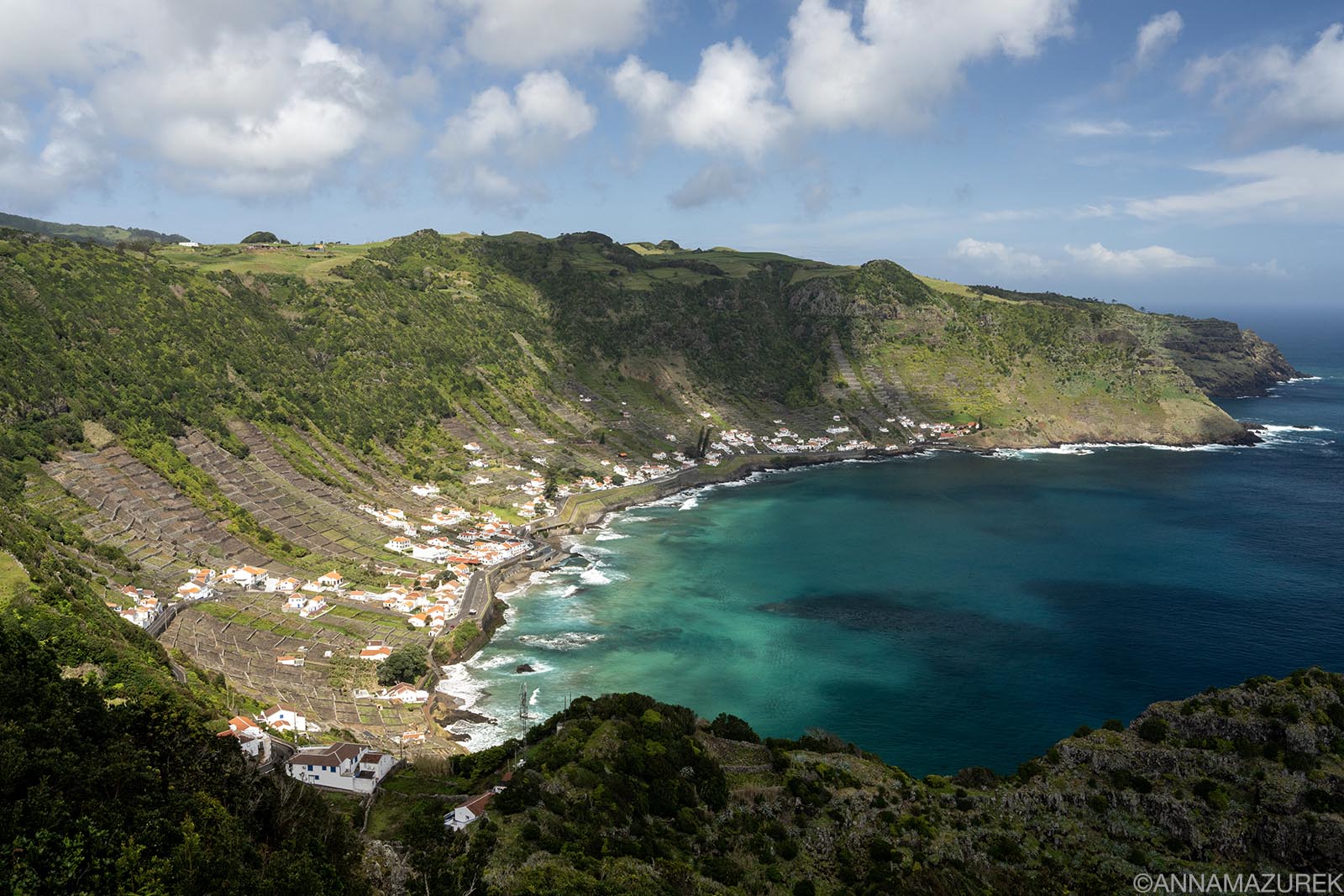 The vineyard-clad slopes of São Lourenço Bay on Santa Maria in the Azores.
Why Go: Swim with manta rays and whale sharks, summer festivals, then hike the island end-to-end on the 78.6 km Grand Route.
Where to Stay: Vila do Porto
How Long: 2-3 days
Santa Maria, the southernmost island, is famous for being the sunniest Azorean Island with a bit of a Caribbean vibe (in my opinion) and white sandy beaches. Manta rays and whale sharks frequent the island in summer (June to October), including the marine protected area of Baixa do Ambrósio, one of the Azores’ best dive sites. July and August are best for free diving sightings, but scuba divers can see them starting in June, according to local guides.
Hike the island end-to-end on the 78.6 km Grand Route (2.5-3 days) or opt for a shorter trek like Areia Branca (PR06SMA) through São Lourenço Bay, a natural terraced amphitheater lined with vineyards. Don’t miss the summer music festivals—Santa Maria Blues (July) and Maré de Agosto (August).
Azores Travel FAQ
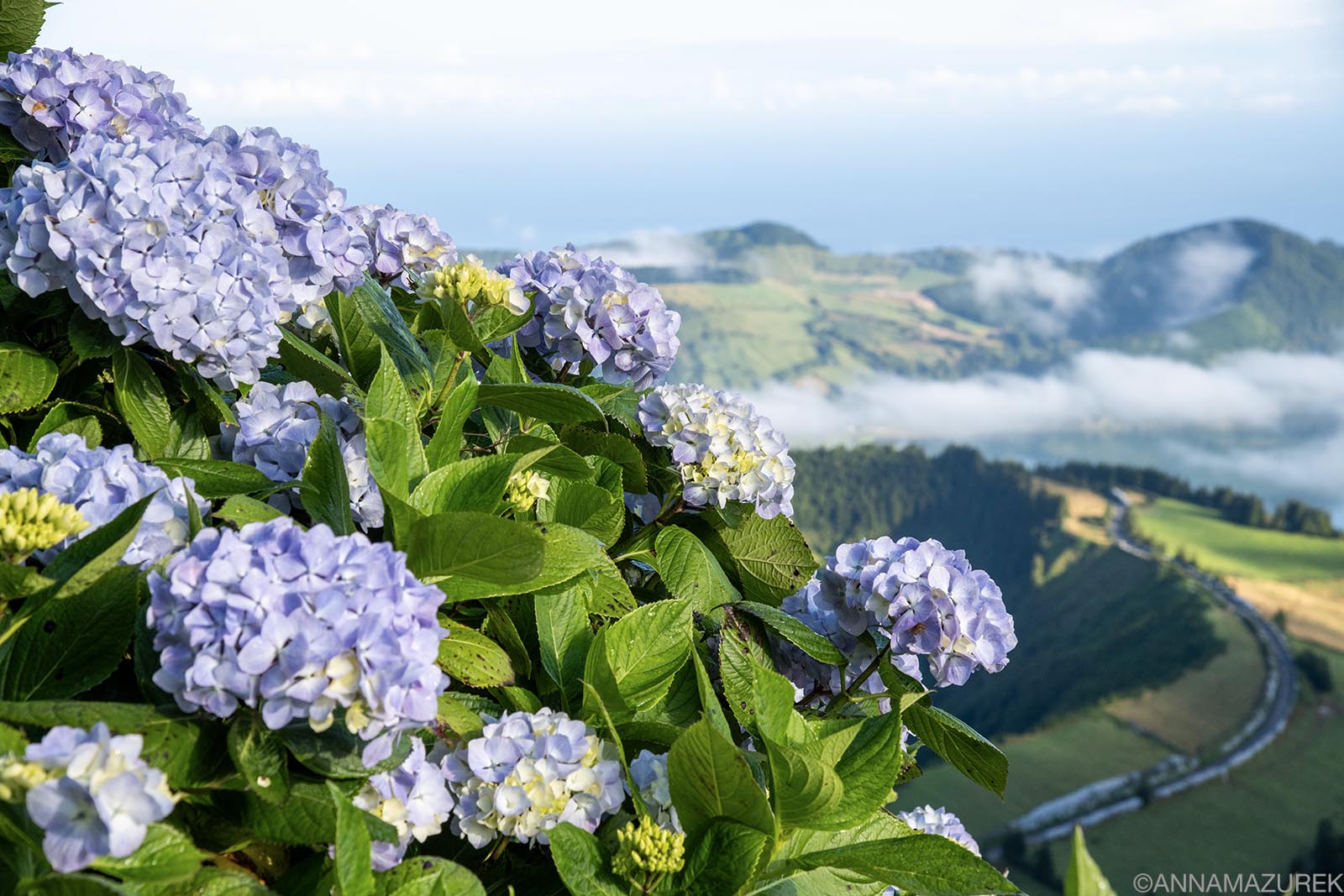 The most photogenic time to visit the Azores is when the invasive hydrangeas bloom from late June to August.
When is the best time to go to the Azores?
The summer months of June through September have the best weather for hiking, sunshine and blooming hydrangeas. While it can be crowded, it will likely be less crowded now that Ryanair suspended all flights to the Azores in March 2026.
For peak summer season, book accommodation a year in advance for all islands except São Miguel and Terceira. I tried to book in April for a July trip to Pico and Flores once, but everything (cars and hotels) was sold out. We had to change the islands we visited.
The shoulder months of April and May have fewer crowds but a higher chance of rain and rough seas, which can affect flights and ferries. I’d still book at least six months out if not more for accommodation and cars in shoulder season. For my May trip to Flores and Corvo, I booked accommodation in October, flights in January and rental cars in December.
What is the best way to get around the Azores?
Renting a car is the best way to explore the islands. All the islands, excluding Corvo, have public buses, but planning hikes around infrequent bus schedules on islands like Flores is complicated. (Sometimes, there’s a 7:45 a.m. school bus, and nothing until 3 p.m.!) Taxis are an alternative but can be a bit pricey.
There are two main local rental car companies on each island, Ilha Verde and Autoatlantis. I used both on Flores, and they were fine. Ilha Verde had nicer cars, but Autoatlantis seemed a bit cheaper. I found the rates on Booking.com and DiscoverCars.com to be the cheapest. There are a few bigger rental brands on the bigger islands, but I recommend supporting the local companies.
On the smaller islands, it’s best to book months in advance for the best prices and options. In Corvo, you can only rent small electric cars that don’t have enough range to make it to the caldera, so you’ll need to take a taxi or hike.
In May, we returned to Flores a day early from Corvo due to weather. Thankfully, I got a last-minute car rental through Ilha Verde on DiscoverCars.com because Autoatlantis was fully booked. For a six-month advance booking, I got a car for $56 USD/day with Booking.com but a last-minute booking on DiscoverCars.com for $114 USD/day, which was cheapest option last minute.
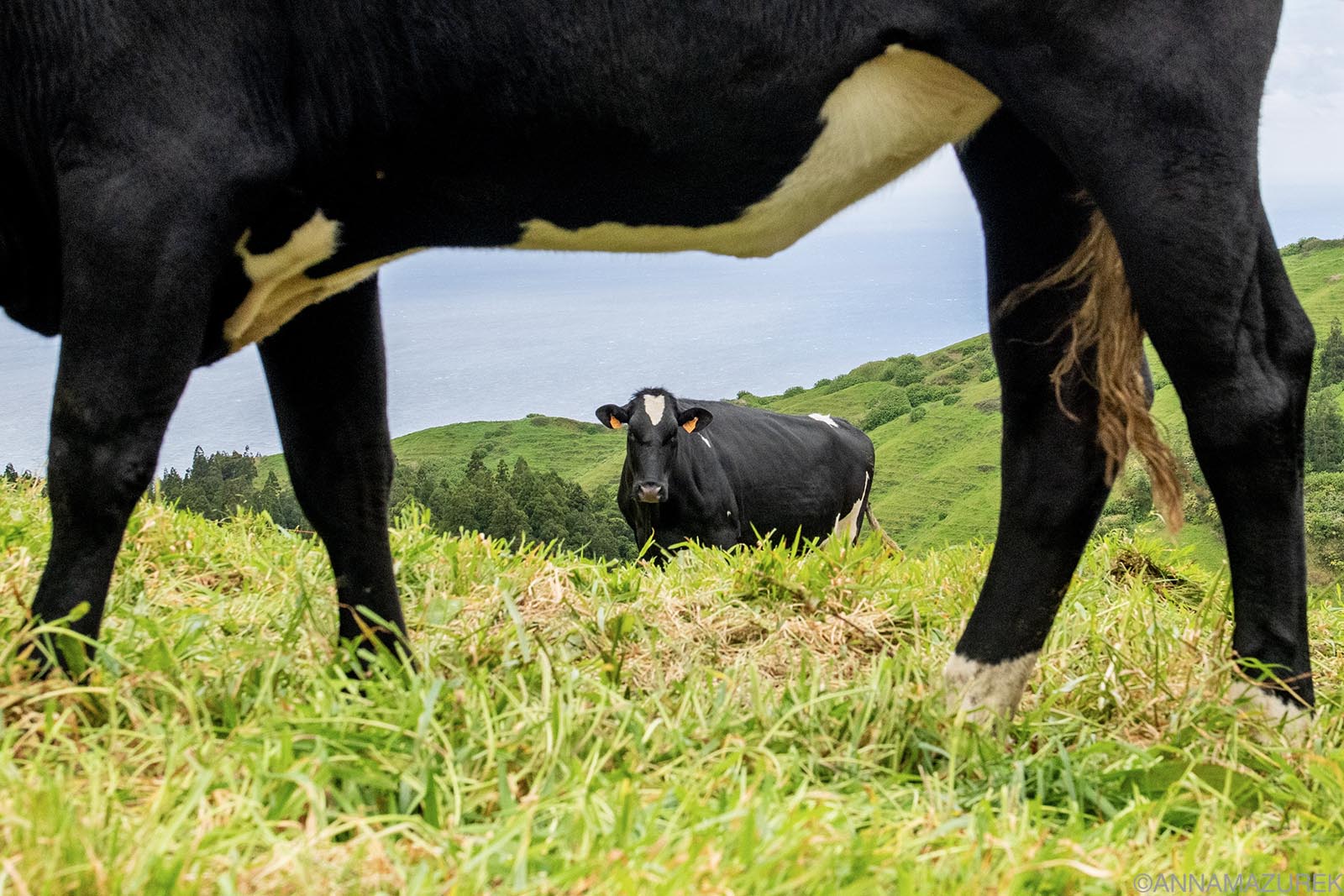 There are more cows than people in the Azores. Every island has its own cheese.
Is it easy to get between islands in the Azores?
Atlântico Line ferries are the easiest way to travel between Flores and Corvo (40 minutes, pedestrian only), the two most Western Islands, and the Triangle Islands of Faial, Pico and São Jorge. There is a seasonal summer ferry between Terceira and Graciosa that runs roughly once a week. There are private boats that also connect the islands.
Otherwise, a series of inter-island flights on SATA Azores Airlines are your best options. These are usually smaller propeller planes, so carry-on luggage space can be limited.
From Lisbon, you can fly directly to São Miguel, Pico, Terceira and Faial on Azores Airlines and/or TAP Air Portugal. Ryanair stopped flying to the Azores in March 2026.
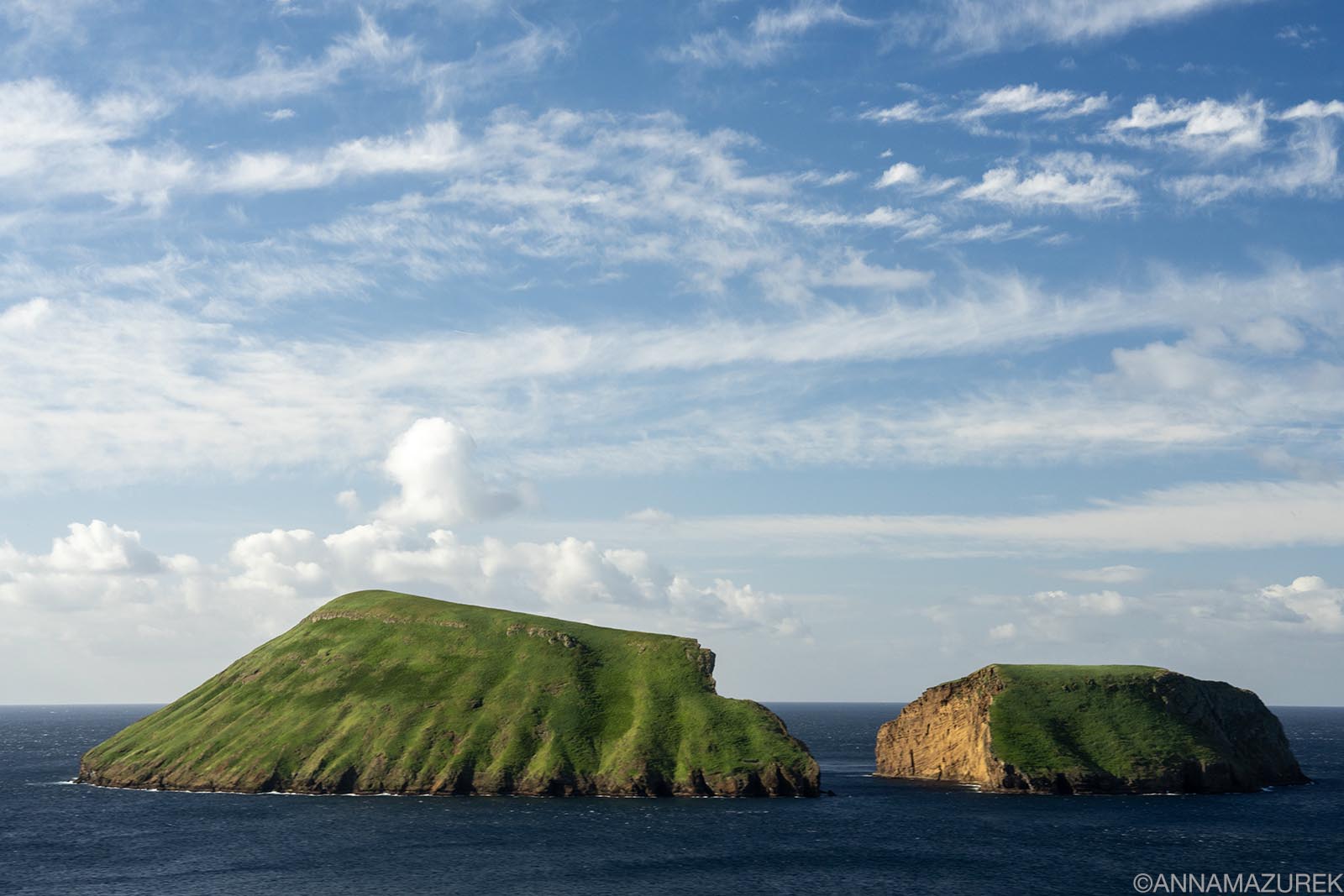 The Cabras Islets, two uninhabited islands formed by a collapsed volcano off the coast of Terceira, are a protected wildlife zone due to nesting seabirds. Visiting is not allowed, but boat trips explore the coastline.
What’s the best eSIM for the Azores?
The best eSIM is one that works with the NOS, Vodafone and/or MEO networks. Don’t buy an Azorean-specific eSIM card. Instead, buy a cheaper Portugal one since they use the same networks. People forget that the Azores is part of Portugal.
I’ve tested Saily’s Portugal eSIM on the NOS network in April on all the islands, except Graciosa, and had excellent 5G coverage. For 10% off Saily plans, use code ANNA10.
I used Airalo’s Portugal eSIM in Graciosa in 2024 and 2025, and it worked perfectly. In general, Airalo also has great coverage in the archipelago, but I haven’t tested it in Flores and Corvo. Use AIRALOESIM10 for 10% off your plan.
Do you need travel medical insurance for the Azores?
Travel medical insurance is a must for any trip abroad. Be sure to choose a plan with trip delay protection for the Azores because weather can wreck travel plans. This really saved me on my recent trip to Flores and Corvo when our flight was canceled, and we were stuck in Terceira overnight. My SafetyWing Nomad Insurance covered $150 USD of expenses, including a hotel and meals. Filing a claim took just a few minutes, and payment arrived a few days later.