 Photo Credit: Stock image from Pexels.com
This post was written in 2019 and is updated annually. Latest update: February 2026.
As a full-time freelancer, health care has always been one of my biggest burdens due to the lack of cost transparency and the complicated structure of the American medical system. Since I work for a travel company for part of the year, I have a travel insurance policy that covers me when I’m working abroad.
Travel insurance is $92/month (It would be cheaper if I was under 40.) with no copays or deductibles while my U.S. insurance was $450/month in 2017 with high copays and deductibles.
Health insurance is one of those topics that gets me all riled up, so I’ll do my best to avoid getting on a soapbox. I feel so strongly about the subject that I even wrote a chapter in my book about how to hack the cost of U.S. healthcare because I understand it well, especially the flaws.
In short, the American healthcare system is inefficient and expensive. (Source: The Atlantic) While the quality of care is high in the U.S., the lack of transparency about cost is what frustrates me more than anything because I want to pay upfront and not wait months for some mystery bill to arrive in the mail. Plus, it often takes months to get an appointment, which is nightmare because of my work schedule.
Due to this, I’ve started going abroad for my annual physical, routine dental cleaning and other routine doctor appointments. I wanted to explain how I handle medical care in my nomadic lifestyle and dispel myths about the quality of care abroad. I highly recommend it and wish I’d started doing this sooner!
This post includes my experience and pricing from 2019 until 2026. In 2025, I signed up for a Cigna global healthcare policy that I review at the end of the post.
The goal of this post is to show what works for me and share my experience. I hope you find this helpful or at least, interesting!
Affiliate links are used in this post for travel insurance only. If you make a purchase, I earn a small commission at no cost to you, which goes toward the cost of maintaining this blog.
Why I Go To Thailand for Medical Care
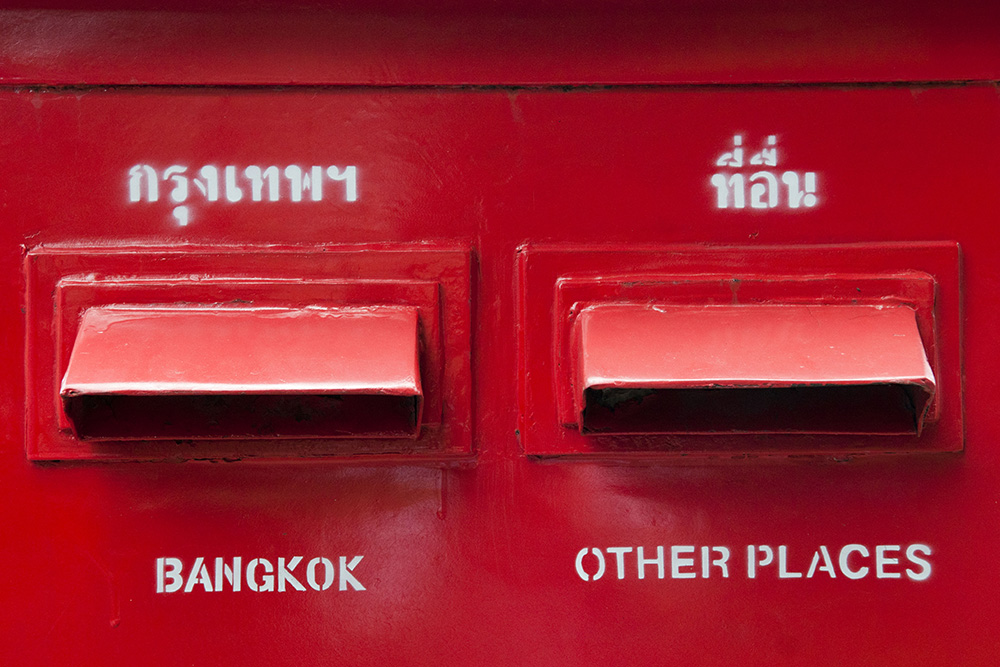 All the mailboxes in Bangkok are separated by location.
I have lived and worked in Thailand off and on for the last decade. I love the country and live in Chiang Mai every winter. I’ll probably retire in Thailand because it just feels like home and it’s always warm.
I had a great experience in 2012 when I went to Bumrundgrad Hospital in Bangkok when one of my running injuries flared up. They did a hip x-ray and gave me the results immediately. It all cost a total of $70 compared to the $700 my insurance was billed for the exact same x-ray I had six months prior in the U.S.
Bumrundgrad and Bangkok Hospital have been recommended by all the expats I’ve met living abroad and even my Thai friends. And, these Thai friends have all lived in New York City and other parts of the U.S., so they understand the U.S. healthcare system.
In Hong Kong in 2018, I had lunch with some old friends — a wealthy retired couple from Australia who spend part of their year in Phuket. They both go to Bangkok Hospital in Phuket for their annual physical, which is what led me to start getting health screenings in Thailand as well! I’ve started conversations with other foreigners I’ve met at these hospitals. Most are more affluent than me proving this isn’t something that lower-middle-class folks due to save money. It’s high-end care at an affordable rate! (My income has doubled since I started getting my healthcare done in Thailand, so I can afford to pay for care in the U.S. but prefer the efficiency, quality and refreshing price transparency of Thailand. )
Private healthcare in Thailand is affordable at baseline. Travel insurance doesn’t cover routine care like annual physicals and dental visits. I pay out of pocket for these, but the hospitals all accept insurance.
If you’d like to read more about the quality of Thai healthcare, The Economist recently did a story, Why is Thai health care so good?, and a case study about how the U.S. and Thailand compare on healthcare spending.
The Cost of an Annual Health Checkup in Thailand
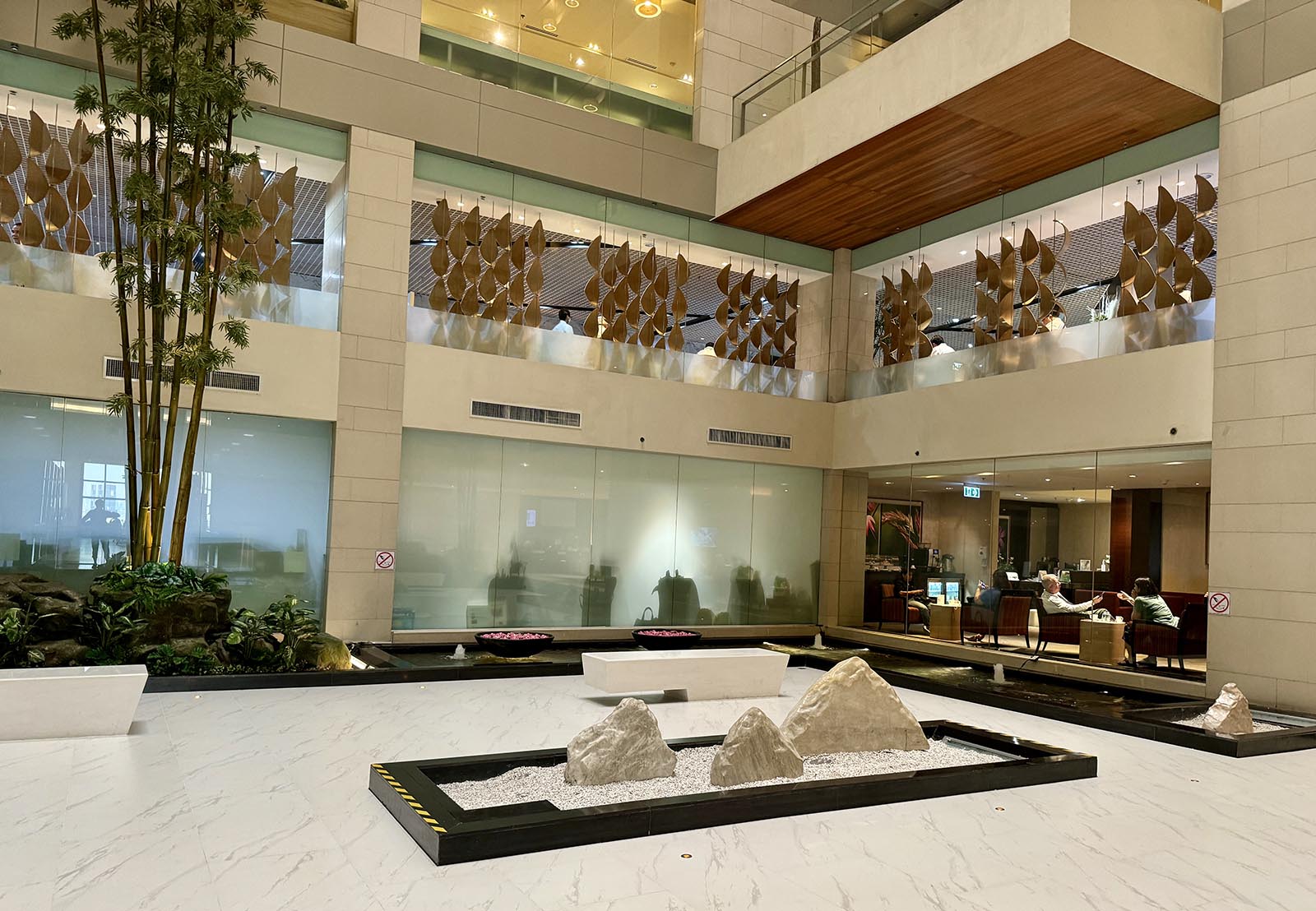 The central interior courtyard at Bumrundgrad Hospital in Bangkok looks like a posh hotel more than a hospital!
The quality of the private healthcare system in Thailand is extremely high, safe, efficient and affordable. Unlike in the U.S., the prices are clear and posted. Bloodwork and other test results are delivered in roughly 60-90 minutes. They also take insurance.
There is a set price list for annual health check options online for both of the major hospital brands in Thailand. Prices increase based on your age due to the extra tests that are included in the package. The prices below are for Bumrungrad Hospital.
2019: I chose the cheapest option since I was under 40, and the cost was 7,140 Baht/$235 USD. (Note prices are higher for females because a pap smear is included.) This includes normal physical blood work, a pap smear, a chest x-ray, urine and stool samples and detailed consultation with an English-speaking doctor. This takes two to three hours.
2022: I chose a higher-priced package since I turned 40 that included a mammogram with ultrasound, pap smear, EKG, ultrasound of the whole abdomen, chest x-ray, extensive bloodwork and urine/stool samples, and detailed consultation with an English-speaking doctor. All results except the pap smear were given to me at the appointment. Cost was 30,500 Baht/$847 USD. Clearly, this is higher than 2019, but it also includes a lot more. Again, prices are cheaper for men because they don’t need a pap smear or mammogram. This takes roughly three to four hours.
2023: The cost of the same package increased to 33,420 Baht/$991 USD, which was about a 17 percent increase from the previous year.
2024: The cost of the same package increased only slight to 34,700 Baht/$1,029 USD, which was only a 4 percent increase. It only took me three hours from when they took my bloodwork until the end when the doctor sat down and gave me all my results.
2025: The cost of the same package increased 4.5% to 36,300 THB/ $1,168.71 USD in December 2025. The Thai Baht was extremely high, which lead to part of the pricing difference.
The doctors all speak fluent English. You can choose a doctor off the website based on their credentials. (My doctor grew up in Florida, and she’s awesome!)
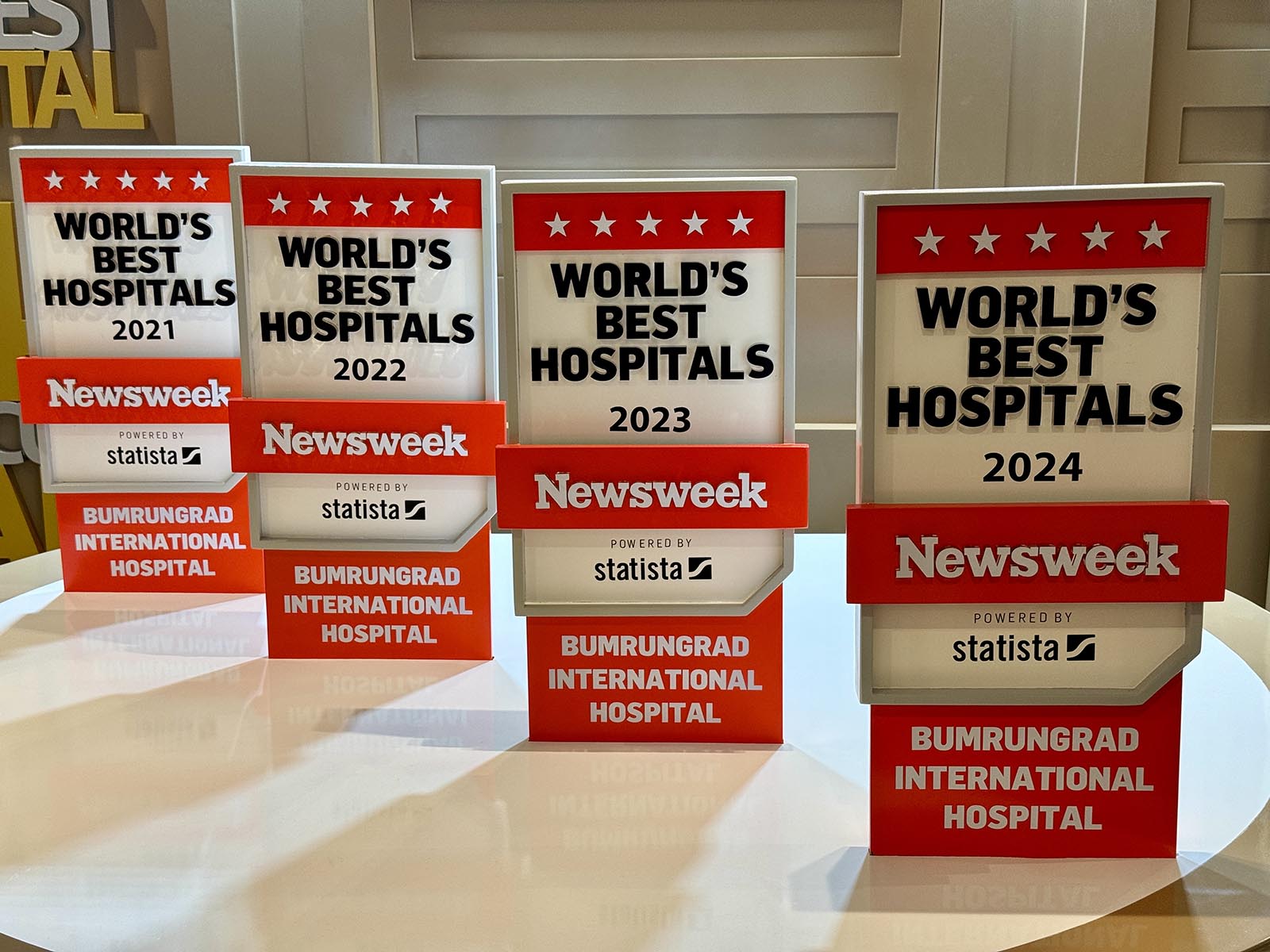 Bumrunggrad International Hospital in Bangkok is constanlty rated one of the best in the world by Newsweek.
Step-by-step guide to a health checkup process at Bumrundgrad Hospital in Bangkok
When you arrive at the hospital, you check in and register to be in the hospital system. If it is your first visit, you’ll need your passport, and they’ll take your photo for their charts. You’ll be given a hospital number that’s your reference for future visits and medical records.
Next, you go to the health screening floor. You take a number and are called up to the registration counter in less than 10 minutes. They go over what package you’ve chosen and what’s included. If you have any medical records or previous x-rays/labs, bring those with you as well. They give you a hospital bracelet with your name and birthday and a barcode they scan at every step of the process. They give you a little buzzer like you’d get a restaurant that lets you know when you are next for all the procedures. Very efficient!
The next counter is the cashier. (You only pay for health screenings in advance since they are packages. Payment is done for normal appointments afterward. Unlike in the U.S., they can easily quote you exact prices before you are given any treatment or tests.)
The floor is set up in a giant circle with the central glass-enclosed area looking down on a well-manicured courtyard below. Each area you proceed to is labeled by letter from A to D.
Counter A: Bloodwork
At Counter A, they take your blood pressure and weight, do bloodwork, measure your waist and check your vision. When doing any records or bloodwork, the nurses are constantly asking you to verify your information on the paperwork and labels. They scan you hospital bracelet for everything. They have you verify your name on the vials for the blood, which is printed on a label. Everything is sealed, packaged and sanitary just like in the U.S. (I used to work in India, so I’ve been to some proper third-world hospitals, so I know the difference!)
Counter B: X-Rays, Mammograms, EKG & Ultrasounds
At Counter B, they ask for a urine and stool sample. This is also where you do your chest x-ray, mammogram with ultrasound, EKG and whole abdomen ultrasound. They give you a key to a locker in a giant changing room/bathroom that’s separated by gender. Each locker has a set of clean scrubs, slippers and hangers for your clothes. They even give you a cute free scarf to wear if you are cold.
Your name is printed on the containers for the urine/stool samples. You place those in a little cubby inside the bathroom for the nurses to retrieve. You sit in the lobby for your x-ray and other tests for just a few minutes. They call you, and you are done quickly. (Again, they scan your hospital bracelet and manually verify your name with each test.) After you are finished, you toss your scrubs in the bins provided and give back the key. They go through, clean and replenish the lockers after each use. The slippers are disposable, so they aren’t reused, so I just use my own shoes.
Counter C: Meet with Doctor & Breakfast Buffet
Counter C is my favorite because it’s where they feed you! A free breakfast buffet catered by the J.W. Marriot is provided! All your bloodwork and test results are processed while you wait. For the basic package, it is roughly a 60-90 minute process from when they take the bloodwork, which was at Counter A. Keep in mind that they already started processing my bloodwork while I was doing the X-ray and other tests. There’s free, fast WIFI, so I brought my laptop so I could work while waiting. I barely had a chance to do any work previously because they were so quick to call me!
I usually sit at Counter C for about 30 minutes or so before they call me back to see the doctor. The doctor goes over your full bloodwork and chest X-ray, mammogram, EKG and abdomen ultrasound results in detail. They ask about preexisting conditions and if you have any concerns. They also do a normal exam listening to your heart and lungs, etc. For women, this includes a breast exam if you didn’t get a mammogram. (You are randomly assigned a doctor. I really liked my doctor. She grew up in Florida and went to medical school in Thailand. I really liked her, so I always request her.) Afterward, men are free to go, but women are ushered over to another hallway to see another doctor to have a pap smear, which is a quick process. This is the only result that’s emailed to you afterward. I got the email about three days later with a detailed PDF with all my test results, including the pap smear.
After this, I was done and free to leave. The entire process takes about three to four hours depending on the packages you choose. The cost of the health screening and the roundtrip flight to Thailand is cheaper than paying for three months of my old insurance plan in the U.S.!
Important Note: I have no preexisting conditions or major health concerns. I’ve often thought about what I would do if I did, which was live abroad most of the year. Currently, I’m already living abroad most of the year anyways with my base in Thailand. I’m only in the U.S. now three to four months a year.
I spent too many years working jobs in the U.S. that I hated just for the health insurance and decided life was too short to be that miserable. (It’s amazing how my career took off the minute I quit the job I was working just for the healthcare because I finally had the time to devote to what I really wanted to do.) And, again, this is what’s best for me. I just all this information is helpful to others!
Specialist Doctors in Thailand
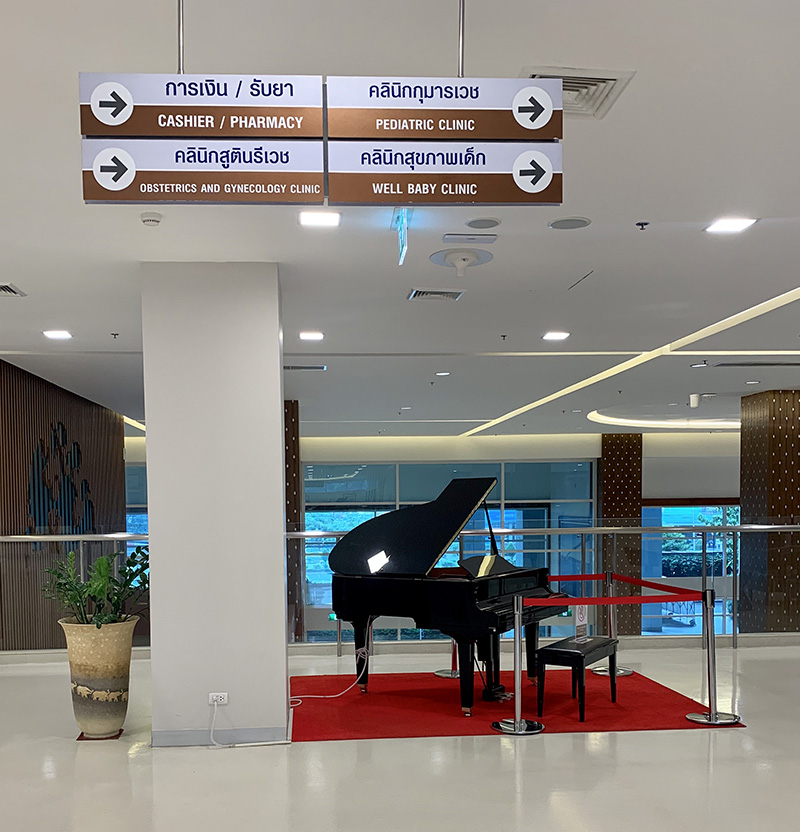 The lobby at Bangkok Hospital in Chiang Mai, Thailand.
Dermatologist
Since skin cancer runs in my family, I always go to a dermatologist for a full-body skin cancer screening. There is an option to choose a doctor off the website based on their photo and their bio, which is what I had done.
I chose one who went to school in Boston. (From this experience and my last experience in the U.S., never choose the young, pretty dermatologists because they will make you feel bad about how you are aging and try to sell you all these cosmetic procedures that aren’t necessary. Older women are always nicer.) This was the only doctor I didn’t really like, but I also felt exactly the same about the last dermatologist in the U.S. who tried to sell me cosmetic procedures. I ended up with a different one last year who I like.
2019 Total Cost: 1,730 Baht/$57.12 USD
2022 Total Cost: 2,000 Baht/$55.54 USD
2023 Total Cost: 2,860 Baht/$84.82 USD (This was a much longer appointment to cover different skin concerns and questions I had, so it cost a bit more.)
2024 Total Cost: 2,675 Baht/$79.34 USD (This year, I had a new doctor who charged a bit more for a new patient visit, but it was still cheaper than last year.)
2025 Total Cost: 2,190 THB/ $70.51USD
I also had two large moles laser removed off my face and scalp for 9,533 THB/ $306.92 USD. It was a quick and great experience.
Gynecologist
I had a golf-ball-sized ovarian cyst a few years ago, so as a preliminary measure I went to see a gynecologist for an ultrasound as a precautionary measure in 2019. This entire process from meeting with the doctor to doing the ultrasound was less than 45 minutes. We sat in her office and discussed everything first. I showed her the results from my previous ultrasound in the U.S., which I keep on my computer.
During the process, she even had the ultrasound on the screen and labeled everything during the process. (Thankfully, everything was good!) I feel more comfortable with a woman doctor in most situations especially this one, so I chose a woman off the website who went to school in Germany. She reminded me of my grandma with her accent, and I totally loved her. I knew this would cost more, but I wanted to be sure things were okay. I knew I was paying for peace of mind! 2019 Total Cost: 7,060 Baht/ $233 USD ($100 for ultrasound, $100 for doctor fee & $33 for supplies) Now that I’m 40, my healthcare package includes an ultrasound, so I don’t pay extra for this anymore.
Colonoscopy/Endoscopy
Since I turn 45 in 2026, I had my first colonoscopy in early January 2025. (Due to the increase in colorectal cancer, doctors are recommending getting one at age 45.) I also did an endoscopy at the same time. The prep wasn’t fun but not nearly as bad as people make it sound. Thankfully, all my results were good.
I had the procedure at Bangkok Hospital in Chiang Mai. The colonoscopy and endoscopy cost 38,000 Bhat/ $1,223.44 USD. The doctor went over all the results and showed me photos as soon as I got out of the recovery room. They send a few things out for testing, which were all fine. The follow-up appointment cost 2,931 THB/ $94.37 USD.
The medicines needed for the procedure were around $20-30 USD. To save money, I bought them all at a pharmacy outside the hospital, except for the powder I had to drink the night before and morning of the procedure. (I had my first endoscopy in 2019 for around $700 USD.)
I did not need a referral. I just made an appointment to talk to the doctor and set the date for the procedure. My Cigna insurance would have paid $350 of this if I had waited until August when I turn 45. I decided to just do it now while I had the time.
Which is better: Bangkok Hospital or Bumrundgrad?
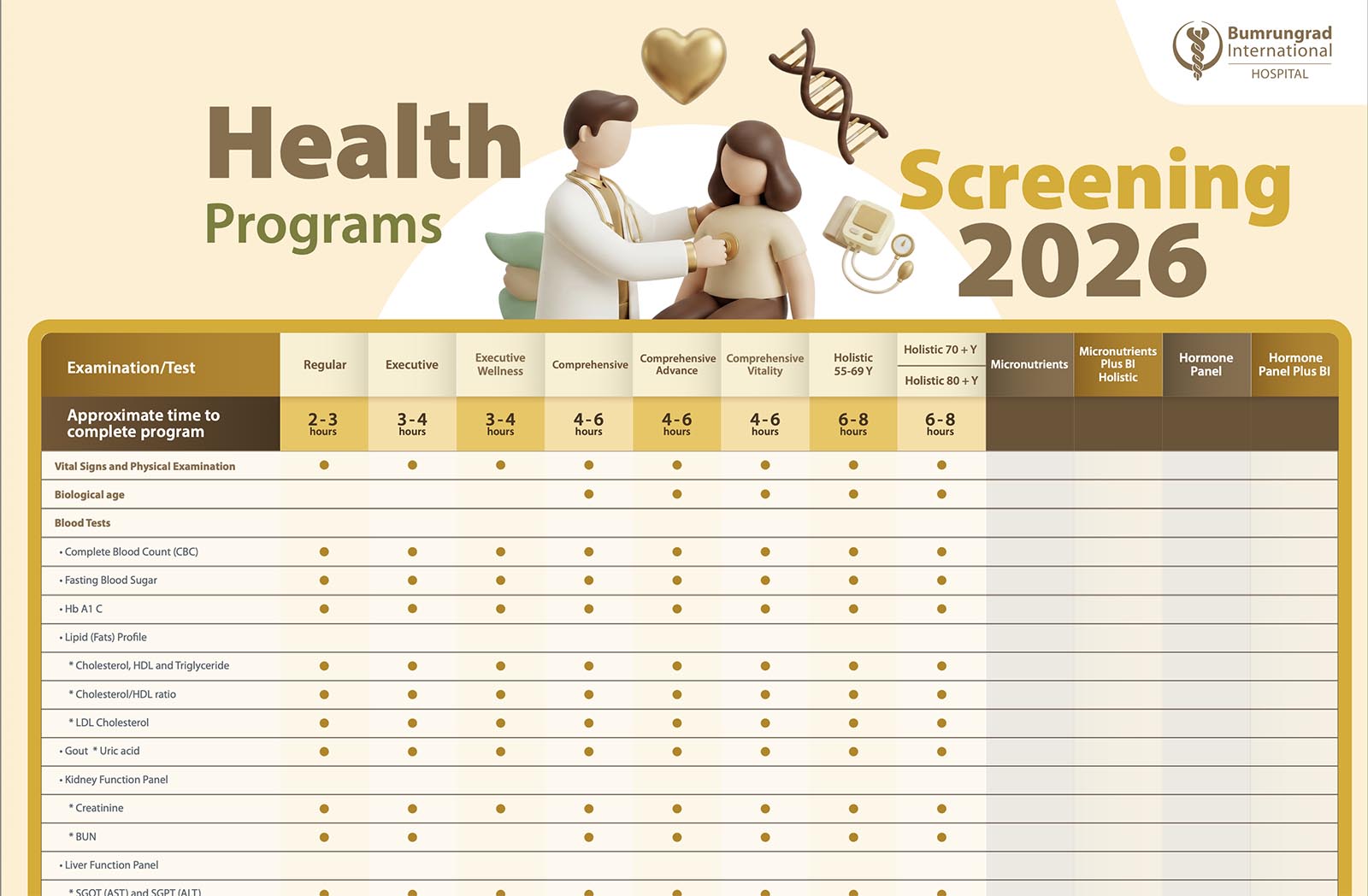 A sample of the health screening options offered by Bumrundgrad International Hospital in Bangkok.
Both Bumrundgrad International Hospital and Bangkok Hospital offer similar packages. Bangkok Hospital offers discouts making them a bit cheaper. Since Bumrundgrad has my medical records and I like my doctor, I decided to keep using them. Prices increase yearly for all packages, which I covered above.
For appointments, I’d book at least a week ahead. I booked a few weeks ahead so I could get an early morning appointment and my doctor of choice. In Bangkok, both hospitals are fairly accessible by public transit. Bumrundgrad offers two free shuttles in Bangkok and an airport pickup service.
Since Bumrundgrad doesn’t have a branch in Chiang Mai, I go to Bangkok Hospital in Chiang Mai, which is $3 taxi ride from the center of town.
Bangkok Hospital is the largest network in Thailand with over 40 hospitals in big cities including Phuket. My Thai friends (even the one who lived in New York) like Bangkok Hospital better but say both have the same quality of healthcare.
Keep in mind that the cost of these hospitals is very expensive to most locals. The average income in Thailand is $10-15 USD/day. (This figure comes from a nonprofit I volunteered with several years ago but has likely increased. I see other sources saying it’s $20/day but can’t verify the accuracy.) The two hospitals I mention are private and the most expensive in the country. There are significantly cheaper options that offer quality care for locals, but those doctors don’t always speak English, which is why I go to the private hospitals, which cater to foreigners.
Medicine in Thailand
 Photo Credit: Stock image from Pexels.com
In Thailand, you can buy common antibiotics at the pharmacy without a prescription like doxycycline (malaria drug) and azithromycin (used to treat strep throat, food poisoning, etc.). This does NOT include controlled substances like pain or anxiety meds, etc. Certain medications are only available at pharmacies inside hospitals with prescriptions.
When I am prescribed or suggested to take a medication or dosage that I’m not sure about while traveling, I call a 24-hour pharmacy in the U.S., like Walgreens or CVS, and ask to speak to a pharmacist to get their opinion. I do this in the U.S. all the time to check drug interactions, etc. (You can call U.S. numbers abroad for free with Google Voice.)
If a doctor at any hospital in Thailand prescribes you medicine, it’s much cheaper (almost 50%!) to buy it outside the hospital. Siam Pharmacy near Bumrundgrad Hospital in Bangkok has a wide selection. In Chiang Mai, Dara Pharmacy, not far from Bangkok Hospital, has a wide selection at better prices than the hospital.
Travel Vaccines in Thailand
For travel vaccines, I verify the name of the vaccine to ensure it is one that’s approved by the FDA in the U.S. I recently got my Typhoid Fever vaccine again, which was a shot that lasts for two years. It was a simple process, and the vaccine cost 1,533 Baht/$42 USD (2022 prices), which is half the cost in the U.S.
In late 2024, I got my Yellow Fever vaccine since I was going to Africa in 2025. It was 5,269 Baht/$155, including the shot and doctor’s fees. (It costs $240 to get the Yellow Fever vaccine at Walgreens. I called while I was in the waiting room just to check.) I had to see a doctor in the infectious disease department, who used to live in Texas oddly enough, to get the shot. He was great and it was a quick process with a same-day appointment. I mainly got this abroad for convenience, but the price savings was a nice bonus.
In December 2025, I got my Tdap vaccine for diphtheria, pertussis, and tetanus for 2,500 Baht/$80.49 USD.
Dentists in Thailand
 Photo Credit: Stock image from Pexels.com
I also get my teeth cleaned in Bangkok at Thantakit International Dental Center at their All Season’s branch. This was recommended to me years ago by my expat friends. The best part about this place is that my teeth cleaning, included free pick-up and drop-off in a private car!
I started getting my teeth cleaned in Thailand in 2013 after my dental hygienist in Santa Barbara recommended it after she’d scolded me for going too long between cleanings because I’d been living in Asia! She’d lived in Bali previously and said the quality of dentists in Asia was good. In Thailand, an actual dentist cleans your teeth.
2019 Total Price: 1,350 Baht/ $44.56 USD (Thantakit gives you a 10% discount if you pay cash.)
2022 Total Price: $1,200 Baht/ $33 USD + 800 Baht/$22 USD for fluoride application. (I’ll decline the fluoride application in the future because it’s not really needed and I didn’t realize it was extra. It was just added like it was part of the procedure. They still give you a 10% discount for paying in cash. My dentist was lovely so I’d go back to her.)
2023 Total Price: 1,350 baht/$44.46 USD (It was 1,500 Baht but they gave me a 10% discount for paying cash.)
2024: Total Price: 1,500/$44.49 USD (They stopped doing the 10% cash discount so I just pay with a card now to earn my airline loyalty points!)
2025 Total Price: 1,500 Baht/$48.29 USD (The Thai Baht is really strong, so the USD price increased even though price did not change.)
Full disclosure: I have perfect teeth, but I went through literal hell to get them, including five years of braces, a cracked tooth, a root canal and a crown that was another two-year hellish ordeal. I’ve lived in five states in the U.S. and been to many dentists, only liked three. Now, I only trust my hometown dentist with major dental work and will not do that abroad or in another state in the U.S. (I wish I’d driven 18 hours to him instead of getting that damn root canal/crown in Texas.) While I’m open to doing most things abroad even surgery, I won’t let anyone else touch my teeth for major dental work. No one does teeth as well as America.
Dental tourism is a huge business in Thailand. The island of Koh Samui in Southern Thailand is filled with dental centers, especially ones that do implants. People literally fly in and start the process on the first day of their vacation. They vacation and then come back at the end to finish the process!
To dig in a bit deeper into medical care abroad, I also wrote a Travel Insurance Guide here!
 When I lived in Austin, I had insurance through a job then switched to a ACA plan. Now, I live abroad and use a global health insurance policy.
What I Do for Health Insurance in the U.S. as a Freelancer
When I quit a part-time job that provided health insurance in May 2017, I paid for a middle-grade healthcare plan through a Texas company called Sendero Health. I purchased it through the health care exchange (Affordable Care Act). Initially, I had a subsidy for my policy, but my income increased, so I owed the full amount.
My monthly premium was $350 but jumped to $450 in January 2018. All my co-pays and deductibles doubled, which is why I immediately canceled the plan. While a lot of doctors in Austin were in-network, they often had a limited “quota” for my type of plan that was already filled.
Most of the doctors who I found that would take my insurance were terrible. I canceled the plan because it was useless and focused on other alternatives. (For the self-employed, the Affordable Care Act (ACA) isn’t perfect, but it is a step in the right direction because it covers preexisting conditions without increasing premiums.)
To be VERY clear, I ALWAYS have some form of health care coverage. It’s too risky to do without. When I’m traveling, I have travel medical insurance, which is roughly $92/month with no deductible through SafetyWing. (Again, this was half the cost before I turned 40.) This covers if I get sick while traveling and emergency evacuation. For these policies, I pay upfront or monthly depending on how long I need the policy. and they reimburse me in roughly seven to 30 days. (U.S. health insurance rarely covers you abroad.) I’ve written a detailed review of my experience with SafetyWing travel medical insurance.
For U.S. coverage, I previously used a short-term high-deductible major medical plan that cost roughly $175/month to cover major emergencies with a $7,500 and 100% co-insurance. This meant that if I got sick, I paid the first $7,500, and they pay 100% of the rest. As of September 2024, the U.S. government restricted short-term major medical policies to only four months maximum in a 12 month period. (This varies by state, and some states have a shorter duration.)
Due to this change, I started investigating global polices that cover up to 180 days each year in the U.S. for Americans who live abroad (Thailand is my current base.) and decided on a Cigna Global plan. (Other similar options include GeoBlue and Vumi, which both have shorter limits for U.S. visits (21 days at a time). Those limits are why I chose Cigna Global.) You can read my review of Cigna in the new section.
Important Note: Most of the ACA plans and even private plans have very limited coverage outside of the state that you live in, so read the fine print carefully. If you have an emergency out of state, the doctor will most likely be out-of-network so you’ll be on the hook for that amount.
In January 2022, Congress passed the No Surprises Act, which expands restrictions on charging health care plan holders out-of-network rates for certain services. While this can help, I still want to stress the importance of fully understanding your out-of-network benefits within the U.S. for ACA plans.
I’m currently investigating cash-based and direct primary care practices that don’t accept insurance as an alternative. (An example of one these practices is Brightmark Health in Birmingham, Ala. if you’re interested in looking into details. I chatted with the owner, Dr. Jospeh Wu, about the business model recently for a potential freelance story.)
These cash or direct primary care practices paired with a lower cost high-deductible catastrophic insurance plan could potentially lower healthcare costs while also increasing the efficiency of medical care and more quality one-on-one time with the doctor. This could be a game changer for many Americans, including freelancers like myself.
My Review of my Cigna Global Policy
I switched to a Cigna Globa Policy last year with Thailand as my residence. (This plan limits you to only six months a year in the U.S., and I only visit the U.S. three to four months anyway.) I have the Silver plan with a $10,000 USD deductible and 0% cost share. This means that I pay the first $10,000 and Cigna covers the rest. This is a basic policy that keeps me from going bankrupt from a medical emergency when I’m in the U.S. It does include a health and wellbeing option that covers some preventative care and screenings. I pay for these upfront and they refund the covered amount.
2025 Annual Cost: $1,456 USD
2026 Annual Cost: $1,603 USD (10% increase)
When I submitted my claim for reimbursement for the preventative care (annual physical and skin cancer screening), I got an email back the next day saying I was entitled to a higher reimbursement than I had submitted in the claim. I was shocked! What insurance company emails to say they will pay you more money? I got reimbursed the next day for a total of $680, more than half of what I had paid for both ($1,239).
Keep in mind that I chose a health screening package that included a lot of extra things, which I knew I’d pay out of pocket for and would definitely not have been covered by U.S. insurance. And, a few of the items I was reimbursed for are only covered every two to three years.
In 2025, I spent about $3,700 on health insurance and doctor’s appointments and tests. (I included the colonoscopy/endoscopy I had in early January in this cost.) I spent about $678.83 on travel medical insurance. If I lived in the U.S., I’d be paying more than that just for the insurance premiums.

What travel medical insurance is best for Thailand?
Travel medical insurance is one of the most important things to purchase for any trip abroad, especially Thailand. It covers all the things that could go wrong from injuries to travel delays so that you don’t have to worry and can focus on traveling! I’m a big fan of SafetyWing’s Nomad Insurance, which offers $0 deductible travel medical insurance coverage for over 180 countries for people aged 69 and under when traveling outside their home country. (Please note that travel medicial insurance will not cover any of the routine doctor’s visits above but will cover injury or illness.) For more details on my experience, read my review of SafetyWing in Thailand!