

Why I go Abroad for Health Care
 Photo Credit: Stock image from Pexels.com
This post was written in 2019 and is updated annually. Latest update: February 2026.
As a full-time freelancer, health care has always been one of my biggest burdens due to the lack of cost transparency and the complicated structure of the American medical system. Since I work for a travel company for part of the year, I have a travel insurance policy that covers me when I’m working abroad.
Travel insurance is $92/month (It would be cheaper if I was under 40.) with no copays or deductibles while my U.S. insurance was $450/month in 2017 with high copays and deductibles.
Health insurance is one of those topics that gets me all riled up, so I’ll do my best to avoid getting on a soapbox. I feel so strongly about the subject that I even wrote a chapter in my book about how to hack the cost of U.S. healthcare because I understand it well, especially the flaws.
In short, the American healthcare system is inefficient and expensive. (Source: The Atlantic) While the quality of care is high in the U.S., the lack of transparency about cost is what frustrates me more than anything because I want to pay upfront and not wait months for some mystery bill to arrive in the mail. Plus, it often takes months to get an appointment, which is nightmare because of my work schedule.
Due to this, I’ve started going abroad for my annual physical, routine dental cleaning and other routine doctor appointments. I wanted to explain how I handle medical care in my nomadic lifestyle and dispel myths about the quality of care abroad. I highly recommend it and wish I’d started doing this sooner!
This post includes my experience and pricing from 2019 until 2026. In 2025, I signed up for a Cigna global healthcare policy that I review at the end of the post.
The goal of this post is to show what works for me and share my experience. I hope you find this helpful or at least, interesting!
Affiliate links are used in this post for travel insurance only. If you make a purchase, I earn a small commission at no cost to you, which goes toward the cost of maintaining this blog.
Why I Go To Thailand for Medical Care
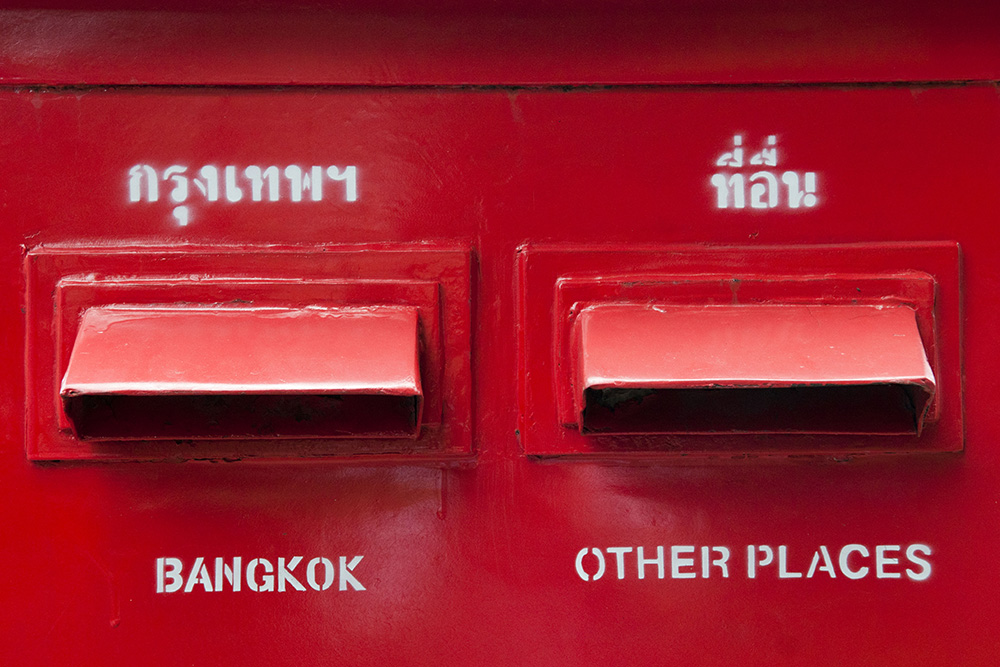 All the mailboxes in Bangkok are separated by location.
I have lived and worked in Thailand off and on for the last decade. I love the country and live in Chiang Mai every winter. I’ll probably retire in Thailand because it just feels like home and it’s always warm.
I had a great experience in 2012 when I went to Bumrundgrad Hospital in Bangkok when one of my running injuries flared up. They did a hip x-ray and gave me the results immediately. It all cost a total of $70 compared to the $700 my insurance was billed for the exact same x-ray I had six months prior in the U.S.
Bumrundgrad and Bangkok Hospital have been recommended by all the expats I’ve met living abroad and even my Thai friends. And, these Thai friends have all lived in New York City and other parts of the U.S., so they understand the U.S. healthcare system.
In Hong Kong in 2018, I had lunch with some old friends — a wealthy retired couple from Australia who spend part of their year in Phuket. They both go to Bangkok Hospital in Phuket for their annual physical, which is what led me to start getting health screenings in Thailand as well! I’ve started conversations with other foreigners I’ve met at these hospitals. Most are more affluent than me proving this isn’t something that lower-middle-class folks due to save money. It’s high-end care at an affordable rate! (My income has doubled since I started getting my healthcare done in Thailand, so I can afford to pay for care in the U.S. but prefer the efficiency, quality and refreshing price transparency of Thailand. )
Private healthcare in Thailand is affordable at baseline. Travel insurance doesn’t cover routine care like annual physicals and dental visits. I pay out of pocket for these, but the hospitals all accept insurance.
If you’d like to read more about the quality of Thai healthcare, The Economist recently did a story, Why is Thai health care so good?, and a case study about how the U.S. and Thailand compare on healthcare spending.
The Cost of an Annual Health Checkup in Thailand
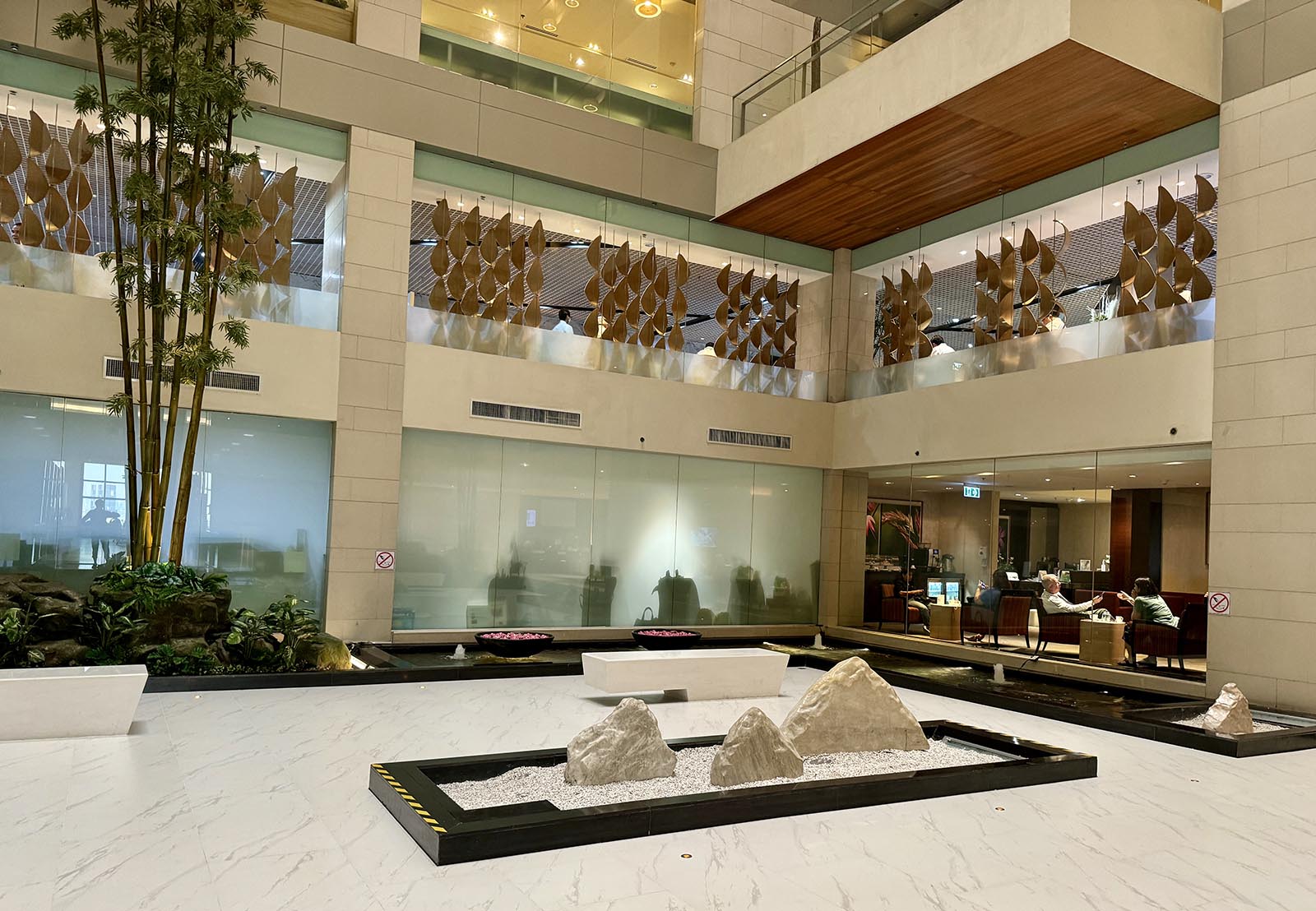 The central interior courtyard at Bumrundgrad Hospital in Bangkok looks like a posh hotel more than a hospital!
The quality of the private healthcare system in Thailand is extremely high, safe, efficient and affordable. Unlike in the U.S., the prices are clear and posted. Bloodwork and other test results are delivered in roughly 60-90 minutes. They also take insurance.
There is a set price list for annual health check options online for both of the major hospital brands in Thailand. Prices increase based on your age due to the extra tests that are included in the package. The prices below are for Bumrungrad Hospital.
2019: I chose the cheapest option since I was under 40, and the cost was 7,140 Baht/$235 USD. (Note prices are higher for females because a pap smear is included.) This includes normal physical blood work, a pap smear, a chest x-ray, urine and stool samples and detailed consultation with an English-speaking doctor. This takes two to three hours.
2022: I chose a higher-priced package since I turned 40 that included a mammogram with ultrasound, pap smear, EKG, ultrasound of the whole abdomen, chest x-ray, extensive bloodwork and urine/stool samples, and detailed consultation with an English-speaking doctor. All results except the pap smear were given to me at the appointment. Cost was 30,500 Baht/$847 USD. Clearly, this is higher than 2019, but it also includes a lot more. Again, prices are cheaper for men because they don’t need a pap smear or mammogram. This takes roughly three to four hours.
2023: The cost of the same package increased to 33,420 Baht/$991 USD, which was about a 17 percent increase from the previous year.
2024: The cost of the same package increased only slight to 34,700 Baht/$1,029 USD, which was only a 4 percent increase. It only took me three hours from when they took my bloodwork until the end when the doctor sat down and gave me all my results.
2025: The cost of the same package increased 4.5% to 36,300 THB/ $1,168.71 USD in December 2025. The Thai Baht was extremely high, which lead to part of the pricing difference.
The doctors all speak fluent English. You can choose a doctor off the website based on their credentials. (My doctor grew up in Florida, and she’s awesome!)
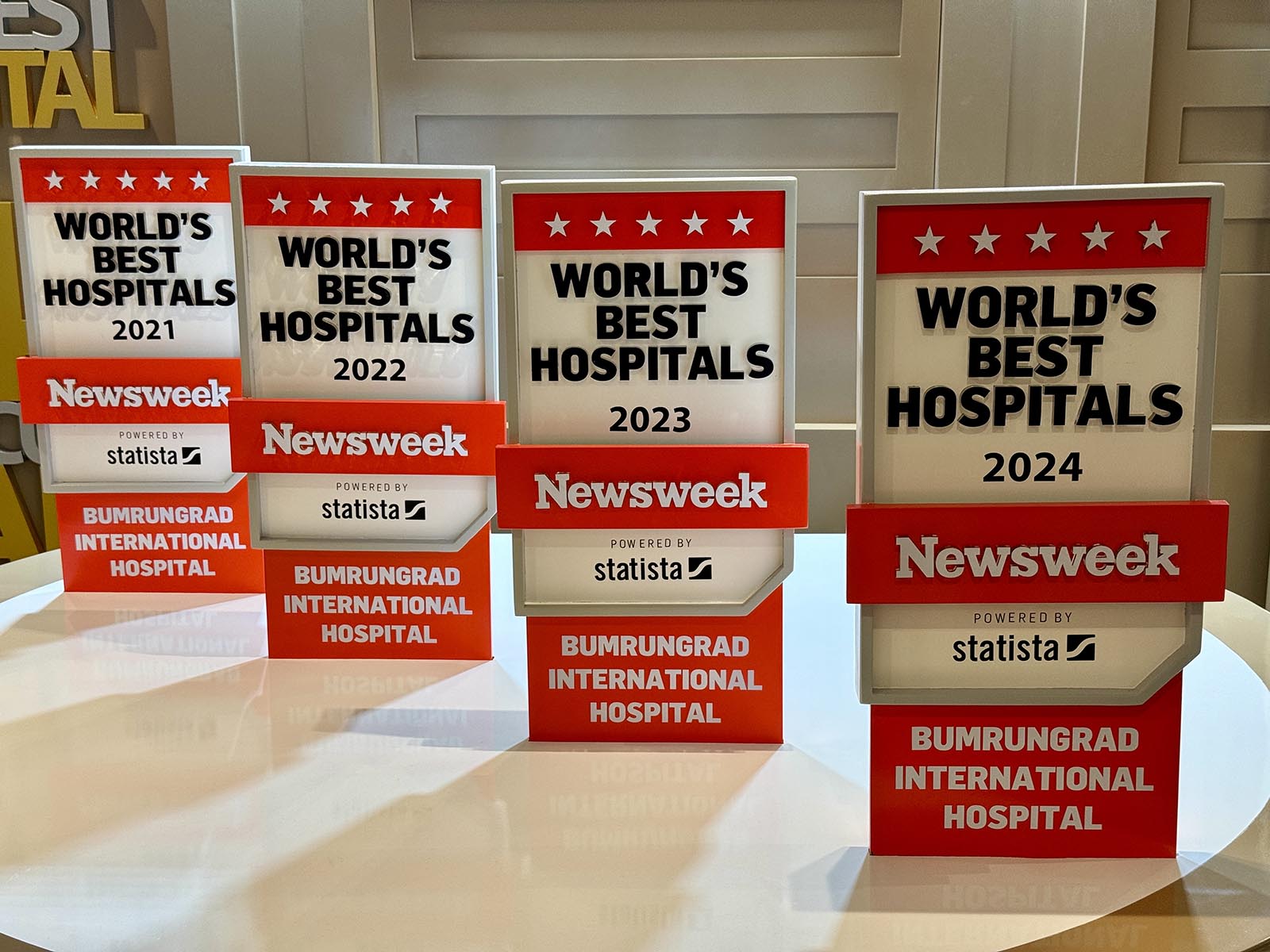 Bumrunggrad International Hospital in Bangkok is constanlty rated one of the best in the world by Newsweek.
Step-by-step guide to a health checkup process at Bumrundgrad Hospital in Bangkok
When you arrive at the hospital, you check in and register to be in the hospital system. If it is your first visit, you’ll need your passport, and they’ll take your photo for their charts. You’ll be given a hospital number that’s your reference for future visits and medical records.
Next, you go to the health screening floor. You take a number and are called up to the registration counter in less than 10 minutes. They go over what package you’ve chosen and what’s included. If you have any medical records or previous x-rays/labs, bring those with you as well. They give you a hospital bracelet with your name and birthday and a barcode they scan at every step of the process. They give you a little buzzer like you’d get a restaurant that lets you know when you are next for all the procedures. Very efficient!
The next counter is the cashier. (You only pay for health screenings in advance since they are packages. Payment is done for normal appointments afterward. Unlike in the U.S., they can easily quote you exact prices before you are given any treatment or tests.)
The floor is set up in a giant circle with the central glass-enclosed area looking down on a well-manicured courtyard below. Each area you proceed to is labeled by letter from A to D.
Counter A: Bloodwork
At Counter A, they take your blood pressure and weight, do bloodwork, measure your waist and check your vision. When doing any records or bloodwork, the nurses are constantly asking you to verify your information on the paperwork and labels. They scan you hospital bracelet for everything. They have you verify your name on the vials for the blood, which is printed on a label. Everything is sealed, packaged and sanitary just like in the U.S. (I used to work in India, so I’ve been to some proper third-world hospitals, so I know the difference!)
Counter B: X-Rays, Mammograms, EKG & Ultrasounds
At Counter B, they ask for a urine and stool sample. This is also where you do your chest x-ray, mammogram with ultrasound, EKG and whole abdomen ultrasound. They give you a key to a locker in a giant changing room/bathroom that’s separated by gender. Each locker has a set of clean scrubs, slippers and hangers for your clothes. They even give you a cute free scarf to wear if you are cold.
Your name is printed on the containers for the urine/stool samples. You place those in a little cubby inside the bathroom for the nurses to retrieve. You sit in the lobby for your x-ray and other tests for just a few minutes. They call you, and you are done quickly. (Again, they scan your hospital bracelet and manually verify your name with each test.) After you are finished, you toss your scrubs in the bins provided and give back the key. They go through, clean and replenish the lockers after each use. The slippers are disposable, so they aren’t reused, so I just use my own shoes.
Counter C: Meet with Doctor & Breakfast Buffet
Counter C is my favorite because it’s where they feed you! A free breakfast buffet catered by the J.W. Marriot is provided! All your bloodwork and test results are processed while you wait. For the basic package, it is roughly a 60-90 minute process from when they take the bloodwork, which was at Counter A. Keep in mind that they already started processing my bloodwork while I was doing the X-ray and other tests. There’s free, fast WIFI, so I brought my laptop so I could work while waiting. I barely had a chance to do any work previously because they were so quick to call me!
I usually sit at Counter C for about 30 minutes or so before they call me back to see the doctor. The doctor goes over your full bloodwork and chest X-ray, mammogram, EKG and abdomen ultrasound results in detail. They ask about preexisting conditions and if you have any concerns. They also do a normal exam listening to your heart and lungs, etc. For women, this includes a breast exam if you didn’t get a mammogram. (You are randomly assigned a doctor. I really liked my doctor. She grew up in Florida and went to medical school in Thailand. I really liked her, so I always request her.) Afterward, men are free to go, but women are ushered over to another hallway to see another doctor to have a pap smear, which is a quick process. This is the only result that’s emailed to you afterward. I got the email about three days later with a detailed PDF with all my test results, including the pap smear.
After this, I was done and free to leave. The entire process takes about three to four hours depending on the packages you choose. The cost of the health screening and the roundtrip flight to Thailand is cheaper than paying for three months of my old insurance plan in the U.S.!
Important Note: I have no preexisting conditions or major health concerns. I’ve often thought about what I would do if I did, which was live abroad most of the year. Currently, I’m already living abroad most of the year anyways with my base in Thailand. I’m only in the U.S. now three to four months a year.
I spent too many years working jobs in the U.S. that I hated just for the health insurance and decided life was too short to be that miserable. (It’s amazing how my career took off the minute I quit the job I was working just for the healthcare because I finally had the time to devote to what I really wanted to do.) And, again, this is what’s best for me. I just all this information is helpful to others!
Specialist Doctors in Thailand
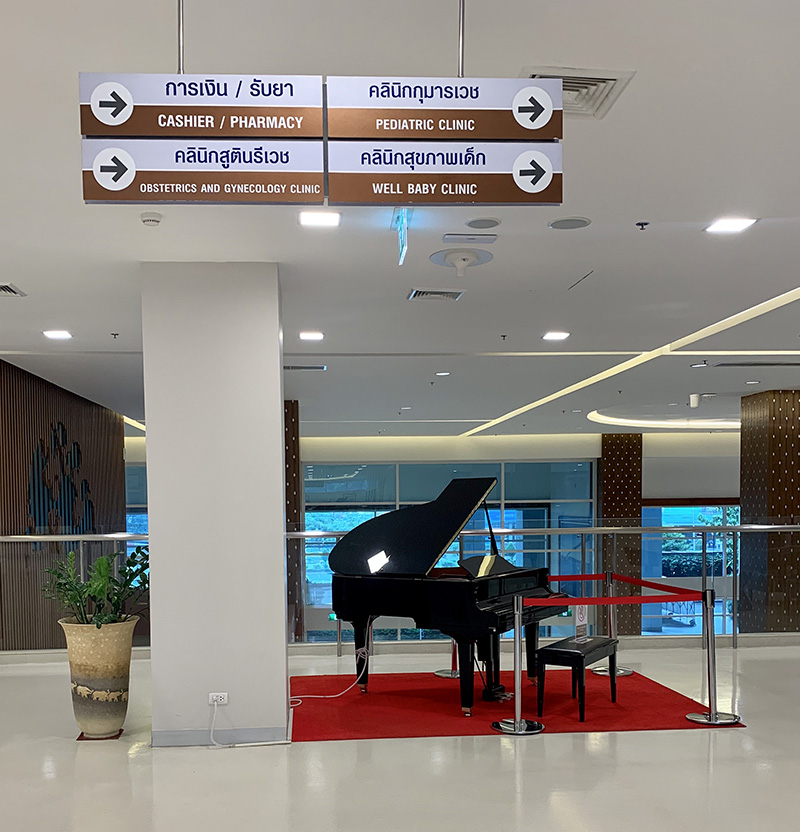 The lobby at Bangkok Hospital in Chiang Mai, Thailand.
Dermatologist
Since skin cancer runs in my family, I always go to a dermatologist for a full-body skin cancer screening. There is an option to choose a doctor off the website based on their photo and their bio, which is what I had done.
I chose one who went to school in Boston. (From this experience and my last experience in the U.S., never choose the young, pretty dermatologists because they will make you feel bad about how you are aging and try to sell you all these cosmetic procedures that aren’t necessary. Older women are always nicer.) This was the only doctor I didn’t really like, but I also felt exactly the same about the last dermatologist in the U.S. who tried to sell me cosmetic procedures. I ended up with a different one last year who I like.
2019 Total Cost: 1,730 Baht/$57.12 USD
2022 Total Cost: 2,000 Baht/$55.54 USD
2023 Total Cost: 2,860 Baht/$84.82 USD (This was a much longer appointment to cover different skin concerns and questions I had, so it cost a bit more.)
2024 Total Cost: 2,675 Baht/$79.34 USD (This year, I had a new doctor who charged a bit more for a new patient visit, but it was still cheaper than last year.)
2025 Total Cost: 2,190 THB/ $70.51USD
I also had two large moles laser removed off my face and scalp for 9,533 THB/ $306.92 USD. It was a quick and great experience.
Gynecologist
I had a golf-ball-sized ovarian cyst a few years ago, so as a preliminary measure I went to see a gynecologist for an ultrasound as a precautionary measure in 2019. This entire process from meeting with the doctor to doing the ultrasound was less than 45 minutes. We sat in her office and discussed everything first. I showed her the results from my previous ultrasound in the U.S., which I keep on my computer.
During the process, she even had the ultrasound on the screen and labeled everything during the process. (Thankfully, everything was good!) I feel more comfortable with a woman doctor in most situations especially this one, so I chose a woman off the website who went to school in Germany. She reminded me of my grandma with her accent, and I totally loved her. I knew this would cost more, but I wanted to be sure things were okay. I knew I was paying for peace of mind! 2019 Total Cost: 7,060 Baht/ $233 USD ($100 for ultrasound, $100 for doctor fee & $33 for supplies) Now that I’m 40, my healthcare package includes an ultrasound, so I don’t pay extra for this anymore.
Colonoscopy/Endoscopy
Since I turn 45 in 2026, I had my first colonoscopy in early January 2025. (Due to the increase in colorectal cancer, doctors are recommending getting one at age 45.) I also did an endoscopy at the same time. The prep wasn’t fun but not nearly as bad as people make it sound. Thankfully, all my results were good.
I had the procedure at Bangkok Hospital in Chiang Mai. The colonoscopy and endoscopy cost 38,000 Bhat/ $1,223.44 USD. The doctor went over all the results and showed me photos as soon as I got out of the recovery room. They send a few things out for testing, which were all fine. The follow-up appointment cost 2,931 THB/ $94.37 USD.
The medicines needed for the procedure were around $20-30 USD. To save money, I bought them all at a pharmacy outside the hospital, except for the powder I had to drink the night before and morning of the procedure. (I had my first endoscopy in 2019 for around $700 USD.)
I did not need a referral. I just made an appointment to talk to the doctor and set the date for the procedure. My Cigna insurance would have paid $350 of this if I had waited until August when I turn 45. I decided to just do it now while I had the time.
Which is better: Bangkok Hospital or Bumrundgrad?
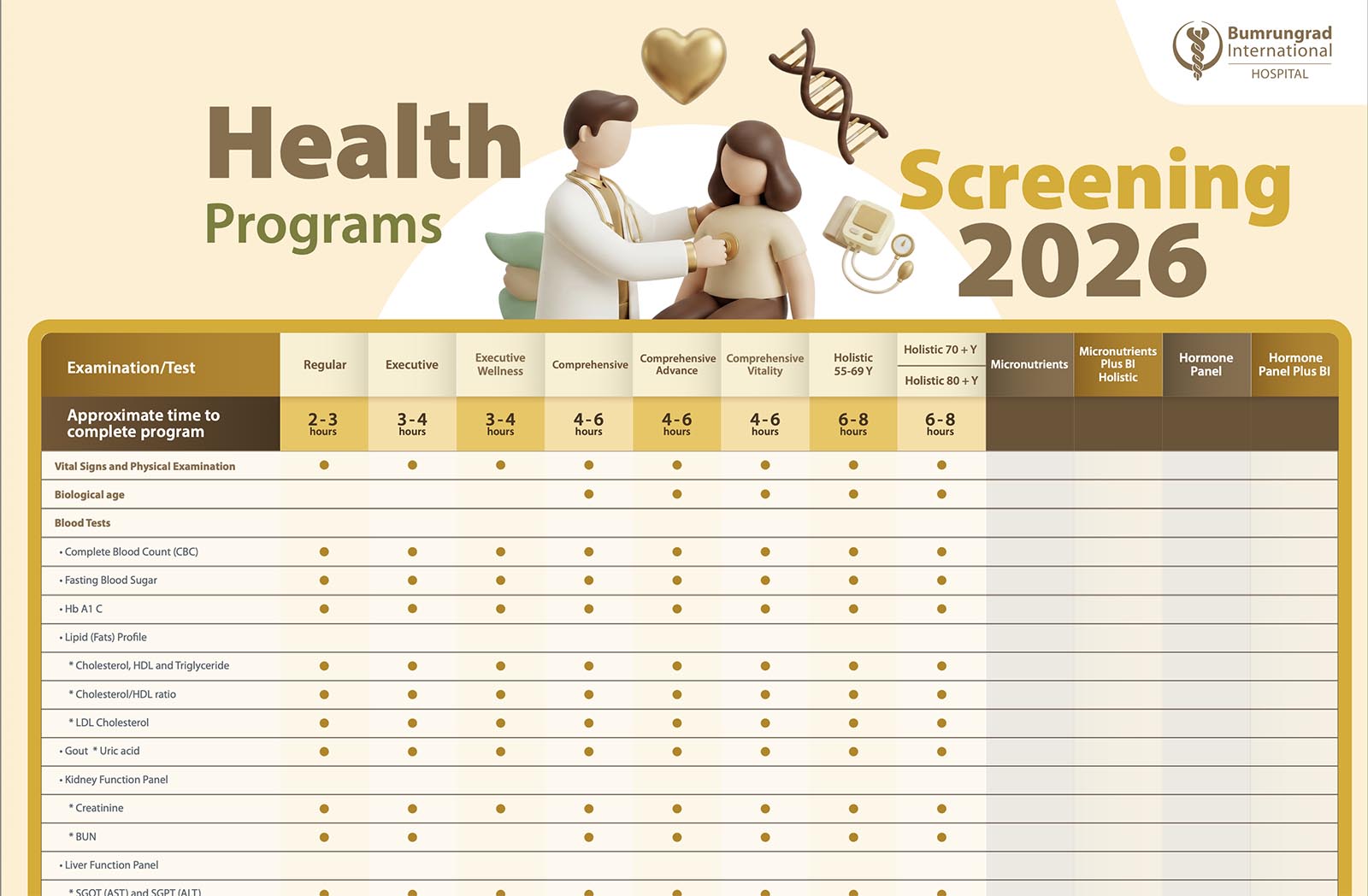 A sample of the health screening options offered by Bumrundgrad International Hospital in Bangkok.
Both Bumrundgrad International Hospital and Bangkok Hospital offer similar packages. Bangkok Hospital offers discouts making them a bit cheaper. Since Bumrundgrad has my medical records and I like my doctor, I decided to keep using them. Prices increase yearly for all packages, which I covered above.
For appointments, I’d book at least a week ahead. I booked a few weeks ahead so I could get an early morning appointment and my doctor of choice. In Bangkok, both hospitals are fairly accessible by public transit. Bumrundgrad offers two free shuttles in Bangkok and an airport pickup service.
Since Bumrundgrad doesn’t have a branch in Chiang Mai, I go to Bangkok Hospital in Chiang Mai, which is $3 taxi ride from the center of town.
Bangkok Hospital is the largest network in Thailand with over 40 hospitals in big cities including Phuket. My Thai friends (even the one who lived in New York) like Bangkok Hospital better but say both have the same quality of healthcare.
Keep in mind that the cost of these hospitals is very expensive to most locals. The average income in Thailand is $10-15 USD/day. (This figure comes from a nonprofit I volunteered with several years ago but has likely increased. I see other sources saying it’s $20/day but can’t verify the accuracy.) The two hospitals I mention are private and the most expensive in the country. There are significantly cheaper options that offer quality care for locals, but those doctors don’t always speak English, which is why I go to the private hospitals, which cater to foreigners.
Medicine in Thailand
 Photo Credit: Stock image from Pexels.com
In Thailand, you can buy common antibiotics at the pharmacy without a prescription like doxycycline (malaria drug) and azithromycin (used to treat strep throat, food poisoning, etc.). This does NOT include controlled substances like pain or anxiety meds, etc. Certain medications are only available at pharmacies inside hospitals with prescriptions.
When I am prescribed or suggested to take a medication or dosage that I’m not sure about while traveling, I call a 24-hour pharmacy in the U.S., like Walgreens or CVS, and ask to speak to a pharmacist to get their opinion. I do this in the U.S. all the time to check drug interactions, etc. (You can call U.S. numbers abroad for free with Google Voice.)
If a doctor at any hospital in Thailand prescribes you medicine, it’s much cheaper (almost 50%!) to buy it outside the hospital. Siam Pharmacy near Bumrundgrad Hospital in Bangkok has a wide selection. In Chiang Mai, Dara Pharmacy, not far from Bangkok Hospital, has a wide selection at better prices than the hospital.
Travel Vaccines in Thailand
For travel vaccines, I verify the name of the vaccine to ensure it is one that’s approved by the FDA in the U.S. I recently got my Typhoid Fever vaccine again, which was a shot that lasts for two years. It was a simple process, and the vaccine cost 1,533 Baht/$42 USD (2022 prices), which is half the cost in the U.S.
In late 2024, I got my Yellow Fever vaccine since I was going to Africa in 2025. It was 5,269 Baht/$155, including the shot and doctor’s fees. (It costs $240 to get the Yellow Fever vaccine at Walgreens. I called while I was in the waiting room just to check.) I had to see a doctor in the infectious disease department, who used to live in Texas oddly enough, to get the shot. He was great and it was a quick process with a same-day appointment. I mainly got this abroad for convenience, but the price savings was a nice bonus.
In December 2025, I got my Tdap vaccine for diphtheria, pertussis, and tetanus for 2,500 Baht/$80.49 USD.
Dentists in Thailand
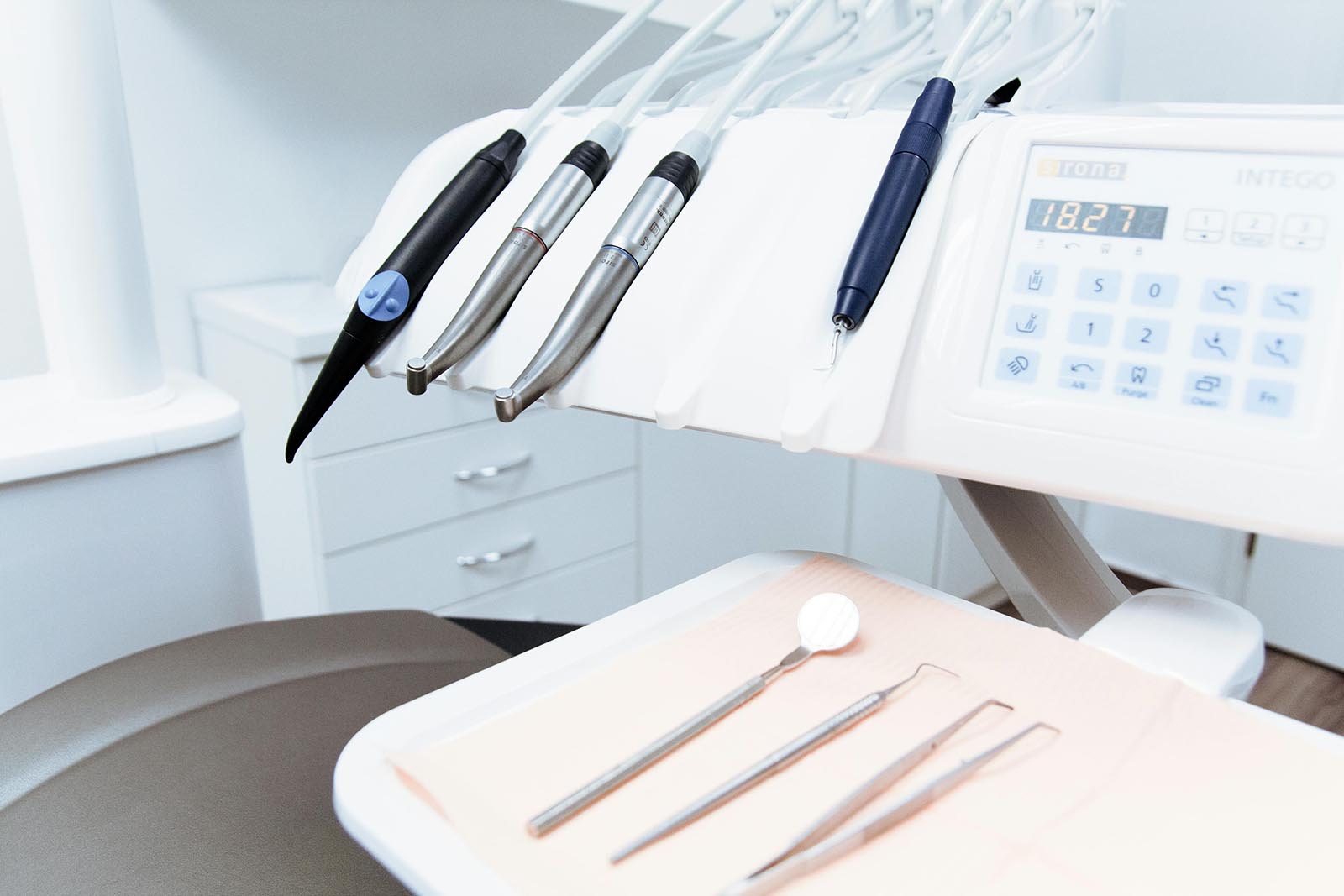 Photo Credit: Stock image from Pexels.com
I also get my teeth cleaned in Bangkok at Thantakit International Dental Center at their All Season’s branch. This was recommended to me years ago by my expat friends. The best part about this place is that my teeth cleaning, included free pick-up and drop-off in a private car!
I started getting my teeth cleaned in Thailand in 2013 after my dental hygienist in Santa Barbara recommended it after she’d scolded me for going too long between cleanings because I’d been living in Asia! She’d lived in Bali previously and said the quality of dentists in Asia was good. In Thailand, an actual dentist cleans your teeth.
2019 Total Price: 1,350 Baht/ $44.56 USD (Thantakit gives you a 10% discount if you pay cash.)
2022 Total Price: $1,200 Baht/ $33 USD + 800 Baht/$22 USD for fluoride application. (I’ll decline the fluoride application in the future because it’s not really needed and I didn’t realize it was extra. It was just added like it was part of the procedure. They still give you a 10% discount for paying in cash. My dentist was lovely so I’d go back to her.)
2023 Total Price: 1,350 baht/$44.46 USD (It was 1,500 Baht but they gave me a 10% discount for paying cash.)
2024: Total Price: 1,500/$44.49 USD (They stopped doing the 10% cash discount so I just pay with a card now to earn my airline loyalty points!)
2025 Total Price: 1,500 Baht/$48.29 USD (The Thai Baht is really strong, so the USD price increased even though price did not change.)
Full disclosure: I have perfect teeth, but I went through literal hell to get them, including five years of braces, a cracked tooth, a root canal and a crown that was another two-year hellish ordeal. I’ve lived in five states in the U.S. and been to many dentists, only liked three. Now, I only trust my hometown dentist with major dental work and will not do that abroad or in another state in the U.S. (I wish I’d driven 18 hours to him instead of getting that damn root canal/crown in Texas.) While I’m open to doing most things abroad even surgery, I won’t let anyone else touch my teeth for major dental work. No one does teeth as well as America.
Dental tourism is a huge business in Thailand. The island of Koh Samui in Southern Thailand is filled with dental centers, especially ones that do implants. People literally fly in and start the process on the first day of their vacation. They vacation and then come back at the end to finish the process!
To dig in a bit deeper into medical care abroad, I also wrote a Travel Insurance Guide here!
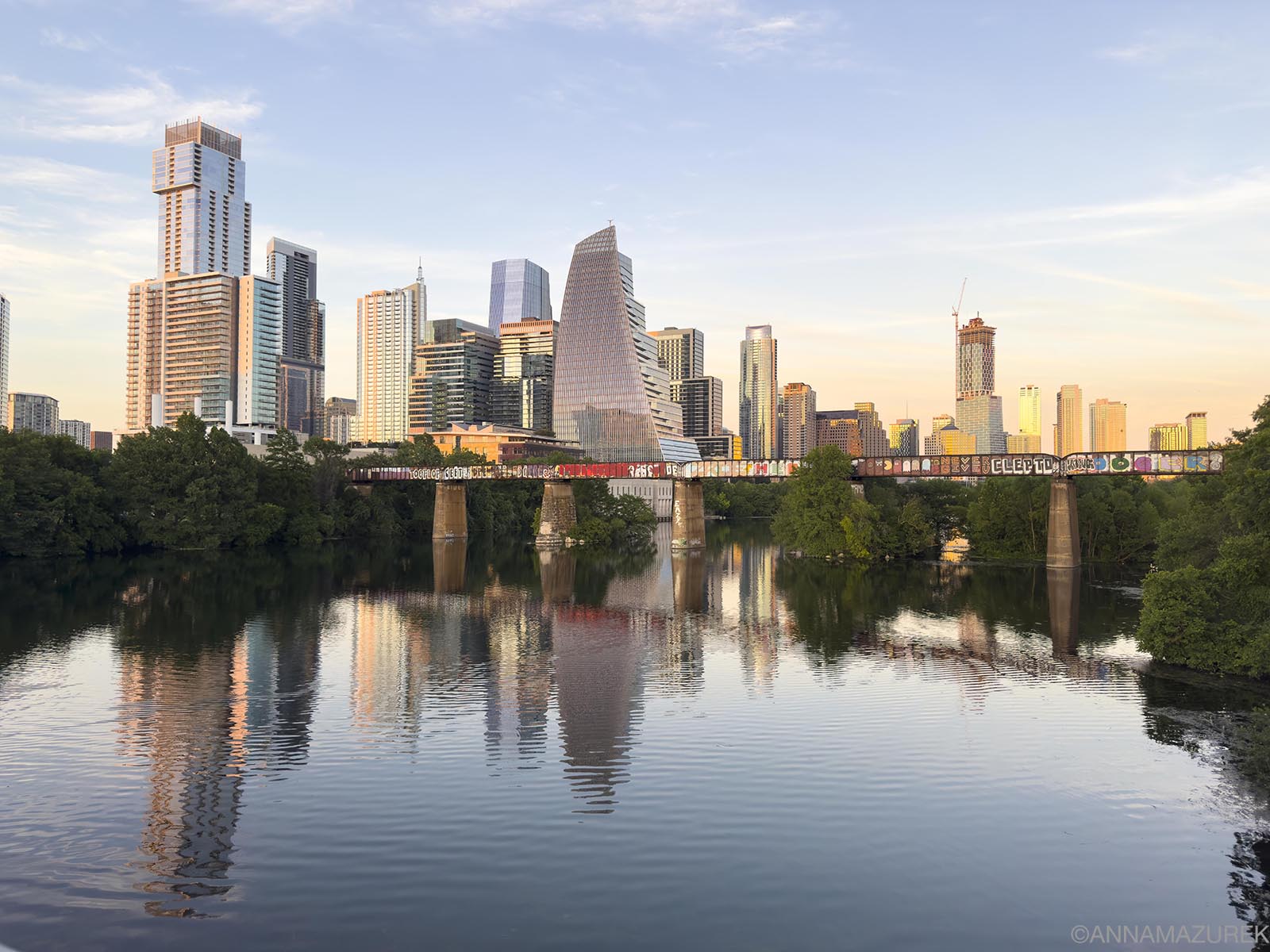 When I lived in Austin, I had insurance through a job then switched to a ACA plan. Now, I live abroad and use a global health insurance policy.
What I Do for Health Insurance in the U.S. as a Freelancer
When I quit a part-time job that provided health insurance in May 2017, I paid for a middle-grade healthcare plan through a Texas company called Sendero Health. I purchased it through the health care exchange (Affordable Care Act). Initially, I had a subsidy for my policy, but my income increased, so I owed the full amount.
My monthly premium was $350 but jumped to $450 in January 2018. All my co-pays and deductibles doubled, which is why I immediately canceled the plan. While a lot of doctors in Austin were in-network, they often had a limited “quota” for my type of plan that was already filled.
Most of the doctors who I found that would take my insurance were terrible. I canceled the plan because it was useless and focused on other alternatives. (For the self-employed, the Affordable Care Act (ACA) isn’t perfect, but it is a step in the right direction because it covers preexisting conditions without increasing premiums.)
To be VERY clear, I ALWAYS have some form of health care coverage. It’s too risky to do without. When I’m traveling, I have travel medical insurance, which is roughly $92/month with no deductible through SafetyWing. (Again, this was half the cost before I turned 40.) This covers if I get sick while traveling and emergency evacuation. For these policies, I pay upfront or monthly depending on how long I need the policy. and they reimburse me in roughly seven to 30 days. (U.S. health insurance rarely covers you abroad.) I’ve written a detailed review of my experience with SafetyWing travel medical insurance.
For U.S. coverage, I previously used a short-term high-deductible major medical plan that cost roughly $175/month to cover major emergencies with a $7,500 and 100% co-insurance. This meant that if I got sick, I paid the first $7,500, and they pay 100% of the rest. As of September 2024, the U.S. government restricted short-term major medical policies to only four months maximum in a 12 month period. (This varies by state, and some states have a shorter duration.)
Due to this change, I started investigating global polices that cover up to 180 days each year in the U.S. for Americans who live abroad (Thailand is my current base.) and decided on a Cigna Global plan. (Other similar options include GeoBlue and Vumi, which both have shorter limits for U.S. visits (21 days at a time). Those limits are why I chose Cigna Global.) You can read my review of Cigna in the new section.
Important Note: Most of the ACA plans and even private plans have very limited coverage outside of the state that you live in, so read the fine print carefully. If you have an emergency out of state, the doctor will most likely be out-of-network so you’ll be on the hook for that amount.
In January 2022, Congress passed the No Surprises Act, which expands restrictions on charging health care plan holders out-of-network rates for certain services. While this can help, I still want to stress the importance of fully understanding your out-of-network benefits within the U.S. for ACA plans.
I’m currently investigating cash-based and direct primary care practices that don’t accept insurance as an alternative. (An example of one these practices is Brightmark Health in Birmingham, Ala. if you’re interested in looking into details. I chatted with the owner, Dr. Jospeh Wu, about the business model recently for a potential freelance story.)
These cash or direct primary care practices paired with a lower cost high-deductible catastrophic insurance plan could potentially lower healthcare costs while also increasing the efficiency of medical care and more quality one-on-one time with the doctor. This could be a game changer for many Americans, including freelancers like myself.
My Review of my Cigna Global Policy
I switched to a Cigna Globa Policy last year with Thailand as my residence. (This plan limits you to only six months a year in the U.S., and I only visit the U.S. three to four months anyway.) I have the Silver plan with a $10,000 USD deductible and 0% cost share. This means that I pay the first $10,000 and Cigna covers the rest. This is a basic policy that keeps me from going bankrupt from a medical emergency when I’m in the U.S. It does include a health and wellbeing option that covers some preventative care and screenings. I pay for these upfront and they refund the covered amount.
2025 Annual Cost: $1,456 USD
2026 Annual Cost: $1,603 USD (10% increase)
When I submitted my claim for reimbursement for the preventative care (annual physical and skin cancer screening), I got an email back the next day saying I was entitled to a higher reimbursement than I had submitted in the claim. I was shocked! What insurance company emails to say they will pay you more money? I got reimbursed the next day for a total of $680, more than half of what I had paid for both ($1,239).
Keep in mind that I chose a health screening package that included a lot of extra things, which I knew I’d pay out of pocket for and would definitely not have been covered by U.S. insurance. And, a few of the items I was reimbursed for are only covered every two to three years.
In 2025, I spent about $3,700 on health insurance and doctor’s appointments and tests. (I included the colonoscopy/endoscopy I had in early January in this cost.) I spent about $678.83 on travel medical insurance. If I lived in the U.S., I’d be paying more than that just for the insurance premiums.
What travel medical insurance is best for Thailand?
Travel medical insurance is one of the most important things to purchase for any trip abroad, especially Thailand. It covers all the things that could go wrong from injuries to travel delays so that you don’t have to worry and can focus on traveling! I’m a big fan of SafetyWing’s Nomad Insurance, which offers $0 deductible travel medical insurance coverage for over 180 countries for people aged 69 and under when traveling outside their home country. (Please note that travel medicial insurance will not cover any of the routine doctor’s visits above but will cover injury or illness.) For more details on my experience, read my review of SafetyWing in Thailand!
I Visit Vietnam Every Year – Here are my Favorite Places (and Where to Avoid)
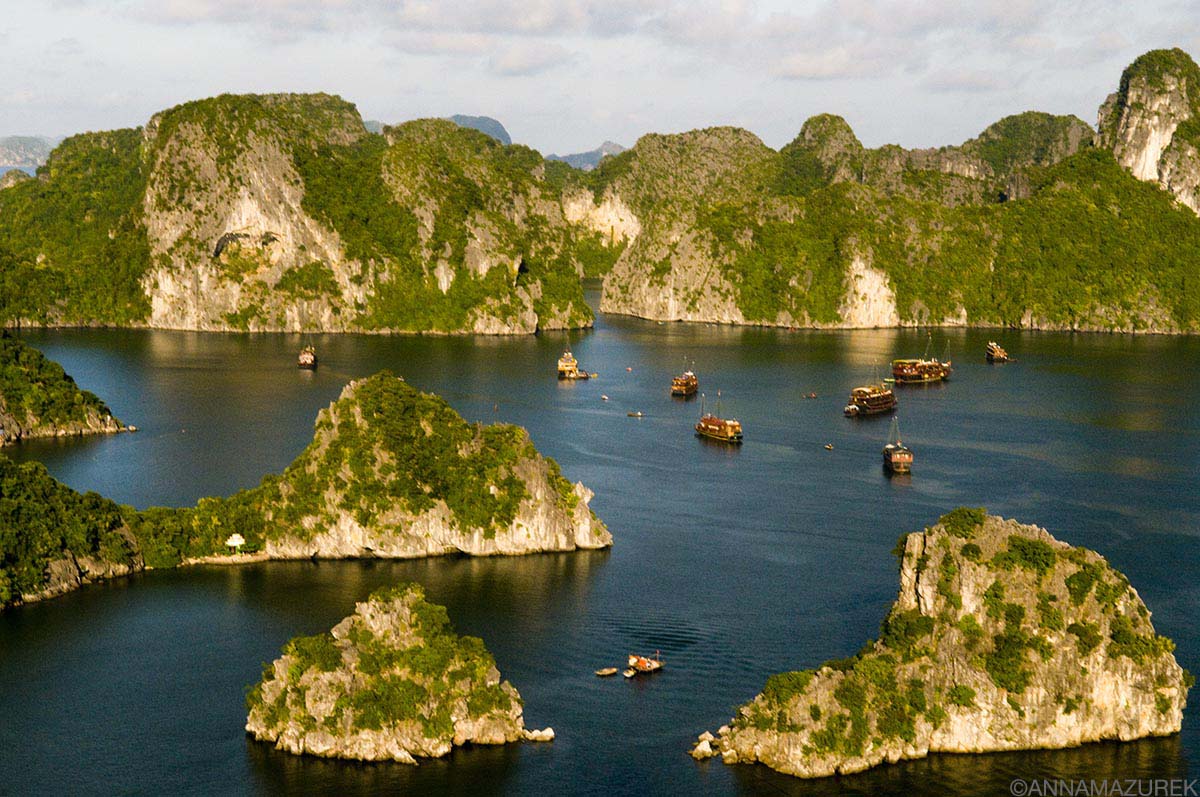
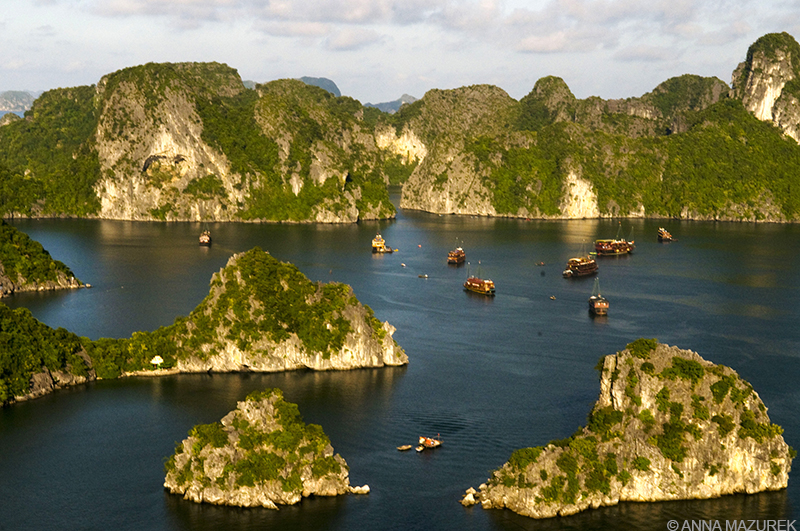
Ha Long Bay is a must-see on any trip to Vietnam. Avoid winter, so it’s not too cold to swim.
Vietnam is unmatched in Southeast Asia in terms of scenery. The country stretches more than 1,000 miles from north to south with a diverse landscape, from the towering limestone pillars of Ha Long Bay to the flat, flooded plains of the Mekong Delta. And, of course, there’s the delicious food—a cooking class is a must!
And, if Vietnam couldn’t get any more appealing—it’s also one of the cheapest places to travel in Southeast Asia. I work in the travel industry and visit Vietnam multiple times a year, so I made this travel guide to help you prepare for your trip. The locations in the post are organized by region: north, central and southern Vietnam. Keep reading for the best places to visit in Vietnam and where to avoid (the beaches!).
To simplify travel, I always book private and shared transfers on Klook for convenience and suggest using 12go.asia for bus and train tickets if it’s too much hassle to go to the station. Please read reviews before booking.
Affiliate links are used in this post. If you make a purchase, I earn a small commission at no cost to you, which goes toward the cost of maintaining this blog.
Plan Your Trip
Currency: Vietnamese Dong (VND)
When to Go: July to September for beaches. December to March for cooler temperatures.
Travel Insurance: Protect yourself with SafetyWing travel medical insurance to cover accidents and travel delays.
Mobile eSIM Card: Get seamless connectivity worldwide with Airalo minus the hassle of physical SIM card. (Save 10% with code AIRALOESIM10!)
Northern Vietnam
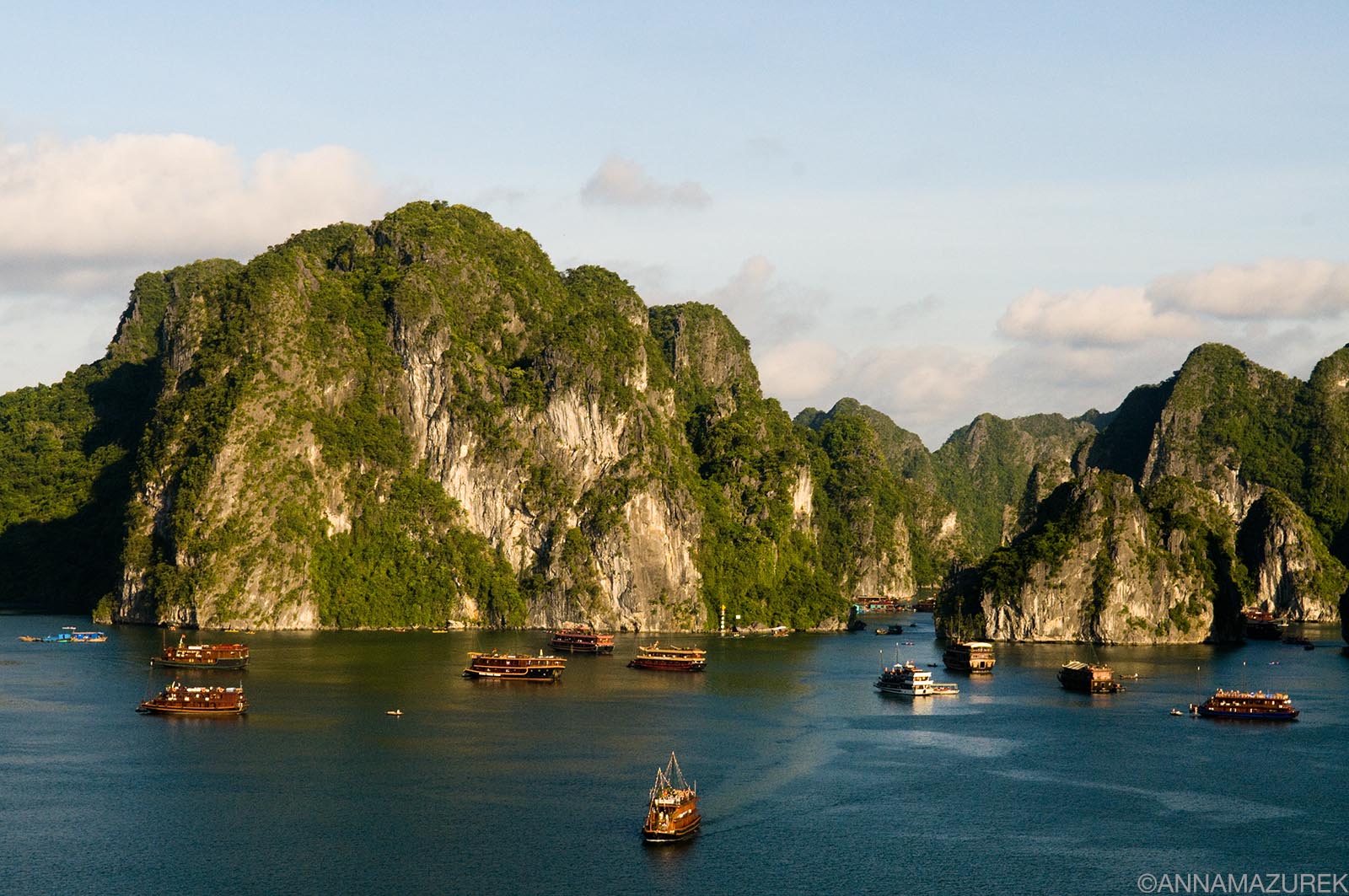 The best time to go swimming in Ha Long Bay, Vietnam is between April and October.
1. Ha Long Bay & Lan Ha Bay
Why Go: Overnight boat trips among limestone karsts
How to get there: Three-hour public bus or private transfer from Hanoi
Ha Long Bay, a UNESCO site, is one of those places like Machu Picchu that you must visit once in your life. The scenery is postcard-perfect: towering limestone karsts and over 1,100 islands scattered through the Gulf of Tonkin’s emerald waters. It is the number one attraction in Vietnam.
The best way to experience the bay is to do a multiple-day cruise on a houseboat to explore the islands, swim and eat year weight in fresh seafood! There are day boat trips and overnight cruises for every budget. I recommend spending a night or two on a houseboat!
Ha Long Bay vs. Lan Ha Bay
Historically, Ha Long Bay spread across two provinces and was split into sections controlled by two different local governments—Ha Long Bay to the north and the Lan Ha Bay to the south bordering the coast of Cat Ba Island. (Both bays are included in the UNESCO area.) Over 300 boats operate in Ha Long Bay (popular with Chinese tourists) but only 64 in Lan Ha Bay, according to my local guide on a recent visit.
While both share the same scenery, Lan Han Bay has less pollution and tourists, but less infrastructure, which I’ve witnessed on my visits to both. There are no caves in Lan Ha Bay or scenic viewpoints like the one in my photo above from Ha Long Bay. The caves are one of the noteworthy features in the UNESCO nomination. While the caves are stunning, they get crowded.
While it’s possible to book last-minute budget tours on Klook or GetYourGuide, luxury boats, like the Ginger by Heritage Line, (stunning ship I stayed on for work trip) fill up four months in advance. To visit both bays, consider booking separate back-to-back one-night trips on different boats. (Only a couple of boats with good government relationships can operate in both bays.)
When to Visit Ha Long Bay & Lan Ha Bay
If you want blue skies, visit from April to October. June to August is steaming hot but less crowded. November to March brings cooler weather (highs in the 60s in January) but often consistent gray skies. September to October is packed with tourists. My visits have always been in January or July. I prefer July for blue skies.
How to Get to Ha Long Bay
Most people fly into Hanoi’s Noi Bai International Airport, the country’s second-largest airport, and take a transfer. (There are two smaller airports near Ha Long Bay—Van Don International and Cat Bi International.) If a transfer isn’t included in your boat tour, you can find affordable transfers through Klook. It’s roughly a three-hour drive.
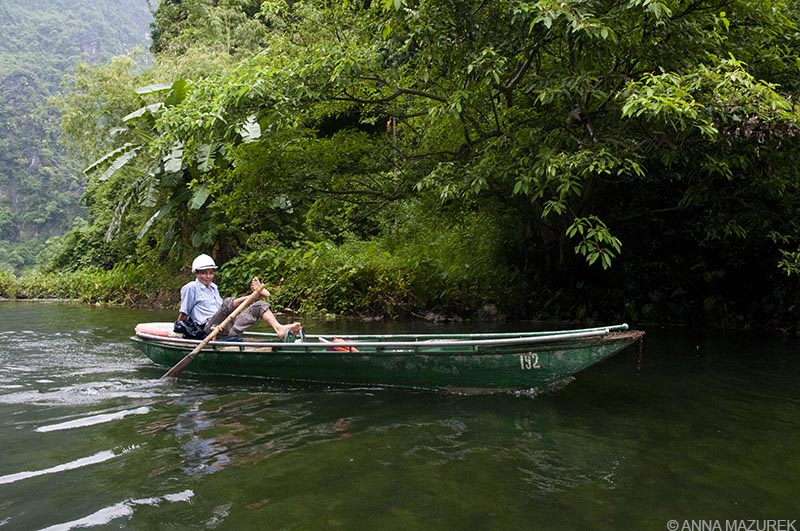 If you like the idea of riding a boat through stunning caves, then add Tam Coc to your list. The rowers use their feet to move the oars just like this guy!
2. Ninh Binh
Why go: Rowboat trips through the “Ha Long Bay on land” with caves & ricefields
How to get there: Three hours south of Hanoi by public bus or $7 shared transfer
Where to stay: Tam Coc Mountain Sunset and Garden Hotel
The Ninh Binh province is known as the “Ha Long Bay on land” famous for row boat tours through giant caves and alongside limestone karsts. The most stunning boat ride is Trang An (Route 3), which is a three-hour tour through spectacular scenery and the kilometer-long Hang Dot cave.
When the rice fields are green (wet season), Tam Coc, a 1.5-hour boat trip where the boat guides row with their feet, is beautiful, but Trang An is better if you only have time for one.
The viewpoint from Mua Cave is worth the 500-stair climb but again is best when the rice fields are green. My other favorite places include the picturesque Bich Dong Pagoda and cave temple (free entry), and Bai Dinh Pagoda, a photogenic 4,200-acre Buddhist complex, one of the largest in Southeast Asia, that’s easily explored on an electric cart shuttle.
Hoa Lu Old Town in Ninh Binh City is a stunning sight of two towering modern pagodas lit up at night with detailed carvings inside. This free attraction was built in 2022, so don’t get it confused with Hoa Lu Ancient Town, the historic site of the first capital of Vietnam that’s 11 kilometers away.
Tam Coc is a good base for exploring the area. In January 2025, I stayed at Tam Coc Mountain Sunset and Garden Hotel ($30 USD/night) with spacious rooms with a convenient location with a pool and helpful English-speaking owner. I recommend staying a few nights in the area, but there’s also plenty of day tours from Hanoi if you are short on time.
For more details, check out my Ninh Binh guide!
How to Get to Ninh Binh Province
The Ninh Binh province is roughly an hour and 45 minutes southeast of Hanoi. The cheapest option is public buses from Hanoi. I recently took this $7 shared transfer from Hanoi, which was efficient and involved transferring to an SUV to drop me off directly at my hotel.
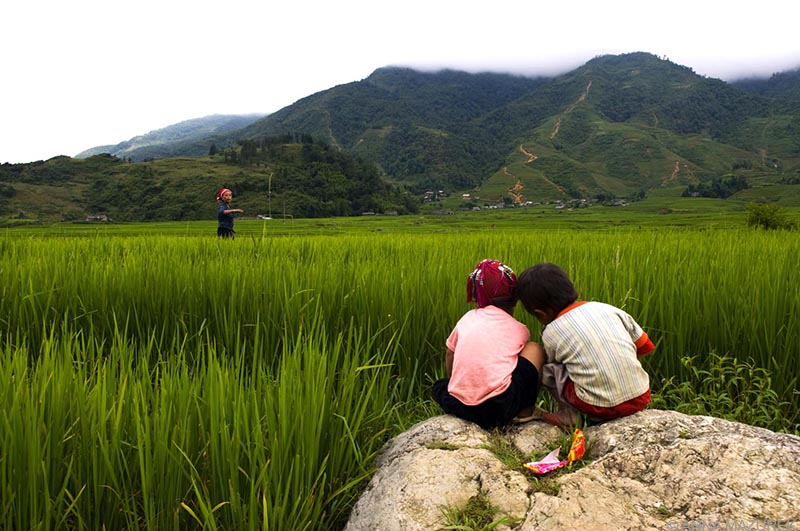
This shot from Sapa is one of my favorite travel images from Asia.
3. Sapa
Why Go: Trekking base with lush rice fields and local villages.
How to get there: Around seven hours by sleeper train (plus a 50-minute transfer), sleeper bus or private/shared car transfer from Hanoi
The former 1922 French hill station is the trekking capital of Vietnam. The views of the valley from the town are stunning. (The photo above is one of my favorite images I’ve shot in all my years in Asia.)
Popular treks include Fansipan, the highest mountain in Vietnam (3,143 meters); Cat Cat, a village three kilometers south of Sapa; Ta Phin Village, a 10-kilometer hike from the city; Sa Seng & Hang Da, a hike along the eastern ridge is great for valley views. Be warned—the tourist touts and aggressive vendors are relentless in Sapa. (I visited a village with a student group and each student had one vendor following them around town the entire day trying to see them something.) Despite this, the scenery is unreal and worth the trip!
How to get to Sapa
Sapa is located 195 miles northwest of Hanoi (closest airport) near the China border. By car or bus, it’s about a five-to-six-hour journey depending on traffic. I’ve taken the roughly seven-hour sleeper train previously, which goes from Hanoi to Lao Cai (closest station to Sapa). It’s an additional 50-minute transfer from there to Sapa. There are also cheaper sleeper buses for about half the price of the train ($11-16 USD).
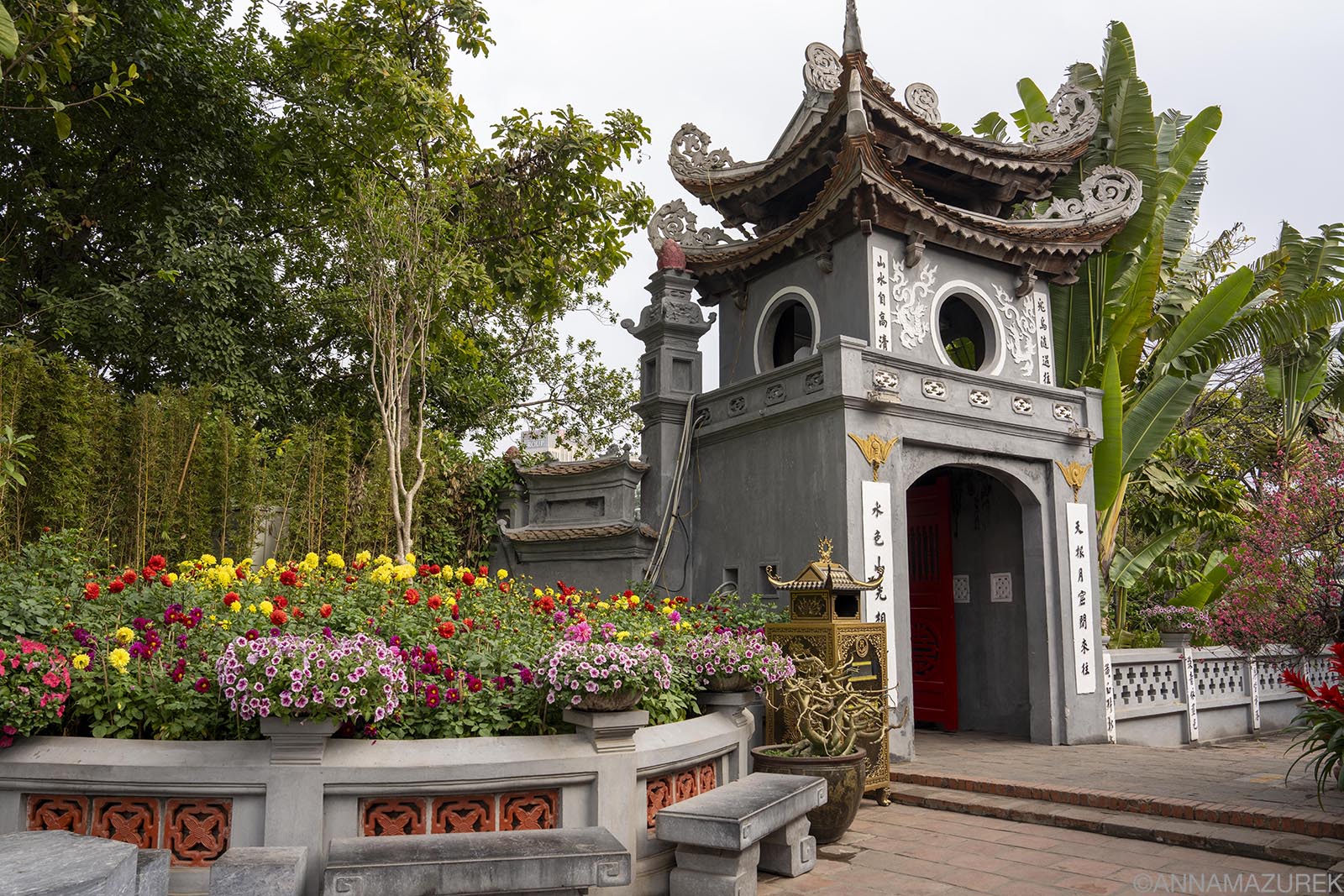 Ngoc Son Temple on Hoàn Kiếm Lake in Hanoi is beautiful year-round but even more vibrant during the TET holiday.
4. Hanoi
Why Go: Historical Old Quarter, cafes, museums and great travel base
How to get there: Fly into Noi Bai International Airport & take a 40-minute taxiWhere to Stay: La Sinfonia del Rey Hotel & Spa and Hanoi Authentic Boutique Hotel
Hanoi is both the capital of the country and the chaos. Hordes of motorbikes cover the streets. Find a safe spot on the sidewalk to people watch as the motorbikes defy gravity and logic with their loads which range from refrigerators to a family of five with a dog and my favorite – dozens of plastic bags filled with water and live goldfish tied to a giant hoop structure on the back of the bike.
Wander the streets of the Old Quarter and the Hoan Kiemshopping district where streets are organized by the goods they sell. (This is really annoying if you need to buy a pen and you’re on the shoe street.) Pho bo (beef noodle shop) is a must for breakfast along with a traditional Vietnamese coffee, which is medium to coarse ground dark roast with a small metal drip filter.
For a bánh mi, try Banh Mi 25. The Note Cafe is an Instagramable spot covered floor-to-ceiling in post-it notes while JOMA is one of my favorite café chains in Southeast Asia for breakfast. For an adrenaline adventure, visit Hanoi 1990s, a small cafe perched on the edge of Hanoi’s famous train street where a handful of trains come buzzing by daily just inches from your table.
Go for a stroll around Hoàn Kiếm Lake and cross the red bridge to Ngoc Son Temple. Stop by the Temple of Literature and the Ho Chi Minh Museum. If you want to say hello to “Uncle Ho”, stop by his mausoleum. Be warned – he’s been preserved and is on full display in typical communist fashion. For more details on the city, check out my Hanoi guide.
How to get to Hanoi
Hanoi is home to the second busiest airport in the Vietnam and connected by bus or train easily to major destinations across the country. While Ho Chi Minh City has more international flights, Hanoi is also easy to get to.
Central Vietnam
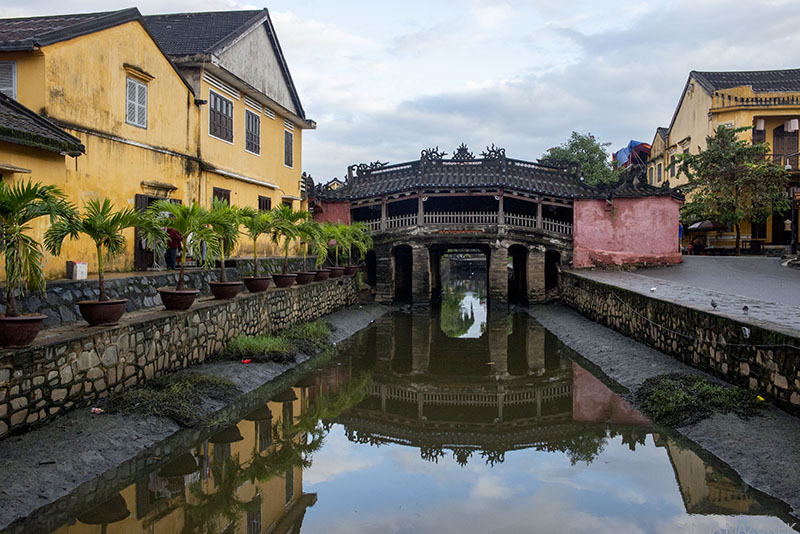 The Japanese Covered Bridge is one of the top sights in Hoi An. After a week of rain, this is the first time I saw blue sky!
5. Hoi An
Why Go: Atmospheric UNESCO old town with lantern-lit streets known for temples, food & clothing tailors
How to get there: Fly into Da Nang & book a 30-minute transfer to town.
Where to stay: Sol’s Villa and Hoianese Tranquil Heritage Hotel
Hoi An is my favorite city in Vietnam. The UNESCO site is one of Southeast Asia’s major seaports and reminds me a bit of Charleston—the same quaint historic charm, old colonial buildings and an overload of tourists.
As per usual, I got up at sunrise every morning to photograph the city and did the same at sunset. Highlights include the Japanese Covered Bridge, the Assembly Hall of Cantonese Chine Congregation, which has cool dragon carvings, and the Assembly Hall of the Fujian Chinese Congregation.
The best Banh Mi spots in town are Banh Mi Queen (I loved the chicken!) and Banh Mi Phuong (Anthony Bourdain loved this spot). Streets Restaurant Café had the best Cau Lau I had on the whole trip. It’s also a nonprofit that trains underprivileged youth to work in culinary and hospitality fields.
How to get to Hoi An
The closest airport is Da Nang, which is roughly a 30-minute drive. I booked a direct transfer to Hoi A from Da Nang on Klook for around $10, but there are even cheaper group transfers. Read reviews before booking!
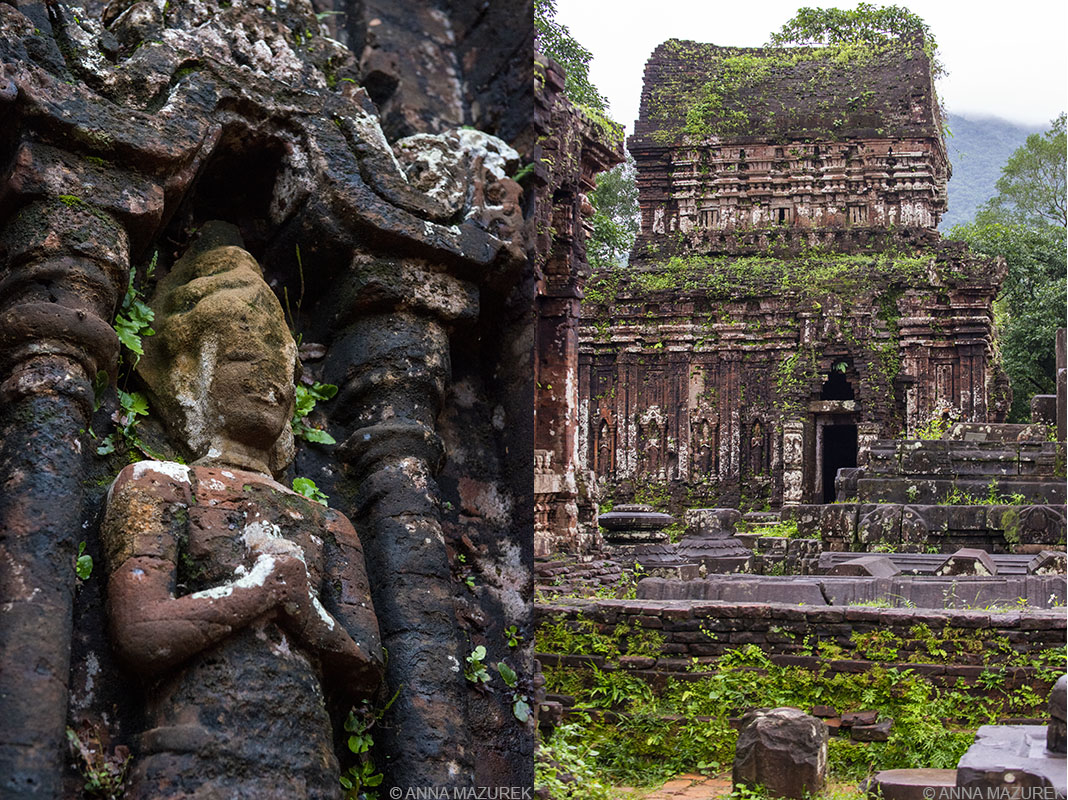 I highly recommend visiting the ruins of My Son, a Hindu temple complex built between the 4th and 14th Century to honor the god Shiva. It’s easily assessable from Hoi An or Da Nang by tour, car or motorbike. I did the sunrise tour to avoid the crowds in my photos.
Day Trips from Hoi An
Hoi An is a great hub to do a few day trips including visiting My Son, the ruins of a Hindu temple complex. (Consider booking one of the sunrise tours I loved being there so early!) You can do it on your own if you have a motorbike. I also recommend renting a bicycle and heading over to the coconut village for a boat ride on one of the circular boats. It’s a very touristy thing but such a fun experience. Check out my Vietnam Instagram story for videos from the trip!
Read my guides to Hanoi, Ho Chi Minh City, Thailand, Chiang Mai, Bangkok and Singapore!
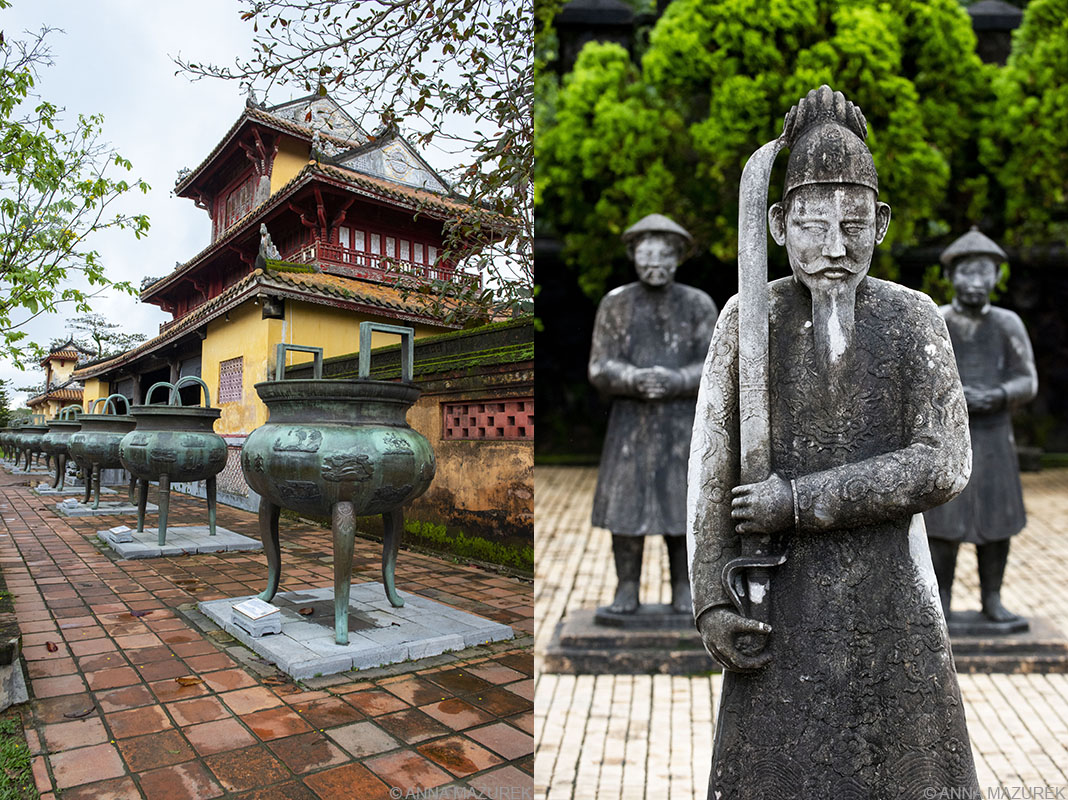 Left: The Nine Brone Urns (tripod cauldrons) in front of The To Temple at Hue’s Imperial Capital. Right: The life-size statues at the Khai Dinh Tomb.
6. Hue
Why go: Former imperial capital on the Perfume River with Imperial City, pagoda and ornate royal tombs
How to get there: Scenic train or bus ride (2.5 hours) from Da Nang over the Hai Van Pass or fly into nearby Phu Bai International Airport
Where to Stay: Azerai La Residence (fancy spot to splurge)
Hue, a former feudal capital, lies along the Perfume River. Explore the remnants of the Nguyen Dynasty, Vietnam’s last dynasty that ruled from 1802 to 1945. Start at the Imperial Capital, a UNESCO site and walled city with 2.5-kilometer-long enclosures. While the site was bombed by both the French and Americans, it’s still worth setting aside a few hours to visit the 20 remaining buildings. The Thiên Mụ Pagoda is worth a quick visit, too.
My favorite part of the city is visiting the seven royal tombs on the outskirts of town, including the Tomb of Khai Dinh Tomb (amazing statues), Gia Long (oldest and rarely visited) and Minh Mang (most stately). All the tombs are located outside the city, so you’ll need a day tour or your own wheels to visit. It would take two days to visit all seven.
How to Get to Hue
While there’s an airport about nine miles from the city center, the best way to get to Hue is driving or riding the train from Da Nang along the scenic Hai Van Pass. Book ahead for the train via 12Go.Asia to secure a window seat facing the sea for the roughly 2.5-hour journey.
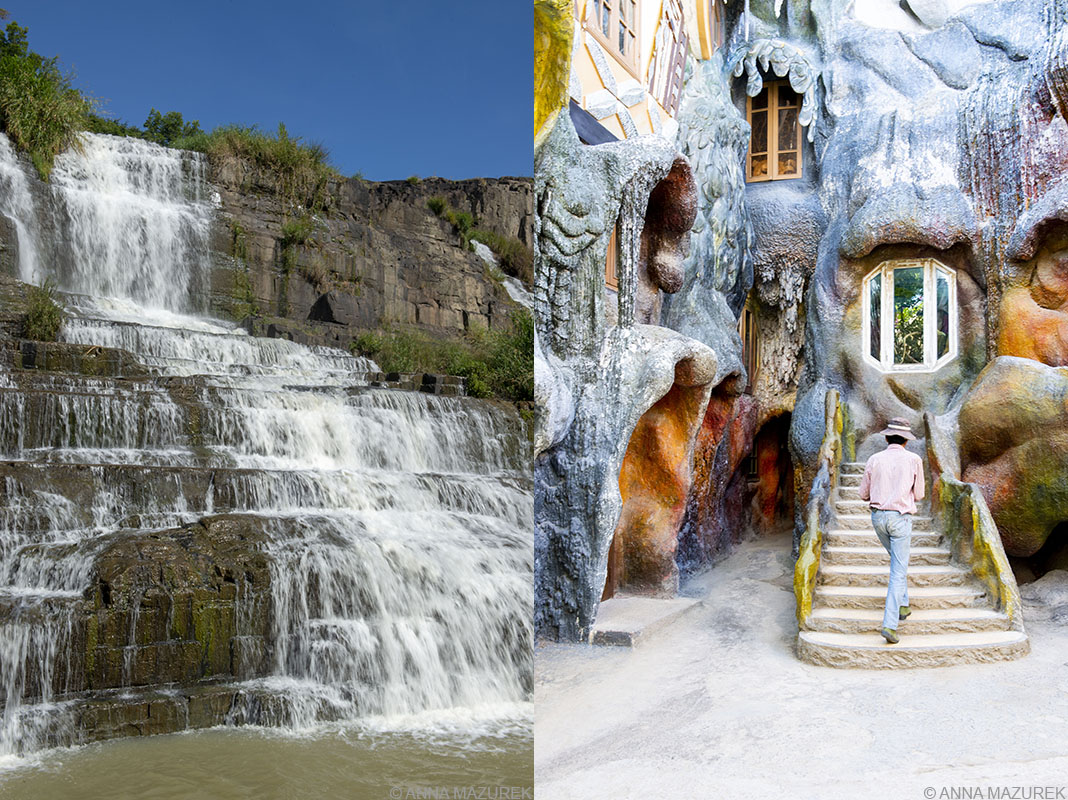 Left: Pongour Waterfalls outside of Da Lat. Right: Crazy House, a Gaudi-inspired tourist site that is also a hotel mixed in the site.
7. Da Lat
Why Go: Cooler climate mountain city for waterfalls, adventure sports & quirky architecture
How to get there: Fly to Lien Khuong Airport nearby or take buses/vans from Nha Trang, Mui Ne or long‑haul routes.
Da Lat is the Medellin of Vietnam. The French fled to this mountainous region to escape the heat. It’s now the adventure capital—trekking, canyoning, white water rafting and mountain biking are all options. The vibe is much more laid back than the rest of Vietnam, which I loved.
I spent most of my time here visiting waterfalls. My favorite was Pongour, but the roller coaster at Datanla waterfall is a must. (It’s a one-car self-controlled system so it’s super fun!) I recommend checking out the Hang Nga Crazy House, which was built by a Vietnamese architect inspired by Gaudi. You can visit and also book a room for the night! Don’t miss the 100 Roofs Bar that resembles the set of a Lord of the Rings movie.
How to get to Da Lat
The closest airport is Lien Khuong Airport, roughly 18 miles south of the city. There are sleeper buses from Hanoi (7 hours) and vans/buses from Nha Trang (4 hours) and Mui Ne (5 hours). I took a long-haul sleeper bus from Hoi An (14 hours).
Southern Vietnam
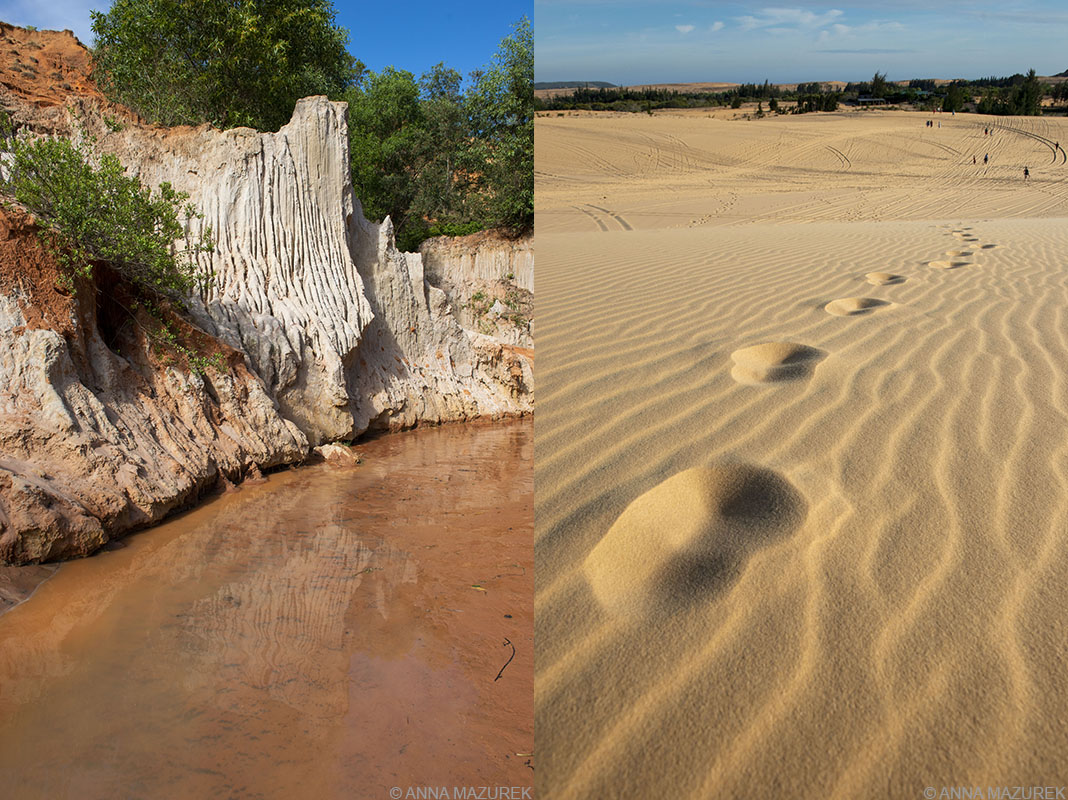 Left: Fairy Spring in Mui Ne, Vietnam. Right: The “white” sand dunes that are 24 km from town.
8. Mui Ne
Why Go: Kitesurfing base with red and white sand dunes, Fairy Spring and access to Ke Ga Lighthouse
How to get there: Bus 5.5 hours from Da Lat or 3.5 hours to Ho Chi Minh City (closest airport)
Mui Ne is the kitesurfing capital of Vietnam. The town itself doesn’t have the best beach but the town is close to some cool attractions. For $5, you can take a jeep tour to the red sand dunes near town and the white sand dunes (24 km from town). The tours also take you to Fairy Spring, a stream that flows through some cool rock formations and sand dunes. (It’s easily accessible from town by foot.)
The best place to eat in town is a Mediterranean spot called Sindbad and Dong Vui Food Court, an open-air food court with independently run stalls that range from German sausages to paella. There are also loads of Vietnamese options and tons of beer.
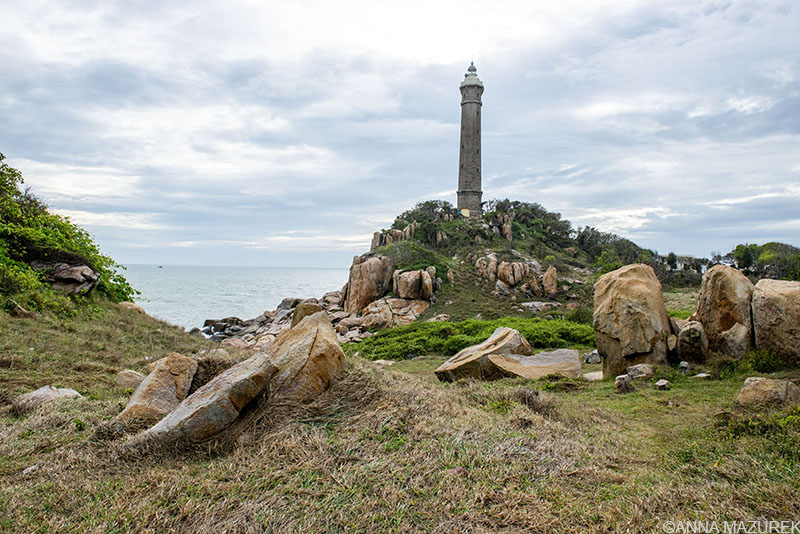 Ke Ga Lighthouse was one of my favorite spots in Central Vietnam! Very few people visit so I totally recommend it. I had the island to myself!
The main reason I went to Mui Ne was to visit the Ke Ga Lighthouse, a remote lighthouse built by the French in 1899 that lies on a rocky islet 300 meters from the coast. I’m obsessed with lighthouses so I had to go. To get to the lighthouse, you need a scooter or a car. Then, you have to take a ferry to the island ($6 USD in 2019). I had the island mostly to myself except for a few officials working on the island.
For the best photos of the lighthouse, take the dirt paths that lead off to the side and shoot back toward the lighthouse. The lighthouse is right by a fishing village, so the sea is lined with boats to the right of the islet, which is also great for photos.
How to get to Mui Ne
I took a bus from Da Lat to Mui Ne (5 hours) then I took a bus to Ho Chi Minh (3 hours). There is no train station in Mui Ne and the nearest airport is Ho Chi Minh. You can book group and private car transfers on Klook to Ho Chi Minh and other cities.
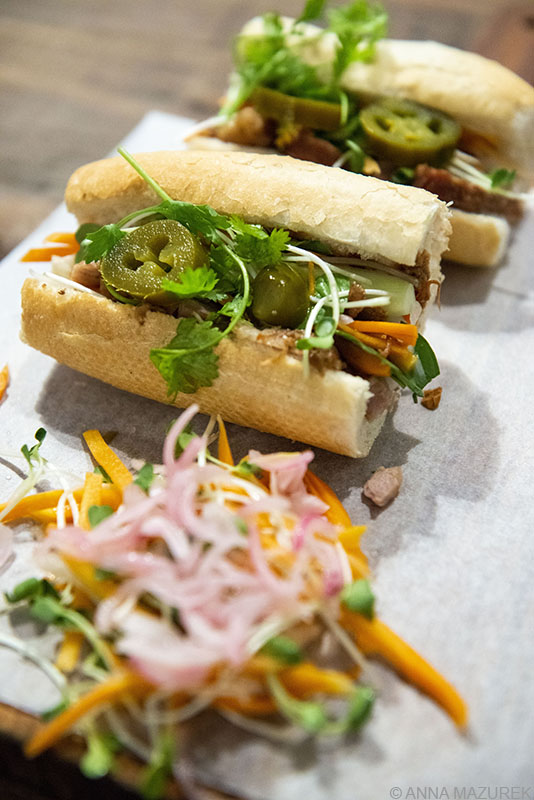 Banh Mi from L’Usine cafe in Ho Chi Minh.
9. Ho Chi Minh City (Saigon)
Why Go: Big‑city energy, war history museums, colonial landmarks and standout craft beer scene.
How to get there: Fly into country’s busiest airport at HCMC, then onward by bus or train nationwide.
Where to stay: Fusion Oriental Saigon Centre and Au Lac Charner Hotel
Ho Chi Minh City (HCMC) is another epicenter of the motorbike madness. This city is worth a visit for a few days just to witness the chaos and visit the war museum and other war-era sights. The view from Bitexco Financial Tower ($9 USD) really helps put into perspective the expansive size of the city. (I suggest buying tickets advance through Klook for your preferred time slot because it’s same price as buying in person without any lines.)
Surprisingly, HCMC is the craft beer capital of Southeast Asia. My favorite breweries were Pasteur Street Brewing Company (great IPA & tap room) and Heart of Darkness. BiaCraft and Belgo (Belgian brewery) also have good brews and food.
Take a morning walk to view the 19th-century French colonial architecture, including the yellow Central Post Office, Notre Dame Cathedral (under renovation until 2027) and the 1897 Opera House. The only way to see the opera house interior is to attend a show—one of the frequent AO Show performances combining acrobatics, music and dance, or a production of the Ho Chi Minh Ballet Symphony and Opera.
My favorite cafes and sandwich spots to eat are The Old Compass, L’Usine, The Vintage Emporium, and Banh Mi 3362. ABC Bakery Café was a great spot to grab a fast and cheap breakfast to go!
Where to Stay in Ho Chi Minh City
Au Lac Charner ($73/night plus taxes) is my favorite hotel with a rooftop pool in Ho Chin Minh City. It also has free breakfast and is located by the Bitexco Financial Tower. (My favorite hostel closed during the pandemic so I don’t have any hostel suggestions, unfortunately.) If you’re looking to splurge, the Park Hyatt Saigon ($289) is the nicest hotel in town with an amazing pool, gym and a mind-blowing breakfast! (I stay at the Park Hyatt for work but at the Au Lac Charner otherwise.)
Fore more details, check out my Ho Chi Minh City Guide!
How to get to Ho Chi Minh City
Ho Chi Minh is home to the busiest airport in Vietnam and the main transport hub. (I always fly through Ho Chi Minh when I’m flying back to the U.S. from Southeast Asia because I fly through Japan because of my successful points hacking with American Airlines/ oneworld alliance.) You can take buses, vans and the train anywhere in Vietnam from there. Keep in mind that Hanoi and Ho Chi Minh are on opposite ends of the country and a 30-hour train ride apart.
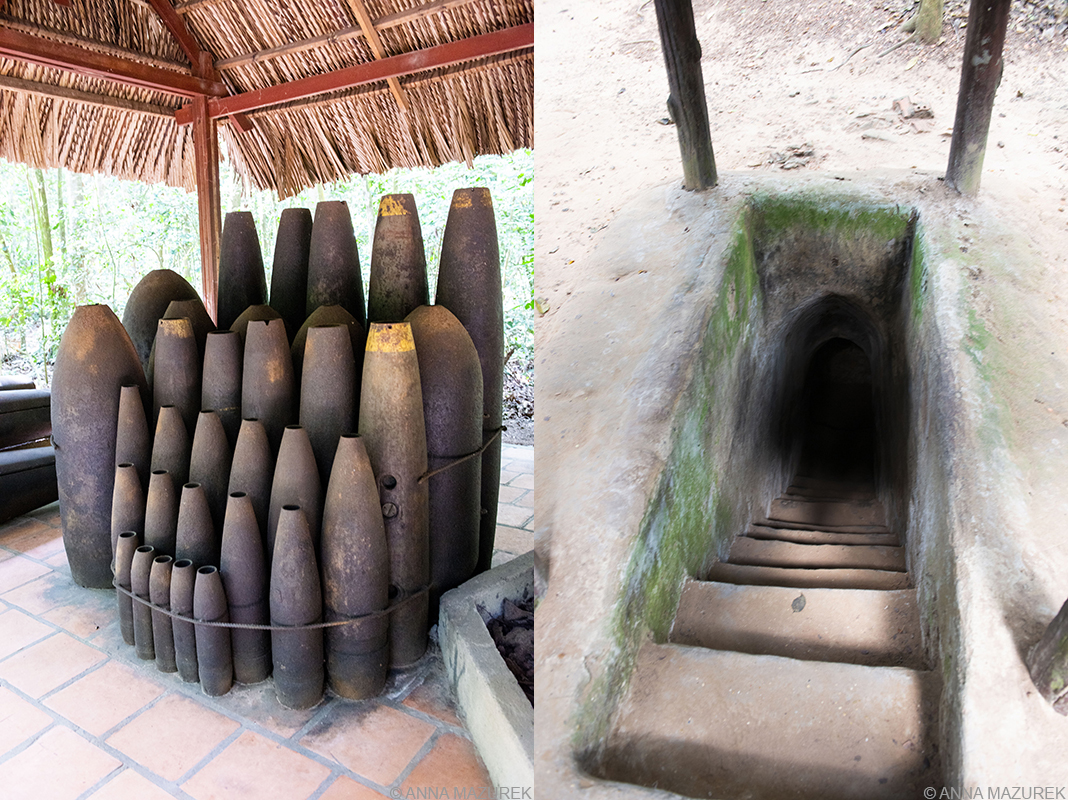 Left: Artillery left over after the Vietnam War is on display at the Ben Douc tunnels, part of the Cu Chi Tunnels. Right: The entrance to one of the tunnels.
10. Cu Chi Tunnels
Why Go: Historic Viet Cong tunnel network offering an up‑close perspective on the war.
How to get there: Day tour from Ho Chi Minh City or public buses to Ben Duoc/Ben Dinh.
Cu Chi is a rural area about 30 to 40 km from Ho Chi Min that’s famous for a legendary spiderweb of tunnels used in the 1960s by the Viet Cong to control the area. There are two sets of tunnels: Ben Dinh and Ben Duoc. Ben Dinh is the most touristy one because it’s easier for tour buses to reach it. Ben Duoc is the best one in my opinion because it’s not touristy. (Trust me, I’ve been to both!) There was only a handful of people when we went. (We went by public bus from Ho Chi Minh City, which was one of my favorite days in Vietnam. I wrote a post about how to get to the Ben Douc tunnels by public bus.)
I’ve found conflicting sources that state that Ben Dinh was constructed only for tourists and Ben Douc is part of the real tunnel network. I can’t find a reliable source to verify this. Lonely Planet says that Ben Douc was widened for tourists but is less touristy. (There’s a set of stairs leading into the tunnels, which clearly aren’t original. Honestly, they probably both were widened at the entrances, but they are still tiny inside.)
How to get to the Cu Chi Tunnels
While it’s easy to find tours to visit Ben Dinh, I recommend taking the public buses (they have air conditioning!) to Ben Douc using my step-by-step guide!
Mekong Delta
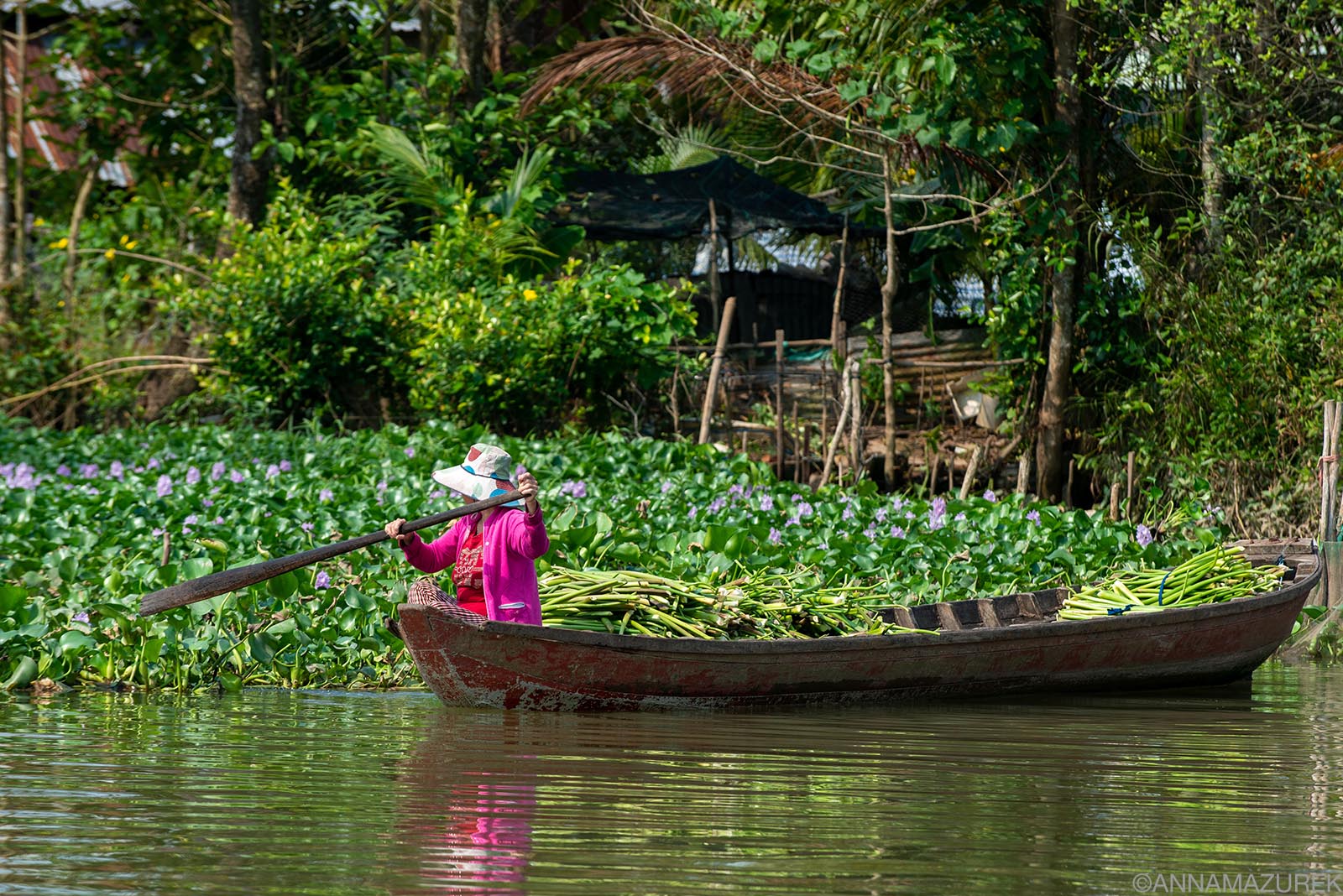 A woman collects water hyacinth, an invasive speices that’s made into baskets and other items, along the waterways near Cai Be.
11. My Tho, Ben Tre & Cai Be
Why Go: Gateway Mekong Delta city with boat trips on narrow canals, orchards and Vinh Trang Pagoda
How to get there: Day tours or a roughly two-hour bus ride from Ho Chi Minh City
Most day trips from Ho Chi Minh City visit one of these three places: My Tho, Ben Tre and Cai Be due to their proximity to the city. Tours usually include sampan boat rides on the river, visits to fruit farms and a coconut candy workshop. Most include a stop at the enormous Vinh Trang Pagoda, an enormous Buddhist temple that I absolutely love. It’s always decorated beautifully, especially during TET.
If you are short on time, there are early-departing day tours that visit the Cu Chi Tunnels and Mekong Delta in one day. If you have more time, go further south to Can Tho or deeper into the delta to Chau Doc.
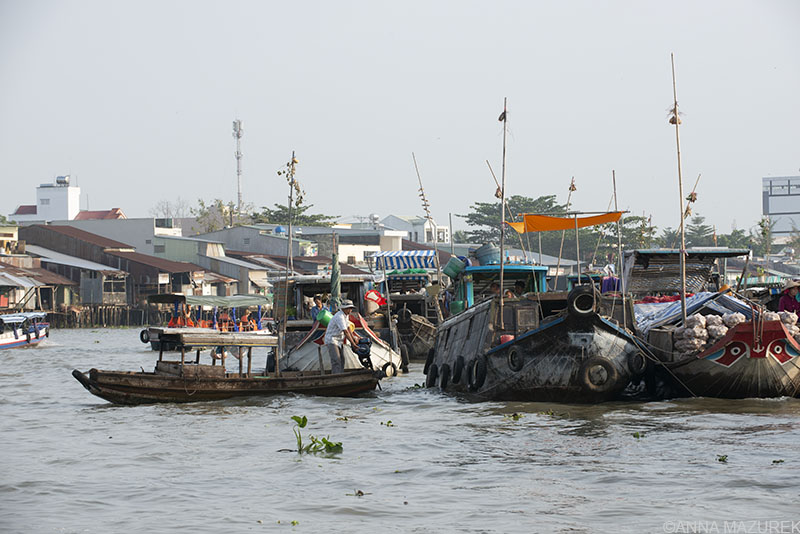 Vendors tie what they are selling to poles at the Cai Rang Floating Market in the Mekong Delta near Can Tho.
12. Can Tho
Why Go: River‑life experience with floating market, orchards and nearby market towns.
How to get there: About a four‑hour bus from Ho Chi Minh City or fly to nearby Can Tho Airport.
Can Tho is the main hub in the Mekong Delta that’s filled with large gardens and bustling markets. It’s the jumping-off point for visiting the famous Cai Rang Floating Market, the biggest one in the Delta. Vendors tie what they are selling to a pole so you can shop easily. There are also boats that serve coffee.
Tours are available, but I recommend showing up at the dock at 5 a.m. to negotiate for your own boat. I went with a friend and we met three cool Australians who joined us. We paid about $4.30 USD each. One of the highlights was stopping by a fruit orchard. We got to paddle around in little boats in the orchard and sample the fruits. This town is also memorable because it’s how I ended up in a van with a rooster for five hours.
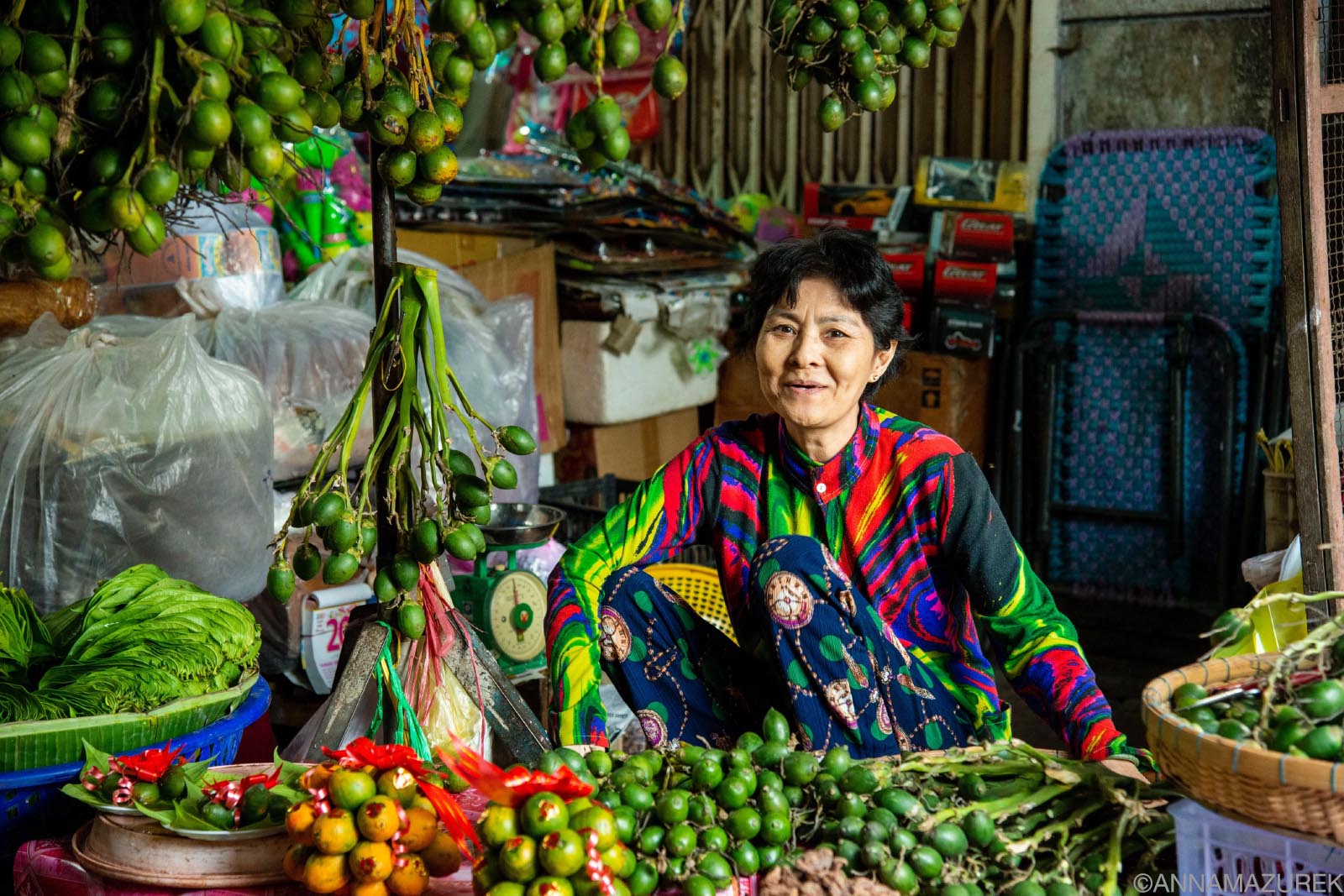 A friuit vendor at the Chau Doc market, one of the least touristy parts of the Mekong Delta in Vietnam.
13. Chau Doc
Why Go: Lesser visited Mekong town near Cambodia border with rainbow-hued floating villages, photogenic markets and Cham communities
How to get there: Five-hour bus from Ho Chi Minh City or three-hour bus from Can Tho
Where to stay: Victoria Chau Doc Hotel
This lesser-visited Mekong Delta town is located on the Hau River near the Cambodia border. It’s surrounded by floating villages and fish farms painted in rainbow hues, a recent ploy by the tourism board to lure visitors. Opt for a boat ride to visit one of the farms.
It’s honestly my favorite town on the delta because I love the photogenic market—the water-side wet market isn’t for the squeamish but is an excellent slice of daily life. Hop on a trishaw, a three-wheeled rickshaw, for a loop of the city through the bustling dry goods market streets and stopping at the colorful temples, like Đình thần Châu Phú.
How to Get to the Mekong Delta
The main airport is in Can Tho (Can Tho International Airport), but there are smaller regional airports. Most people fly into Saigon and either drive or bus to the delta, which is what I’ve also done. It’s about a four-to-six-hour bus ride depending on your destination. Book in advance on 12go.asia to make sure you get a lower-level bed on a sleeping bus!
If your schedule doesn’t allow an overnight visit, there’s plethora of day trips from Saigon that typically visit the My Tho area. Be warned—a day trip will make you want to come back and spend more time.
Vietnam FAQ
 SafetyWing travel medical insurance covers travelers in Vietnam and over 180 countries.
Do you need travel medical insurance for Vietnam?
Yes, travel medical insurance is one of the most important things to purchase for any trip abroad, especially Vietnam. It covers all the things that could go wrong from injuries to travel delays so that you don’t have to worry and can focus on traveling!
SafetyWing’s Nomad Insurance offers $0 deductible travel medical insurance coverage for over 180 countries for people aged 69 and under when traveling outside their home country. The best part is that it only costs a few dollars a day! If you get sick or injured abroad, you can visit any hospital or doctor. Other benefits of Nomad Insurance include coverage for lost checked luggage, travel delays over 12 hours, motor accidents (if properly licensed, wearing all safety equipment and not intoxicated) and injuries from sports or leisure activities. You can even add adventure sports, electronics theft and U.S. coverage (for non-residents) to your policy.
One of the best things about SafetyWing is that you can buy policies abroad and speak to a REAL human from the 24/7 customer support team if you have questions! (I can vouch that they are excellent at assisting and will follow up with you afterward.) Pay in full or choose an auto-renewing plan that can be canceled anytime.
If you’re abroad for 90 days, you can get 30 days of home-country coverage. (For the U.S. residents, it’s 15 days.) Plus, every single part of the process from purchasing a policy to filing a claim is easy, which is why SafetyWing has been the best travel medical insurance policy for me. Read my review of using SafetyWing in Southeast Asia.
Where’s the best place to buy a SIM card in Vietnam?
The easiest thing to do is buy a Vietnam-specific eSIM card from Airalo that will work instantly when you arrive. (Airalo partners with Viettel, the fastest network in Vietnam.) For more details, read my review of Airalo eSIM cards in Southeast Asia.
If you are traveling to multiple countries in Southeast Asia on a short trip, then consider one of their Asia Regional eSIM cards. (Both the country-specific and regional eSIMs have worked wonderfully for me and even have a mobile hotspot option that’s critical for me because I’m always working remotely.) Keep in mind it’s always cheaper to buy a country-specific eSIM than a regional one.
Promo Codes: New customers save 15% off with NEWTOAIRALO15 and existing users save 10% with AIRALOESIM10.
Be sure to join the free Airalo Loyalty Program to earn 5% cash back for every purchase, which can be redeemed on future purchases. For more about eSIM cards, check out this post on the pros and cons of eSIM cards!
Where is the best place to get clothes made in Vietnam?
While Ho Ani is the most popular spot in Vietnam to get clothes made, I was unimpressed because every tailor shop I visited only seemed to only have material to make winter suits or wedding dresses. I was looking for wrinkle-resistant fabric for summer dresses and tanks. I tried again in Ho Chi Minh City but didn’t have any luck until a friend introduced me to Elegant Silk, the best place to get clothes made in Ho Chi Minh. This tailor had a wide variety of fabric options. She had silk blend fabric that was fairly wrinkle-resistant. In early 2024, I had her copy an existing tank and dress while also making a new wrap-around skirt for $70 USD.
In Hoi An, I have friends who raved about Blue Chic for men’s suits and Two Ladies for summer dresses.
Where is the best craft beer in Vietnam?
Vietnam has the best craft beer in Asia. Trust me, I’m a craft beer connoisseur and have traveled and lived all over Asia. While Ho Chi Minh is the epicenter, there are also taprooms in Hanoi. The two biggest brands—Pasteur Street Brewing and Heart of Darkness—have multiple tap rooms in HCMC while Pasteur has one in Hanoi. Both do a great job of incorporating local flavors like jasmine and pomelo. (Pasteur Street’s signature Jasmine IPA and Pomelo IPA are my two favorites.) BiaCraft and Belgo (Belgian brewery) also have good brews and food in Ho Chi Minh City. In Da Nang, stop by the Heart of Darkness taproom.
What about the caves in Vietnam?
Phong Nha-Ke Bang National Park, a UNESCO site, is filled with hundreds of caves including the world’s biggest cave, Hang Son Doong. (Two of my friends went to Hang Son Doong and loved it. It’s not cheap and you have to book months if not a year in advance.) I was in the area during the rainy season so I didn’t visit any of the caves. (Water levels are a huge safety issue during the rainy season. ) April to August is the best time to go.
How are the beaches in Vietnam?
I’m not a fan of the beaches in Vietnam. I’ve been on a quest to find the best beaches in the world, and they aren’t in Vietnam or even Southeast Asia for that matter. To be brutally honest, every beach I went to in Vietnam was badly polluted.
I even went to Phu Quoc island, one of the main attractions. I went to all the prime snorkeling spots and there was trash and beer cans in the coral. This part of the world is notorious for plastic pollution, which is really bad in rainy season. But, I was there in January in the dry season, and it was still bad!
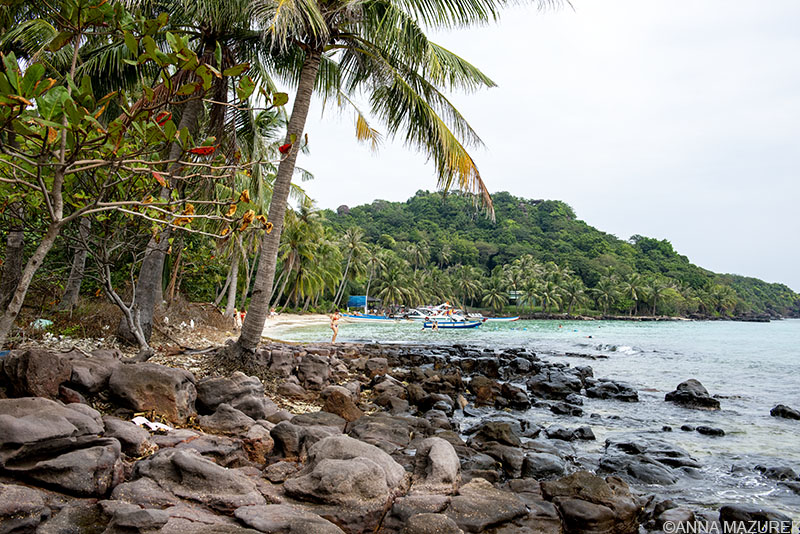 This is a shot from one of the islands near Phu Quoc that’s part of all the snorkeling tours. All the debris you see on the left side of the frame under the trees is some kind of trash or plastic. Aside from the main small bit of beach, the sides of the island were covered with trash like this.
I visited three beaches in Vietnam—Mui Ne, Na Trang and Phu Quoc—on a 2019 trip and never wanted to go back to them. They were mostly polluted or overrun with tourists. If you stay at a resort then, it’s nice because they clean the beaches, but the snorkeling will still be polluted. (In my opinion, the best beaches in the world are in the Caribbean. Anguilla and Costa Rica are hard to beat. Maldives (resort islands) and Fiji are nice, too.)
Please be kind to the environment and avoid single-use plastics in this part of the world. Read this post about how to be a better eco-friendly traveler.
Vietnam 101: Logistics, Costs & Safety
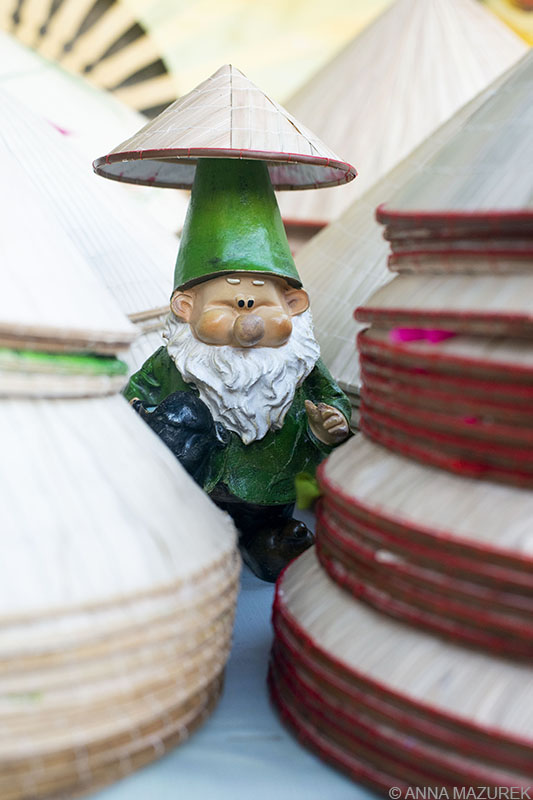 Alfred the Gnome did a bit of hat shopping in Hoi An. Clearly, this hat was meant for a gnome.
When to Go To Vietnam
Hanoi, Sapa & Northern Vietnam: March – May & September – November
Central Vietnam (Hoi An, Mui Ne, Da Lat): March – September
Ho Chi Minh & South: November to February
July and August are high season. Monsoon rains are common. It’s really cold in Hanoi and northern Vietnam during January so avoid those months especially if you want to swim in Ha Long Bay.
The Cost of Traveling in Vietnam for a Month
In 2019, I spent a month in Vietnam and spent $991 in total. If you look through my Vietnam Instagram story, you’ll find a saved story highlight on Vietnam with a detailed breakdown. This includes my $156 flight from Thailand.
Average Transport Costs: overnight buses ($15); overnight trains ($30) and the ferry roundtrip to Phu Quoc was $20.
Accommodation: Hostels cost about $4-9/night.
Food: Street food ranges from $1.40-2/meal. Restaurants start at $3 and up. Craft beer is $5 in the big cities.
Splurges: I splurged on a $32 snorkeling trip in Phu Quoc (not worth it), $45 lighthouse tour (Ke Ga Lighthouse – totally amazing) and $50 Ba Na Hills visit (only good if the weather is nice).
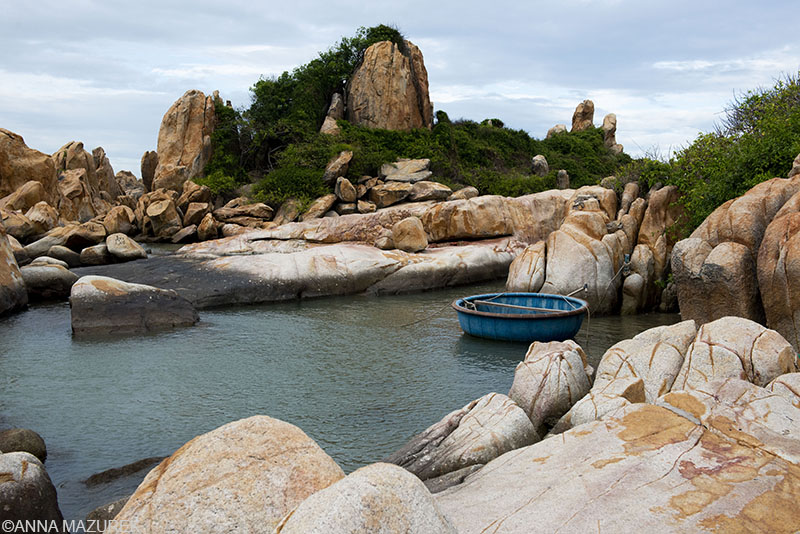 A round boat anchored to the island where Ke Ga Lighthouse is located outside of Mui Ne in Central Vietnam.
How to Get a Vietnam Visa
Americans need a visa before entry into Vietnam, and an e-visa is the easiest option that I always use. (I visit every year.) E-visas are available for up to 90 days with single or multiple entries. I applied online for a 30-day e-visa, which was approved really quickly. The normal turnaround time is three “working” days in Vietnam. Please note these are only valid if you arrive at one of their main ports, which is most of the major airports and major land borders. Be sure to check the list in advance.
The cost is $25 for single entry and $50 for multiple entry. Apply online at https://evisa.gov.vn/. Make sure to apply early. I made a mistake on my recent multi-entry application, and it took them three days to tell me it was wrong. I had to start over again from scratch and wait another three days to get it approved.
Is Vietnam Safe?
Overall, Vietnam is a really safe place to travel. There are a lot of scams in Hanoi, Ho Chi Min and Na Trang. I honestly felt like taxi drivers were always trying to scam me. (Never take a street taxi by meter because the meters are often rigged. Agree on a price in advance or take a Grab, a rideshare app that’s similar to Uber and used all over Asia.)
Keep a steady hand on your phone, wallet or purse in the Hanoi and Ho Chi Minh. Thieves on motorbikes are a real concern. I met people who narrowly avoided losing their phones this way. I use a phone case with a finger loop so I always have a stronger grip on my phone.
There’s still a large amount of unexploded landmines. Be on high alert in rural areas and abide by all signs. For example, the My Son ruins had signs warning you to stay on the trails.
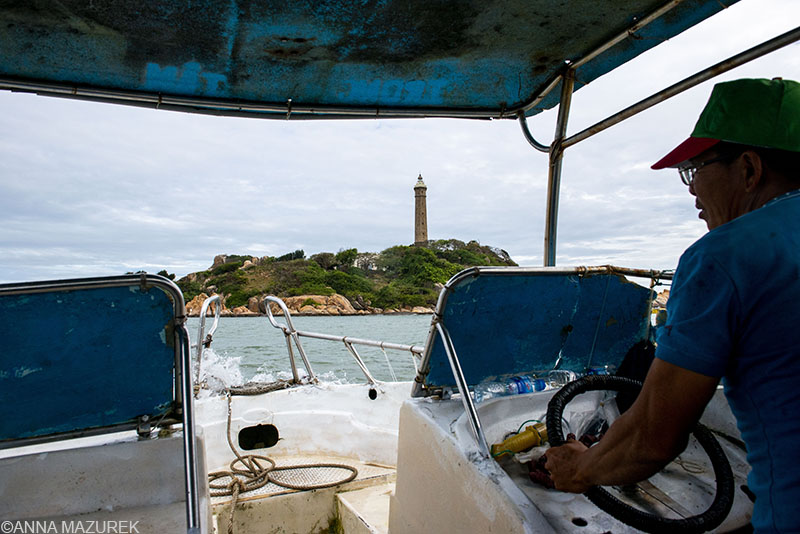 The short boat ride to Ke Ga Lighthouse was a little sketchy but thankfully, the rest of the transit in Vietnam was reliable and felt a lot safer! (I was really close to the coast, so I knew I was safe.)
Vietnam Transit Options
Buses are the cheapest way to travel. Overall, the sleeping buses are fairly nice. You’ve got a lot of space, and they are air-conditioned. I suggest a bottom bunk if you have a lot of luggage. (You have to take off your shoes and put them in a bag, which I find annoying when you stop at rest stops. They give you communal flip-flops but that grosses me out.)
Trains are okay but pricier. In 2019, it was about $30 for me to go from Da Nang to Na Trang. (There were definitely roaches in my cabin so take a sleep sack to sleep in!) In big cities, I used Grab, a rideshare app that’s popular all over Asia. The app also offers motorbike taxis, which I used a few times. Helmets are provided.
I took a ferry to Phu Quoc island, which was really nice. It was $20 roundtrip. Buy tickets for all transit from the station if possible. It’s always cheaper this way. Domestic flights are fairly cheap but always connect through big cities. In 2019, I traveled by land my entire month-long trip.
Overall, thoughts on Vietnam:
I always enjoy visiting Vietnam. It’s a bit more intense than the rest of Southeast Asia. There is some stunning scenery and the food was amazing. I highly recommend it but just avoid the beaches during the rainy season.
For more about Southeast Asia, check out these posts:
Pros & Cons of eSIM Cards for Travel
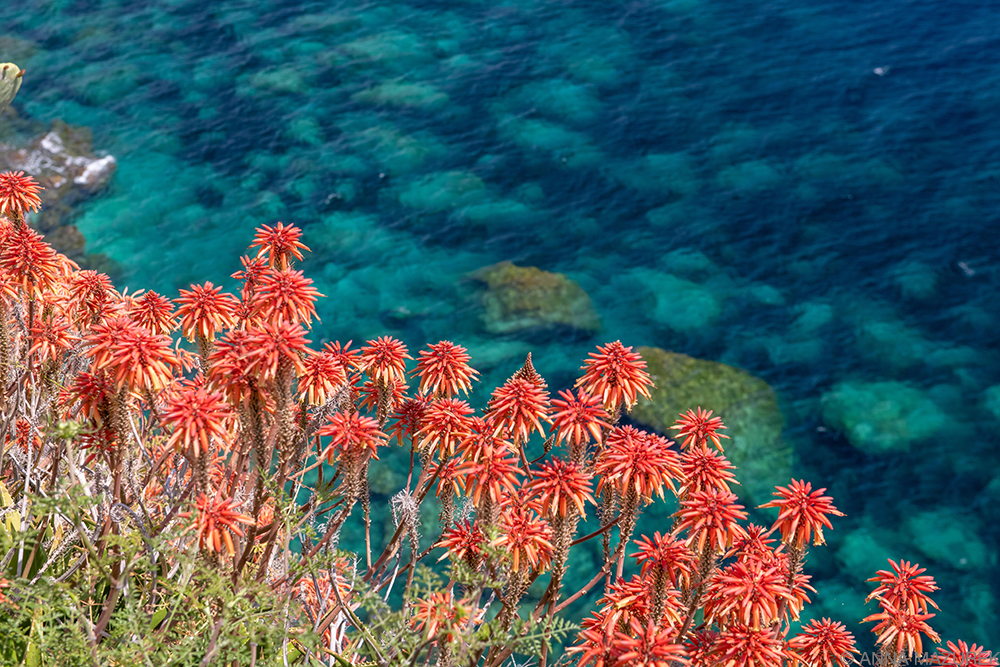
Bonifacio, Corsica // I used an EU SIM card I bought in Italy for a trip to three different countries in the Mediterranean with success.
Since I travel full-time, my biggest travel pet peeve is finding affordable cellular data plans abroad. Historically, I’ve always bought local SIM cards because they are significantly cheaper than paying $10/day for my U.S. plan with Verizon to work abroad.
When Apple removed SIM card slots from the iPhone, I had no choice but to reluctantly switch to eSIM cards. For a while, I traveled with my old iPhone 13 as a backup in case I had to buy a physical SIM card. Now, eSIMs have become my lifeline.
I’ve spent the last three years researching and testing eSIM cards across the globe, from Southeast Asia to Southern Africa. Keep reading for more details about eSIM cards for international travel, along with eSIM discount codes to cut costs!
Affiliate links are used in this post. If you make a purchase, I earn a small commission at no cost to you, which goes toward blog maintenance costs. I only recommend products and companies I truly love and use.
In this Post
What are the cons of an eSIM card for travel?
Do eSIMs offer unlimited data?
Are eSIMs cheaper than SIM cards for travel?
Do eSIMs work in the U.S. for travel?
Do eSIMs support personal hotspots?
Are eSIMs safe? Are there privacy concerns with eSIMs?
What is the best eSIM card for international travel?
What is an eSim card?
An eSIM card essentially a digital SIM card included in many newer phones. (Apple nixed the SIM card tray on U.S. models with the iPhone 14, so eSIMs are the only option for those models and newer ones going forward.) It makes things more convenient since people no longer have to go to a store to get a physical SIM card and find a tool or paper clip to open the SIM tray! The main benefit of an eSIM card is that it can work in multiple countries, so it eliminates the hassle of buying multiple SIM cards. Plus, it’s much cheaper than paying for an internatinal plan through a U.S. carrier.
In parts of Asia, you can still buy the newest iPhone model with a physical SIM tray. (The only negative side to buying an iPhone abroad is that the AppleCare plan doesn’t include the theft option.)
What are the cons of an eSIM card for travel?
The cons of eSIM cards are that they can be tricker to activate and aren’t compatible with all phones or phone plans. I had issues with my previous iPhone 13 Pro initially (locked by Verizon) but haven’t had any issues with my current iPhone. Now, most eSIM apps will tell you if your phone is compatible before purchasing.
The biggest problem with eSIM cards is that they don’t cover some remote parts of the world. Options are either limited or very expensive. I struggled to find an affordable eSIM card for my trip to Laos in Southeast Asia last year but was able to buy a cheap one from a local provider at the airport with no issues. I had similar issues in Africa.
Also, learn from my mistakes: If you’re buying a regional or global eSIM card, be sure to check that every country on your trip is covered by your plan.
Honest eSIM Reviews for Travel
Since I travel fulltime, I constantly test eSIMs across the globe. Here are my reviews:
- Airalo eSIM Reviews for Southeast Asia, Europe and Africa.
- Saily eSIM Review for Southeast Asia.
How do I get an eSIM card?
To set up an eSIM card on your phone:
1. Download the app on your phone from any of the eSIM card brands, including Airalo, Saily, GigSky, or Truely.
2. Choose and purchase a global, regional or local eSIM card, depending on your needs. (The apps will even tell you right away if your phone is compatible before purchasing!)
3. Follow the on-screen instructions to install, which I recommend doing before leaving for your trip.
4. In the cellular settings on your phone, make sure the eSIM card is selected for cellular data.
Important Note: The plan will not activate until you arrive in the destination. If it doesn’t connect automatically, toggle Airplane mode on and off.
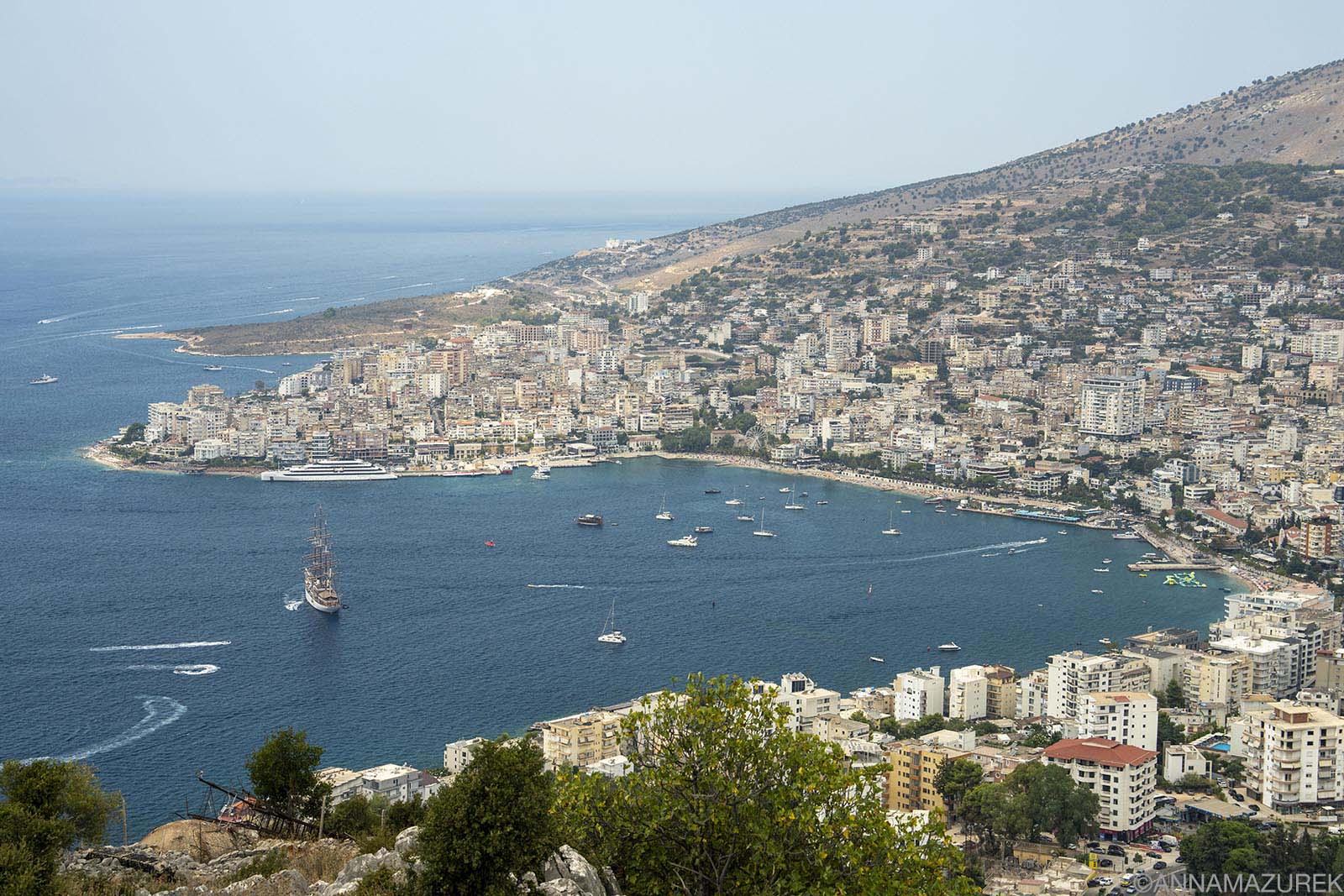 Sarandë, Albania // I used an Airalo 10 GB Europe eSIM for seamless connectivity hopping between Greece, Croatia, Albania and Montenegro recently. Since the latter two are not E.U., so I’d had pervious issues with a physical SIM card bought in Greece not working in those countries. The eSIM solved the issue.
Do eSIMs offer unlimited data?
Yes, there are several eSIM companies that offer an unlimited data option, but read the fine print. The word “unlimited” is deceptive because there’s always a “fair use” data limit, where you get a set amount of high-speed data (usually 3-5GB) per day. After that, data speeds are throttled, which makes sense. This also really affects hotspot users. I’ve seen brands that cap hotspot data at only half a gig a day, which is insane.
Most unlimited plans are more customizable allowing you to pick exactly the number of days you need but are always more expensive that plans with set data limits.
Currently, Airalo, Saily, GigSky and Truely offer unlimited data plans in certain parts of the world.
Are eSIMs cheaper than SIM cards for travel?
It depends. While eSIMs for travel are cheaper than paying for a U.S. international plan, they are not cheaper than buying a local physical SIM card in most places.
With companies like Airalo or Saily, it’s $16-20 for 5GB in various regions of the world, which is a good deal and more convenient if you’re country-hopping. If you’re staying in one place long-term, it’s still cheaper to buy a local SIM card. In Thailand, I pay roughly $10/month for an unlimited plan and in Laos, I paid $4 for 30 GB a few months ago buying directly from a local network.
Always avoid buying one in an airport—everything is usually half-price outside the airport! I’ve found physical SIM cards to be slightly less expensive than a regular SIM, but most phones don’t have this option anymore.
The Best eSIM Discount Codes
- Airalo: 15% off for new customers with NEWTOAIRALO15, or 10% off for existing users with AIRALOESIM10.
- Saily: Use code ANNA10 for a 10% discount.
- GigSky: Free 15-day plans and up to 30% off all plans for select Visa card holders in the U.S., Canada & Latin America.
- Truely: Use ANNA15 for 15% off all plans, including unlimited data.
Do eSIMs work in the U.S. for travel?
Yes, eSIM cards work in the U.S. for travel. Nearly, every major eSIM card company has plans in the U.S. Last spring, I ran out of data on my Verizon plan right before a three-month trip to Europe, so I but didn’t want to renew for another month. I bought at three-day Airalo plan, and it worked perfectly. This is great for people traveling in the U.S. or expats returning for a short stint. Here is a list of their U.S. plan options.
Do eSIMs support personal hotspots?
The short answer is yes, eSIMs support personal hotspots but not all do! This is a dealbreaker for me because I work while I’m traveling and most of the time, I find that WiFi networks are terrible. I rely heavily on my personal hotspot for WiFi on my computer for Zoom calls.
I’ve had great success using my personal hotspot with both country-specific and regional Airalo eSIMs in Asia recently in Japan, Korea and Southeast Asia. Airalo says it’s available if the carrier supports it, so it’s hard to say if it will work every time, but it’s always worked for me. (I still travel with my old iPhone 13 Pro in remote areas as a backup in case I need to buy a physical SIM to hotspot!)
I’ve successfully been able to hotspot to my computer using plans from Airalo, Saily, GigSky, and Truely.
Are eSIMs safe? Are there privacy concerns with eSIMs?
eSIM are as safe any doing anything on the internet. eSIM providers require you to use their app to activate and use the service, which means you can be tracked. Apple users should turn on the “ask app not to track” setting to avoid this. I’m sure Android devices have a similar setting. In some ways, eSIMs are safer.
If your phone is stolen, you can easily switch the service off your phone to prevent your number from being stolen. If you’re really concerned, you can also use a VPN for added security. (Saily eSIM cards actually include a virtual location feature.) I personally use NordVPN, which is the company that owns Saily, as my VPN for my phone and Mac for traveling. For more about VPNs, check out my post about two-step verification and traveling.
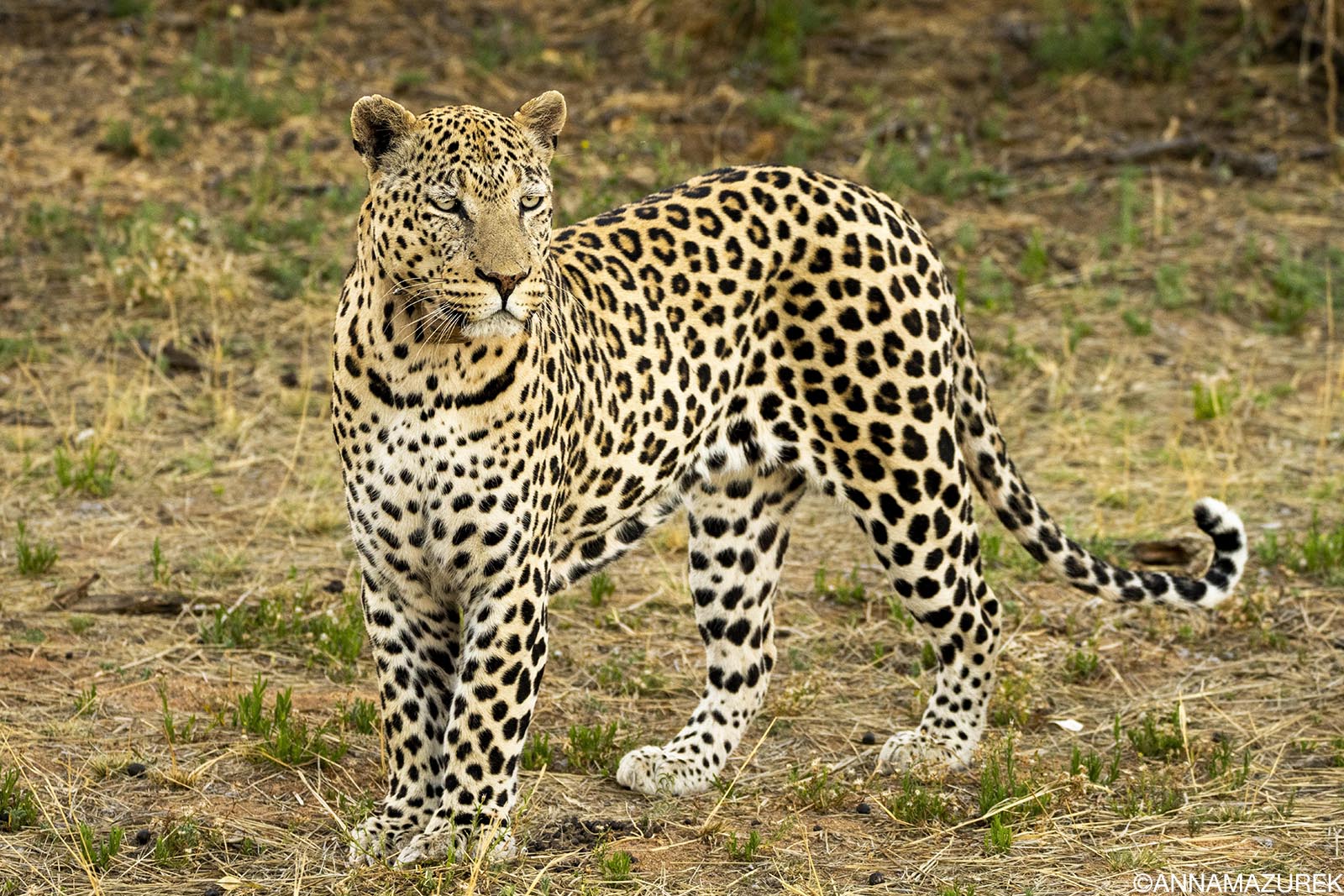 On a recent two-month trip to Africa, I used Airalo’s plans in South Africa and Botswana seamlessly, which I wrote about in this detailed review.
What is the best eSIM card for international travel?
All eSIM brands have a similar pricing structure, but eSIM cards are only as good as the local partner network. And, networks on regional packages might differ from those used by local country-specific packages.
Research which brand partners with the strongest network in the location you are visiting. (For remote locations like Laos and Namibia, you’re better off going with a local company from my experience. Buy one when you arrive.)
Airalo is the world’s oldest eSIM store with one of the widest variety of plan options, while Saily adds built-in security features including virtual location. I’ve had great experiences with both. If decide to purchase either, use the discount codes in the next section.
I’m currently testing Gigsky and Truely. Other brands include Holafly, Flexiroam and Nomad. Apple also has a comprehensive webpage with a list of wireless carriers worldwide that offer eSIM services.
How much does an eSIM card cost for iPhone?
eSIM card plans start as low as $4 USD. While pricing is often consistent between brands, certain companies will have a larger variety of plan options than others. Europe or Southeast Asia will always be cheaper than Africa.
Seven-day plans start around $4 USD for Europe, the U.S. and Asia, while five-day unlimited data plans start around $18.99 USD. Pricing varies based on duration (usually three to 60 days) and data limits (1GB to unlimited).
Save money with these eSIM discount codes:
- Airalo: 15% off for new customers with NEWTOAIRALO15, or 10% off for existing users with AIRALOESIM10.
- Saily: Use code ANNA10 for a 10% discount.
- GigSky: Free 15-day plans and up to 30% off all plans for select Visa card holders in the U.S., Canada & Latin America.
- Truely: All plans are 15% off with code ANNA15.
Loyalty programs are another perk—Airalo gives you 5% to 10% back on purchases, while Saily offers 3% credit and a 15% student discount. Since you can’t usually pair discount codes with the loyalty program, I use discount codes for every purchase since it’s a better deal.
What I do for phone data when I travel long-term
Since Verizon’s international plan is outrageously expensive and never worked for me, I use travel eSIM cards for the region I’m traveling. The only exception is in Thailand, where I spend a few months every winter, when I buy an eSIM directly from AIS (local network).
For two months in Europe last fall, I strictly used Airalo eSIMs, a regional Europe plan and a Greece-specific plan, which has been great.
Final eSIM Takeaways
Overall, eSIMs are the future—ready or not. They are very convenient and cheaper than paying for an international plan for an American phone plan unless you have T-Mobile. Regional eSIM plans are excellent for short trips to multiple countries.
If you’re going to be traveling long-term in a country or region, I still think getting an eSIM or regular SIM card from a local cellular provider is a better deal, especially in places like Southeast Asia. After two months in Africa last year, I feel more confident about the availability of eSIMs for travel in remote locations.
Happy travels!

I Traveled for 2 Months in Southern Africa—Here’s How Much It Cost
 A giraffe has a snack at Okonjima Nature Reserve in Namibia.
How much does it REALLY cost to travel in Africa? The truth is Africa isn’t cheap—you’re either paying for safety (from crime and wildlife), complicated transportation logistics or both! But, yes, there are ways to trim costs.
This trip started with a half joking WhatsApp message—“How about we road trip Namibia?”—almost two years ago. Planning a trip of this scale yourself is discombobulating and made me wonder if the zebras and giraffes were worth the effort. (Of course, they were totally worth it!)
There’s nothing I love more than talking about money and being honest about the cost of travel. It’s why I tracked every peso, dollar and Boliviano I spent on a seven-month backpacking trip in Latin America in 2014. And, I decided to do it again for this pricier two-month Africa adventure.
To make the trip more affordable, I went with my best friend, Becky, and we both worked while we traveled. Neither of us paid rent or a mortgage during this trip—Becky rented out her Lisbon condo, while I simply don’t have a lease or a mortgage by choice. Two other friends joined at different points, too, which helped cut costs. To be clear, I have no debt and would not go into debt for travel. This trip was a grander version of a canceled 2020 trip, so the saving started a long time ago! This was a rare kind of trip for me.
After hours of staring at spreadsheets, I’ve created a detailed breakdown of the cost of traveling in Africa during two-month trip to help you plan your own adventures. I also share ways to trim costs. (All costs are in USD.)
Affiliate links are used in this post. If you make a purchase, I earn a small commission at no cost to you, which goes toward blog maintenance costs.
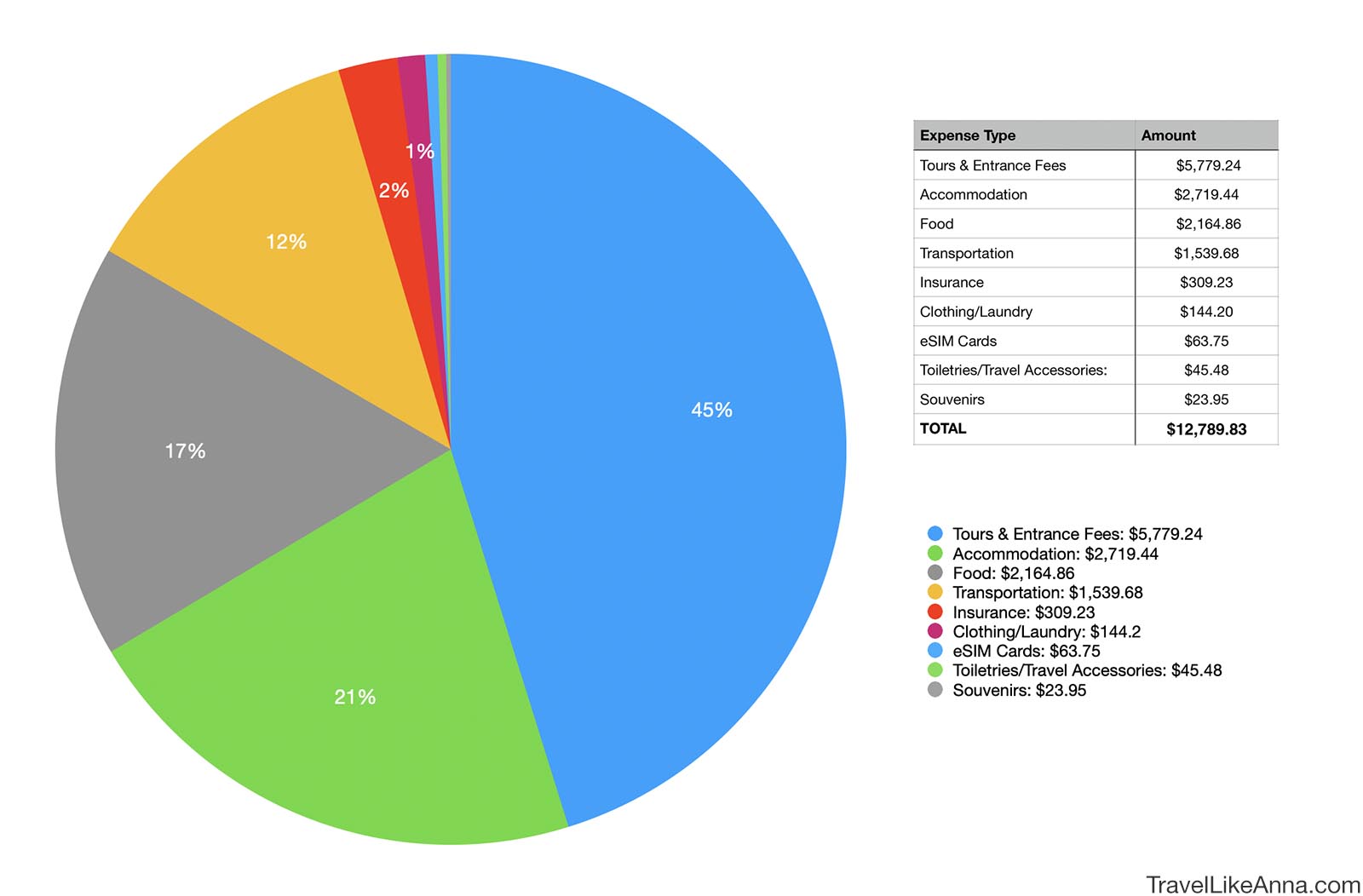 I tracked all my expenses for my two-month Africa trip with the Dollarbird app then exported the data to make these graphics.
Total Cost of Trip: $12,789.83
Cost per Month: $6,394.15
Cost per Day: $203/day for 63 days
Excludes flights. All costs are in USD.
Countries Visited: South Africa, Namibia, Botswana, Zimbabwe, and Zambia
Length of Trip: 63 days
Southern Africa Itinerary
Week 1:Cape Town
Week 2: Safari in Kruger National Park
Week 3: Chill week in Windhoek, Namibia
Week 4: Safari through Botswana and Victoria Falls
Week 5: Chill week in Windhoek, Namibia
Week 6&7: Road Trip Namibia (self-drive)
Week 7&8: Cape Town
Biggest Expenses in Africa
Our two safari tours were the most expensive items:
- 8-Day G Adventures Botswana and Victoria Falls Adventure Tour: Base Rate $2,294.15 + $472.46 (tips, airport transfers, $55 visa, meals & safari drives)
- 8-Day G Adventures Kruger National Park in Depth Tour: Base Rate $1,699 + $448 (tips, airport transfers, meals & safari drives)
- Total for tours = $4,913.61, which was 38.4% of the total cost!
Africa Travel Cost Summary
When looking at the total cost above ($12,789,23 US), you either fall into two mindsets—”That’s crazy expensive!” or “That was a good deal.”—based on your budget and expectations. For context, luxury safaris range from $1-2.5k/day per person, while budget participatory camping trips cost around $166/day per person (without optional excursions), which is roughly 19% cheaper than our trip.
For example, G Adventures offers a 40-day participatory camping trip through eight countries (Nairobi to Cape Town) for a base rate of $6,199 and says to allot an additional $470 for meals that aren’t included. This breaks down to $166/day but doesn’t account for optional safari drives, tips or entry to places like Victoria Falls ($50). (G Adventures always runs sales—we saved about 15% on our tours.)
I tracked all my expenses in the Dollarbird app, which is a paid subscription ($34/year) and the best money management app I’ve found.
Detailed Breakdown of Expenses for Africa Trip
 Big Daddy Dune (left) and Deadvlei (right) in Sossusvlei, Namibia.
Tours and Entrance Fees: $5,779.24
(Visas: $145; Entrance Fees: $426.65; Tours: $4,810.90; Tips: $396.69)
We did two eight-day safaris with G Adventures, a company that was recommended by travel industry friends as a budget option. These tour prices below are the base rate and don’t include the optional safari drives, some meals, tips and airport transfers. We both really enjoyed our tours and highly recommend them!
- 8-Day G Adventures Botswana and Victoria Falls Adventure Tour: $2,294.15
- 8-Day G Adventures Kruger National Park Tour: $1,699
Some things you just can’t do on your own due to safety and environmental regulations, such as Sandwich Harbor Dune Driving ($175 pp) in Namibia, rhino tracking ($116 pp) and leopard spotting ($84 pp). We also paid for several safari drives with guides because the guides have radios and tell each other where the animals are for easier wildlife spotting.
Since it’s a very tip-based society, you need to allot an extra 10% minimum for tips. (Some of the tips were included in the tour pricing in my calculations.) The admission for foreigners to certain sites was hefty—$50 entry for the Zimbabwe side of Victoria Falls.
Visas Costs in Africa
Namibia started requiring a $90 multiple-entry visa for Americans in April 2025, and it was $55 for a multiple-entry Zimbabwe visa that we used to take a day trip to Zambia. (If you are a dual passport holder, you can’t swap around your passports in Africa just to save on visa costs. Immigration will flag you because they look previous stamps to see where you’ve been in Africa.)
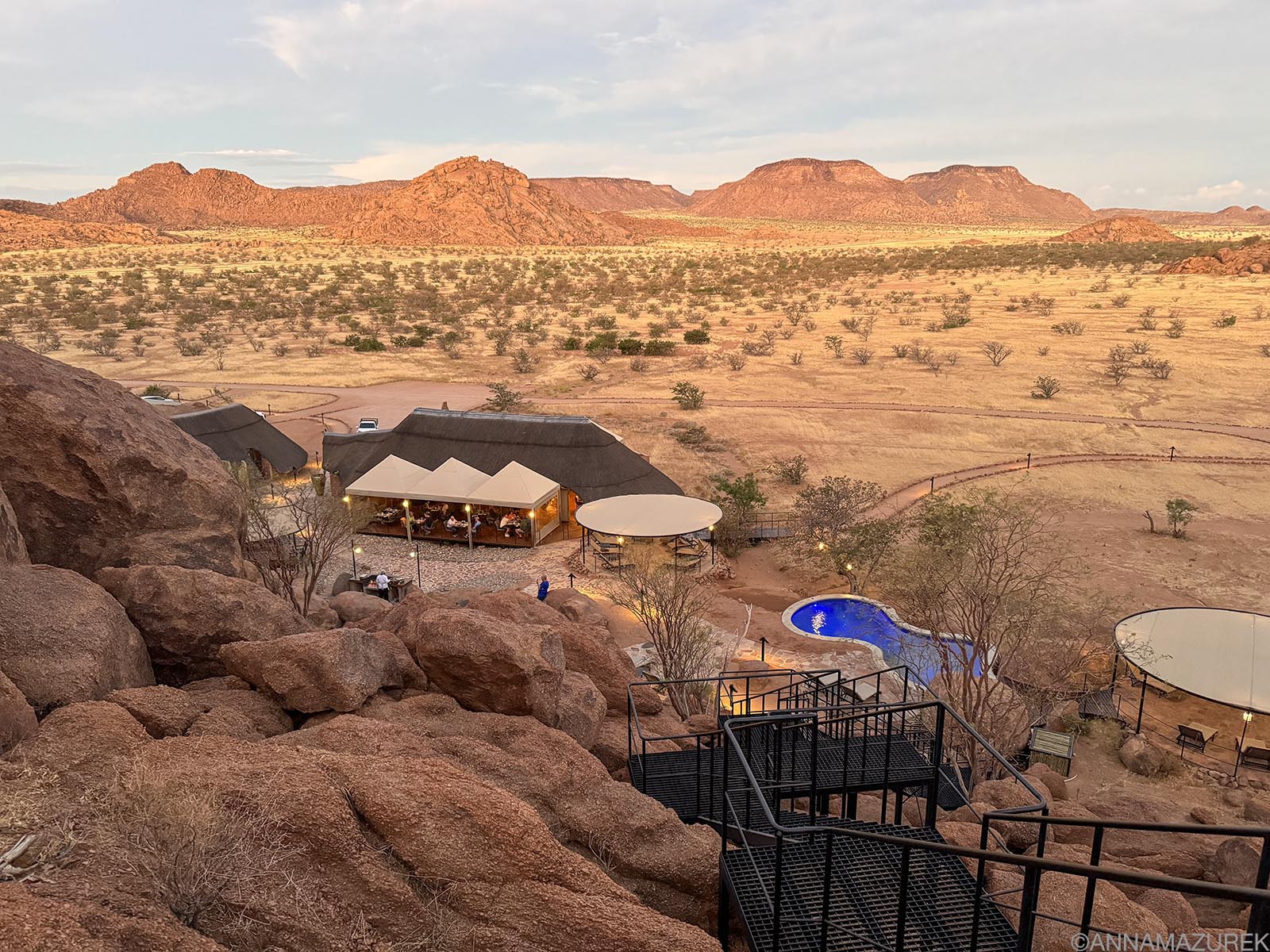 We stayed at Twyfelfontein Adventure Camp after visiting the nearby UNESCO rock art site.
Accommodation: $2,719.44
There are two options for accommodation in rural Africa: camping ($20/per person in Namibia) or swanky lodges. Since we were working remotely, camping wasn’t an option, so we splurged on fancy places for four nights of the entire two months, ranging from $281 pp to $143 pp per night, including two meals. We kept joking that we were retired since we were often the youngest people at these spots! The heat was another reason we opted for fancier accommodation.
The rest of the time we paid around $57/night pp on average for accommodation in cities to rent two-bedroom apartments with full kitchens and laundry facilities. (Swakopmund, Namibia was by far the cheapest—we only paid $19/each a night for a two-bedroom apartment downtown.) In Namibia’s Etosha National Park, we paid $88/night each for a two-bedroom chalet, which was basic but functional.
Food: $2,164.86
(Eating Out: $1,076.33; Groceries: $925.31; Beer: $163.22)
On travel days, we spent a lot of time eating sandwiches and snacks on the long drives. Anytime we were in a proper town, we ate out mostly for convenience. Plus, we were exhausted after the driving days.
My most expensive meal eating out was $38.86, including tip and wine. I only had eight meals that cost over $30 in two months, and the median meal price was $12.97. Eating out was relatively inexpensive—cute cafes in Cape Town had breakfast sandwiches for $6, etc. It’s the cost of alcohol that makes it more expensive. I just tracked beer to be funny but that also includes wine. The wine scene in South Africa and the craft beer options in Cape Town was fantastic!
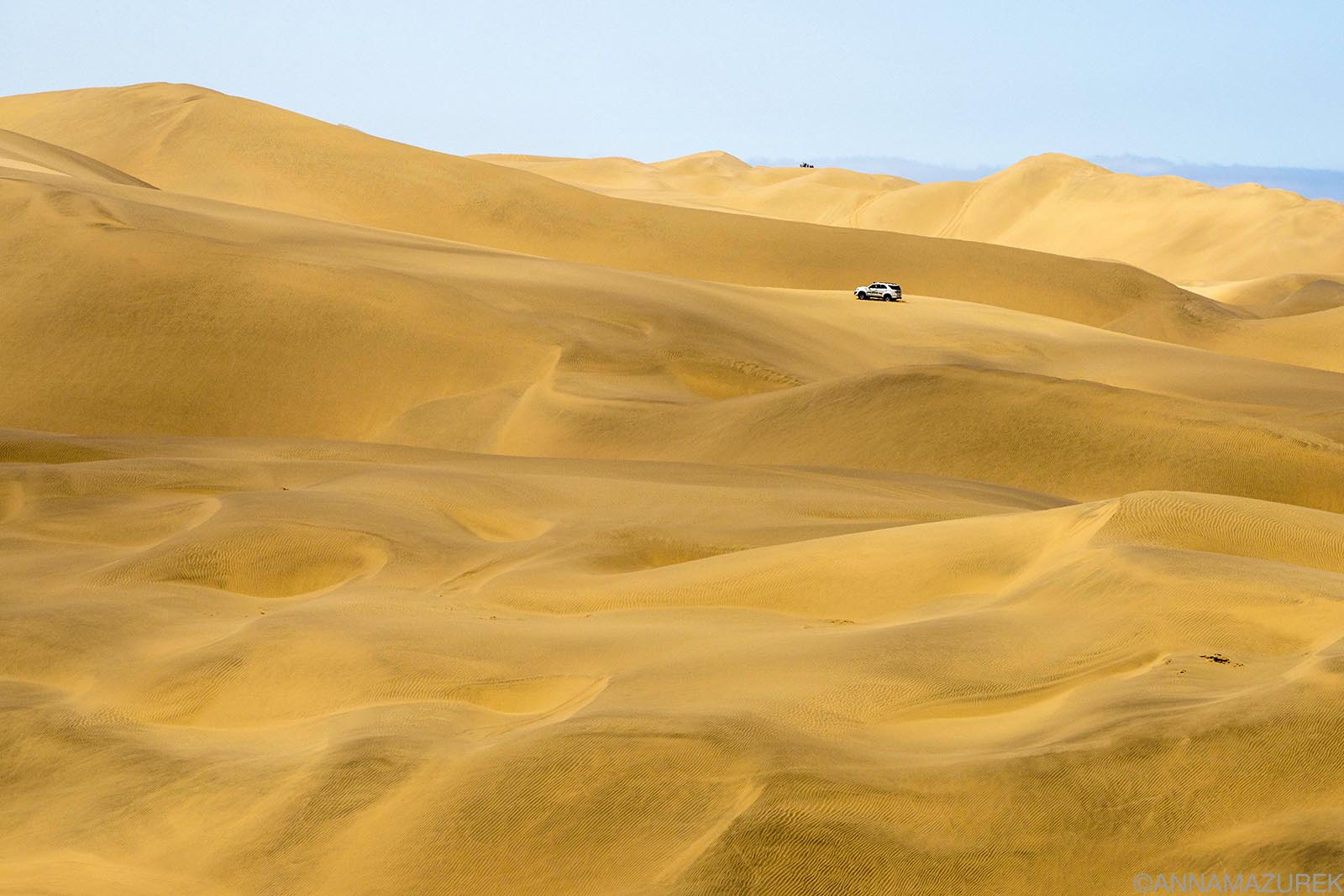 Sandwich Harbor, Namibia is one of those places you can’t drive yourself and must book a tour, which is worth every penny!
Transportation: $1,539.68
(Car Rentals: $574.76; Gas: $111.06; Mechanic/Tire: $73.73; Taxis & Private Transfers: $780.13)
We paid for safety when it came to transport. Let me be clear: You cannot walk alone at night, even as a group, in most of Southern Africa. Mostly due to the chance of being robbed but also due to wild animals in the bush. We tried to walk 15 minutes back from the farmer’s market in Green Point in Cape Town, only to run into some Dutch travelers running back, yelling for us to turn around because they’d been robbed up ahead.
We rented a 4×4 SUV ($1,4871 total) for our two-week self-drive road trip in Namibia from Kalahari Car Hire, which I’d highly recommend. After a hilarious turn of events, we ran out of gas 20 miles out of Swakopmund and paid $105 total for the roadside service. The office was so sweet with helping us and checking in on us later. One of the tires got three nails in it, so we had to buy a new one after returning the car for $116 total.
Then, in Cape Town, we rented a normal SUV ($315.20 total for a week) for driving around the area for our first week. The Namibia car cost was split three ways and Cape Town four ways because another friend joined us.
Otherwise, we did taxis, ride shares (Uber) and private transfers. For safety, we had our hotels book us airport pickups to make things easier. In Cape Town, we used Uber Black or Comfort to get around for safety. I also used the women driver feature, which I had great luck with. I also used a private transfer company called Angel Watch for airport pickups and day trips to the wine regions. Book through WhatsApp. I highly recommend them.
Namibia has a rideshare app called Yango. We used it only during the day, and it was fine. It was mostly older cars, but occasionally, the driver would ask for more money. (This is a question they ask you in the app when you rate the driver!) I wouldn’t feel very safe alone in one at night.
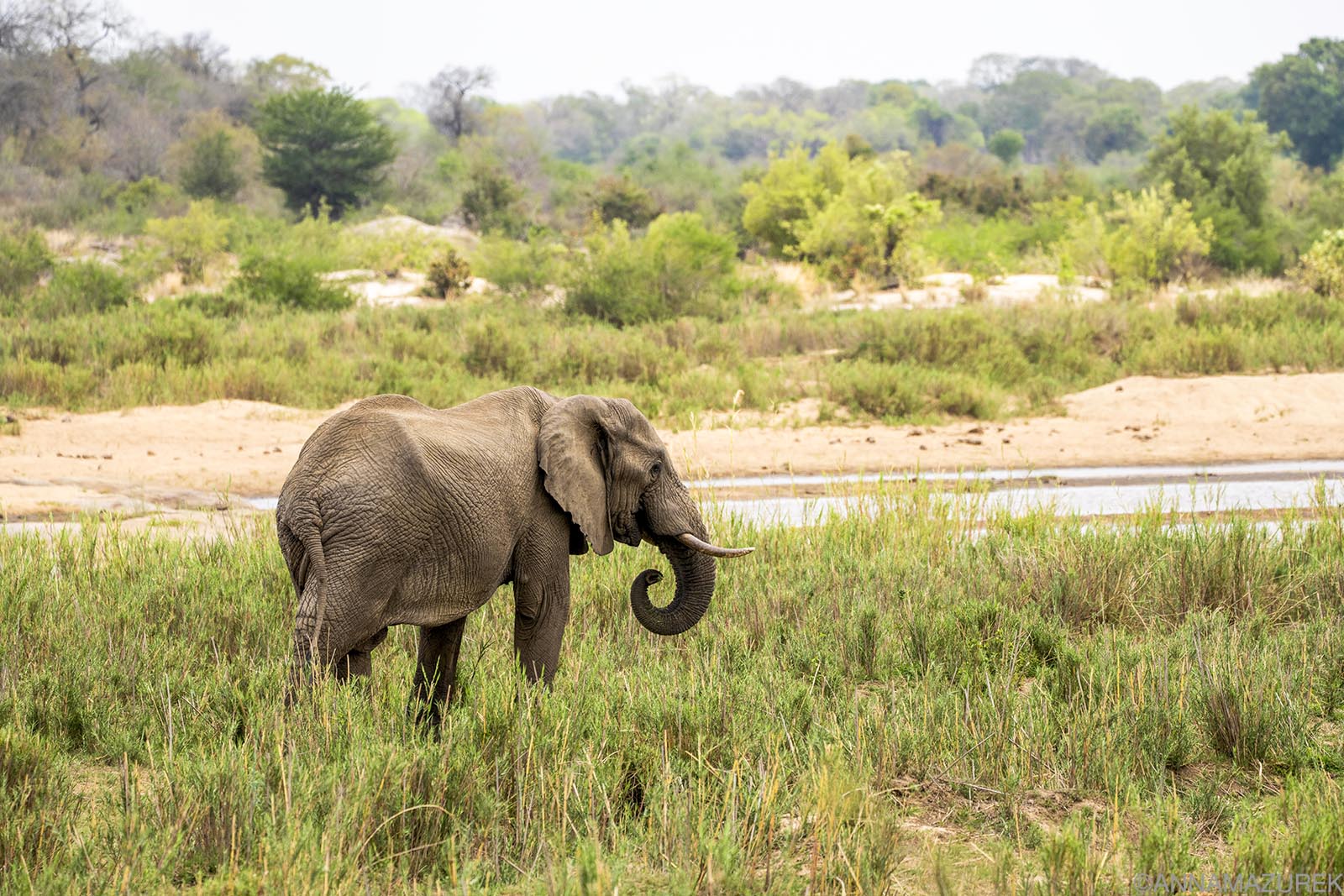 Kruger National Park does not have cell service to deter poaching.
eSIM Cards: $63.75
Staying connected was key for this trip because we were all working remotely at some point, so we needed to have the ability to hotspot our computers. Plus, it was also a safety issue for navigation on our long drives. I used Airalo’s eSIM plans for both South Africa and Botswana with no issues—you can read more in my detailed eSIM review.
In Namibia, MTC (local network) is the best and honestly only network in the country. (They claim to cover 95% of the country, but it only worked in towns and cities.) Buy an eSIM at the airport store outside arrivals. No other eSIM card company works in Namibia. My friend tried his international Verizon plan, but it did not work because they don’t partner with MTC. The same happened with Airalo.
Based on the MTC staff’s comments, they don’t partner with anyone. Basically, you have to use MTC—your international plan with any U.S. carrier will NOT work unless they use MTC. For more details, read my review.
Travel Insurance: $309.23
While SafetyWing is my go-to for travel medical insurance, I ended up going with World Nomads for this trip because SafetyWing was just under the minimum coverage required by G Adventures for tours. World Nomads also has better coverage for travel delays, which was key for my flight to Asia out of Cape Town. (I often use World Nomads in the U.S. when I’m 100 miles from home to cover me on hiking trips.) I switched back to a SafetyWing plan the minute I got back to Asia.
Full disclosure: We receive a fee when you get a quote from World Nomads using this link above. We do not represent World Nomads. This is not a recommendation to buy travel insurance.
Clothing/Laundry: $144.2 & Souvenirs: $23.95
I bought a few dresses and things while we were traveling. I made sure to book apartments or hotels with free laundry to make life easier. (I hate having other people do my laundry because they always mess up my clothes.)
 The plug chaos in my Windhoek hotel! Bring both a European plug and the rounded South African plug.
Toiletries/Travel Accessories: $45.48
The most annoying thing about Southern Africa is the plug situation—they use this giant round version of the British plug. I’ve been to over 70 countries and never seen anything like this. Plus, most places also use the standard European plug. You needed both because you never knew which type was by your bed or desk. The electronics—hair dryer, kettle, etc.—in the room were a mix.
Sometimes, there was even a standard British plug with the rectangular plugs. It was the most confusing thing ever, and the South African plug doesn’t come on the standard travel plug adapter. Buy them at the airport when you arrive or at an electronics shop.
What is the Cost of Flights to Africa?
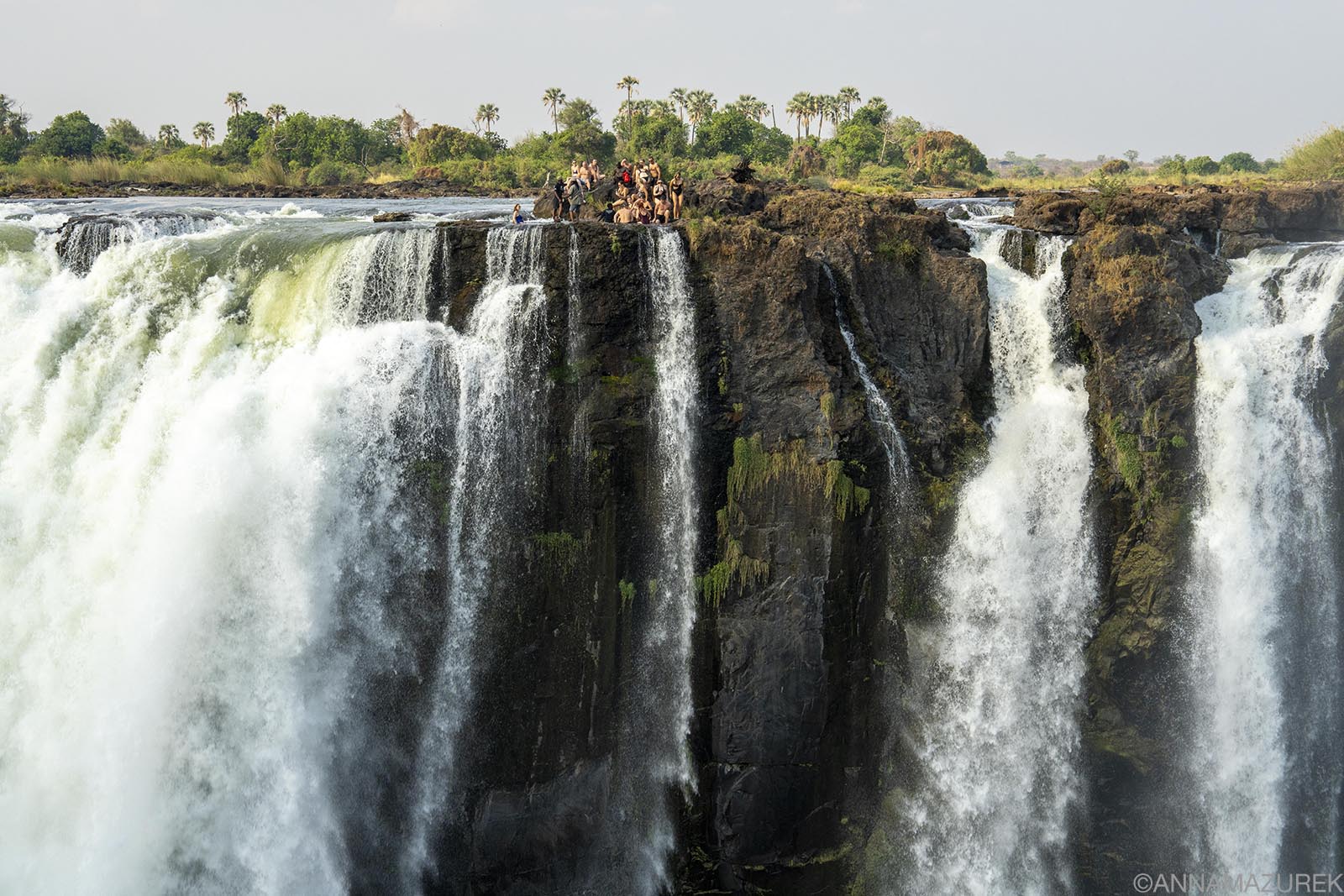 From the Zimbabwe side of Victoria Falls, there’s a nice view of the queue at Devil’s Pool on the Zambian side.
This cost breakdown above doesn’t include flights because I paid for most of my internal flights on miles, and one of my freelance jobs covered a portion of the other flights. The Star Alliance has the best network in Southern Africa, while Lufthansa’s budget carrier Discover Airlines flies direct to Victoria Falls and Windhoek from Germany. Norse, another budget airline, flies out of London direct to Cape Town.
My focus is on building status on American Airlines, but I had some extra United points that I used for the flights. Flying through Qatar is a cheap option, but there was too much tension in that region—Qatar got hit with an attack when I was booking flights, so I avoided it.
- One-Way Flight from Athens, Greece to Cape Town via London: $1,300 for economy
- Cape Town to Johannesburg: $166.90 economy + $99.50 to upgrade to business class to not have to check my camera gear.
- Johannesburg to Windhoek: $118 economy + $208 to upgrade to business class to not have to check my camera gear.
- Victoria Falls to Windhoek: 12.5K United Airlines miles + $50 for economy
- Windhoek to Cape Town: 25K United Airlines miles + $34.70 for economy
- One-Way Business Class Singapore Airlines flight from Cape Town to Bangkok via Singapore: $1,900
Do NOT fly Singapore Airlines Business Class from Africa! Economy was half the price and business class was not worth the extra cost because it’s a very old plane with a terrible, awkward seating arrangement and cheap amenities. I was very disappointed.
How Can You Travel in Africa on a Budget?
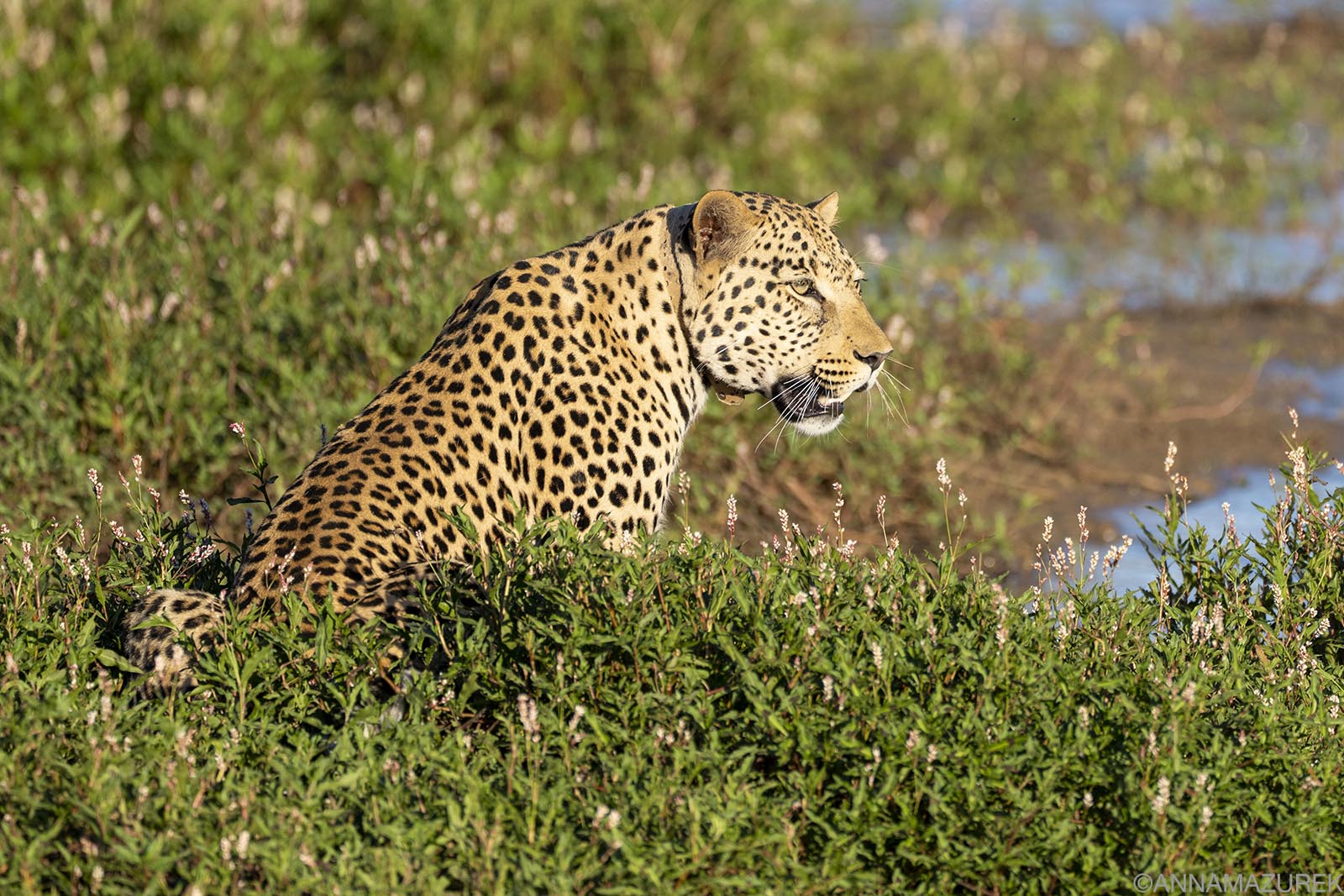 A leopard at Okonjima Nature Reserve in Namibia.
The easiest way to do Africa on a budget is to camp or do a participatory camping safari where you help set up tents and cook. It’s really that simple. You can easily rent 4×4 SUVs and trucks with camping gear, so you don’t have to bring anything really yourself. The rental will cost a bit extra to include the gear.
I’d highly recommend this for self-driving in Namibia. We did two weeks driving on our own and loved it. You’ll need a good GPS and a portable air compressor. You can easily rent these, too, but I highly recommend the travel friendly Hoto portable air compressor that self-calculates in both psi and bar.
For other parts of the region, I’d do your research about the safe areas to drive, especially in South Africa. We rented a car to explore the Cape Town area but didn’t explore on our own past the Western Cape.
I would recommend G Adventures for great budget tours. They have a wide range from classic tours with hotels to the cheaper participatory camping options.
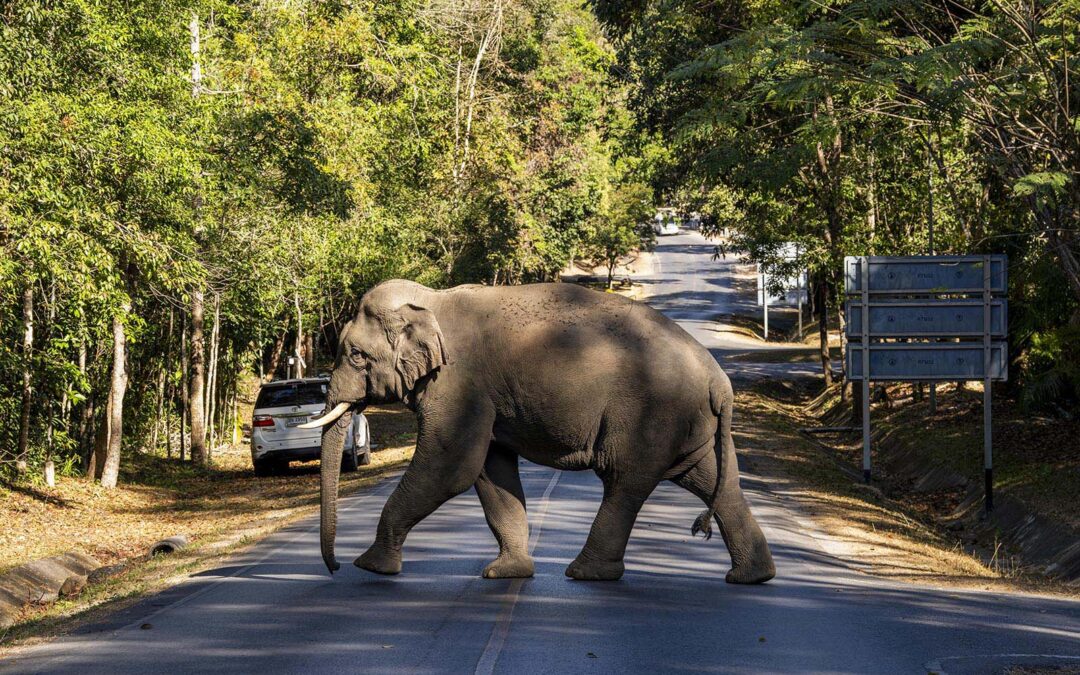
A Guide to Visiting Khao Yai National Park in Thailand
 Park rangers stop traffic for a wild elephant to cross the road at Khao Yai National Park.
If you get tired of Bangkok’s noise and traffic, there’s a quiet nature escape just a few hours away—Khao Yai National Park. This 2,206 square kilometer park is famous for wild elephants, gibbons, hornbills, stunning waterfalls and trekking. With over 280 bird species, avian enthusiasts worldwide flock to the park for prime birdwatching. In 1962, the area became Thailand’s first national park and a UNESCO World Heritage site in 2005.
Even though I’ve lived and worked in Thailand off and on for over a decade, this spot wasn’t on my radar despite being so close to Bangkok. It was such a fantastic wilderness getaway and a wonderful surprise.
If you are short on time, book a day trip from Bangkok. If you have a night or two to spare, I recommend spending a few nights in the area. I booked a tour through Greenleaf Guesthouse & Tours, which I highly recommend. For more details, check out my review of the tours and accommodation below.
Keep reading for all the details about what to do, where to stay and how to get to Khao Yai National Park.
Affiliate links are used in this post. If you make a purchase, I earn a small commission at no cost to you, which goes toward the cost of maintaining this blog.
Plan Your Trip
Why Go: Jungle waterfall treks and epic wildlife sightings, including wild elephants & gibbons
How to Get There: Take a day trip from Bangkok or take the 3.5-hour train to Pak Chong, the gateway to the area, and book a day tour through Greenleaf Tours.
How to Get to Khao Yai National Park from Bangkok
 Hikers wearing tick socks trekking along the trails with a guide at Khao Yai National Park.
If you don’t have time to spend the night near Khao Yai, then I recommend a day trip from Bangkok.
If you have more time, you can easily get to the area with public transport, but you will have to spend at least one night if you want to do a full-day tour. It’s a roughly 3.5-hour drive from Bangkok.
To get to Khao Yai National Park via public transport, you’ll need to get to the city of Pak Chong by train, bus or minivan. You can easily arrange for a pickup upon arrival from your accommodation. I took the train, and I recommend it.
The train leaves Bangkok from Krung Thep Aphiwat Central Train Station and stops at Don Mueang and Ayutthaya stations. The cost is $4-5 USD for the roughly 3.5-hour trip. You can book directly through the SRT D-Ticket app (official State Railway of Thailand app) or 12go.asia.
There are five trains from Bangkok to Pak Chong:
- Train #21 (Depart 6:10, arrive 8:43)
- Train #135 (depart 7:10, arrive 10:43)
- Train #71 (Depart 10:35, Arrive 13:17)
- Train #139 (Depart 19:25, Arrive 22:33)
- Train #23 (Depart 21:05, Arrive 23.58)
Trains are always late, so if you plan to do a half-day tour when you arrive, make sure to get one of the earlier trains (#21 or #135). Trains have both air conditioning and cheaper fan sections. (I did air conditioning,
and it was fine.)
If you want to do a full-day tour, you will be back in time to catch the last train for Bangkok.
There are four trains from Pak Chong to Bangkok:
- Train #24 (Depart 1:41, Arrive 4:50)
(This is a 24-hour clock, so very early in the morning) - Train #140 (Depart 3:12, Arrive 6:50)
(This is a 24-hour clock, so very early in the morning) - Train #72 (Depart 11:18, Arrive 14:10)
- Train #22 (Depart 19:48, Arrive 22:15)
Buses from Bangkok (NakhonChai 21) will depart from the Mo Chit Bus Station but will not drop you in the center of Pak Chong. Instead, you’ll be dropped at the Tesco Lotus in Pakchong, seven kilometers away. Mini vans will also leave from the Mo Chit Bus Station for Pak Chong.
When is the best time to visit Khao Yai National Park?
 January is one of the colder months in Khao Yai but not as green since the trees lose their leaves, which you can see in this photo.
The park is open year-round from 6 a.m. to 6 p.m. with an average temperature of 21 degrees Celsius. The hottest part of the year is from March until May, when temperatures range from 26-27 degrees. (The trees make it cooler than other parts of the country.) The rainy season is from June until September, when waterfalls are gushing, and the vegetation is the lushest. Temperatures can drop to 10 degrees during the coolest part of the year, from December to January, with blue skies.
I visited in January, and it was still hot in the day but cold at night. For me, the ideal time to visit would have been in October and November right after the rainy season, when the forest is still lush. You must watch out for ticks in the dry season and leeches during the wet season. Tours will give you socks to wear to help with both. Pack a good bug spray.
Things to do in Khao Yai National Park
 Left: The 25-meter tall Haew Suwat Waterfall Right: A hornbill at Lam Ta Khong Campground.
The park’s daily entrance fee for foreigners is 400 baht for adults and 200 baht for children. Day tours include the park entrance in the tour fee.
Trekking
There are seven nature trails ranging from 1.2 to 8 kilometers with a hiking time from 45 minutes to six hours. The trails are clearly marked with numbers but need to be started early in the day due to the heat. The official website says that Trails 1-5 and 7 can be started from 8 a.m. to 2 p.m., but you must start on Trail 6 no later than 10 a.m. Guides are required for Trails 3 to 6.
Birdwatching
The park is home to 282 species of resident and migratory birds from across the globe. You’ll see some epic camera lenses around the park. I shot with a 70-200mm, and it wasn’t enough for most of the wildlife. A longer lens would have been more helpful.
 Visitors can rent camping equipment in Khao Yai National Park.
Camping
Lam Ta Khong Campground and Khao Rom Viewpoint Campground are the only two campgrounds in Khao Yai National Park. Lam Ta Khong Campground was a great place for wildlife sighting. It’s where I got my best hornbill photos. There were a ton of wildlife photographers camped out there as well. You need to find your own transportation to camp. The park rents camping equipment from tents to sleeping bags. Facilities include showers, electricity, a restaurant and coffee shop.
Stargazing
During the cool season from November to March, the sky is very clear and perfect for stargazing. The campground and other open meadows are excellent locations.
Night Safari
The park offers two timings for a one-hour night safari at 7 and 8 p.m. Book at the visitors center before 6 p.m. The safari is a 10 km drive on a high-bed pickup truck with high-powered flashlights to look for samba deer, Malayn porcupine, large Indian civets, Asian palm civets, wild elephants, owls and nightjars. You will need your own transport or to arrange transport to get to the park to join these tours.
Review of Greenleaf Tour Guesthouse at
Khao Yai National Park
 The 300 baht/night rooms at Greenleaf Guesthouse & Tour are simple but clean.
Greenleaf Tour Guesthouse & Food
I absolutely loved Greenleaf Tour and can’t recommend them enough. I was skeptical at first because their website looks like it’s from 1995. (You can’t book through Booking.com or other websites.) I emailed, and they sent an overwhelming amount of helpful information on everything from transport to lodging. You can book both a tour by itself or a tour along with a room at the guesthouse.
For logistical reasons and cost, I booked both through them. I did the 1.5-day tour and spent two nights. I visited in January when the weather was cold. Due to this, I was concerned because the rooms only had cold showers. I tried to find a hotel with hot water nearby, but it was not cost effective since every hotel nearby seems to use them for tours anyway. They seem to be a monopoly in the area or the only tour company.
Greenleaf provided free pickup and drop off at the train station, while other hotels charged for it (minimum 200 baht each way), which was a big plus. It was only a short drive from the station. Free pickup and drop off is only included when you book the full-day tour.
 You can’t miss the elephant sign (left) outside Greenleaf Tour and the budget-friendly Thai food.
The property is gigantic—an open-air restaurant with yummy Thai food with great prices (60-80 baht) sits at the front. Breakfast only costs 50 baht. They have 19 rooms with a double bed for 300 baht/night with ensuite bathrooms. The rooms don’t have air conditioning or hot water. Since I visited in January when it was cold, I didn’t care about the air conditioning, but cold water was a concern. There was a fan in the room, so I was fine. Each room had a table outside on the shaded shared porch. The other guests were a wide variety of ages ranging from 20-something backpackers and retirement-age trekkers.
The Thai-style rooms were very basic but spotless. I slept well and enjoyed my time. I think I even had to ask for an extra blanket at night because it was cold!
Khao Yai National Park Tour Options
 A gibbon along the trails at Khao Yai National Park.
Greenleaf Tour offers a half-day (500 baht) and a full-day tour (1,500 baht). I did both tours in January. Only the full-day tour goes into the national park. Payment is cash only.
The half-day tour (15:00 – 19:30) includes a visit to an underground cave, swimming in a natural spring and watching swarms of bats leave another cave for their nighttime escapades. You can’t swim in the waterfalls inside the park, so I assume that’s why they take you swimming on the half-day tour.
The full-day tour explores Khao Yai National Park and focuses heavily on wildlife. We saw hornbills, macaques, gibbons, wild elephants, vipers in trees,
porcupines and countless other bird species on our forest treks. We had a tasty lunch in the park that we had preordered and visited the 25-meter tall Haew Suwat Waterfall. Wildlife sightings are not guaranteed, but we had two epic wild elephant sightings back-to-back.
On one of the hikes, we saw a 500-year-old Strangler Fig tree. Both tours were in songthaews, a traditional form of transport consisting of pickup trucks with rows of seats in the back. They gave us tick socks to wear for trekking since ticks are common in the cold season. (In the hot season, you need the same socks for the small forest leeches.)
 We spotted some porcupines just as we were leaving Khao Yai National Park.
To be honest, I didn’t care much for the half-day tour because I’ve seen a lot of caves, and it was too cold to swim (for me!). The bats emergence from the cave was pretty cool, though. I had low expectations for the next day for the full-day tour, but it was phenomenal. The amount of wildlife sightings and photo ops inside the park was amazing. The guides were lovely and helpful for both tours. They had spotting scopes that were helpful for wildlife sightings and even took photos of the animals through the scope with our phones for us. This was extremely helpful for the birds.
Private tours are about 5,000 baht. This price was quoted to me by Greenleaf and multiple hotels I reached out to. Night safaris can be arranged through the park before 6 p.m. daily, but you need to find your own transport to the park or stay in the park.
A girl I met on the full-day tour ended up staying in the park and booking tours with rangers the following night. She didn’t have a great experience as the rangers didn’t speak English and walked too quickly. She went back to Greenleaf for a second day tour and said it better than staying in the park!
Where to Stay: Khao Yai National Park Hotels
 Lam Ta Khong Campground is a great place to stay for birdwatchers.
You can stay inside the park, but you’ll need your own transportation. Contact the park’s office to book one of the two campsites and a series of lodges across four zones. For more details, check out the park’s website.
Budget travelers should stay at Greenleaf Tours Guesthouse if they don’t mind the cold water and lack of air conditioning. If you are looking for nicer hotels outside the park with hot showers and air conditioning, Greenleaf Tour recommends the following. (Read reviews before booking. Prices range from $25 to $200 based on property and season.)
- Moo Si Yard HomeStay (Highly rated)
- Khaoyai Cottage
- Plern Pitch Residence
- Le Monte
- Mont Blanc Basecamp (close to “Ban Tha Chang Natural Spring Water”)
- Mont Blanc Glamping
- Hotel MYS Khao Yai (Fancy & highly rated)
- The Jungle House (jungle atmosphere)
- Lala Mukha Tent Resort (Gorgeous scenery)
- San Guesthouse and Tour KhaoYai (located by park entrance)
- Fortune DPlus
- Hotel Labaris (Stunning property)
- Tressure Inn KhaoYai
- Lacol Khao Yai (Part of Chatrium Collection)
- no.17@KhaoYai
I Live in Chiang Mai, Thailand Every Winter—Here’s the Best Things to Do
 Left: Wat Doi Suthep; Right: Wat Phantao during the lantern festival in Chiang Mai
I fell in love with Thailand in 2009 when I was running photo trips for a student travel company in Southeast Asia. While the Chiang Mai has changed a bit over the years, I still love the city. Now, I spend every winter in Chiang Mai for a few months and decided it was finally time to write a guide about the best things to do in Chiang Mai!
Chiang Mai is the smaller laid-back sister to the chaotic madness of Bangkok. It has a population of 200,000 and centers around the old city, which is lined by a moat and the crumbling remains of retaining wall from its 13th century heyday as the capital of the Lanna Kingdom. It’s a foodie town filled with temples and a great base for day trips for waterfalls, trekking and ethical elephant experiences.
Outside of the old city walls, the eastern area (Tha Phae Gate) along the Ping River is the commercial hub filled with markets. The western part is the trendy, hip area along Nimmanhaemin Road (known as Nimman) that’s popular with both the digital nomad community and Chinese tourists for the shopping, cool cafes and coworking spaces.
Whether you’re here for two days or two months, this guide will answer ALL your questions about the best things to do in Chiang Mai, including day trips and the best hotels and hostels.
Affiliate links are used in this post. If you make a purchase, I earn a small commission at no cost to you, which goes toward the cost of maintaining this blog.
Plan Your Trip
Currency: Thai Baht (THB)
When to Go: October to January has the best weather. Avoid the smokey season from February to April.
Travel Insurance: Protect yourself with SafetyWing travel medical insurance to cover accidents and travel delays.
Mobile eSIM Card: Get seamless connectivity with Airalo minus the hassle of physical SIM card. (Save 10% with code AIRALOESIM10!)
The Best Chiang Mai Temples
 Wat Chiang Man in Chiang Mai’s old city
There’s literally a temple on every corner in Chiang Mai. Please be sure to dress appropriately when visiting temples—cover your shoulders and knees; remove hats and shoes. Avoiding pointing your feet at anyone or the Buddha statues because it is considered disrespectful. I’ve marked my favorite photogenic temples with asterisks! The famous temples charge 20-30 baht for entry, and the smaller ones are usually free. It’s often free if you go early or late.
Temples Inside Chiang Mai’s Old City Gates
**I added two asterisks to notate my favorite temples below.
**Wat Phan Tao – This teak temple is one of my favorites and was renovated just a few years ago.
Wat Phra Singh – This is one of the most popular and crowded in town. It’s famous for Lion Buddha Image and golden chedis (a mound-like structure containing relics) with elephants.
Wat Chedi Luang – This is the second most popular and one of tallest structures in town. The brick chedi ruins dates back to 1441 and features a few remaining elephant statues.
**Wat Chiang Man – This is the oldest in town and known for elephant chedi from 1297. It’s one of the best for photography.
**Wat Saen Muang Ma Luang (Wat Hua Khuang) – This small and slightly hidden temple is down a small road near north gate of the city. It’s also stunning for photographs.
Temples Outside the Chiang Mai Old City Gates
Wat Lok Molee – This temple is one of one of city’s older temples. It’s just outside of the north gate to the old city. It’s popular during the lantern festival and always has cool decorations.
Wat Sri Suphan – The silver temple is just south of city walls. It’s stunning except for the fact that women can’t go inside the main temple.
**Wat Buppharam and Wat Mahawan – These are two of the three stunningly beautiful Burmese temples near Tha Phae Gate.
 Left:Chiang Mai Old City; Right: Wat Suan Dok
Temples in Driving Distance of Chiang Mai
Wat Doi Suthep – This is the most important temple in Chiang Mai and home to a Buddha relic. It’s located on top of a mountain just outside of town. It’s accessible by songthaew or a rideshare from the city or by foot via the Monk’s Trail. Be prepared to climb the 300+ steps to reach the temple.
Wat Pha Lat – This is a small jungle temple on the way to Doi Suthep. It’s accessible by car and foot via the Monk’s Trail.
Wat Umong – This cave temple is a couple kilometers out of city and one of the most unique ones.
Wat Phra That Doi Kham – You can’t miss this big white buddha temple on hilltop.
Wat Suan Dok – This temple is located in the Nimman area and known for the photogenic white stupas/chedis. They offer one-day and multi-day mediation retreats that I totally recommend and regular monk chats!
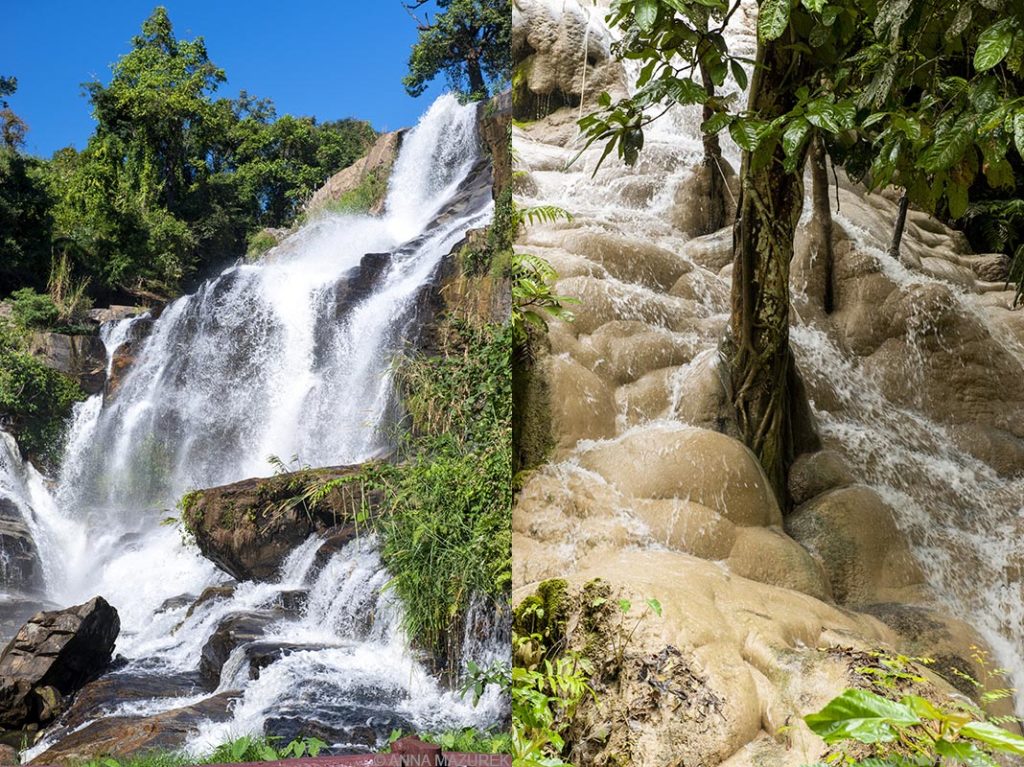 Left: Doi Inthanon National Park; Right: Sticky Waterfalls (Bua Thong)
The Best Day Trips from Chiang Mai
If you don’t have a motorbike or car for day trips, I’d recommend booking transfers or tours through Klook, an online travel booking site with the best deals in Asia. You get 5% off your first booking and discounts off future bookings just for leaving reviews!
Cooking Classes – Chiang Mai is a total foodie town, so it’s a great place for a cooking class. I really loved the full-day cooking class at Grandma’s Cooking School, which I booked on Klook. We made six dishes, including dessert. They even have a photographer shooting the entire time and give you the photos for free along with the recipes! I’ve also heard good things about Asia Scenic. (1,200-800 baht/$50-65 USD).
Grand Canyon – This former limestone quarry carved out of red clay soil is a stunning place to relax and swim. It’s broken into three separate sections and two appear to be commercial – one waterpark/wake park on the far left of the canyon and a smaller water park in the center. Both have inflatable obstacle courses, cliff jumping and bamboo rafts for floating. Be careful with cliff jumping as deaths have been reported. Entry 300-150 baht depending on which park you visit.
Sticky Waterfall (Bua Thong) – This multi-tiered waterfall (my favorite!) is made of limestone and mineral deposits. The rocks are easy to walk on without slipping, hence, the name “sticky waterfalls.” It’s fed by a natural spring that’s connected to the parking lot by a path. There’s a series of ropes and wooden railings to assist with climbing. Entry is currently free. It a 90-minute drive from town so a day tour through Klook, motorbike, rental car or Grab (ride share app) are your best options. Go early to have the place to yourself.
Monk’s Trail – This hiking trail leads up to the city’s most famous temple – Doi Suthep and passes a smaller temple Wat Pha Lat. The first portion of the trail is easy but after the first temple, it gets steep. You can take a songthaew down after the end of the hike. Depending on your fitness level, it can take roughly 90 minutes one-way. Check AllTrails for the route.
 A two-week old baby elephant and her mother at Journey to Freedom, an ethically-run elephant experience near Chiang Mai. Photos by Chris Rufflo.
Ethical Elephant Sanctuaries – While there’s no shortage of elephant activities around Chiang Mai, only book with ethical companies that don’t allow riding like Elephant Nature Park, an elephant rescue and rehabilitation center that offers half, full and overnight tours along with volunteer opportunities. For an intimate wilderness adventure experience with jungle treks and volunteering, consider the four- or seven-day overnight programs at Journey to Freedom.
Meditation Retreat – Wat Suan Dok offers weekly meditation retreats ranging from a one-day retreat on Monday and Fridays; weekly two-day retreats Tuesday to Wednesday and monthly four-day retreats. The one-day retreats are free but donations are appreciated. Two-day retreats are 800 baht. For more information, visit monkchat.net or stop by the monk chat office at the temple. (I personally LOVED the one-day retreat!)
Monk Chat – Wat Suan Dok offer chats on weekdays from 5-7 p.m. and Wat Chedi Luang in the old city offers it weekdays from 9 a.m. – 6 p.m. Both are organized by Wat Suan Dok’s Buddhist university, monkchat.net.
Doi Inthanon National Park– This national park is home to Thailand’s tallest peak at 8,415 feet! It’s also filled with hiking trails and waterfalls. It’s popular with cyclists as well. It’s located 70 kilometers from Chiang Mai, but there’s no public transport unfortunately. (I usually rent a car or hire a Grab driver for the day and split it with friends for day trips.) If you don’t feel comfortable renting a car, consider booking a day trip through Klook.
The Best Public Parks in Chiang Mai
 The Chiang Mai Flower Festival is held at Chiang Mai Chaloem Phrakiat Park (Chiang Mai PAO Public Park) from November to early January.
Chiang Mai has some hidden parks that are a must-visit. My favorite is the well-manicured Buak Hard Public Park, the only greenspace in the old city that acts as a public gym. At sunset, the park comes alive—locals play takraw (foot volleyball on a badminton court) and foreigners slackline in the acroyoga corner, while runners loop the track. There’ s stationary workout equipment and a nightly 20 Baht aerobics class, which is tougher than it looks! A flower festival is held here every February.
Chiang Mai Chaloem Phrakiat Park (also known as Chiang Mai PAO Public Park) is the city’s largest public park with immaculate paved trails and photogenic green spaces. It opened in late 2024 and hosts a free annual flower festival from November to early January. It’s the best place to go for a run in the city.
The Best Chiang Mai Museums
 FAM Fahlanna Art Museum is Chiang Mai’s newest with rotating art and historical exhibits.
For a deeper insight into the history of Chiang Mai and the Lanna culture, stop by the Chiang Mai City Arts and Cultural Center and Lanna Folklife Center (my favorite of the two) in the central part of the old city by the Three Kings Monument plaza, a favorite nighttime haunt of local teenage skateboarders. Entry to each is 90 Baht ($2.89 USD). These are great spots to escape the heat.
Newly opened in late 2025, the modern FAM Fahlanna Art Museum features both historical and rotating art exhibitions on the Lanna culture. The entry fee is steep (999 Baht/$32 USD), but there’s a promotional rate of 555 Baht currently, with a free cafe drink included. While I enjoyed the museum, it did feel overpriced.
Kalm Village is a free arts, crafts and culture center housed in a serene three-story complex tucked in a quiet lane in the old city. It offers a series of paid yoga and craft workshops. If you just want to chill, there’s a restaurant, coffee shop and a series of comfy chairs for lounging in the shaded courtyard.
The Best Places to Eat in Chiang Mai
 Left: Mango sticky rice; Right: Coconut yogurt bowl from Goodsouls Kitchen.
Budget Meals in Chiang Mai Under 100 Baht / $3 USD
Moo Ping Khun Por – This breakfast and lunch spot in Nimman serves up one of my favorite Thai dishes — moo ping (grilled pork usually in coconut milk) and khao niew (sticky rice). They also have chicken as well. 27 Nimmana Haeminda Rd Lane 11
Anchan Noodle – This local spot is famous for blue noodles, which get the hue from butterfly pea tea. The noodles are served with a variety of meat choices and spicy dipping sauce. Only open for breakfast and lunch. 19/1 Siri Mangkalajarn Rd Lane 9.
Ming Kwan Vegetarian Restaurant – The vegan khao soi might just be my favorite khao soi in town (and I’m not vegan!)! This spot is budget-friendly and super tasty. I also recommend the veggie Northern Thai sausage! 98 Rachadamnoen Rd Soi 4 (Near Wat Phra Sing)
Mall Food Courts – All malls in Thailand have cheap (and super tasty) food courts with local stalls serving fresh food. The basement level of the Maya Mall and Central Festival are two good ones. The 4th floor of Central Festival is nice as well. I usually eat a meal for 50-60 baht ($2 USD).
Khao Tom Baht Diao – This is the cheapest spot in town for both food and beer with the most convenient hours. Portions are small, but it’s so cheap it doesn’t matter so just order a second dish. It’s open from 5 p.m. to 2 a.m. daily so it’s good any time of day!
Ploen Ruedee Night Market – This hip food truck market is located right beside the sprawling night market. It’s filled with tons of options for eating and small shops. There’s usually live music and cold beer readily available. 28/3-4 Changklan Rd.
Chang Phueak (North Gate) Market – Every night there’s a sprawling local food market located outside the walls of the old city across from the north gate. It winds down around 9 p.m. Highlights are the pork rice lady who wears a cowboy hat at Chang Phueak Pork Leg Rice, which was on Anthony Bourdain, and the sukiyaki spot (Suki Changphuak) that’s just over a few stalls from her. (The sukiyaki spot was on a Netflix show, so it’s always got a line. Get a number when you arrive and expect at least an hour wait!) I also love the roti pancake guy by the stoplight.
 Left: Northern Thai dishes from Huen Muan Jai. Right: The purple butterfly pea noodles from Anchan Noodle.
Meals from 100 baht/$3 USD and higher
(Most of these spots are around 200-250 baht ($7 USD) depending on what you order.)
Goodsouls Kitchen – This vegan spot is my go-to breakfast spot. (I’m far from vegan but love the fruit bowl and homemade coconut yogurt and granola.) The dinner options and mains are also delicious. I dream of this place when I’m not in Thailand. 52/2 Singharat Rd.
Khao Soi Nimman (Michelin-Guide listed)– This is my next favorite khao soi spot in town. It’s open much later than the others. The northern Thai sausage is the best and spiciest option, but the fried pork is also good. 22 Nimmana Haeminda Rd Lane 7.
Goodneighbor Cafe – This hidden breakfast spot is one of the best in town for bagels and coffee. The chill vibe is also great. 149, 49 M.2 Soi. Ban Pae, Chang Phueak.
SP Chicken – Rotisserie chicken, sticky rice and spicy stir-fried morning glory are my favorite meal at this local spot in the old city near Wat Phra Singh. Only open for breakfast and lunch.
Night & Day Resturant – For craft beer and northern Thai food, there’s no better place than this local favorite. This is off the tourist trail, which is why I love it. The hang lay curry is amazing, too. 34, 13, Suthep. (They opened a second location near Nimman called LaabReun Home Cuisine.)
Khao Soy Maesai (Michelin-Guide listed) – This local spot serves up the best khao soi (northern Thai soup curry) in town. It’s only open from 8 a.m. to 4 p.m. Arrive early for the best selection. I recommend the chicken and to get extra pickled veggies to add in! 29, 1 Ratchaphuek Alley
Klay Cafe, Groon Bread & Brunch Cafe and The Moon Eatery are three of my favorite brunch spots in Nimman area. They all open around 8:30 a.m., which is early for the neighborhood! They each have homemade bread or bagels! Rob’s Berry does excellent homemade yogurt bowls.
 A tray of four meats (brisket, pork ribs, pulled pork and sausage) with sides of fried okra slaw and a mustard-based potato salad at Dinky’s BBQ.
Dinky’s BBQ – That’s right Chiang Mai has authentic Texas barbecue made by an Austinite! Choose from brisket, pulled pork and sausage. The side dishes (slaw, potato salad and fried okra) are tasty just like their homemade tortillas for their tacos. There are several sauce choices, but the mustard is my favorite, which is crazy because I normally hate mustard. For more about Dinky’s, read the Texas Monthly story I wrote and photographed.
Huen Muan Jai (Michelin-Guide listed) – Located diagonally from Khao Soy Maesai, this is another popular restaurant specializing in Northern Thai food. I recommend their sampler platter and the hung lay curry with pork. 24 Ratchaphuek Alley.
Cherng Doi Roast Chicken (Michelin-Guide listed) – There will be a line at this hole-in-the-wall spot. The roast chicken with tamarind sauce is amazing! The menu offers a lot of other chicken dishes along with creative somtam (green papaya salad) options. 2/8 Suk Kasame Rd.
Tong Tem Toh (Michelin-Guide listed) – There’s always a line at this Nimman spot that serves up traditional northern Thai favorites like Hang Lay curry and red ant dishes. The chicken wings are perfection. 11/13 Nimmanahaeminda Road.
The Salad Concept – If you’re missing your veggies or are sick, this is the best spot in town. There’s a massive selection of build-your-own salads and wraps. The portions are huge and range from 100-150 baht/$4-5 USD for a main. There are two locations.
The FACES Gallery & Gastro Bar – Hidden in the southern corner of the old city, this fancy spot serves up tasty Thai food in a beautiful setting. Terracotta carvings line the walls. The atmosphere of this spot is 10/10! 33 ถนน Ratchamanka Soi 6.
The Hide Out – With homemade bagels, this is one of the best western breakfast and brunch spots in Chiang Mai. It’s not far from Tha Phae Gate.
Where to Stay in Chiang Mai
 The Amanor Hotel is one of the nicest hotels in the Nimman neighborhood and has my favorite rooftop bar. Photo courtesy of Expedia.
The Best Hotels in Chiang Mai
For the best hotels in Chiang Mai’s Nimman neighborhood, I recommend Hotel YaYee ($38 USD/night) or Amanor Hotel ($138 USD/night) that both have great rooftop bars. The latter has an infinity pool. Both hotels bars are open to the public if you decide to stay elsewhere. A quiet, family-run option is the modern and sleek Chern Chiangmai Boutique Hotel ($65 USD/night).
In Chiang Mai’s Old City, Baan Hanibah ($82/night) is a lovely family-run guesthouse with comfortable rooms in the northeast corner, while Marigold Lanna Hotel is a cute comfy spot in the southwest corner. Smile Lanna Hotel ($82/ USD night) has a stunning pool. Hotel rates vary by season.
The Best Hostels in the Old City
For the best hostels in Chiang Mai’s old city, try the sleek rooms at The Common Hostel ($10 USD/night) or Pakping Hostel, which have private bunks with curtains and individual plugs. In Nimman, the highest rated hostels with the best location are Ray Hostel and Bed Addict Hostel. Both are around $13-14 USD/night. (Things are always slightly pricer in Nimman than the old city.)
Weekly & Monthly Room Rentals in Chiang Mai
There’s no shortage of monthly rentals in town. The best ones book out in advance. I’ve included several locations to show the wide variety of options. I prefer to pay $300-400/month personally depending on if I get a studio or a one-bedroom. Electric and water is usually not included. (I pay around $50USD/month for utilities.) A one-month deposit is also required.
Mirror Chiang Mai – These apartments are family-owned with both one- and two-bedroom units ranging from $540-840 USD/month. The same company owns PT Residences next door, which offers clean but dated apartments starting at $300/month. Weekly cleanings are included.
Huay Kaew Residence – This is the most budget friendly and centrally located spot in town for both the old city and Nimman. The good news: there’s a pool and the complex is huge so there’s always availability. The bad news: the beds are literally like sleeping on a wooden board. Studios start around 3,500 baht/$117 USD per month for 24 square meters.
Liv@Nimman – This modern condo building is swanky and includes a stunning pool. It’s located in the heart of Nimman near Maya Mall. One bedroom apartments start at $672/month.
Green Hill Place – This modern apartment building has two NICE pools and a gym. It’s located by Maya Mall. One bedroom units start at 10,000 baht/$336 USD.
Live Music & Free Events in Chiang Mai
 North Gate Jazz in Chiang Mai’s Old City
There’s no shortage of live music spots and open mic nights in Chiang Mai. My three favorite live music spots are North Gate Jazz Co-op (open mic night is Tuesdays), Boy Blues Bar in the Night Bazaar and Thapae East, a chill spot not far from the Ping River.
One Nimman – This huge shopping complex offers free events, including dance classes (salsa, swing and tango) and yoga classes. Check timings before visiting as events can change often. There’s always an event or market in the courtyard on weekends, and the White Market is set up along the side street Thursday to Sunday afternoons and evenings.
Jing Jai Farmer’s Market – This weekly farmer’s market is a must-visit! Aside from fresh produce, there’s a whole section of food stalls ranging from freshly baked banana bread to dumplings. The vendors are also really unique artists and not touristy at all. Open every Saturday and Sunday from roughly 6:30 a.m. to 2 p.m.
The Best Coworking Spaces in Chiang Mai
 Left: Punspace Nimman is closed but their Wiang Kaew location is great.; Right: The Coco Club coworking in Chiang Mai.
There’s new coworking spaces opening all the time, and it’s best to choose a place based on where you live. Cafes are always a great backup option. I’ve always gone to Punspace, which has only two locations in old town because their Nimman branch closed during the pandemic. (Wiang Kaew is the most social of the two branches.)
In Nimman, there is Yellow, a large space that’s always packed, and the newest addition is OpenHub near Maya Mall is great for coworking and private offices. CAMP, a 24-hour cafe in Maya Mall, is a popular workspace.
Other options include Hub53 (offers unlimited and hourly plans) and the Bali-style luxury of The Coco Club offering day passes and a swanky pool!
The Best Gyms in Chiang Mai
 Maxx Fitness at Maya Mall
These gyms are located around the Nimman area and I’ve tried them all! (I am picky about gyms when it comes to equipment and air conditioning.) Prices can change frequently so be sure to check with the gyms directly!
Maxx Fitness – This is the nicest gym in the Nimman area and the priciest. It’s located in the Maya Mall and has excellent air circulation and climate control. The equipment is all new and classes are offered. The monthly membership fee is 1,699 baht ($50 USD).
Jett Fitness – This chain gym is located in the One Nimman shopping complex. It’s actually a fairly small and awkward space, so I decided to stick to Maxx Fitness instead. They have a good amount of equipment, but Maxx is still best in my opinion.
Playground Fitness Chiang Mai – When this gym opened, I initially didn’t like it because it was a small space, and the main floor area was used for classes in the mornings and evenings. It’s moved to a new space, so perhaps things are better. Monthly memberships start at 2,000 baht/ $64 USD. Sai 26 Road Suthep.
Harris Fitness Center – This is one of the most budget options in town located in the Lotus Hotel. It’s a cramped space with older equipment but lots of options. Classes are also included for free. The staff is really friendly. It doesn’t have great airflow or a/c. Rates are 1,250 baht/month ($42 USD) and 600 baht weekly ($20). 21 Huaykaew Rd.
Gold Hillside Gym & Fitness – (1,100 baht/$37 USD month) This gym is located in the bottom of Hillside Condo 3. It’s a nice-sized space but a bit dated. It’s got good airflow but just didn’t have the equipment I wanted. 25 Huaykaew Rd.
The Wall Fitness Studio – (1,600 baht/$50 USD month or 200 baht/$6 USD day) This new modern gym is located behind the Maya Mall. It’s a large space filled with lots of equipment. Daily and monthly passes are available. (This is the only one I haven’t tried yet because I just love Maxx so much.) 49/22 Huay Kaew Rd.
Vira Yoga Studio – My friend Wee has a great yoga studio that I recommend. Class schedules can be found online. He also teaches the 8:30 a.m. class Maxx Fitness on Wednesdays, too.
Best Muay Thai Gyms in Chiang Mai
There is a Muay Thai gym in every corner of the city, but I love Heavy Hit Boxing Gym located southeast of the city. This gym is only pad work and by appointment only (1.5 hours, 350 baht), so it feels like more one-on-one training. There’s never more than a handful of people here. I feel like there’s more individual instruction here to help me improve my form. I’d recommend Heavy Hit first if you’re new to Muay Thai. Book via Facebook or Line.
Bear Fight Club Chiang Mai is another spot I frequent because I like the trainers. (They just moved to a bigger location south of town.) Classes are roughly 2.5 hours and 400 baht. It’s the most intense and also the most crowded, which is intimidating if you’re new. It can get too crowded for me, so I will only go early on weekdays. If you want to train to fight, this is the spot.
The other option I’ve tired is Chiang Mai Muay Thai, which has the most frequent class times. Classes are shorter (1.5 hours) for 390 baht. It’s located in the old city and can also get slammed with people.
The Best Shopping & Markets in Chiang Mai
 The art galleries of Baan Kan Wat are just a few miles from Chiang Mai’s old city.
Baan Kan Wat – An adorable artist village just a few miles from Chiang Mai’s old town filled with galleries and cute cafes. Many spots offer workshops and classes. The village is a winding pathway through some cool building designs. It’s a lovely way to spend a few hours. Open Tuesday to Sunday 10 a.m. to 6 p.m.
Jing Jai Farmer’s Market – The best place for shopping for unique items is Chiang Mai’s weekly farmer’s market! It’s a must-visit spot. There are no elephant pants or tourist trinkets here, which is part of the appeal. Most of the clothing is homemade. There’s an entire food court serving up everything from popsicles to dumplings. Open every Saturday and Sunday from roughly 6:30 a.m. to 2 p.m.
Chiang Mai Night Bazaar – This is the main night market in town and runs every night from 6 -11:30 p.m. It’s a good place for food, souvenirs, clothing, luggage, etc. Intersection of Chang Khlan Road and Loi Khro Road.
Talat Warorot – This is where all the locals go to shop – a sprawling complex with food, cheap (not quality) suitcases, clothes, etc. Cnr Th Chang Moi & Th Praisani
Sunday Walking Street – This is a haven for street food and basic souvenirs, but it’s so crowded you feel like you’re at a music festival smashed against the person in front of you. Rachadamnoen Rd.
Ploen Ruedee Night Market – This food truck market is located near/in the night bazaar. It’s got a wide variety of food options, alcohol, live music and clothing vendors. It’s my favorite spot in the night bazaar. 28/3-4 Changklan Rd
The Best Shopping Malls in Chiang Mai
The largest mall in town is Central Festival, which is outside the city center. Maya Mall in Nimman and Central Chiang Mai Airport, largest mall in Northern Thailand.
All three have movie theaters and pharmacies – the British chains Boots and Watsons along with a Pharmacare Plus (usually the cheapest). From a shopping standpoint, there’s every chain from H&M to Zara to Uniqlo in at least one of these malls. Each mall has a food court with cheap and tasty eats (all homecooked Thai food), which I always frequent. Maya and Central Festival have a Daiso, the Japanese dollar store which is the most useful store on the planet.
Where to get a haircut in Chiang Mai
While there’s plenty of places around to get a haircut, I like New York New York in Nimman. It’s an Aveda salon, and they do a good job. (I’ve had so many terrible haircuts abroad that I’m really picky about places since I have short hair!) Prices range from 550-850 baht ($18-28 USD) for a wash and cut.
The Best Thai Massage in Chiang Mai
 Oasis Spa Nimman branch is one of the nicest spas in Chiang Mai.
Oasis Spa is hands down the best and nicest place to get a massage in Chiang Mai but also one of the priciest. Book an appointment before 1 p.m. online to save 20 percent! (I got a 90-minute hot oil massage there last week for roughly $1,900 Baht/ $61 USD after the discount.)There are two locations (Nimman and Old City).
The runner up is Fah Lanna Spa with three locations in the Old City, Night Market and Nimman. It’s about 25 percent cheaper than Oasis, but the facilities aren’t as nice. (Don’t get me wrong—they are really nice but nothing compared to Oasis.) A 90-minute Thai massage is 1,150 Baht. Check Klook for massage deals at both Fah Lanna and Oasis!
My favorite budget-friendly massage spot is Phuphaya Massage and Spa in Nimman for a 300-baht, hour-long Thai massage. The nicest budget-friendly spot is Sense Massage & Spa, which has multiple locations, and charges 450 Baht for a 60-minute Thai massage. (The Nimaman one books out in advance, so reserve early.) In the Old City, Chinola Massage is a solid option starting at 450 Baht.
Chiang Mai FAQ
 SafetyWing travel medical insurance covers Thailand and over 180 countries
Do you need travel medical insurance for Thailand?
Yes, travel medical insurance is one of the most important things to purchase for any trip abroad, especially Thailand. It covers all the things that could go wrong from injuries to travel delays, so that you don’t have to worry and can focus on traveling!
SafetyWing’s Nomad Insurance offers $0 deductible travel medical insurance coverage for over 180 countries for people aged 69 and under when traveling outside their home country. The best part is that it only costs a few dollars a day! If you get sick or injured abroad, you can visit any hospital or doctor.
Other benefits of Nomad Insurance include coverage for lost checked luggage, travel delays over 12 hours, motor accidents (if properly licensed, wearing all safety equipment and not intoxicated) and injuries from sports or leisure activities. You can even add adventure sports, electronics theft and U.S. coverage (for non-residents) to your policy.
One of the best things about SafetyWing is that you can buy policies abroad and speak to a REAL human from the 24/7 customer support team if you have questions! (I can vouch that they are excellent at assisting and will follow up with you afterward.) Pay in full or choose an auto-renewing plan that can be canceled anytime.
Plus, every single part of the process from purchasing a policy to filing a claim is easy, which is why SafetyWing has been the best travel medical insurance policy for me. Read my review of using SafetyWing in Thailand.
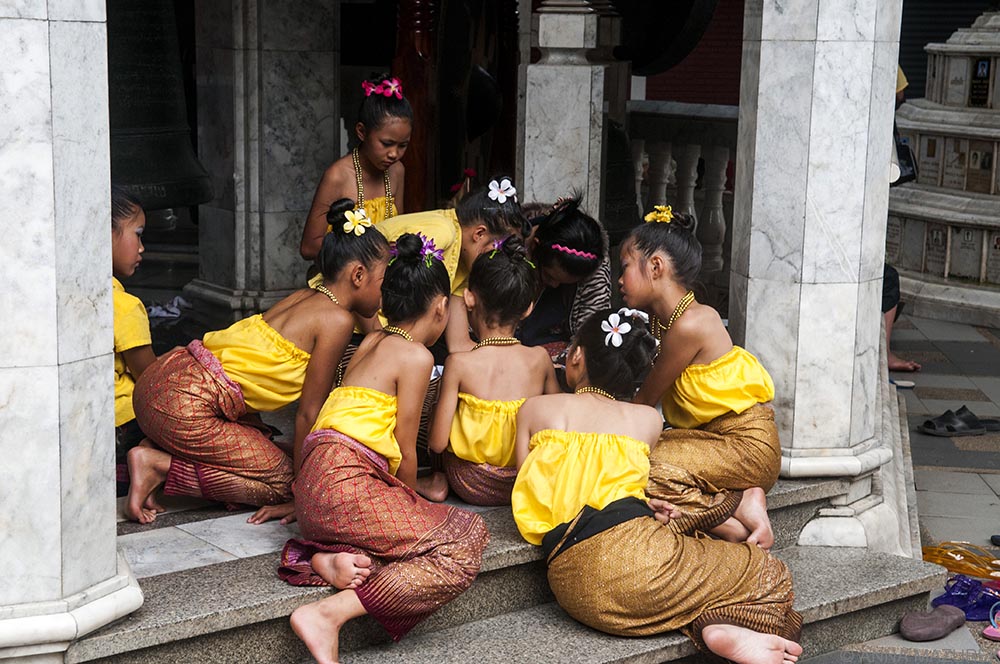 Wat Doi Suthep, Chiang Mai, Thailand
When to Go to Chiang Mai
The best time to visit Chiang Mai is in the dry, cooler months from November to February. Temperatures are in the 70s/80s with lows in 60s. Beware of the burning season when the fields in the north are burned and the smoke heavily pollutes the city to unsafe air quality levels, which is normally February and March. (Download the free Air Visual app to check air quality levels!) It can start as early as late December. April and May are steaming hot. The monsoon rains arrive in June but peak in August/September.
How to get to Chiang Mai
The easiest way to get to Chiang Mai is to fly! International flight options are expanding with direct routes to Singapore on Scoot Airways (love this airline!) and Hong Kong via Cathy Pacific. Domestic flights are available from Bangkok and other large cities. There’s a train to Bangkok that takes roughly 12 hours and is always late. (I love the sleeper car. A bottom bunk is roughly $50.) Buses are the cheapest ($20ish) and take about 10 hours from Bangkok. For prices, check at the station directly or buy in advance from 12Go.Asia.
Local Transport in Chiang Mai
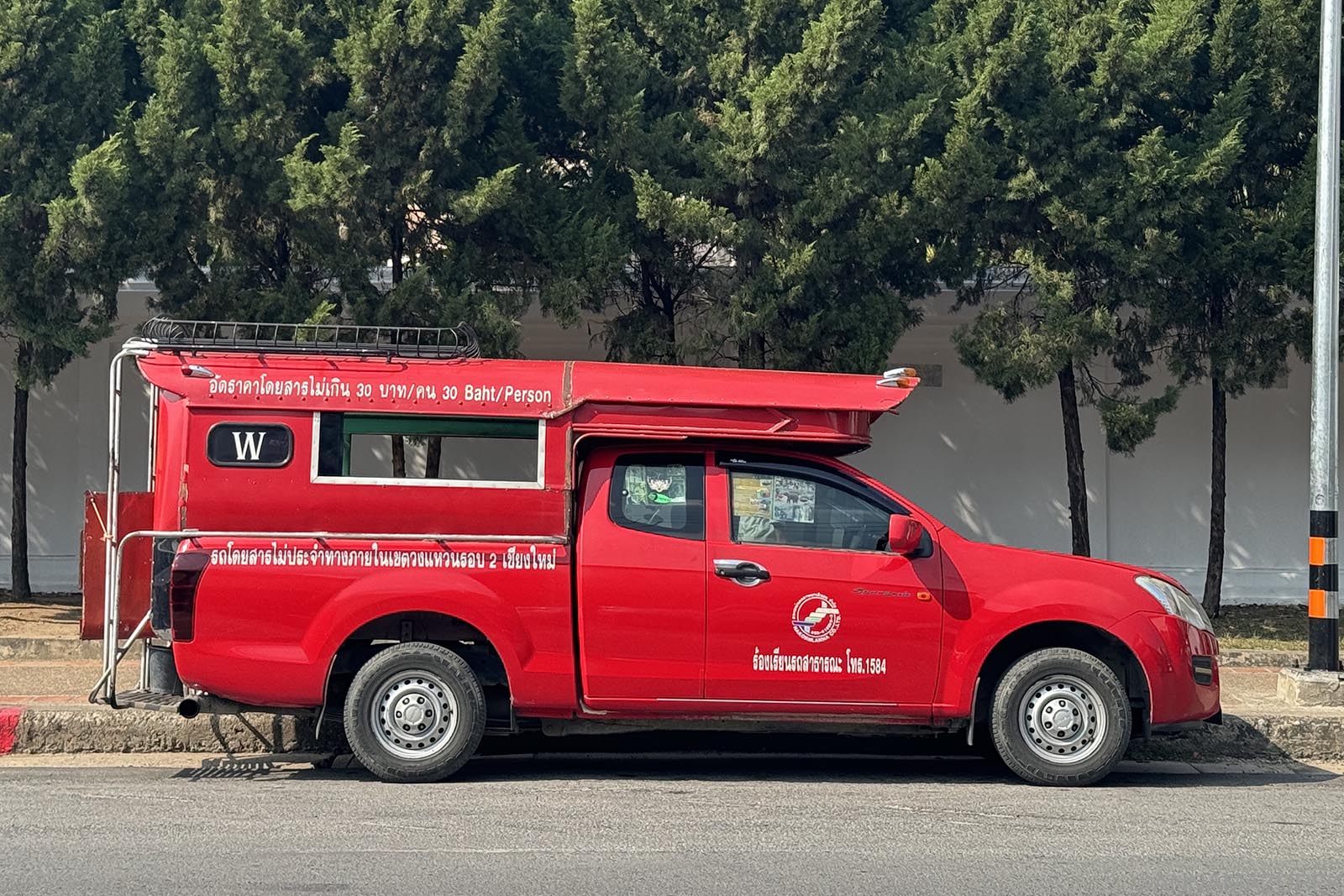 Flag down a red songthaew, a pickup truck with benches in the back, for a cheap lift around town. It’s 30 Baht flat rate.
The local transport in Chiang Mai revolves around a system of songthaews—pickup trucks with two benches in the back—that are constantly on the prowl for business. There’s a few different color truck lines (yellow, red, etc.) but the red ones will take you just about anywhere in the city for 30 baht ($1). I use these a lot and find it’s best to tell the driver a large landmark near where I want to go like Maya Mall or Tha Phae Gate. It’s really important to support the songthaews, so they don’t get replaced by Grab or other rideshare apps!
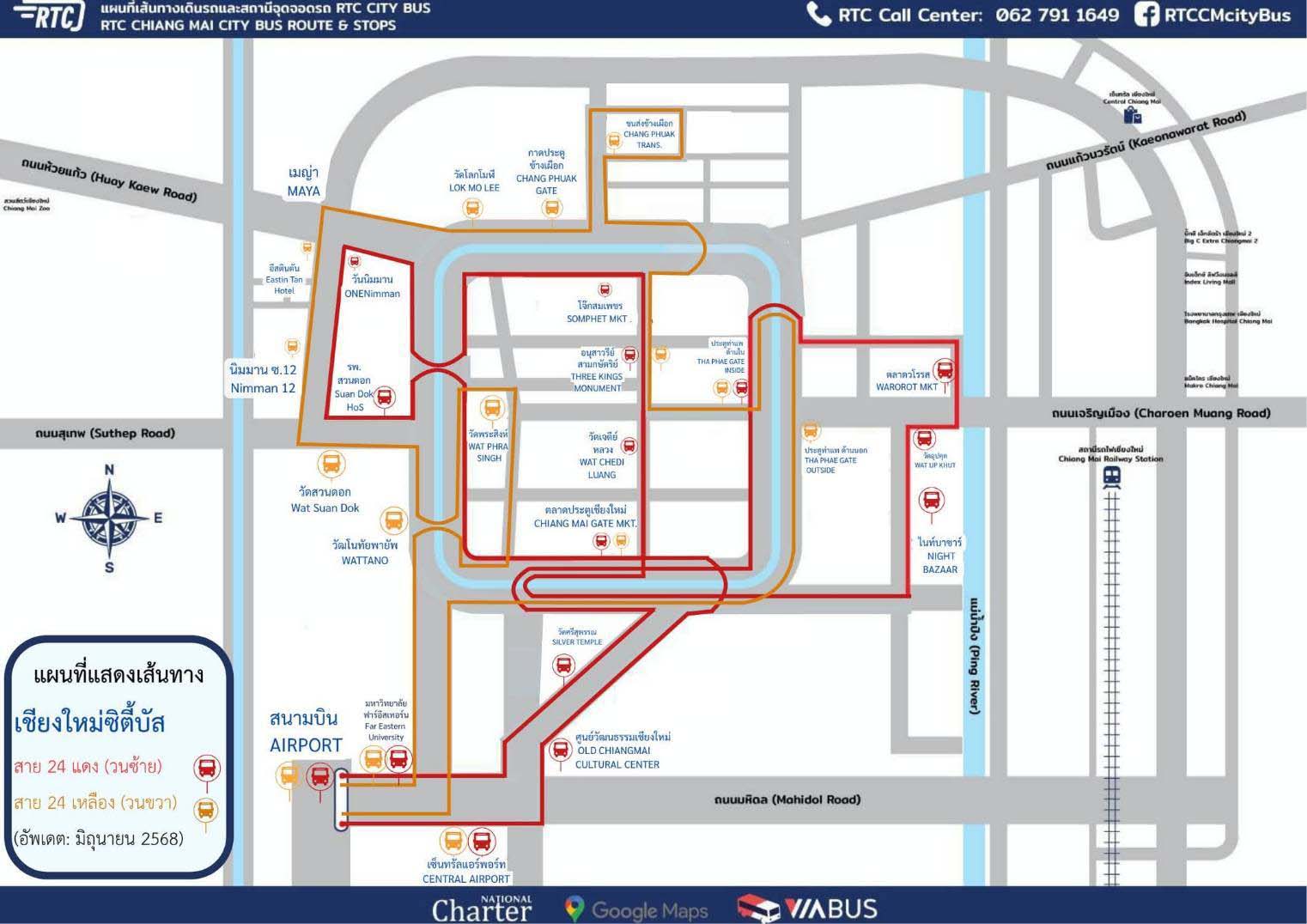 Chiang Mai City Bus Map. Source: https://www.facebook.com/rtccmcitybus
There are currently two city bus lines that both service the airport. Fare is 30 baht. It’s hard to find a good English map, so refer to maps posted in airport when you arrive. The bus line has a Facebook page that’s mostly in Thai, but the airport website lists the stops. Don’t expect buses to run on time. (The previous system, which disappeared during the pandemic, was only consistent at the terminal stops from my experience.)
There are several rideshare apps, including Grab (most reliable) that offers both car, bike taxi and food delivery options. Helmets aren’t always provided for bike taxis. Maxim is a new rideshare app that’s a bit cheaper than Grab but less relaible. Bolt works in Chiang Mai, too, but I’ve never had good experience with it.
Tuk tuks are a total tourist trap and outrageously expensive. Avoid them across Thailand, unless you can get them to match the pricing in a rideshare app.
Car & Motorbike Rentals in Chiang Mai
Motorbikes can be rented just about anywhere in town for roughly 200 baht/day ($6.60 USD). There’s several places along Huay Kaew Road.
SAFETY ALERT: If you don’t have a Thai license or an international motorcycle license, most travel insurance companies will NOT cover you if there’s an accident. The police also set up regular check points around the city and fines are 500 baht ($16.50 USD) if you don’t have a proper license.
I’ve rented a car from Budgetcatcher Car and Scooter Rental in Nimman and had a great experience. It was roughly $30/day for a car.
Where’s the best place to buy an eSIM card
in Chiang Mai?
The easiest thing to do is buy a Thailand specific eSIM card from Airalo that will work instantly when you arrive. If you are traveling to multiple countries in Southeast Asia on a short trip, then consider one of their Asia Regional eSIM cards. (Both the country-specific and regional eSIMs have worked wonderfully for me and even have a mobile hotspot option that’s critical for me because I’m always working remotely.) Keep in mind it’s always cheaper to buy a country specific eSIM than a regional one. For more details, read my Airalo review for Southeast Asia.
Be sure to join the free Airalo Loyalty Program to earn 5% cash back for every purchase, which can be redeemed on future purchases. For more about eSIM cards, check out this post!! Airalo Promo Codes: New customers save 15% off with NEWTOAIRALO15 and existing users save 10% with AIRALOESIM10.
If you’re going to be traveling in Thailand for while, then buying a local SIM or eSIM when you arrive will offer the best value and maximum data. The main carriers are AIS, DTAC and TrueMove. I’ve always used AIS so that’s my preference since coverage is good everywhere I’ve been in the country. You have to show your passport to get a SIM card, which is pretty common in most countries. It’s always more expensive to buy it at the airport.
When I arrived in Thailand, I bought a 30-day plan with 6 GB from AIS in airport for $19 USD. When I topped it up at the AIS in Maya Mall, they offered me a new sim card with a better plan with unlimited data for $8.28 USD. You can top up at machines at 7Elevens or at the retail stores for all the main carriers.
The Chiang Mai Lantern Festival
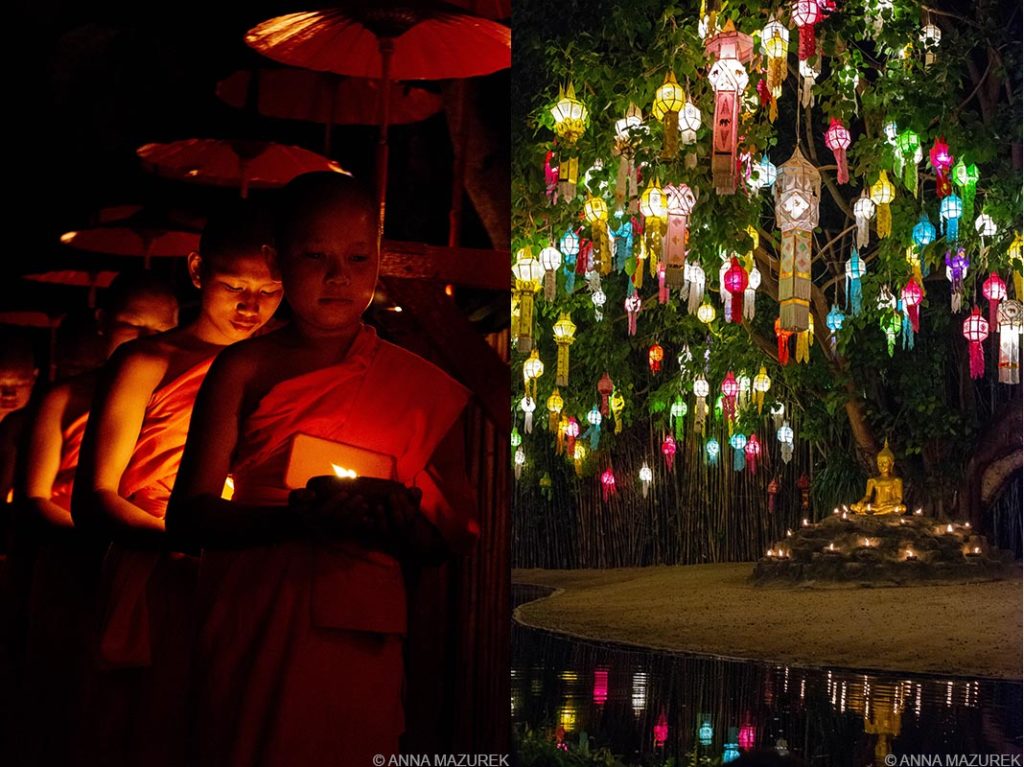 The monk ceremony during the Yee Peng Festival at Wat Phaotao in Chiang Mai. (This temple was remodeled, and this pond no longer exists sadly.)
One of the big festivals in Chiang Mai is the Yee Peng (also spelled Yi Peng) Festival that’s held during the full moon of the twelfth lunar month every year (usually in November). This festival of lights is known as the lantern festival and also coincides with Loy Krathong. The best locations for the festival are the Three Kings Monument, Ping River to launch the krathongs (small floats made from banana leaves and flowers) and the bridge over the Ping River.
Events vary every year. Many temples like Wat Phantao and Wat Chedi Luang will have ceremonies. In 2022 and 2024, Wat Chedi Lunag had a cool light show reflected on the temple. There’s always a parade by Tha Phae Gate one night.
Before COVID, people were releasing lanterns everywhere, which was a real fire hazard. I literally saw a roof on fire by Tha Phae gate! The city seems to be cracking down on the lanterns for safety reasons. Every year it seems to vary. Sometimes, I’ve seen them release them across the Ping River but away from the buildings.
The main “lantern” release is an overpriced event outside of the city that sells out months in advance. It’s a nightmare to get to because it’s far from the city and you have to take shuttles. When you see photos online of a mass lantern release with no buildings in the background, this is what you are seeing photos of, not central Chiang Mai.
Where to get Medical Care in Chiang Mai
The medical care in Thailand’s private hospitals is FANTASTIC, efficient and affordable. In Chiang Mai, Chiang Mai RAM near the old city and Bangkok Hospital Chiang Mai near Central Festival mall are the two main hospitals. I’ve been to Bangkok Hospital many times and the facilities are really nice. (I get all of my routine annual health checks done in Thailand every year, which I’ve written about in this blog post with a full cost breakdown. I even get travel vaccines in Thailand because it’s easier and cheaper than the U.S.)
For medicine, Dara Pharmacy near Central Festival Mall will have any medication you need and it will be at least half the price of Bangkok Hospital.
How to get Thailand Visa Extensions in Chiang Mai
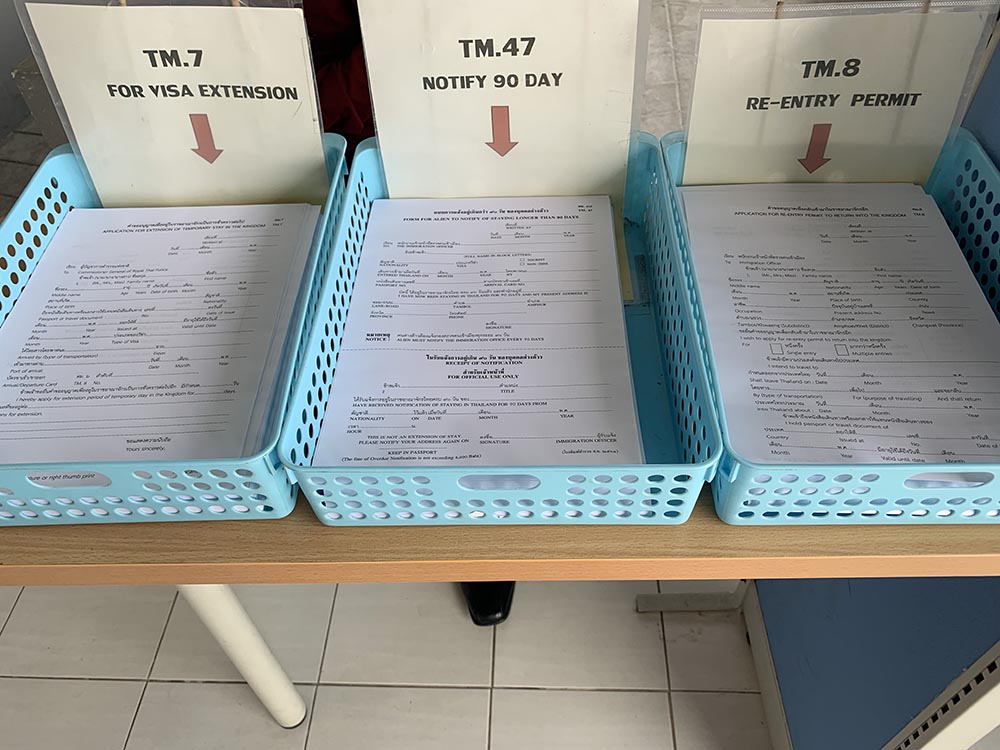
On July 15, 2024, Thailand implemented at 60-day visa upon entry for Americans and 92 other countries. Previously, a 30-day stamp was issued on arrival. After 60 days, you can extend your visa for 30 days at an immigration office. If you need more than 60 days, you’ll have to do a visa run, which I talk about below. There is also a new online system for applying for the extension.
As of late 2025, immigration was cracking down on people doing visa runs. Due to this, I’m unsure how this will affect the 30-day extensions! Make sure to prepare in advance.
How to do a 30-Day Visa Extension in Chiang Mai (In-Person)
These instructions apply to people who need to extend their 60-day visa stamp for another 30 days.
The main Chiang Mai Immigration Office is located near the airport. (Address: 71 ถนนสนามบิน Mueang Chiang Mai District, Chiang Mai 50200) Hours are 8:30 a.m. – 4:30 p.m. There is also an immigration office at Central Festival mall.
When you arrive, grab a number at the booth by the entrance. You’ll have to fill out the applications forms in the outdoor area to the left. For 30-day visa extensions, you’ll need bring following documents with you: a copy of your passport photo page, a copy of your entry stamp in your passport, a copy of where your accommodation listed you in the government registry, a passport-sized photo and the correct application form (TM.7 form provided at the entrance).
If you forget copies or the photo, the gas station across the street has a booth set up to help. The cost for a 30-day extension is 1,900 baht cash. (Don’t worry – they give change if you don’t have exact change!) There are volunteer staff at a table to help make sure you have the correct paperwork, so be sure to have them look over your papers.
When your number is called, you’ll go up to a window outside, and they’ll check your paperwork. You’ll be given a new number for the inside. Unless you arrive when they open, you’ll likely have to come back after lunch for the inside portion. They will give you the timing to come back when they give you your inside number.
When they call your second number, you go inside, you’ll hand your forms to the main counter. They will give you a ticket with a number and barcode then you’ll be called up to the counter. Your number shows up on a screen. They will take your picture and get any other information they need. They’ll call your name a few minutes later to give you your passport with a blue receipt, which you need to show when you exit the country. The second part is really quick. It’s just the first part that’s so long. Set aside a whole day just to be safe and arrive when they open! The last time I did this it took almost the whole day. Please check their website for holiday closings.
How to do an 30-Day Visa Extension in Chiang Mai Online
As of January 2025, you can now apply for an electronic extension for tourist visas. Book an appointment online, upload the required documents (same as above), book an appointment and pay online. Once your extension is approved, you still have to physically go to immigration to get the extension stamp. The visa fee is 1,900 Baht. There are additional service fees: Regular (7 business days) 500 Baht; Express (3 business days) 1,500 Baht; and Urgent (next day but only if next day is a business day) 5,000 Baht. (I physically got this information off the sign at immigration.)
How to do a Border Visa Run from Chiang Mai
If you need more than the 30-day extension or you have already done a 30-day extension, you’ll need to do a visa run to a land border or fly to another country. I recently did this and wanted to share my experience.
IMPORTANT NOTE: Since the 60-day stamp was implemented in July 2024, land borders to Laos (closest crossing to Chiang Mai) require you spend two nights in Laos before reentering Thailand unless you go through an agency. (If you arrive at any Laos land border by yourself, you’ll likely have to spend two nights in Laos.) I saw signs at the Huay Xai crossing on my recent trip.
I used Chiang Mai Visa Run to take a full-day trip to the border and retuned the same day with a new 60-day stamp. I was picked up at Maya Mall at 6:30 a.m. and we returned around 5:30 p.m. The drive was close to five hours each way with one toilet stop. You send roughly an hour at the border. A immigration official mets the group and escorted us through the entire process, which took about an hour. Traffic getting back into Chiang Mai slowed things down a bit but otherwise it was pretty efficient. There were seven people on my trip total. Many people used this service to transfer to other visas like the Digital Nomad Visa, etc. The company screens all customers to make sure the visa run will work for your visa.
The cost of the visa run is 4,300 baht ($127 USD) and an additional 2,000 baht ($59.14) for the Laos visa. You also have to pay 25 baht (74 cents USD) each way for the bus shuttle to cross the border bridge. (I booked through PayPal so there were some extra fees. In PayPal, make sure to select the option to let your bank do the currency conversion to save a few dollars.)
Due to the visa change, it’s best to use an agency if you’re doing a visa run to the Cambodia border as well or fly out of the country.
For more about Southeast Asia, check out these posts:

I Live in Thailand – Here are the Best Places to Visit (and Where to Avoid)
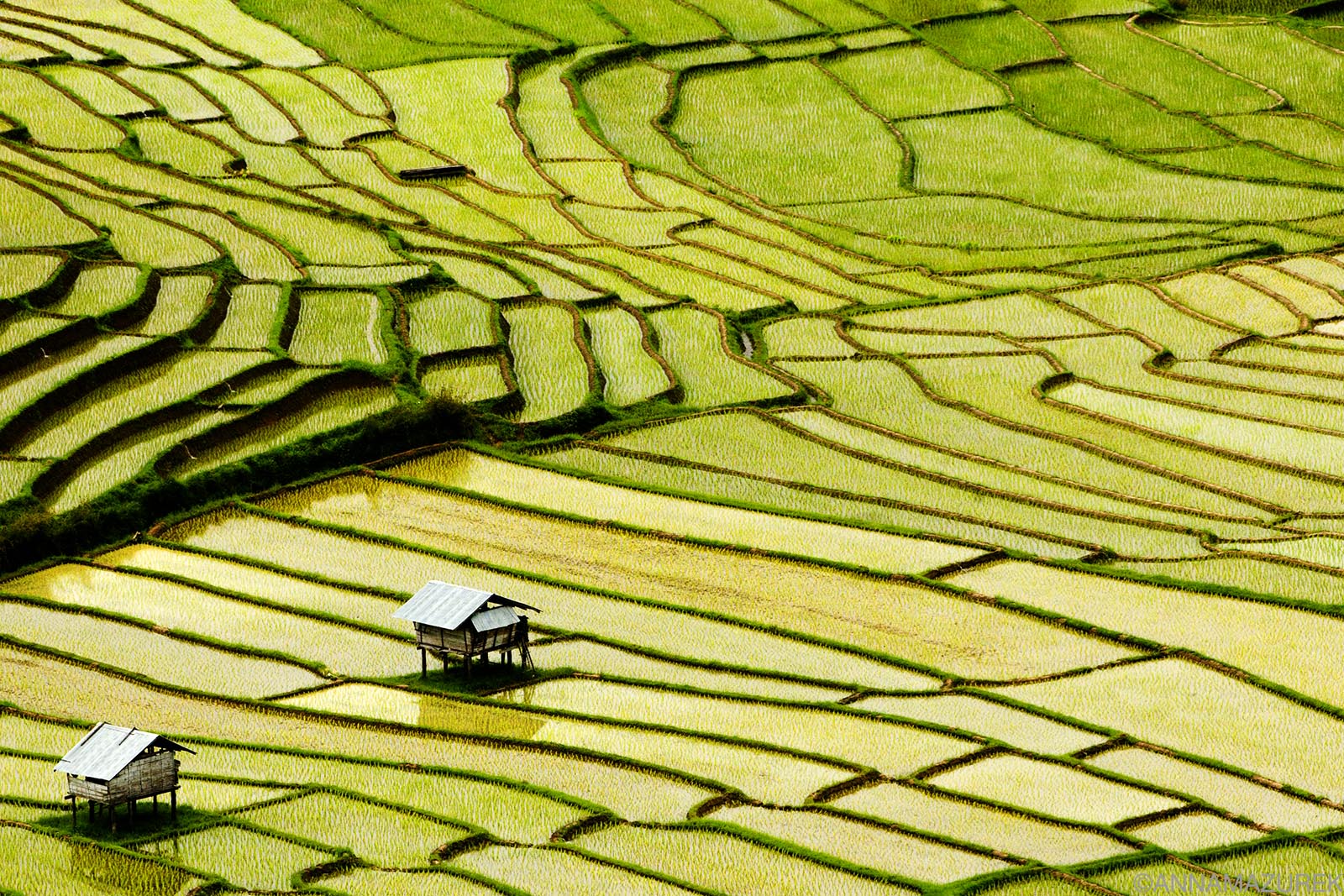 Rice fields during the monsoon season in Bon Mai village in Northern Thailand
The hardest part of any trip to Thailand is deciding where to go. The choices are endless – the white sandy beaches of the Andaman Coast, indulging in Chiang Mai’s culinary delights, visiting Bangkok’s gleaming Buddhist temples and biking through the 13th-century ruins of ancient Sukhothai, Thailand’s first capital. You’ll find it hard to leave.
I’ve spent the last decade living and working in Thailand off and on working for travel companies, teaching English and volunteering with an NGO. I now spend every winter living in Chiang Mai. I decided it was time to write up my favorite places to go in Thailand—I’ve been everyone on this list!
Thailand is a traveler’s dream—friendly people, delicious food and stunning scenery. Plus, it’s budget-friendly and very safe. Keep reading for the best places to go in Thailand and how to best prepare for your trip!
Affiliate links are used in this post. If you make a purchase, I earn a small commission at no cost to you, which goes toward the cost of maintaining this blog.
Plan Your Trip
Currency: Thai Baht (THB)
When to Go: November to February for cooler temperatures. October is very lush at the end of rainy season (my favorite month).
Travel Insurance: Protect yourself with SafetyWing travel medical insurance to cover accidents and travel delays.
Mobile eSIM Card: Get seamless connectivity worldwide with Airalo minus the hassle of physical SIM card. (Save 10% with code AIRALOESIM10!)
 A monk walks through the courtyard of Bangkok’s most stunning temple – Wat Suthat.
Bangkok
Bangkok is a kaleidoscope of both Eastern and Western culture – sleek shopping malls just blocks away from traditional Buddhist temples. The capital city boasts a sleek metro train system that makes it easy to get around. Since Thailand is famous for its high-quality medical care, Bangkok is a big hub for medical tourism. I get my annual health checkups in Bangkok and wrote a post with a detailed breakdown of the cost.
The most famous sites are The Grand Palace, the former royal residence, and Wat Phra Kaew, home to the Emerald Buddha, the most revered image in Thailand that dates back to the 13th and 14th centuries. Tickets are 500 baht for foreigners. Consider booking online through Klook if you want to skip the lines. (There is a strict dress code. Cover your knees and wear long sleeves or you’ll be forced to rent clothes.)
Nearby, Wat Pho, known for the reclining Buddha, and the iconic Wat Arun across the river are also a must. (Both are 200 baht each.)
For more things to do (including less touristy sites) in the Thai capital, read my detailed Bangkok Guide!
Where to Stay in Bangkok
Always choose accommodation near one of the train lines to make it easy to get around. I like to stay near the Siam area.
-
Bangkok Hostels: I stayed at Bed Block One Hostel ($16 USD/night) for years and loved how close it was to Siam (Ratchathewi BTS) and the airport train.
-
Bangkok Hotels: S33 Compact Sukhumvit ($55 USD/night) is a short walk from the BTS and my favorite neighborhood, Thong Lor. Don’t laugh, but the Holiday Inn Express Siam ($88 USD/night) by the National Stadium BTS is my go-to because it’s a great location with clean rooms, free breakfast and a gym. If you want to splurge, I recommend VIE Hotel Bangkok ($188 USD/night) and Chatrium Grand ($215 USD/night).
 Wat Chiang Man is a hidden temple in Chiang Mai’s old city.
Chiang Mai
Chiang Mai is the laid-back culinary hub of Northern Thailand. Stroll through the old town, a 1.5 km square surrounded by original walls and moat to visit Wat Chedi Luang which dates back to 1441. Climb the 306 steps to the mountain-top temple of Wat Phra That Doi Suthep, which is a short trip outside of the city. Stop by the Chiang Mai Night Bazaar, the 1km long sprawling nightly market for a bowl or two of khao Soi, a delicious soup curry. A cooking class at Grandma’s Home Cooking School is a must, along with a trip out to the Sticky Waterfall.
For more details, check out my Chiang Mai Guide.
The Best Places to Stay In Chiang Mai
HOTELS: In the hip Nimman area, try Hotel YaYee ($38 USD/night) and Amanor Hotel ($138 USD/night), which have the best rooftop bars in town. Chern Chiangmai Boutique Hotel ($65 USD) is a modern, family-run hotel tucked on a quiet street.
In the old city’s southwest corner, Marigold Lanna ($50 USD/night) and the stunning pool at Smile Lanna Hotel ($82/ USD night) are favorites. Baan Hanibah ($82 USD/night) is a lovely family-run guesthouse with comfortable rooms in the northeast corner.
HOSTELS: In the Old City, consider The Common Hostel ($10 USD/night) or Pakping Hostel, which has private bunks with curtains. In Nimman, Ray Hostel and Bed Addict Hostel have the best locations and ratings. ($13-14 USD/night.)
Traveling in Southeast Asia
Read my guides to Chiang Mai, Bangkok, Vietnam and Singapore!
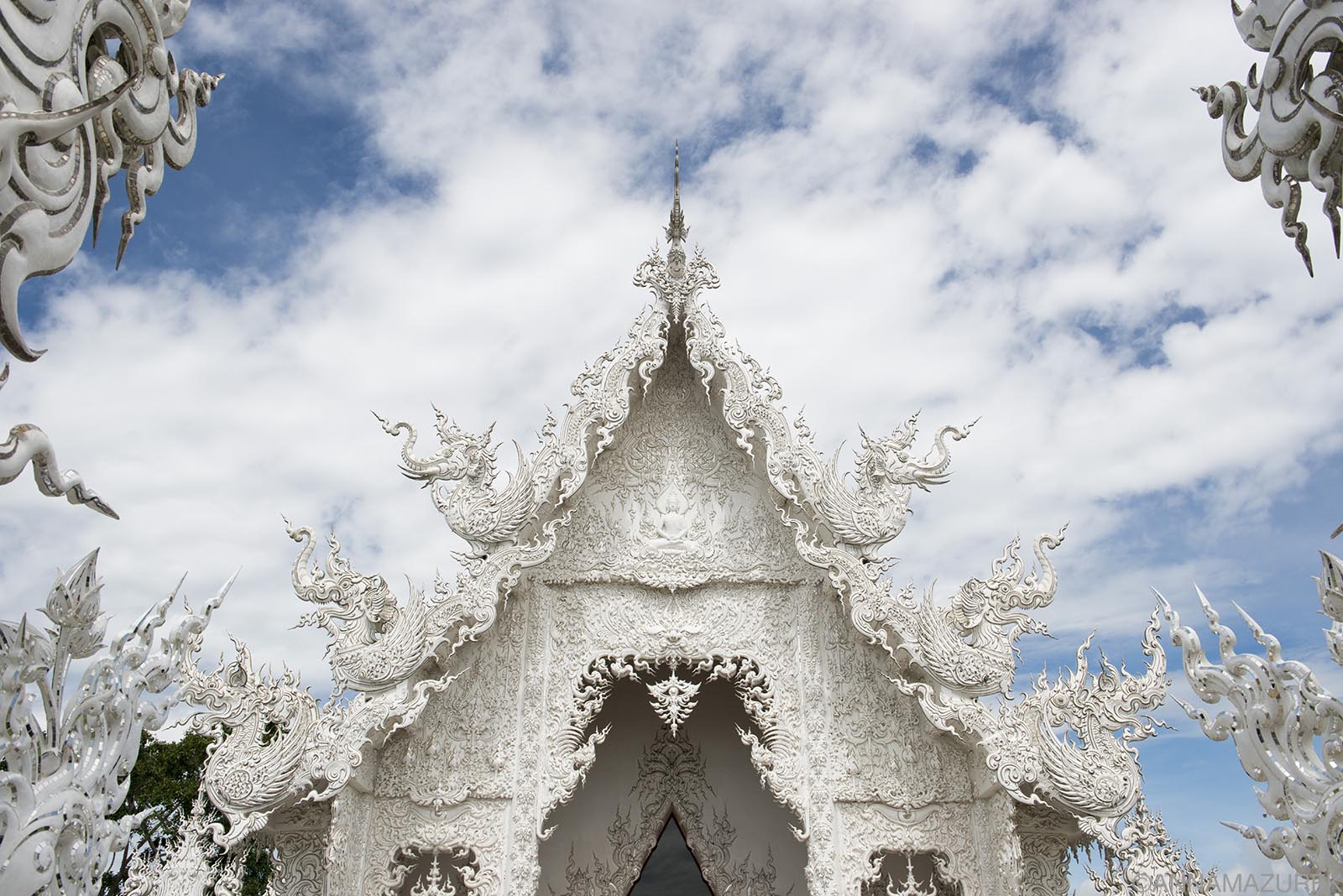 Chiang Rai’s temple-inspired art project, Wat Rong Khun, features images of Hello Kitty and Keanu Reeves in the interior.
1
Chiang Rai
The small town of Chiang Rai is often overlooked but worth a visit if only to see the famous white temple, Wat Rong Khun. The temple is a contemporary art project by local artist Chalermchai Kositpipat that opened in 1997 and is still not yet completed! It’s open daily for visitors with a small entry fee (50 Baht/$1.39 USD).
Another local artist, Thawan Duchanee, is known for a 40-building complex known as the black temple (Baan Dam Museum) that features a dark and controversial interpretation of Buddhist philosophy. There’s also a blue temple, Wat Rong Seur Ten and the hilltop Buddha at Wat Huay Place Kang. The city has great food, budget accommodation, stunning temples and is a good base for nearby excursions. The nightly light show at the downtown clock is fun. There are a plethora of day-trip tours from Chiang Mai.
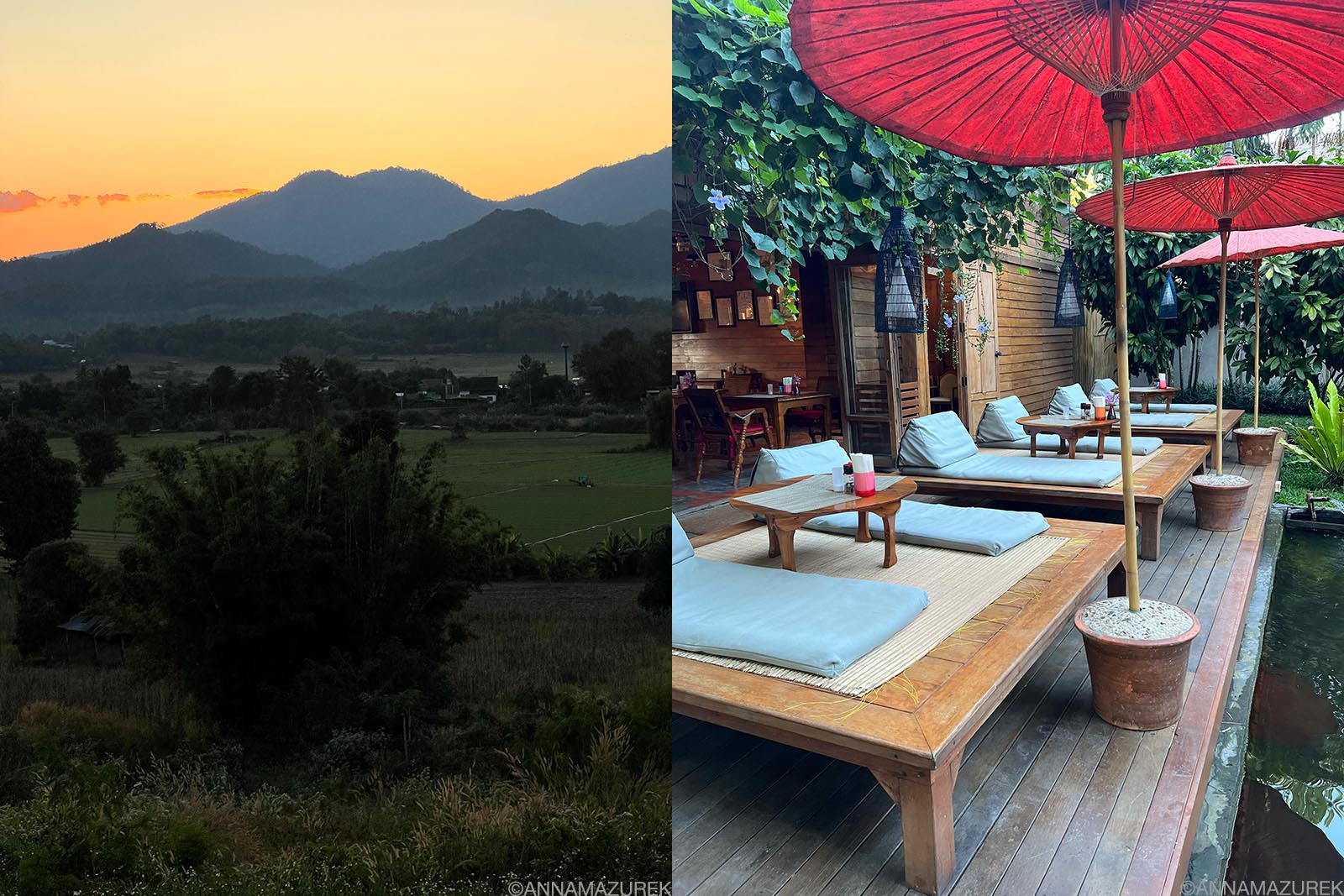 Left: Two Huts, a popular sunset spot in Pai. Right: The Pai Village Boutique Resort.
Pai
Everyone loves Pai, a mountain town with beach vibes. The bohemian outpost is surrounded by lush mountain scenery and is one of the most visited parts of Northern Thailand. The city center is filled with trekking agencies, boutiques and an endless array of restaurants. The walking street is hopping at night so stick to the edges of town if you want solitude. Highlights include Pai Canyon, the waterfalls of Pam Bok and Mae Yen, and Tha Pai Hot Spring.
The Best Places to Stay in Pai
For rice field views, consider the quieter Yoma Hotel ($58 USD/night) or Buzzas @ Pai Chan, a backpacker’s spot that’s $26 USD/night. Pai Village Boutique Resort ($160 USD/night) is right on the walking street and super fancy.
 A reflection of Wat Mahathat in Sukhothai, Thailand’s first ancient capital.
Sukhothai & Ayutthaya
If you love ancient Buddhist ruins as much as I do, then don’t miss these two UNESCO World Heritage sites. Sukhothai was the first capital of Siam in 13th and 14th centuries, and Ayutthaya was the second. Both are easily accessible by bus.
Sukhothai is over halfway between Chiang Mai and Bangkok. Simply rent a bicycle by the park entrance and explore on your own. (It’s totally flat so easy biking!) Vendors aren’t allowed in the walled portion of the ruins making for peaceful exploration. For details on how to get to the park, check out this post. (On my last visit, I stayed at TR Guesthouse ($14 USD/night for a private room) and really liked it.)
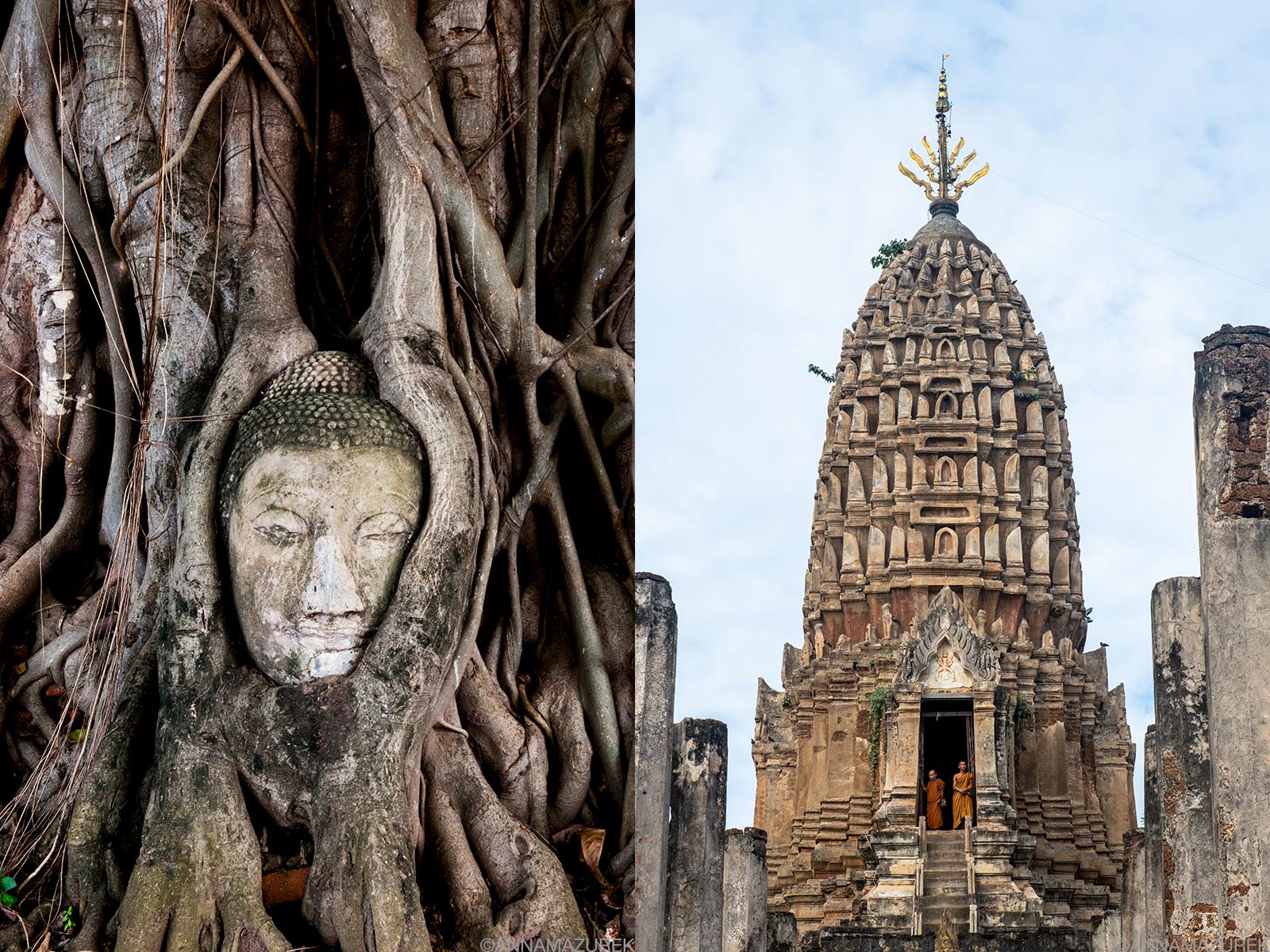 Ayutthaya’s ruins are famous for a Buddha head entangled in tree roots at Wat Mahathat. Right: Wat Phra Sri Rattana Mahathat Rajaworaviharn at Si Satchanalai
To get off the beaten path, stay an extra day to visit the nearby Si Satchanalai, one of Thailand’s hidden secrets! It’s 60-kilometer drive away and part of the same UNESCO designation. (Si Satchanalai was the spiritual capital while Sukhothai was the political head of the first kingdom of Thailand.)
Check out my Instagram highlight about how to visit to Si Satchanalai!
Ayutthaya is 80 miles north of Bangkok and easy to visit on a day tour. Unlike Sukhothai, the sites at Ayutthaya are spread out and has lots of annoying vendors. Doing a tour will make it easy to travel between sights. While both UNESCO sites are worth visiting, I personally prefer Sukhothai because it’s not as crowded, and there are far fewer annoying vendors.
 Park rangers stop traffic at Khao Yai National Park for a wild elephant to cross the road.
Khao Yai National Park
For a chance to see wild elephants, a visit to Thailand’s first national park is a must. Located only three hours from Bangkok, this 2,206 square kilometer UNESCO site is also world-renowned destination for birders. On my visit to Khao Yai National Park, I was amazed by the diversity of the wildlife sightings, including wild elephants, hornbills, gibbons, vipers and porcupines.
You’ll need your own set of wheels to visit or to book a tour. If you’re short on time, you can easily do a day tour from Bangkok.
It’s worth taking the train out to the area (Pak Chong is nearest station) and spending a few nights. I highly recommend booking tours and accommodation through Greenleaf Guesthouse & Tour. (The website looks like it’s from 1995, but it’s legit.) For more details, check out my guide to Khao Yai National Park.
Where to go in Southern Thailand
 A 20-minute boat ride from Ko Tao takes you to the Koh Nang Yuan Viewpoint.
The trickiest part of visiting Thailand’s beaches is deciding between the Andaman Coast or the Gulf Islands. The gulf islands of Ko Tao, Ko Samui and Ko Pha-Ngan are close together, while the islands on the Andaman coast are scattered. Both have white sandy beaches and clear water, but the Andaman Coast is known for towering limestone cliffs. (The water is clearer on the gulf side but there’s sea life on the west coast.)
To be brutally honest, I’m not the biggest fan of the Thai beaches and islands—I’ve been to them all—because they are all built-up tourist attractions that don’t feel like Thailand. (The only ones I like are the Similian Islands and Khao Lak.) Avoid the rainy season because beaches will be filled with trash and debris, including plastic. This is an issue on most beaches in Southeast Asia.
Thailand’s Gulf Coast Islands
 Left: The trail on the way to the John-Suwan Viewpoint; Right: Boat ride to Koh Nang Yuan.
- Ko Tao is the main diving hub in Thailand and second in the world for the annual number of dive certifications. It’s also one of the cheapest places to be PADI certified. If you want to dive, there’s no better place in Thailand. (I stayed at Sairee Cottage Resort on my last visit and would recommend it.)
- Ko Samui is a swanky resort island of the trio and probably the nicest island in Thailand with the cleanest beaches due to the amount of high-end resorts. It’s the main ferry hub for reaching Ko Pha-Ngan and Ko Tao. All taxis are fixed rate, so it’s expensive to get around. Songthaews, pickup trucks with covered rows of seats, are the cheapest options. If you’re flying in and going straight to the ferry to one of the other islands, book a group airport transfer with your ferry ticket.
- Ko Pha-Ngan is the infamous party island known for the Full Moon Parties, a never-ending beach rave filled with electronic music and backpackers covered in neon paint. The party rages on both before and after the full moon. To escape the party scene, head to the laid-back and less visited northern parts of the island.
-
Ko Samet’s ferry dock is only a three-hour bus ride from Bangkok’s eastern bus terminal. Despite being the closest island to Bangkok, it’s still an underdeveloped destination with a thick jungle interior. I spent my birthday here one year and really enjoyed it. The southern portion of the island is more secluded and parts of the island only accessible by motorcycle or ATV, which are easy to rent. There are no white sandy beaches here, but the water is still clear.
How to get to Ko Samui, Ko Tao and Ko Pha-Ngan
You can fly to Ko Samui from Bangkok easily or other cities internationally. (The airport is privately owned by Bangkok Airways and is one of the coolest airports I’ve ever visited.) Then, it’s easy to take a ferry to the other islands.
The cheapest way to get there is a bus/ferry combination from Bangkok’s southern bus terminal. You can also take the train/bus/ferry combination from Bangkok, but the bus/ferry option is much easier from my experience.
To get here from Krabi, you’ll need to take a van/ferry combo. Both 12Go.asia and Klook sell easy transport packages for all island destinations.
Thailand’s West Coast Islands on the Andaman Sea
 Long-tail boats docked on the sandy shores of Ko Phi-Phi Don in Southern Thailand’s Andaman Sea.
-
Krabi Town is a key transport hub nestled between towering limestone karsts. Ao Naug and Railay are the nicest beaches nearby. While the town of Ao Naug isn’t the nicest, it’s a great place to grab a boat over to Railay, a tiny picturesque white sandy beach village accessible only by sea.
-
Phuket is the celebrity of Thai islands and the largest island in the country. It’s a sprawling 30 miles long, which means you must decide exactly what part of the island to book accommodation. Transport between the main town and other beaches is pricey. It’s a big luxury destination filled with swanky resorts. I recently stayed at the J.W. Marriott for work, which was nice but more geared to families. Phuket just doesn’t feel like Thailand, so I’m not a fan. It is worth a stroll through Phuket town to see the historic architecture. Phuket, like Krabi, is a good transport hub to other islands.
-
Khao Lak is a small town with a nice beach an hour north of Phuket. Over the past few years, I spent several weeks there volunteering with an NGO, the Foundation for Education and Development. It’s a great location for day trips to the Similan and Surin Islands, Khao Sok and Khao Lak/Lam Ru National Parks. Klook offers day trips to most surrounding islands with free pickup.
-
The Similan Islands Marine National Park is home to the most beautiful beaches in Southeast Asia and one of the prime diving and snorkeling spots. (Ko Bon and Ko Tachai are the best snorkeling and diving areas since they are unaffected by coral bleaching.) Overnight stays were banned in 2018. (Divers can stay on a live-aboard.)
The islands are closed annually from May 15 – October 15th each year for environmental rehabilitation. (Koh Tachai, one of the park’s most beautiful islands, is rumored to reopen soon after nine years of restoration to combat over tourism.) Consider a diving trip or a day snorkeling trip from Phuket and Khao Lak. (I booked day trips to the Similan Islands through Klook, which offer pickups in Phuket, Khao Lak and Krabi.)
 Khao Sok National Park is an easy day from Khao Lak but worth staying for a night or two!
-
Khao Sok National Park is one of Thailand’s hidden gems. The park centers around an inland, man-made lake, Chiaw Lan Lake, with some Ha Long Bay-esque scenery of towering limestone formations surrounded by some of the world’s oldest evergreen rainforest dating back 160 million years.
Go for a jungle trek to see one of the 300 species of birds, a cave tour or a dip in the calm lake waters. Take a day trip from Surat Thani or Khao Lak or stay the night in a fancy lodge or one of the floating raft houses. If you only have time for a day trip, consider booking through Klook, which I use for day trips.
-
Ko Phi-Phi Don is a backpacker island accessible by ferry from Phuket or Krabi. I was disappointed by the trash on the beaches but loved the nightly fire shows. Its nearby sister island, the uninhabited Ko Phi-Phi Leh, is a gorgeous national park island. You’ll probably recognize the soaring limestone cliffs jutting out of crystal-clear waters from the movie “The Beach” that was filmed there. It’s a popular day trip with great snorkeling opportunities. Klook offers great day-trip rates from Ko Phi-Phi Don, Krabi and Phuket.
How to get to Phuket and Krabi on Thailand’s West Coast
Phuket is the largest airport with international flights, and Krabi is usually the cheaper option from Bangkok. Phuket is also easily accessible via overnight bus from Bangkok. There is an endless number of ferries between all the islands. Just plan to arrive early to catch a same-day ferry.
Thailand FAQ
 Wat Phra That Doi Suthep, Chiang Mai
The Best Time to go to Thailand
It will be hot year-round in Thailand, even in the “cool” season. The rainy season lasts from May to October, but it usually only rains a little each day. The occasional deluge can occur so keep an umbrella handy. (I honestly prefer the rainy season because it’s much greener and lusher. But, it’s been rough lately due to climate change with heavier rains.) Avoid the burning season near Chiang Mai starting in February/March, when the air quality is the worst in the world.
March to May is steaming hot across the country, so avoid this time of year if possible. November through February is peak travel season when temperatures drop (low 80’s Fahrenheit in the north), and prices increase dramatically. The water festival (Songkran) in mid-April is another peak travel time so book ahead for accommodation. I personally love October and early November, when everything is still lush from rainy season. By January, all the trees have lost their leaves.
Do you need travel medical insurance for Thailand?
Yes, travel medical insurance is one of the most important things to purchase for any trip abroad, especially Thailand. It covers all the things that could go wrong from injuries to travel delays so that you don’t have to worry and can focus on traveling!
I use SafetyWing’s Nomad Insurance, which offers $0 deductible travel medical insurance coverage for over 180 countries for people aged 69 and under when traveling outside their home country. The best part is that it only costs a few dollars a day! If you get sick or injured abroad, you can visit any hospital or doctor.
Other benefits of Nomad Insurance include coverage for lost checked luggage, travel delays over 12 hours, motor accidents (if properly licensed, wearing all safety equipment and not intoxicated) and injuries from sports or leisure activities. You can even add adventure sports, electronics theft and U.S. coverage (for non-residents) to your policy.
If you’re abroad for 90 days, you can get 30 days of home-country coverage. (For the U.S. residents, it’s 15 days.) For more details about my experience using SafetyWing in Southeast Asia, read my SafetyWing Review.
The best place to buy a SIM card in Thailand
The easiest thing to do is buy a Thailand-specific eSIM card from Airalo that will work instantly when you arrive. If you are traveling to multiple countries in Southeast Asia on a short trip, then consider one of their Asia Regional eSIM cards. (Both the country-specific and regional eSIMs have worked wonderfully for me and even have a mobile hotspot option that’s critical for me because I’m always working remotely.) Keep in mind it’s always cheaper to buy a country-specific eSIM than a regional one.
Be sure to join the free Airalo Loyalty Program to earn 5% cash back for every purchase, which can be redeemed on future purchases. For more about eSIM cards, check out this post on the pros and cons of eSIM cards!
If you are staying for a month or more in Thailand, go by an AIS store and buy a local SIM or eSIM card for the cheapest deal. (AIS is Thailand’s largest mobile network operator.)
 Tuk tuks made from beer cans at a market in Bangkok.
Thailand Transport Tips & Logistics
Trains
The trains in Thailand are good but usually late by at least 30 minutes to a couple of hours. Sleeper trains are quite comfy and one of my favorite forms of travel. (Always get the bottom bunk – it’s bigger. Plus, the air conditioner makes the top bunk FREEZING.) Book directly at the train station or through 12go.asia. Bottom bunks sell out so try to buy a day or two in advance.
Bus
Buses are more efficient. Always take the second-class buses instead of the VIP tourist buses. It’s half the price and nicer. (The VIP buses are always blaring music all night and can be targets for people to get robbed since it’s all foreigners. I’ve heard rumors of bus staff going through bags when coming from the beaches.) The second-class buses are usually only locals, so they are safer in my opinion. They have air conditioning and bathrooms, too.
Tuk Tuks
Tuk tuks (auto rickshaw) prices are outrageous in Bangkok. Always get a taxi in Bangkok – it’s significantly cheaper to pay by taxi meter than the horrible flat rate tuk tuk prices. They can be cheaper in other parts of the country. Always negotiate a price beforehand.
Grab
Grab is the Uber of Southeast Asia and the most reliable of the rideshare apps. You can even schedule pickups in advance, which is great for airport runs. There are other apps as well like Maxim that are slightly cheaper but a bit more glitchy. Bolt also works, but it’s not as reliable.
Banking
Exchange rates are always better in towns than at the airport. All ATMs in Thailand are now charging ATM fees for withdrawals. To avoid these fees, be sure to open a fee-free travel bank account before your trip, which will save you a significant amount of money. For more details, check out my post on Travel Banking 101.
 Bangkok’s Wat Arun is best photographed from across the river.
How to Dress in Thailand
Thailand is very conservative, so be sure to cover your knees and shoulders in temples! Many temples in Bangkok even require long pants and long sleeves, and they will require you to rent clothing if you are not dressed appropriately. Be respectful at all times. Normal shorts are okay in Bangkok and Chiang Mai. Anything goes along the beaches in Southern Thailand.
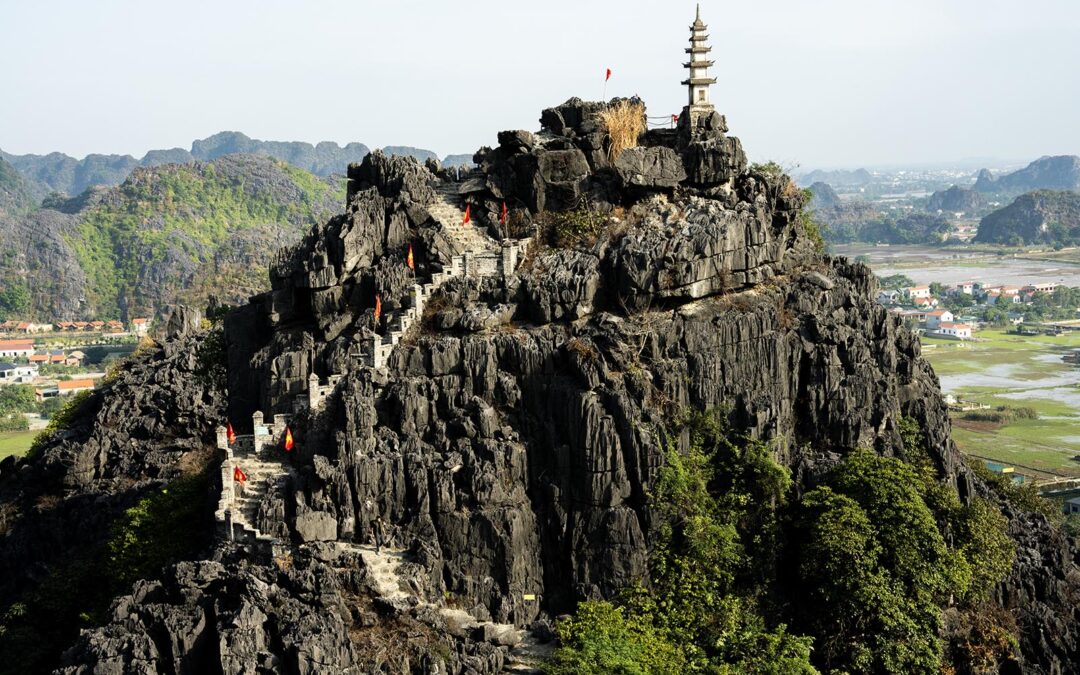
8 Things to do in Ninh Binh, Vietnam—Here’s What’s Worth the Time
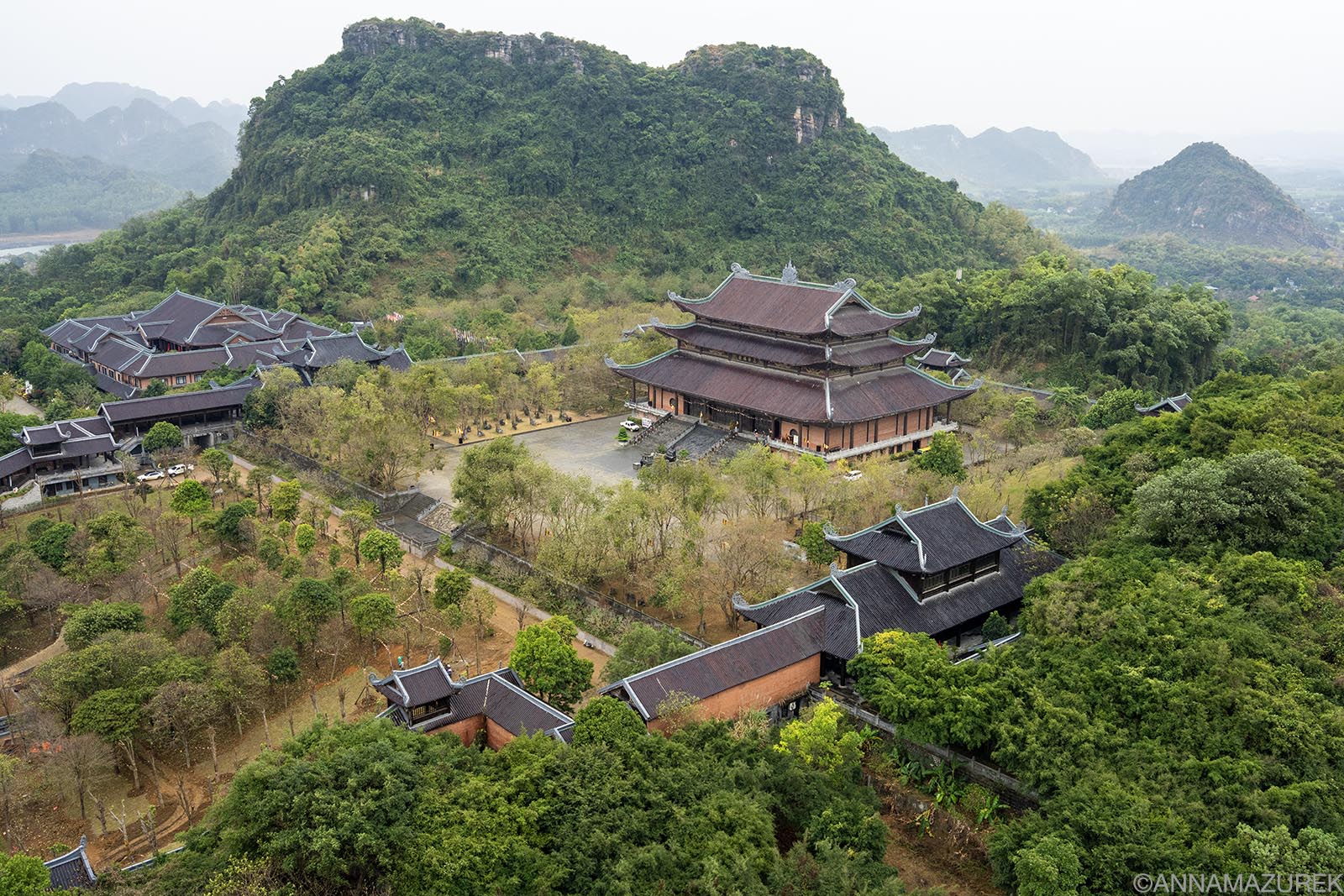 The view from the top of the 13-story tower at Bai Dinh Pagoda.
The scenery in Vietnam’s Ninh Binh province, known as the “Halong Bay on land” is unmatched in Southeast Asia with dramatic limestone karsts, enormous caves and boat rides on winding rivers through rice paddies. Over 6,000 hectares of the scenic landscape, known as the Trang A Landscape Complex, were given UNESCO status in 2014. You’ll likely recognize some of the otherworldly panoramas from the 2017 movie “Kong Skull Island” that was filmed in Vietnam.
Of course, the region is also home to some fabulous 15th century pagodas and temples—the area was Vietnam’s first capital.
Located in the Red River Delta less than two-hours by car from Hanoi, Ninh Binh province is easily accessible and worth setting aside a few days to explore. If you’re short on time, consider a day tour from Hanoi.
I’ve been in love with this region since my first trip in 2009, long before it became a UNESCO site. The more I visit, the more places I discover. Keep reading for the best things to in Ninh Binh!
Affiliate links are used in this post. If you make a purchase, I earn a small commission at no cost to you, which goes toward the cost of maintaining this blog.
Plan Your Trip
Currency: Vietnamese Dong (VND)
When to Go: December to March for cooler temperatures but March to June & September/October for best photo opps of rice fields.
Travel Insurance: Protect yourself with SafetyWing travel medical insurance to cover accidents and travel delays.
Mobile eSIM Card: Get seamless connectivity worldwide with Airalo minus the hassle of physical SIM card.
Trang An Boat Ride
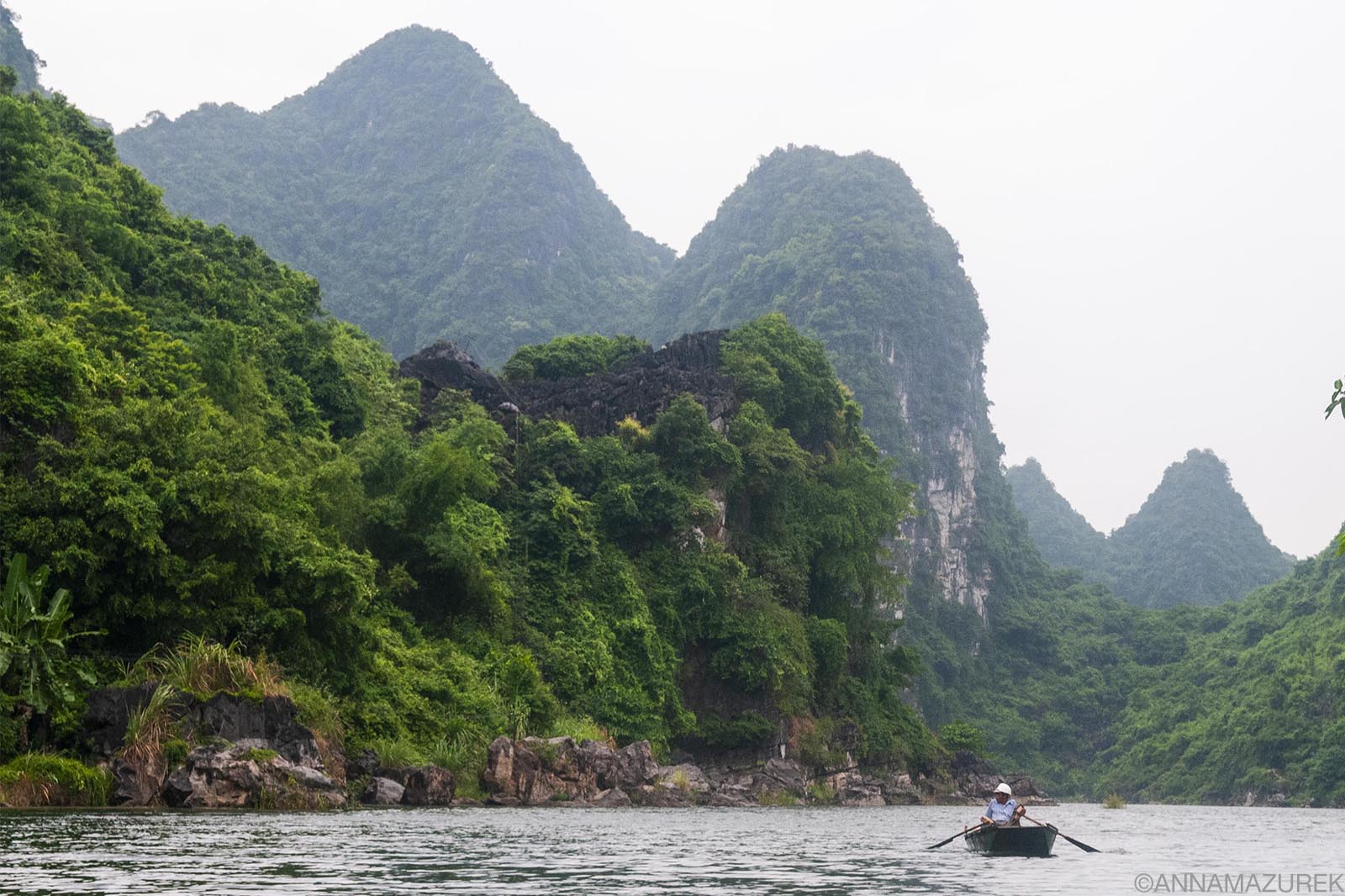 The Trang An Landscape Complex achieved UNESCO status in 2014.
Location: 7 kilometers from provincial capital of Hoa Lu City
The region’s main attraction is a series of boat rides through spectacular scenery, and the most popular stunning is the UNESCO-listed landscape at Trang An.
There are three different route options but the most beautiful route in Trang An is route 3, a three-hour cruise to visit three temples and three caves, including the kilometer-long Hang Dot cave. (The experience made me feel like I was in Steven Spielberg’s “The Goonies” and one-eyed Willie’s ship would be waiting on the other side.) It’s often quieter than neighboring Tam Coc because the boat departure point isn’t in the center of a town.
Tam Coc Boat Ride
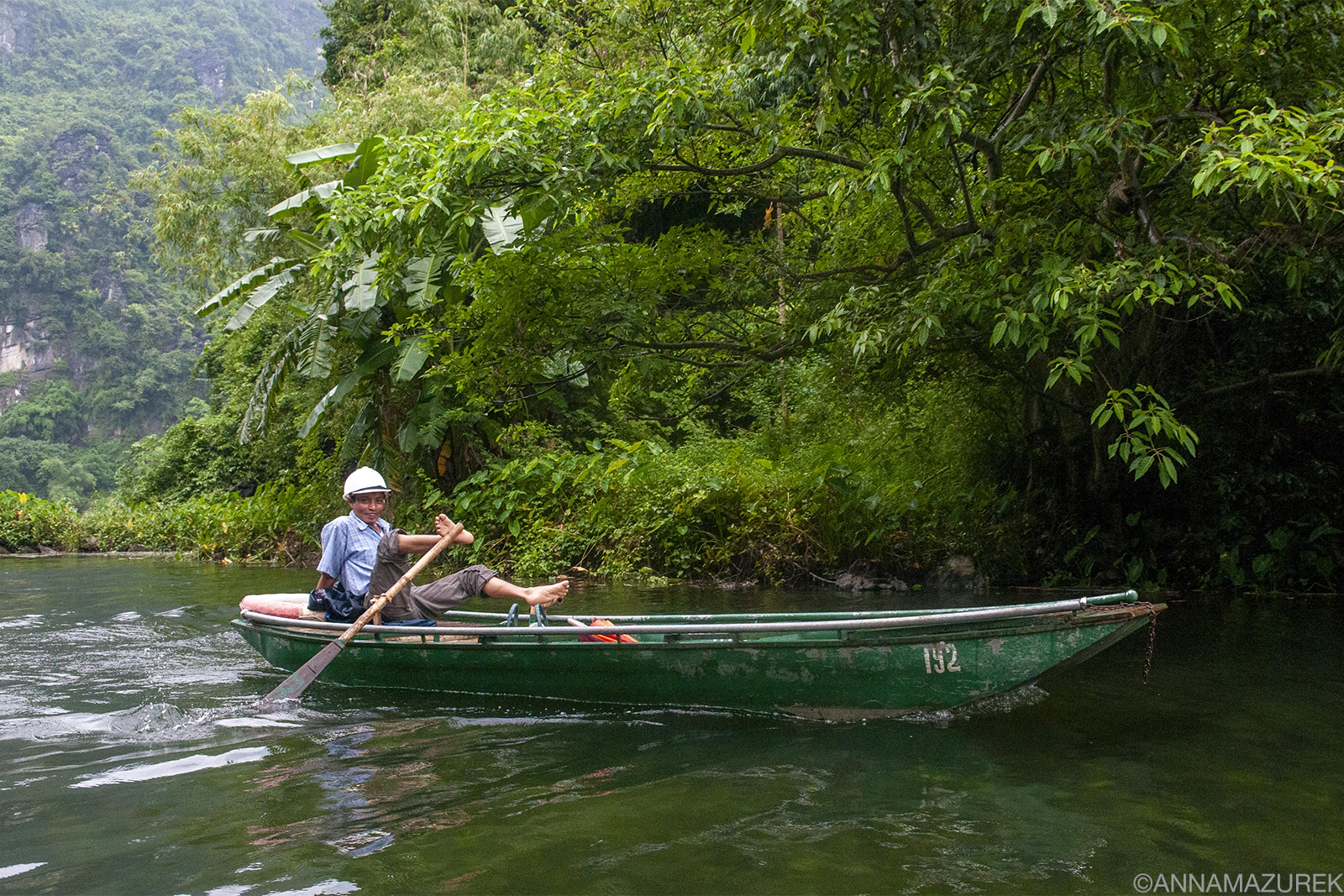 At Tam Coc, the rowers use their feet to propel the oars.
Location: Departure point located in Tam Coc town center.
When the rice fields are green (wet season), Tam Coc is great for a fun 1.5 to 2.5-hour boat trip on the Ngo Dong River where the boat guides row with their feet! The name Tam Coc (three grottoes) is based on the three natural caves that can be explored by water. The boat ride departure point is in the middle of the bustling town with the same name. Queues can be long in good weather.
While it’s beautiful, Trang An is better if you only have time for one because it’s quieter and has larger caves. If you visit out of season, it won’t be as pretty. On my last visit in January, the rice fields were mostly muddy or were just starting to grow.
Mua Cave
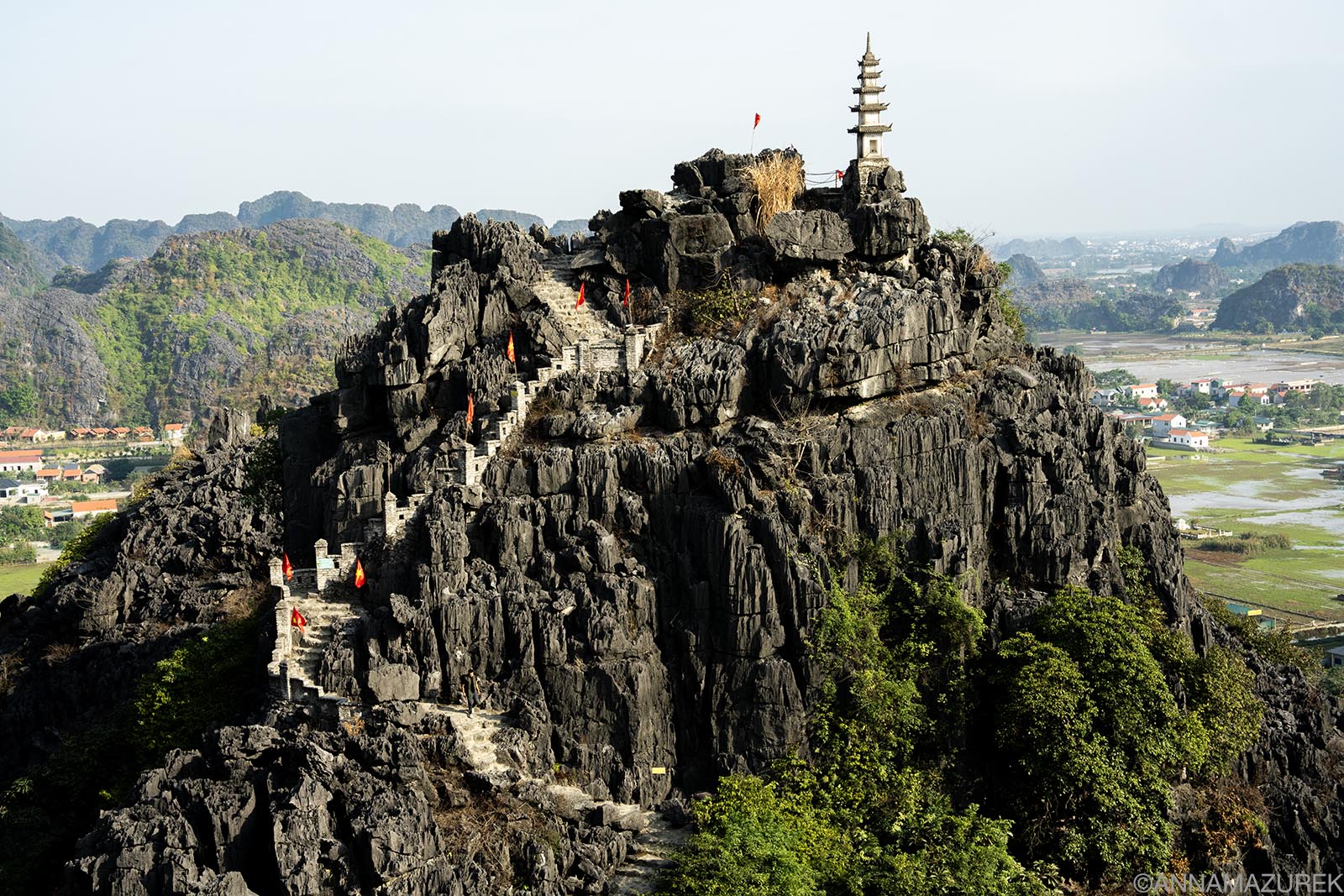 The two viewpoints at Mua Cave offer some of the best views in Ninh Binh.
Location: 6 kilometers from provincial capital of Hoa Lu City
For an ariel 360-views of Tam Coc’s boat route on the Ngo Dong River, climb the 500 stairs at Mua Cave. There are two viewpoints—one with a dragon statue overlooking at pagoda with a Avalokitesvara statue and another with a skinny towering multi-layered pagoda.
While the location shows up on Google Maps, you must walk through the Hang Mua Ecolodge to reach the stairs. It’s best visited with the rice fields are green (March/April) or yellow (May/June). The nearby ponds offer great lotus viewing between May and July. (Avoid January and December when vegetation is scarce.)
Bich Dong Pagoda and Cave Temple
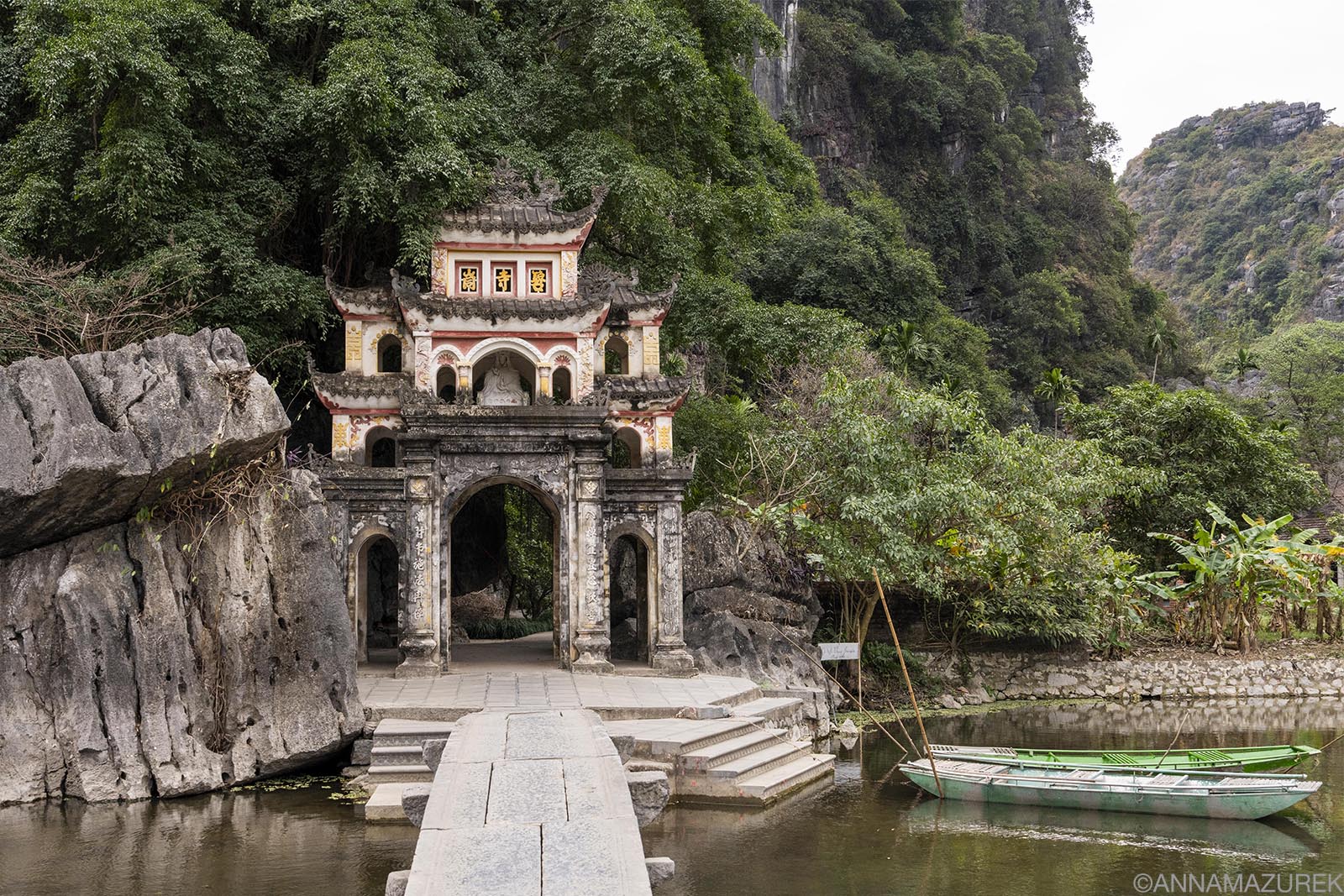 The Bich Dong Pagoda dates back to the 15th century and is only a short bike ride from Tam Coc.
Location: 10 km from provincial capital of Hoa Lu City; 3 km from Tam Coc
This three-tiered Buddhist pagoda cave complex is one the most idyllic settings in Vietnam with a stone gateway at the base of a limestone cliff surrounded by an emerald pond. Built in 1428, it was originally a small pagoda before being enlarged during the 18th century. There’s a series of 100 steps between the base and the middle pagoda then a short but steep accent to the third level.
The entryway is the most photogenic spot, but I loved how Choco pies were the most common offering inside the Buddhist temple.
Bai Dinh Pagoda
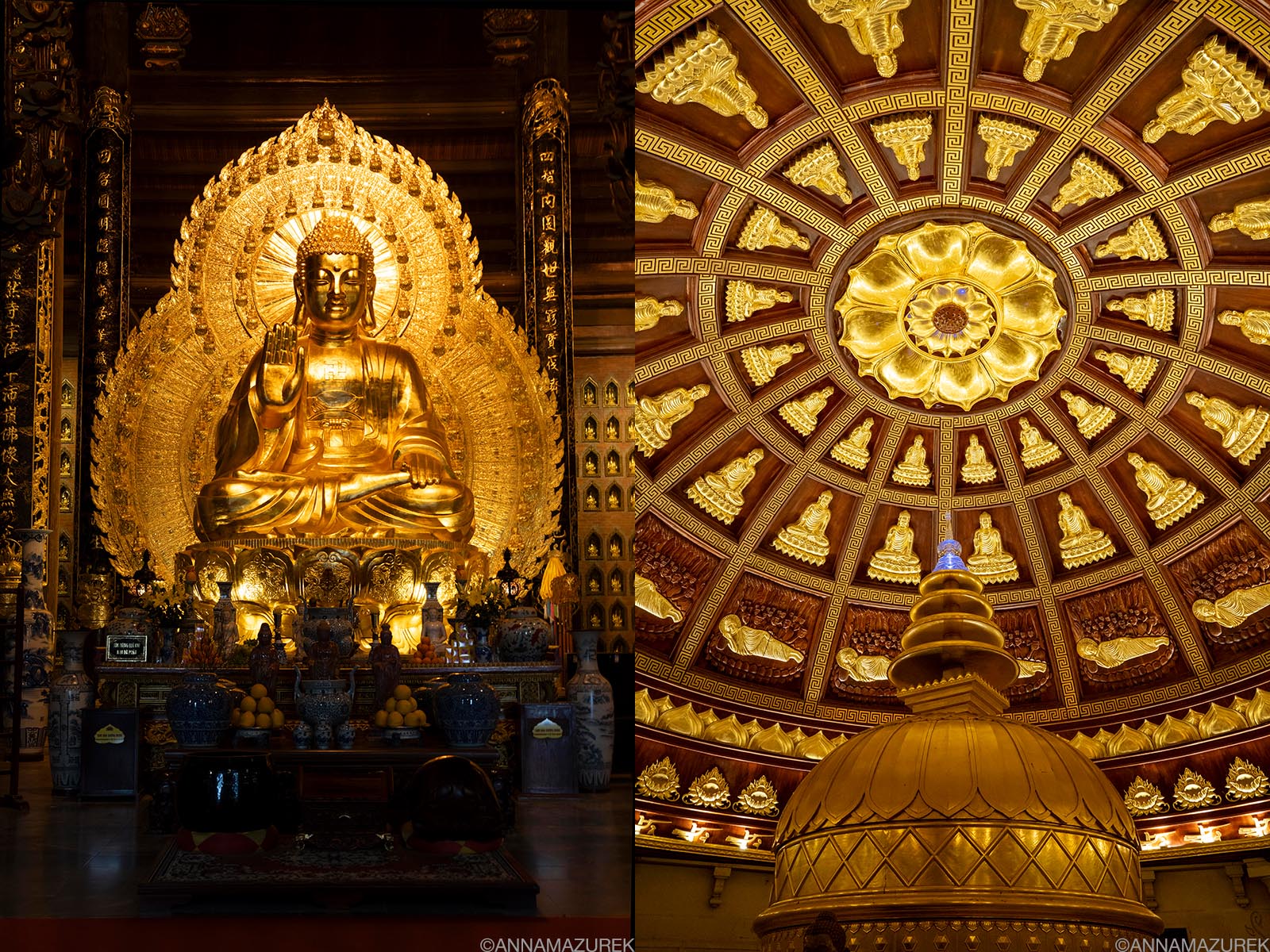 Set aside at least half a day to explore the Bai Dinh Pagoda complex.
Location: 21 kilometers from provincial capital of Hoa Lu City
This photogenic 4,200-acre Buddhist complex, one of the largest in Southeast Asia, is located about 20 kilometers from Ninh Binh. Opt for the ticket with the included electric cart shuttle to make it easy to explore the expansive site of massive great halls and towering Buddha statues. Don’t miss the views from the 13-story tower. You could easily spend a whole day here due to the size.
I spent a rainy day exploring the complex and loved that it wasn’t crowded. If the weather isn’t ideal, this would be the first place I’d visit. Based on the parking lot size, it can get very crowded—avoid visiting during the annual festival on the sixth day of the first lunar month of the year.
Hoa Lu Old Town
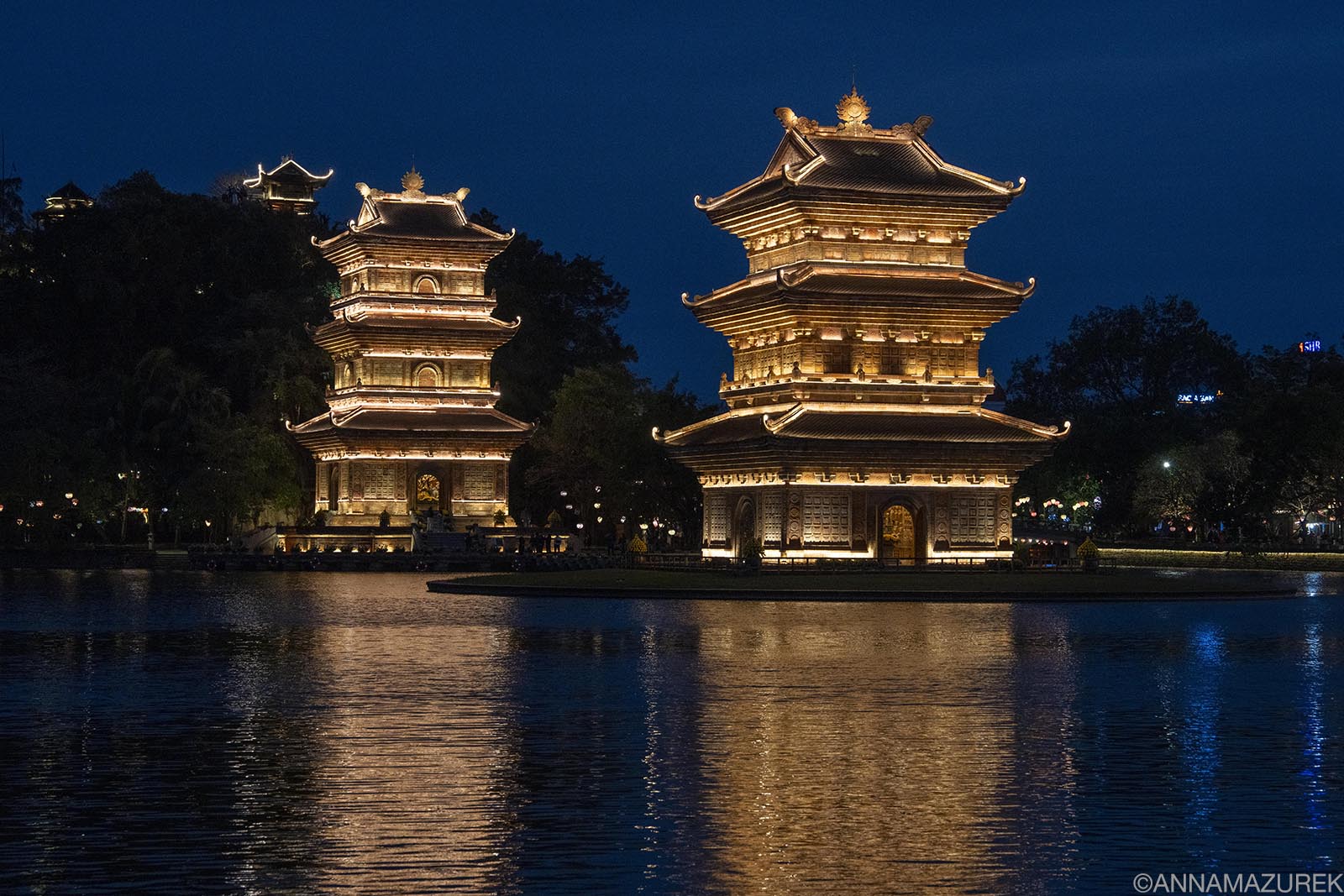 A nighttime stroll around Hoa Lu Old Town, always known as Pho Co Hoa Lu, is a great photo opp.
Location: Central part of Hoa Lu City
Hoa Lu Old Town, located in Hoa Lu City (formerly Ninh Binh City), is a stunning sight of two towering modern pagodas lit up at night with detailed carvings inside. This free attraction was built in 2022, so don’t get it confused with Hoa Lu Ancient Town, the historic site of the first capital of Vietnam that’s 11 kilometers away. It’s free to visit and is beautiful in the evening. To reach the pagodas, you must walk through the island in the reservoir and then, follow the path to the temples.
Hoa Lu Ancient Town
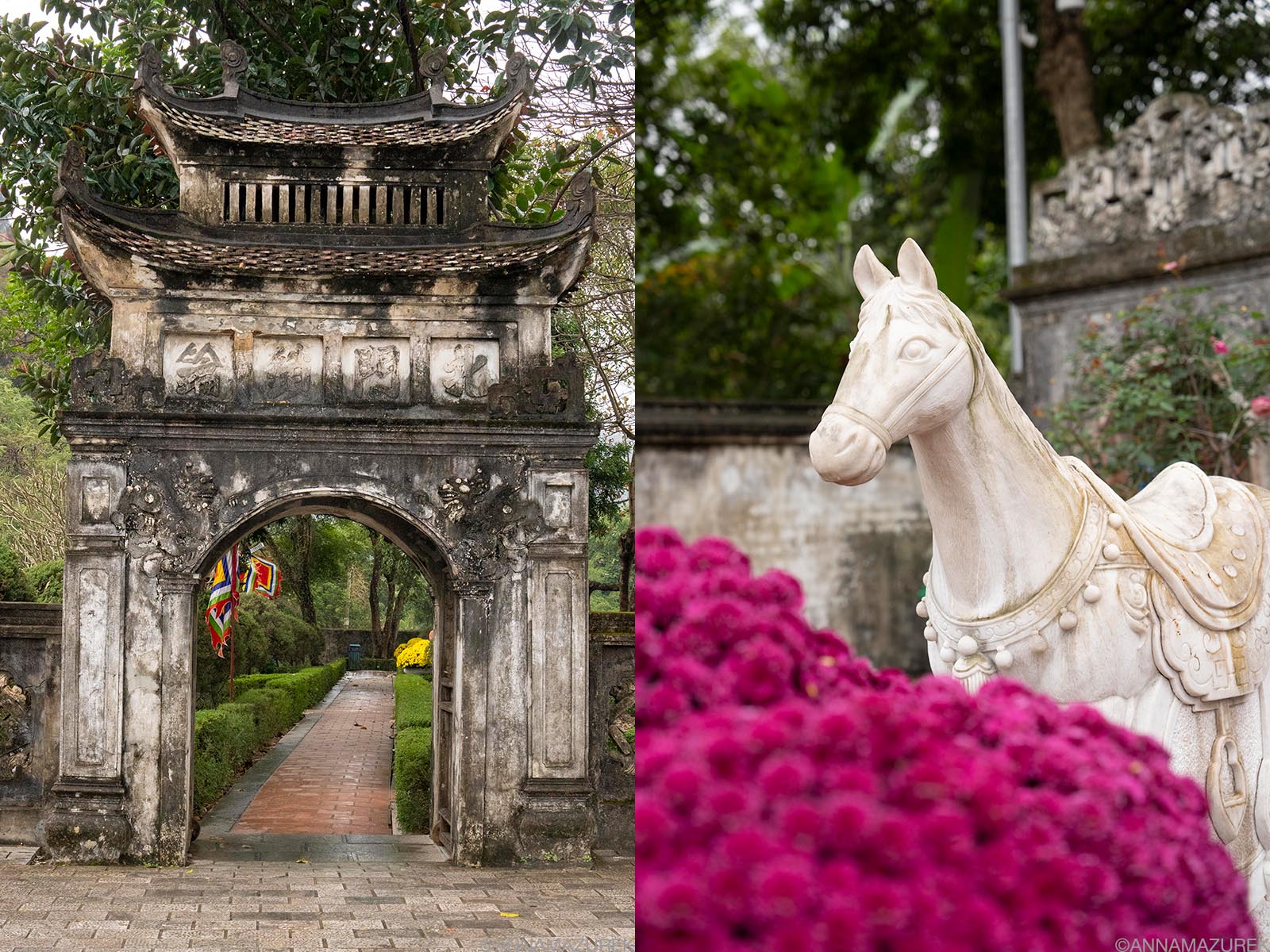 The Temple of Dinh Tien Hoang is one of two ancient temples dedicated to emperors at Hoa Lu Ancient Town.
Location: 11 kilometers from provincial capital of Hoa Lu City; 4 km from Trang An boat departure point
A gargantuan stone gate and bridge act as the entrance to Hoa Lu Ancient Town, the first capital of Vietnam dating back to the 10th century. After walking through the gate, there are two temples dedicated to emperors: Temple of Dinh Tien Hoang on the left and Temple of Emperor Le Dai Hanh on the right. If you feel up for a 20-minute hike, trek to the tomb of Emperor Dinh Tien Hoang for an aerial view of area. There’s no public transport, so you’ll need your own set of wheels or book a tour out of Ninh Binh City. If you’re in the area, it’s worth stopping for a short visit but I wouldn’t go out of my way to visit. There’s much more exciting sites in the area.
Want to avoid the crowds in Ninh Binh?
If you don’t mind trekking a bit further out, the Van Long Nature Reserve is a quieter boat trip with less tourists. It’s located farther north in the province than the other sites. Thung Nham Bird Park, an 18-square-kilometer bird sanctuary, is home to over 50,000 birds and the number increases during migration season. The park has a series of well-marked trails for biking or walking.
How to Get to Ninh Binh
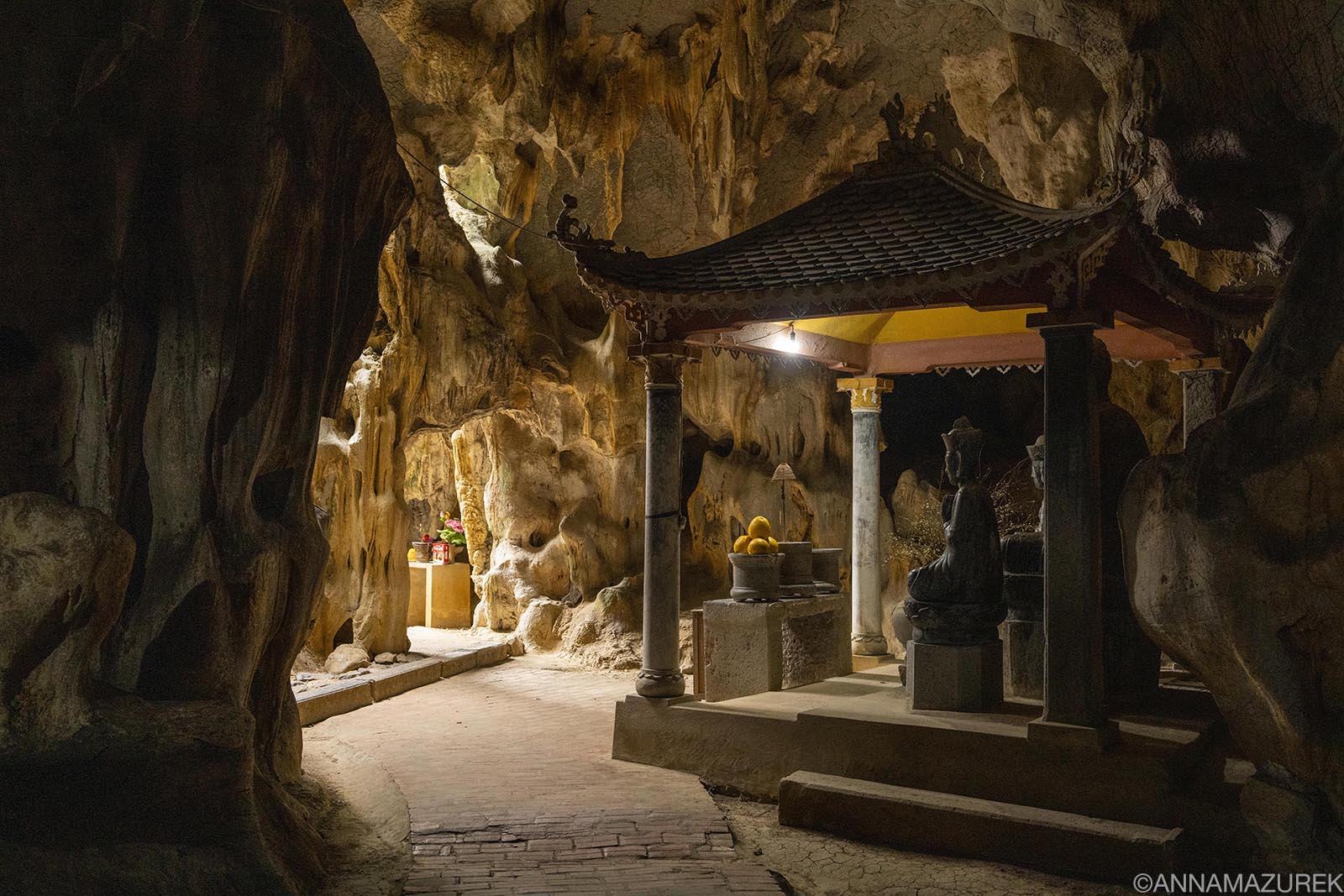 The interior of the cave temple at Bich Dong Pagoda.
The Ninh Binh province is roughly an hour and 45 minutes southeast of Hanoi. The cheapest option is a public bus from Hanoi, which often to go the provincial capital of Hoa Lu City (formerly Ninh Binh City). The easiest option is a $7 shared transfer from Hanoi that will drop you directly at your hotel in Trang An, Bai Dinh, Tam Coc, Ninh Binh City.
I had a great experience with this transfer—it was efficient. Once we reached the area, I had to transfer from a comfy van to an SUV for a short ride to my hotel in Tam Coc.
How to Get Around Ninh Binh Provence
You’ll need your own set of wheels to visit most sights, so plan on renting a motorbike or car. Most accommodation can help with this and also set up a car with a driver, which is what I ended up doing on my last visit because the weather was too rainy for a motorbike. Day tours are easy to find as well.
When to go to Ninh Binh
January is the coolest month—it can be downright cold—but all the vegetation is barren. Things start to green up in March. From May to June, the rice fields turn yellow during harvest season and again in September and October in some areas. The rainy season starts in May and lasts through October with heavy rains and high temperatures but lush green rice fields. (Mosquitos and leeches are at their peak during rainy season, so come prepared with bug spray and long sleeves.)
Personally, I’d avoid December to January when all trees and rice fields are brown and gross. Yes, it’s cooler, but it’s just not great for photos. Photographers should aim for April or May. Avoid the TET holiday when many places shut down.
Where to stay in Ninh Binh
Hoa Lu City (formerly known as Ninh Binh City) is the provincial capital and transportation hub with many accommodation options. All the main sights are within a 15-to-30-minute drive. You’ll need to arrange your own transport or to book a tour. There’s plenty of quieter accommodation options in between the main attractions. (You can easily get cheap shared transfers to other parts of the area direct from Hanoi without going through the city.)
I prefer Tam Coc as a good base for exploring the area because it’s smaller and walkable. I stayed at Tam Coc Mountain Sunset and Garden Hotel ($30 USD/night) with spacious rooms, a convenient location with a pool and helpful English-speaking owner. The Tam Coc Lion Kings Hotel & Resort is another that’s been highly recommended by friends.
Many hotels have the words “garden” or “sunset” in the name, so pay close attention to where you book so you don’t end up in the wrong place! This happened to me at first.
I recommend staying a few nights in the area, but there’s also plenty of day tours from Hanoi if you are short on time.
I Used SafetyWing Travel Insurance in Southeast Asia—Here’s How It Went
From a ski trip in the French Alps to backpacking South America, travel insurance is one of the most important things to purchase for any trip. When it comes to insurance, you insure what you can’t afford to pay yourself. Unlike health insurance in the United States, travel insurance is very affordable. SafetyWing is currently my go-to company for flexible travel medical insurance, and I currently use their Essential plan. In this post, I share their insurance and coverage options along with my personal review of SafetyWing.
Affiliate links are used in this post. If you make a purchase, I earn a small commission at no cost to you, which goes toward blog maintenance costs. This post was originally published in February 2025 and has been updated with my most recent experience.
In This Post
Why do you need travel medical insurance?
SafetyWing Travel Insurance Options
What does SafetyWing Travel Medical Insurance cover?
Does SafetyWing cover adventure sports?
Does SafetyWing cover electronics theft?
What’s not covered by SafetyWing travel medical insurance?
How much does SafetyWing cost?
Purchasing Process with SafetyWing
My Review of SafetyWing Travel Medical Insurance
Why do you need travel medical insurance?
Travel insurance covers all the things that go wrong – the flight delay that left you stranded in Istanbul for the night or the bout of food poisoning that hits a few hours before your flight home from Mongolia. Both are true stories from my travel adventures and not fun memories. Both of these I claimed on travel insurance and were covered by my plan. I ALWAYS buy travel medical insurance for every trip, which usually runs roughly $56-100/month depending on your age.
Who is SafetyWing?
Founded in 2018, SafetyWing was a fully remote Norwegian startup based in California run by nomads and expats providing insurance for budget travelers and nomads. (You don’t have to be a nomad or a budget traveler to use their insurance. It’s available to everyone.)
SafetyWing Travel Insurance Options
SafteyWing Nomad Insurance has two options: Essential and Complete. Neither plan covers pre-existing conditions. (I’m currently on an Essential plan.)
In late 2025, SafetyWing launched Nomad Citizen—a beta membership offering global coverage for entrepreneurs, freelancers, and nomads who join Plumia’s Nomad Citizen or a sponsoring organization.
SafetyWing Nomad Essential
Best for short-term travel
Nomad Insurance Essential provides short-term coverage for unexpected medical issues and emergencies while traveling outside your home country. Additional add-ons include adventure sports, electronic theft and U.S. coverage for non-residents.
You can pay monthly or in full for policies. Longer policies can be set to auto-renew. When you cancel a policy anytime and get a pro-rated refund. There’s no minimum time limit for policies, so you can buy coverage for the exact dates you need.
This policy is very affordable because it’s less comprehensive than other companies, but provides optional add-ons so you only pay for what you need and don’t overpay for what you don’t. Prices start at $56.28 for people aged 18-39.
SafetyWing Nomad Complete
Best for longterm travel
The Nomad Insurance Complete is long-term comprehensive coverage (12-month commitment) for unexpected and ongoing health concerns worldwide. These plans can be paid monthly or annually for a 10% discount. While adventure sports are included, additional add-ons include electronic theft and coverage in Hong Kong, Singapore and the U.S. (This policy is not available to U.S. residents.) Plans start at $150.50/month.
One of the best benefits of SafetyWing is that you can buy while you are abroad and get 24/7 customer support with a REAL human! (I can vouch that they are excellent at assisting and will follow up with you afterward!) Prices start at $161.50 for people aged 18-39
SafetyWing Nomad Citizen
Global coverage for entrepreneurs, freelancers, and nomads
SafetyWing’s newest insurance program, Nomad Citizen, (beta version) is for people under age 50 who live abroad six months a year and earn $4,000 USD per month for the last year. It provides premium worldwide healthcare, including emergency and preventative care along with coverage for maternity, mental health and massage, plus travel and income protection. Plans start at $400/month for ages 18-39 for members of Plumia or another association focused on borderless living. Join the waitlist for details.
What does SafetyWing Travel Medical Insurance cover?
While it’s important to always read the full insurance policy, the items below are covered by SafetyWing for the Essential and Complete plans:
SafetyWing Nomad Insurance Essential Plan
Each Essential policy has a $250,000 USD max limit and a $100,000 USD max limit for U.S. residents over 65.
- Emergency Accident & Sickness Expenses.
- Emergency Evacuation & Repatriation. (Evacuation to a better-equipped hospital when needed is included with a $100,000 USD lifetime max.)
- Trip Cancelation, Delay or Interruption. (Benefits kick in usually for delays after 12 hours. $100/day for two days)
- Baggage Delay & Damage. ($500/item with a $3,000 policy maximum)
- Injuries from leisure sports and activities.
- Motor Accidents. You must be properly licensed, not intoxicated and wearing safety equipment to be covered. ($250,000 US max limit)
- Continued coverage in your home country after 90 days abroad. (30 days for non-U.S. residents and 15 for U.S. residents.)
For more details, read the full policy on their website.
SafetyWing Nomad Insurance Complete Plan
This is an annual comprehensive plan with $1,500,000 overall limit for people aged 18-65.
- Emergency medical treatment and hospitalization (Including evacuation to better-equipped hospital and transport of remains)
- Routine check-ups and preventative care plus doctor and specialist visits
- Psychologist and psychiatrist visits along with wellness therapies (chiropractor, dietician, etc.)
- Trip Cancelation, delay or interruption. (Benefits kick in after three hours.)
- Lost checked luggage and stolen belongings
- Injuries from leisure sports and motor accidents
- Maternity Care (10-month waiting period)
- Cancer Tests and treatment
For more details, read the compete policy.
Does SafetyWing cover adventure sports?
SafetyWing now covers adventure sports with a policy add-on for the Essential plan. It is included in the Complete plan. From paragliding to scuba diving, check out the full list of covered sports here. Organized and professional sports are not covered.
Does SafetyWing cover electronics theft?
Yes, you can add electronics theft coverage to a SafetyWing Essential and Complete policy for an additional fee. It covers cameras, laptops and phones with a $1,000 USD limit per item and a yearly limit of $3,000 per policy. This benefit is only available as an add-on for policies over 28 days. Proof of ownership like a receipt is needed for claims. To read the fine print, check out this page with all the details.
What’s not covered by SafetyWing travel medical insurance?
SafetyWing doesn’t cover pre-existing conditions for either plan. The Essential plan does not cover cancer treatment, lost or stolen personal belongings (except for electronics if you purchase that policy add-on), or trips that were canceled before you left.
Where can you travel with SafetyWing Nomad Insurance?
You can travel anywhere in the world except for your home country and countries with U.S., U.K., EU or UN sanctions including Belarus, Cuba, Iran North Korea, Russia, Syria and Ukraine.
After being abroad for 90 days, you can get 30 days of home country coverage. (For U.S. residents, it’s 15 days.) This is only for the Essential plan.
Who is eligible?
Essential Plan: Anyone aged 69 and under. Their policies cover people from across the world while they are outside their home country. Plans can be purchased abroad. Over 180 countries are covered. One child under 10 can be added at no extra cost per adult.
Complete Plan: Ages 18-65 except for residents (people who live in the following places 6 months per year) of Belarus, Canada, Democratic Republic of the Congo, Ireland, Palau, Saudi Arabia, United Arab Emirates and the U.S. Please note that this policy doesn’t cover you in your primary residence.
Nomad Citizen (beta): Ages 18-50 who live abroad six months a year, earn $4,000 USD per month and members of Plumia or another association focused on borderless living.
How much does SafetyWing cost?
Plans cost just a few dollars a day and vary by age making SafetyWing one of the most affordable brands of travel medical insurance. Policy add-ons such as U.S. coverage, adventure sports and electronics theft are extra for the Essential plan.
Purchasing Process with SafetyWing
It just takes minutes to fill out the form online including your age, home address and countries you’ll be visiting. The chat box makes it easy to ask questions and talk to a real human 24/7. Customer service can easily answer any questions quickly. They are also great about following up when needed.
My Review of SafetyWing Travel Medical Insurance
This includes my experience with three claims in late 2025 and 2024.
I spend every winter in Southeast Asia and always buy a Nomad Insurance policy for my time abroad. In late December 2025, I went to Bangkok Hospital in Chiang Mai to see a doctor for a UTI, who ordered a urine test, gave me some meds and asked me to come back in three days for another visit and urine test. Thankfully, it was all cured by then. The total cost for both visits and the medicine was $113.70 USD. (I’ve also written about my experience with Thailand’s affordable private healthcare.)
The process of filing a claim with SafetyWing took only five minutes and was very simple. (It took probably 15 minutes total, including the time to organize and PDF the documents.) I had to include the medical report with the diagnosis and an itemized bill and proof of payment. (Make sure to ask for these before leaving the doctor’s office.) The best part of about the filing process is that you can upload all the documents together as a single file and don’t have to upload each in a separate category, which I’ve had to do with my regular health insurance. The next step was to add my banking details and done!
A quick note: I waited to upload the documents from both appointments at the same time because it just seemed easier. You can upload things separately because there’s an option to select if it’s related to an existing claim.
The normal turnaround time for processing claims is five business days. Since I submitted the claim late on the Friday before Christmas week, I expected a delay due to the holiday, but it was approved exactly on the fifth business day (December 29th). Since there’s no policy deductible, the direct deposit for the full amount was in my account the same day via a wire transfer that showed up from EXPATPA!
In February 2025, I filed a small claim for a bout of food poisoning I got in Cambodia. The doctor’s visit and medicine were less than $20 USD. The claim was approved the next day and deposited the following day. Perhaps the small amount of the claim helped expedite the process. Either way, I’ve had nothing but smooth experiences since they launched the new streamlined claims process.
In early 2024, SafetyWing paid a claim related to some knee pain I had that required an MRI ($331). In general, they’ve covered a wide range of injuries and illnesses for me over the years.
Overall, the process was smooth. It’s very important to have all your documentation together including the doctor’s report, payment receipts for the visit and any prescriptions. I’ve always had great experience using their plans.
Safe Travels!
I Spent Two Months in Southern Africa—Here are my Favorite Safari Photos
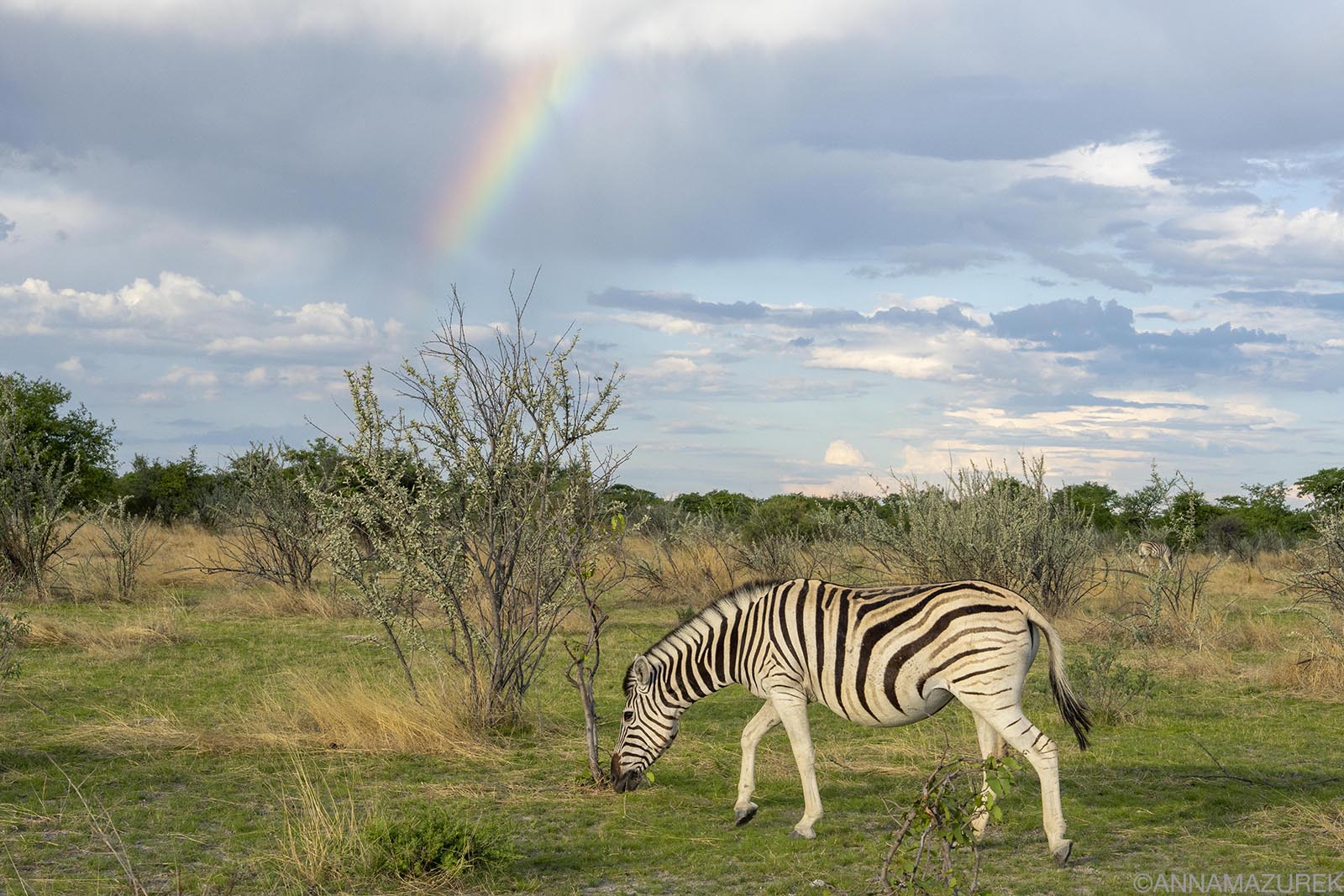 What’s at the end of the rainbow in Etosha National Park in Namibia? A zebra!
On my two-month Africa trip, I shot thousands of frames and still ended up with 600 GB of images and that’s AFTER deleting my outtakes!
Instead of letting these images sit on my hard drive, I wanted to share some of my favorite photos from the trip and the stories behind them!
Safari photography is anything but easy. It’s a real adrenaline rush because you’re bouncing around in the back of an open-air jeep trying to hold your camera steady to snap a frame before an animal moves, turns its head or decides to hide behind a tree.
These images are from four main parks: Kruger National Park in South Africa, Etosha National Park in Namibia, Okavango Delta in Botswana and Chobe National Park in Botswana. Here’s my favorite 16 images from my Southern Africa safari adventures along with the camera settings for each image:
What photography gear is best for safari in Africa?
All but one of these images was shot with my Sony A7Rv body and an f/4 100-400 lens. The only exception is the rainbow image, which was shot with a 24-70 mm lens. I had two of the same camera bodies with me at all times because changing lens was too risky outside in the back of a jeep. I feared I’d miss a shot or get dirt in my sensor.
I shot with my zoom the majority of the time. Honestly, I could have shot the wide images with my phone easily. (I’ve heard of people just taking a phone and a DSLR with only a long lens.) I had a 1.4x teleconverter but only used it once or twice. I found that I was too shaky when shooting with it from the jeep, so I just stuck to the 100-400mm. I also had a circular polarizing filter on each lens.
Best Camera Settings for African Safari
I used a wide aperture (between f/5.6 and f/7.1) to help blur the background/foreground for tighter animal shots, but I did shoot a smaller aperture on landscape images. I always used a fast shutter speed (minimum 1/500 but aimed for closer to 1/1000) to make up for any movement from the animal or the safari jeep. Plus, the 100-40mm lens gets heavy after a while, so the fast shutter speed really helps when I’m wobbly. Since we were moving in the jeep, I kept my ISO between 400 and 800 usually, except for a couple low-light images. (And the elephant shot where I clearly changed the ISO by mistake in my haste to capture the image. Haha!)
Also, I always shoot fully manual out of habit, but shutter priority would be a great idea for a safari. I’ve shared my exposures below to be helpful. Remember, these are just what worked for me or what my camera was set on when the animals appeared. You don’t often have much time to change settings!
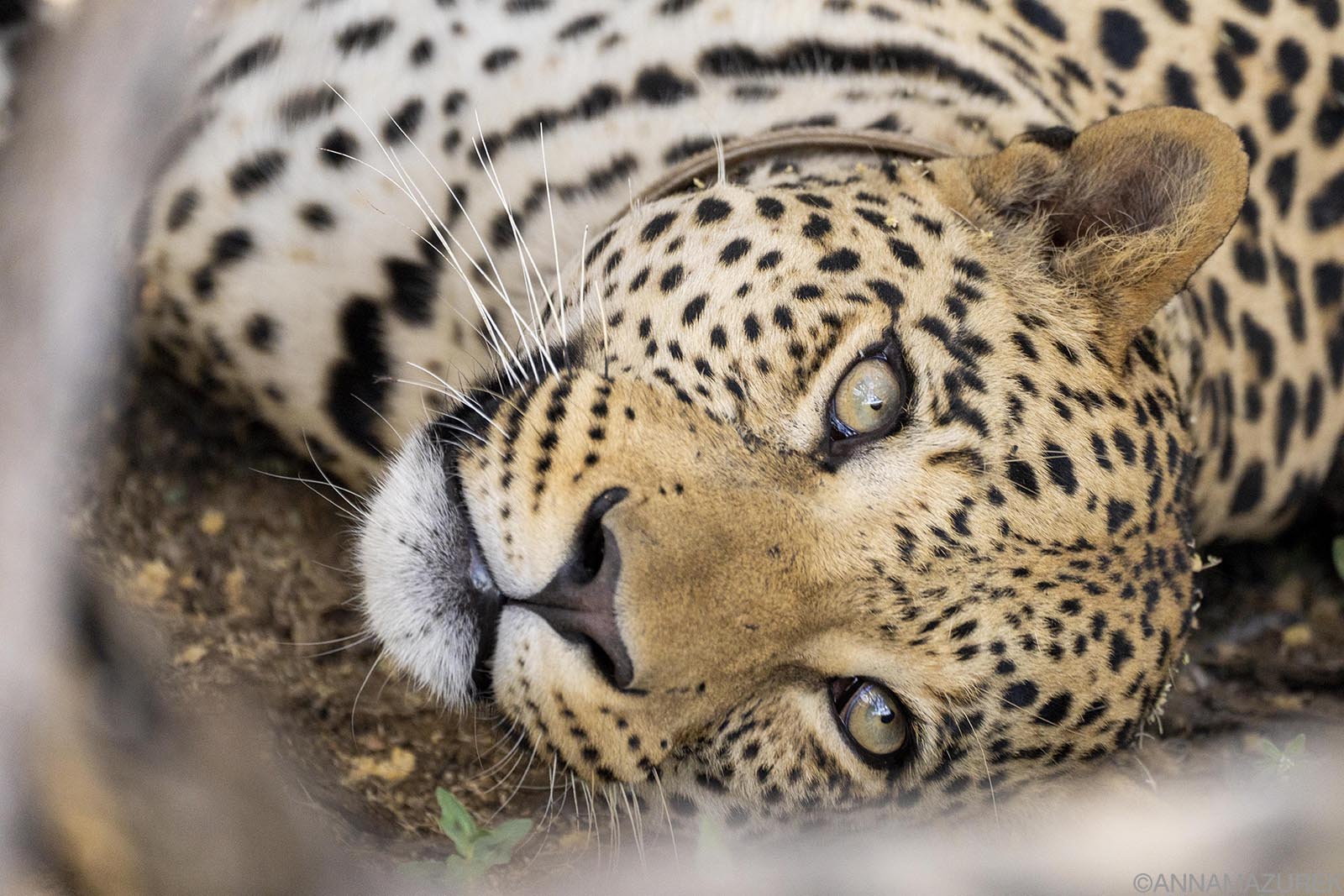 A leopard at Okonjima Nature Reserve in Namibia. (ISO 800, f/5.6 at 1/500)
We spent one night at a private game reserve south of Etosha National Park, known for their leopards. It’s very interesting how private game reserves operate differently than national parks. They have trackers on the majority of the leopards, so if you sign up for a leopard safari, you guide pulls out a device that looks like a 1980s-era TV antenna. We saw three leopards on the ground, walking or sleeping off their food coma at the reserve. (We did see one in the wild at Kruger National Park, walking by a watering hole.) They are normally hanging out in trees, so it was very special to see them on the ground in all of our sightings.
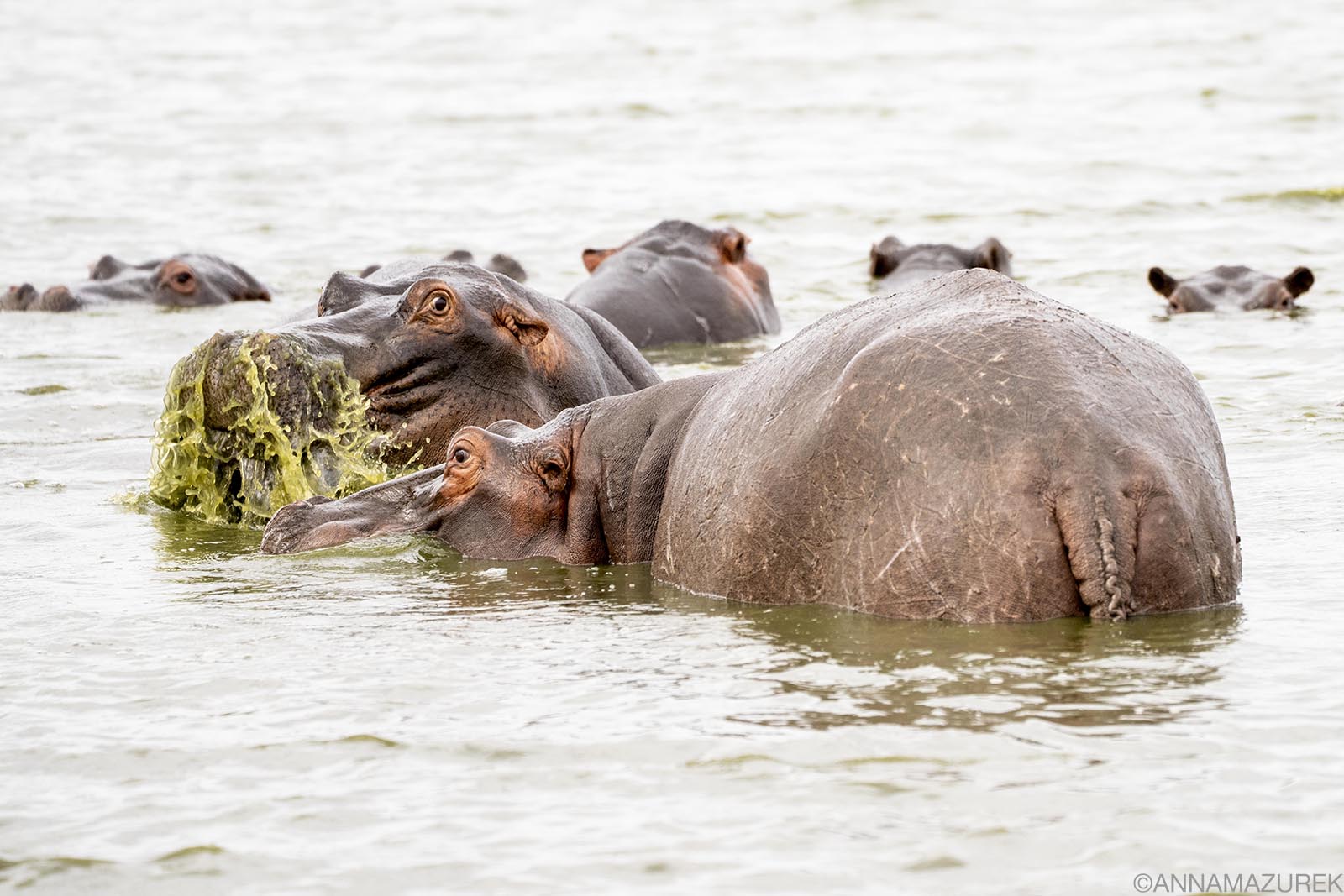 Hippos at Kruger National Park, South Africa. (ISO 800, f/5.6 at 1/1000)
Did you know the word for a group of hippos is called a bloat? We found this bloat in Kruger National Park on our last day. These two were splashing around in the gross green water. Hippos are one of the most dangerous animals in Africa. That’s why every single hippo photo I shot was with my 100-400 lens for safety. (If you like hippos, you should check out my gallery of Moo Deng, the famous sassy pigmy hippo in Thailand.)
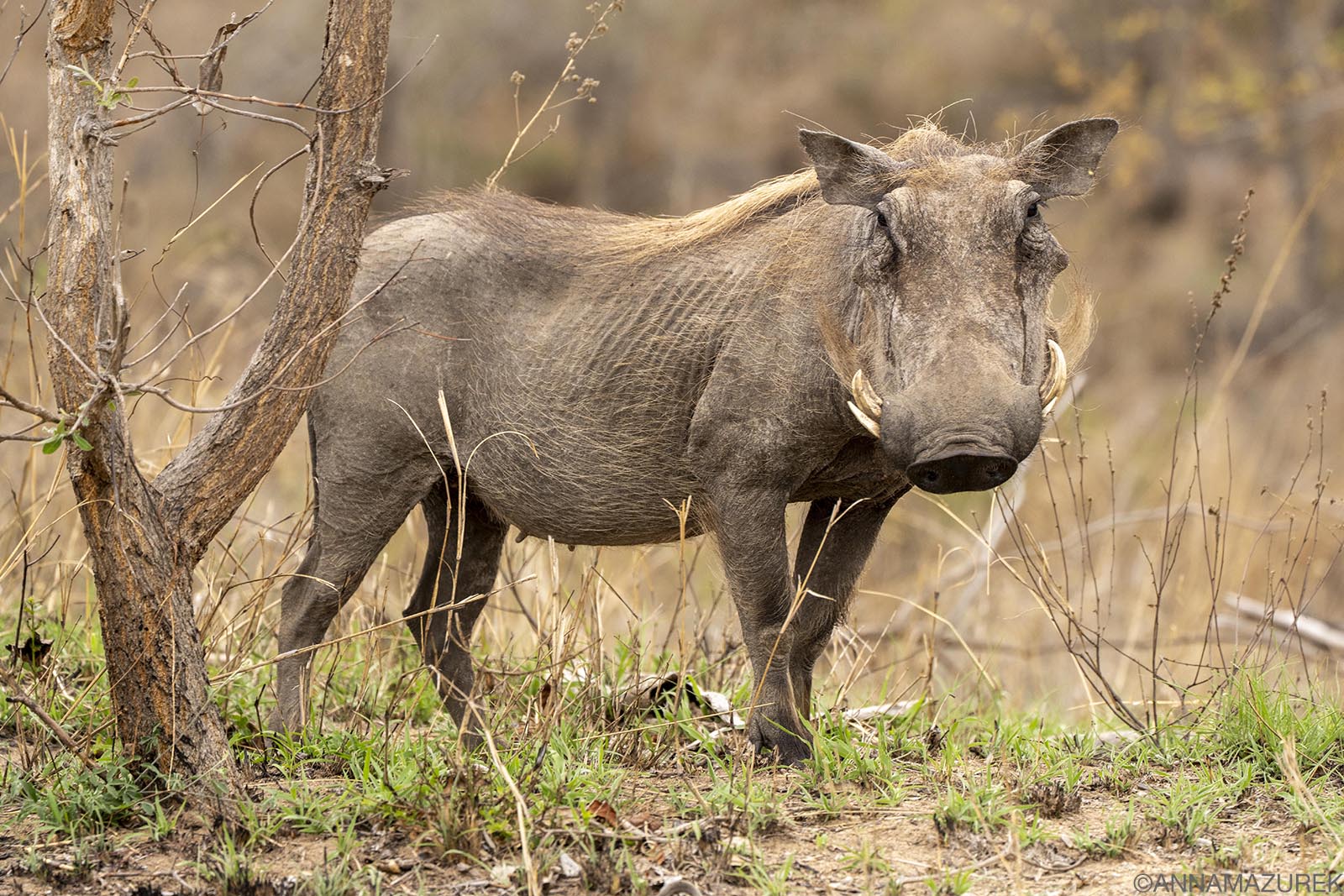 Pumba (warthog) at Kruger National Park (ISO 500, f/6.3 at 1/500)
On every single safari, our guide always yelled out the names of The Lion King characters every time we saw an animal. Pumba! Rafki! Simba! It was a highlight of the whole trip. Well, this Pumba was posing perfectly by a tree with his hair smoothed back like he was getting ready to go on a date.
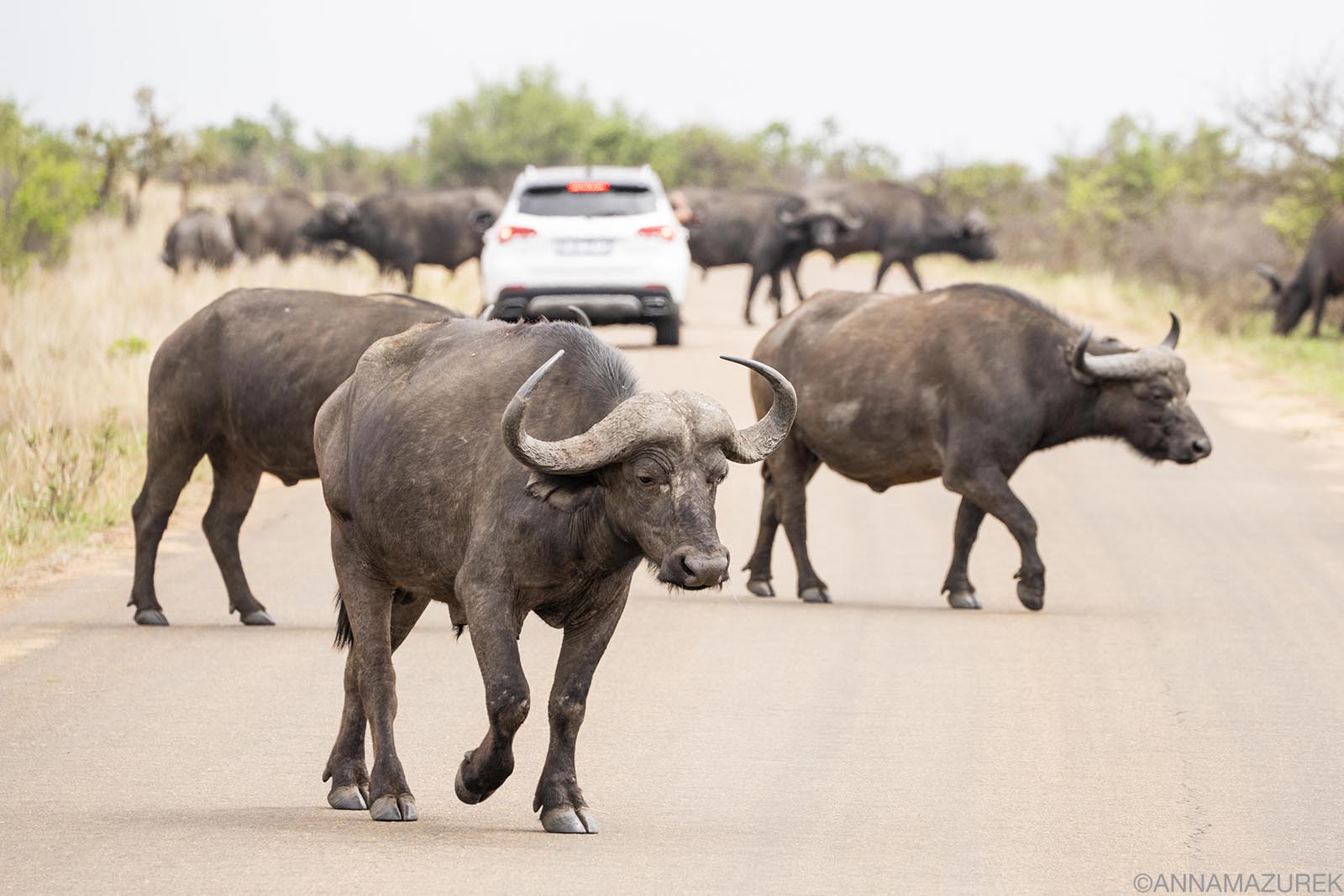 Cape Buffalo crossing the road in Kruger National Park. (ISO 800, f/810 at 1/800)
At Kruger National Park, you can self-drive the entire park or pay for guided safari drives. Either way, you have to stick to the roads (paved and unpaved), but there’s always going to be a wildlife crossing. We had tons of crossings with giraffes, elephants, impala and even a rhino (not in Kruger). This shows the reality of driving through any national park in Africa. Even if you self-drive, I recommend at least doing one guided safari drive because the guides know the best spots to go and have radios to tell each other about animal sightings.
 Brown hyena at Okonjima Nature Reserve and a zebra at Etosha National Park in Namibia. (Left: ISO 3200, f/5.6 at 1/200; Right: ISO 400, f/8 at 1/1600)
Brown hyenas are the rarest of the species, and we lucked out with a sighting at the private game reserve. It was coming to investigate two leopards lounging on the ground together at sunset. It was getting so dark that I wasn’t sure I’d get an image, which is why I bumped the ISO up to 3200. (Sony has very little noise at a high ISO!) The second image was a zebra with a funny face at Etosha National Park. The park is a salt pan with some very flat areas, making it easy to get clean wildlife shots with a nice blurred foreground of grass. (Fun fact: Etosha only has four of the Big Five. It’s too salty for the Cape Buffalo.)
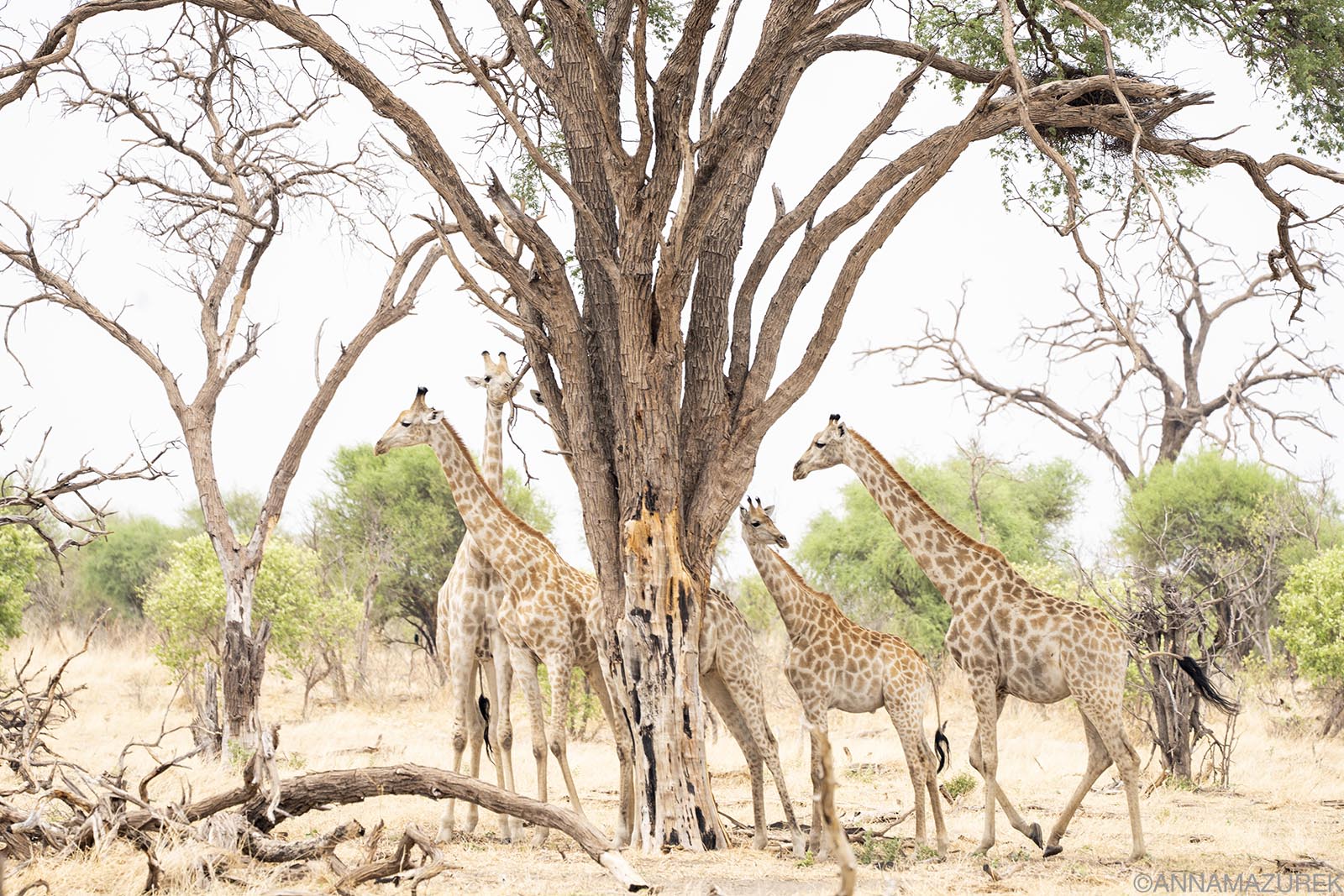 Giraffes in the Okavango Delta, Botswana. (ISO 400, f/7.1 at 1/640)
We lucked out with cloudy skies for our time in the Okavango Delta, which helped with both the heat and the light for photography. I loved being able to shoot without any harsh shadows. I also loved how the tone of the giraffes matches the landscape. Safari photography is tricky because you have to stay in the jeep for safety and can’t change angles very easily.
 Cape Buffalo in Kruger National Park (left) and a zebra with a rainbow in Etosha National Park in Namibia (right). Left: (ISO 640, f/6.3 at 1/1000); Right: (ISO 400, f/10 at 1/1000)
The light and composition worked out in my favor in this shot of the Cape Buffalo. I struggled to get a clean shot of their faces on previous encounters due to branches and grass. Getting the two lined up together was a dream!
We spent a while chasing this full rainbow in Etosha National Park but had trouble finding anything great for the foreground composition until we found a few zebras grazing. We kept backing the car up a bit to frame the shot with the zebra under the rainbow.
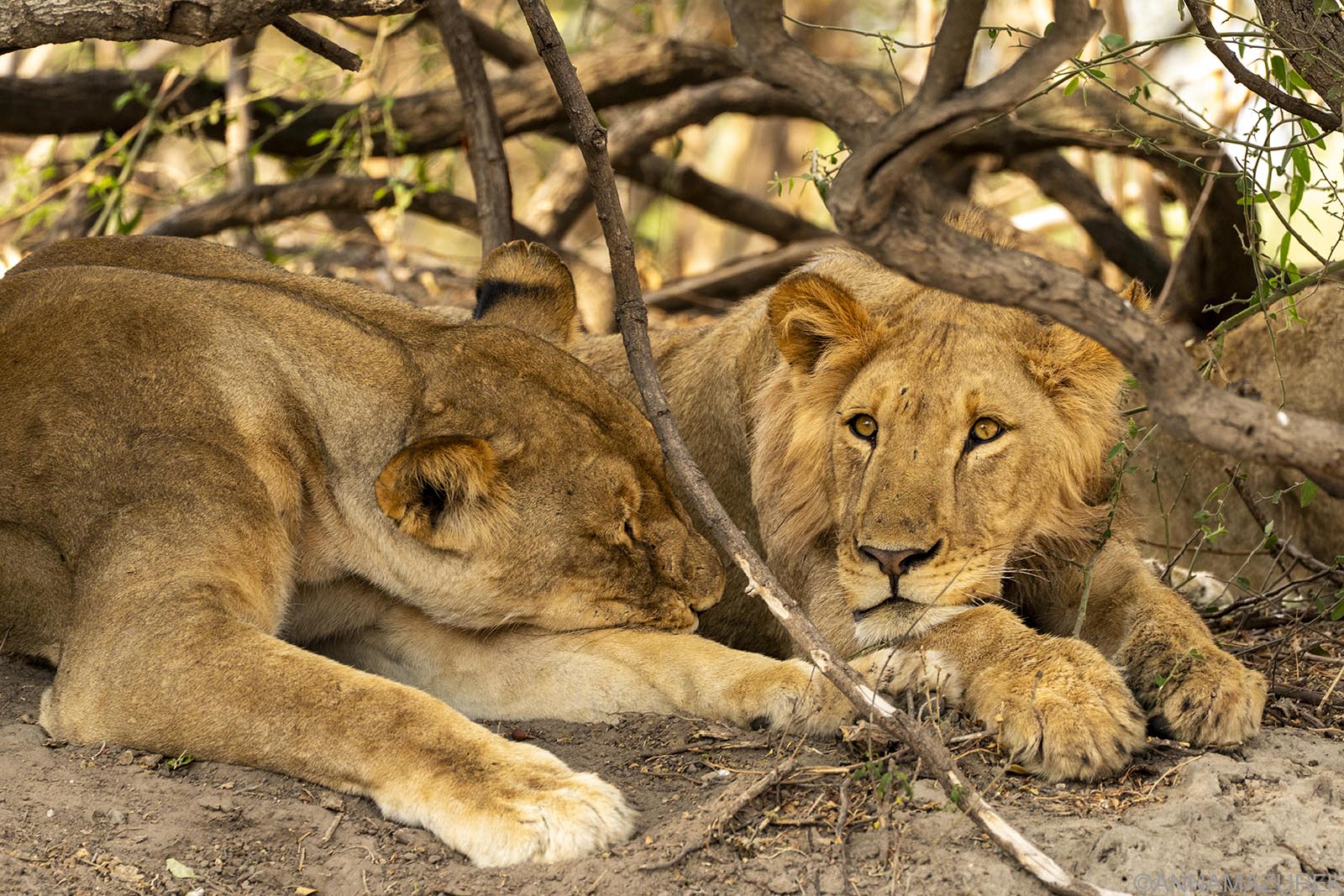 Lions napping after a kill in Chobe National Park. (ISO 400, f/7.1 at 1/500)
A young male lion naps with a pride of female lions in Chobe National Park in Botswana along the banks of the Chobe River. There was a carcass of a Cape Buffalo underneath a nearby tree, with one lion still licking the bones clean. These lions didn’t even care that we were nearby. The male lion looked at us curiously, but the lions are all used to the safari jeeps. You just have to be careful not to lean out the side of the jeep!
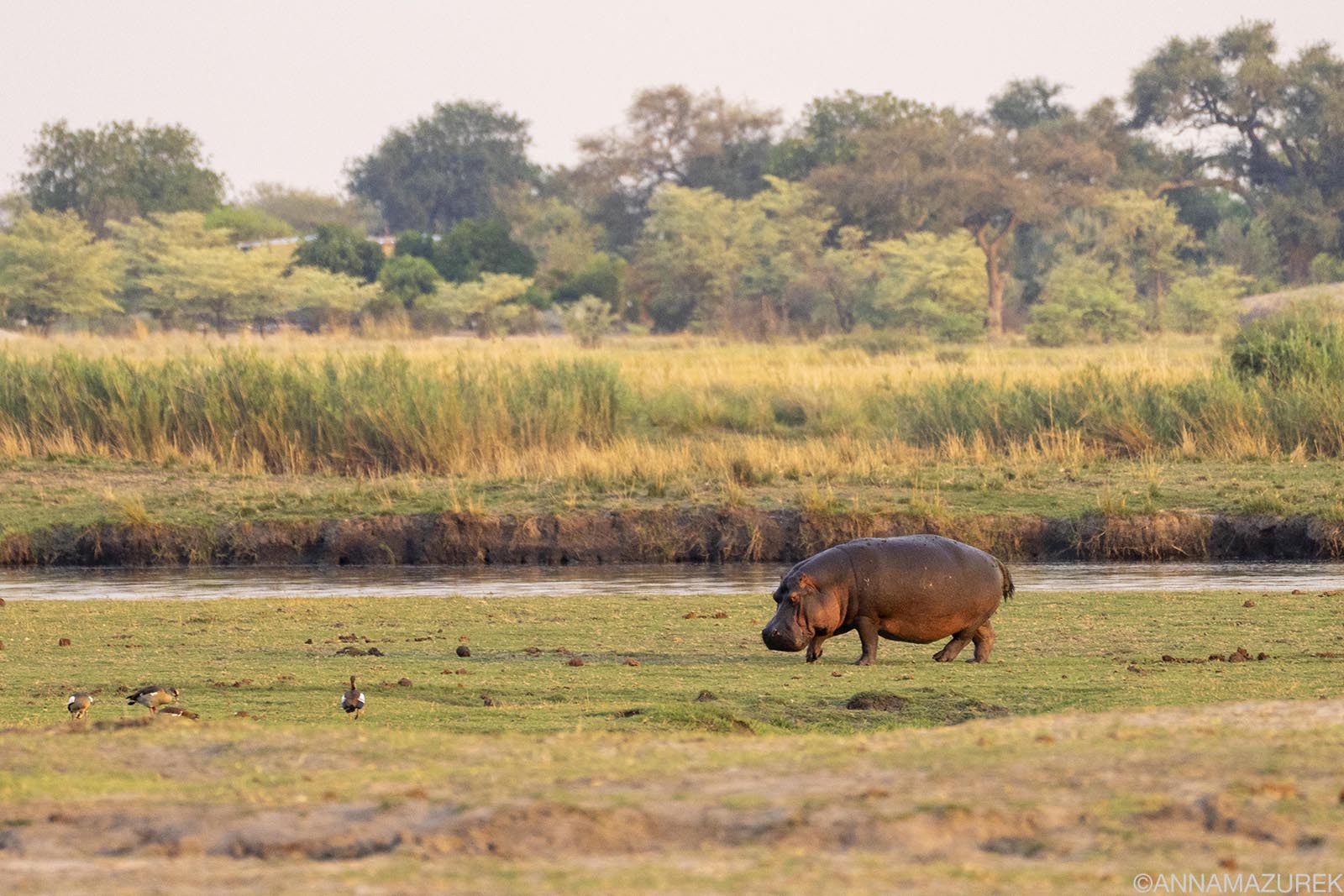 A hippo walking across an island in Chobe National Park along the Chobe River in Botswana. (ISO 800, f/5.6 at 1/400)
Hippos can spend up to 16 hours a day in the water but come out to graze around sunset. We saw this guy wandering through an area along the Chobe River in Botswana around dusk. Since hippos are very territorial, we kept a safe distance—all of my hippo shots were with a 100-400mm lens. I liked the idea of framing him with the landscape in the background.
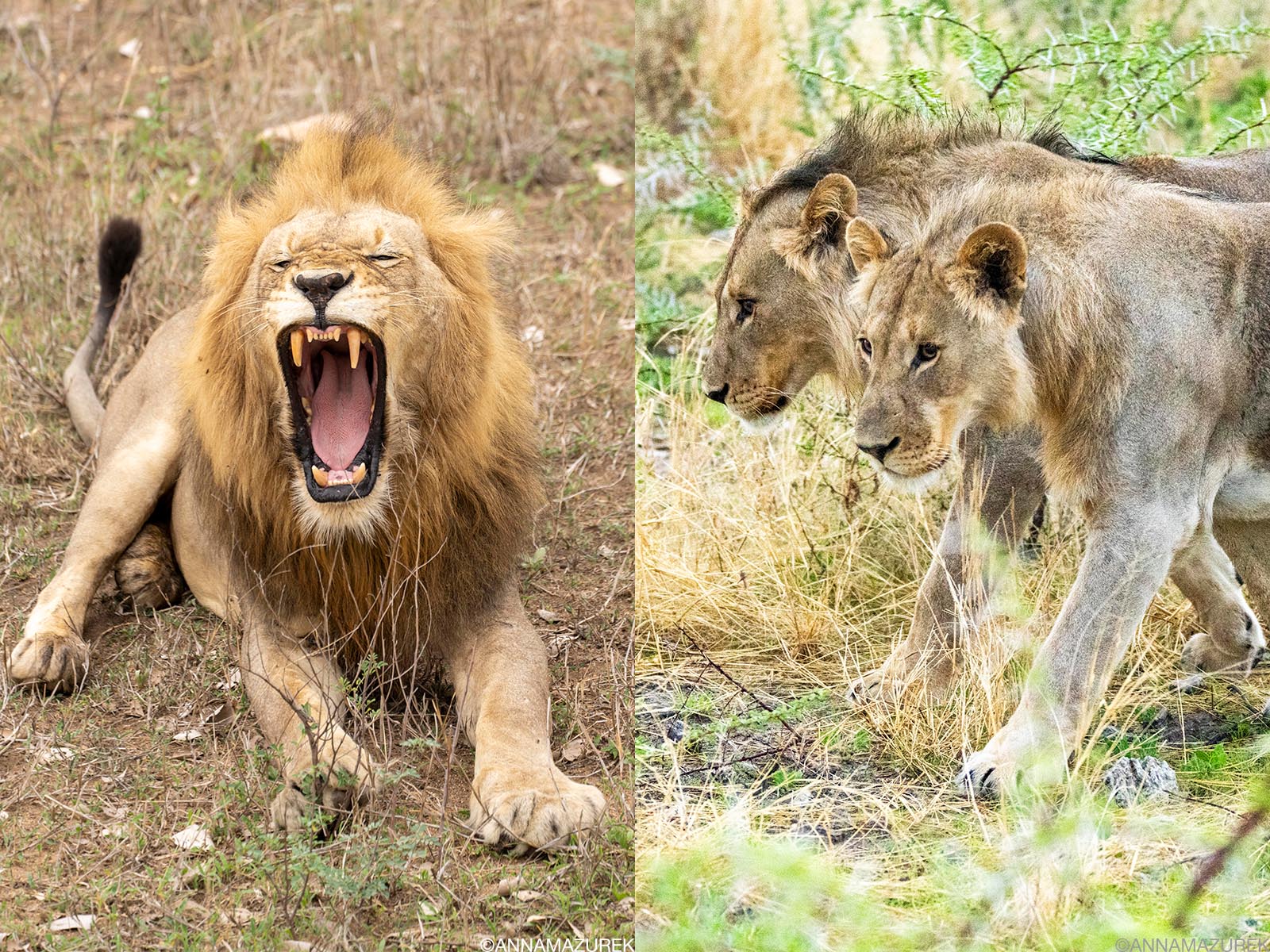 Male lions in Kruger National Park (left) and Etosha National Park (right). (Left:ISO 800, f/7.1 at 1/640; Right: ISO 6400, f/5.6 at 1/160)
In Kruger National Park, we came across two lions mating in a field. Afterward, I got this shot of the male yawning big. The photo on the left is of two young males walking together along the roadside in Namibia’s Etosha National Park. (This image was shot at a high ISO because it very dark at sunrise.) The key to these shots is just waiting for the moment and composition to appear. Again, I was limited on my angles because we were confined to the jeep, so I did the best I could. I’d love to have had a lower angle on the yawning shot, but it wasn’t possible due to safety.
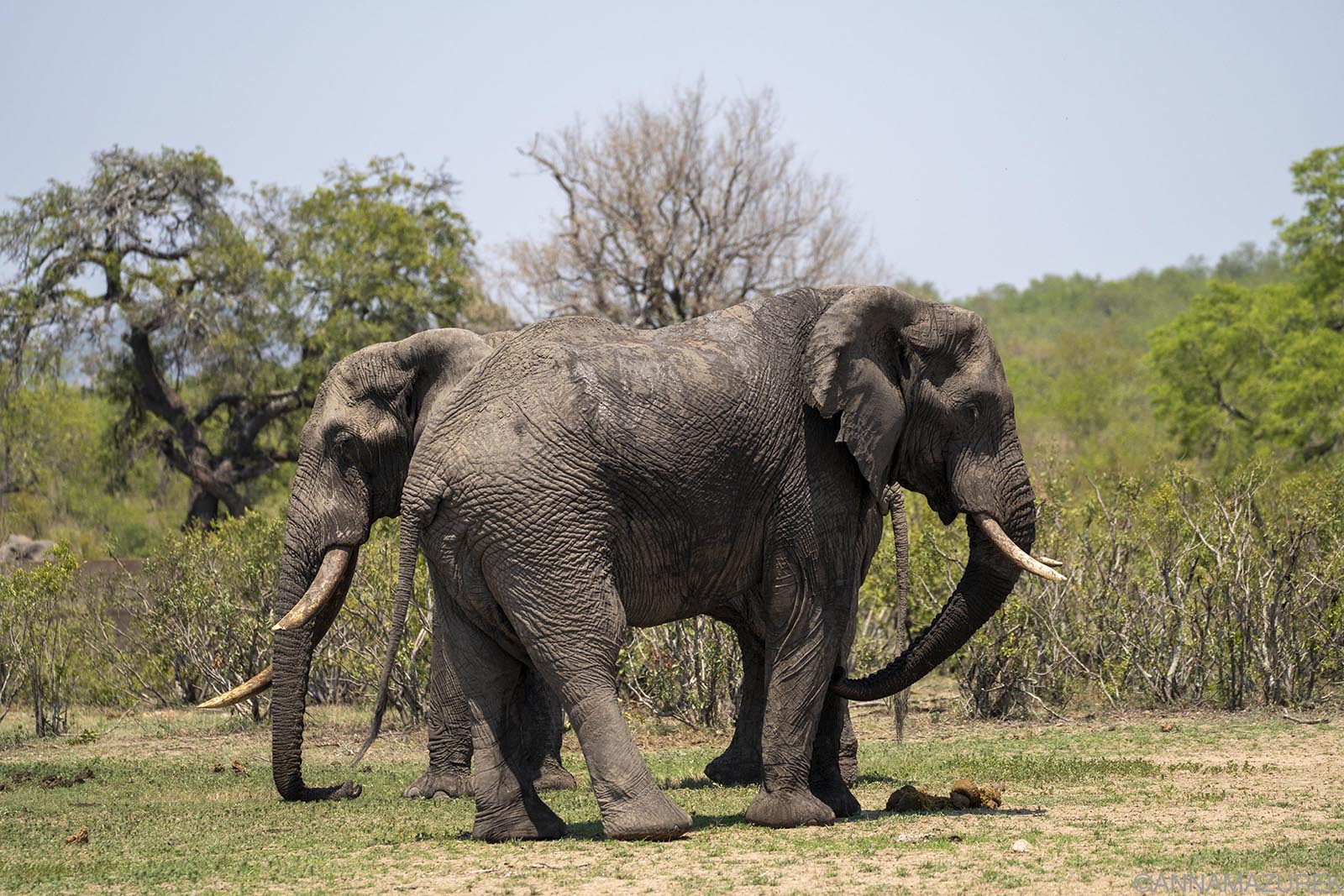 Elephants in Kruger National Park, South Africa. (ISO 400, f/5.6 at 1/3200)
These two elephants put on quite a show for us in Kruger National Park. We were photographing one when the other walked out of the bushes. It looked like they might fight, but they just walked around each other. When they overlapped, I snapped this frame because I loved the juxtaposition of their tusk lengths. The one with the longer tusks is older and has a broken tusk, which doesn’t grow back. (I’m laughing that I accidentally shot this at ISO 3200, but that’s what happens when you get excited in the moment!)
 Painted dog in Kruger National Park. (ISO 640, f/6.3 at 1/800)
Painted dogs, also known as African wild dogs, are a very rare sighting in Kruger National Park. We lucked out and drove up on a pack of at least 15, including some pups. It was our only sighting but a very special one. This image really shows their unique fur pattern.
 Giraffe and an impala at Kruger National Park, South Africa. (Left: ISO 500, f/5.6 at 1/640; Right: ISO 500, f/7.1 at 1/1000)
This giraffe image is one of my favorites because I love how its spots almost blend in with the tree branches at the bottom of the frame. I love the texture of the trees and the wonky look on its face. Giraffes are the best at posing for photos. Impalas (right image) are one of my most common animals we saw on a safari. Anytime we saw a jeep stopping to photograph them, we always joked that it must be their first day in the park. Regardless, they are beautiful creatures who deserve some love!
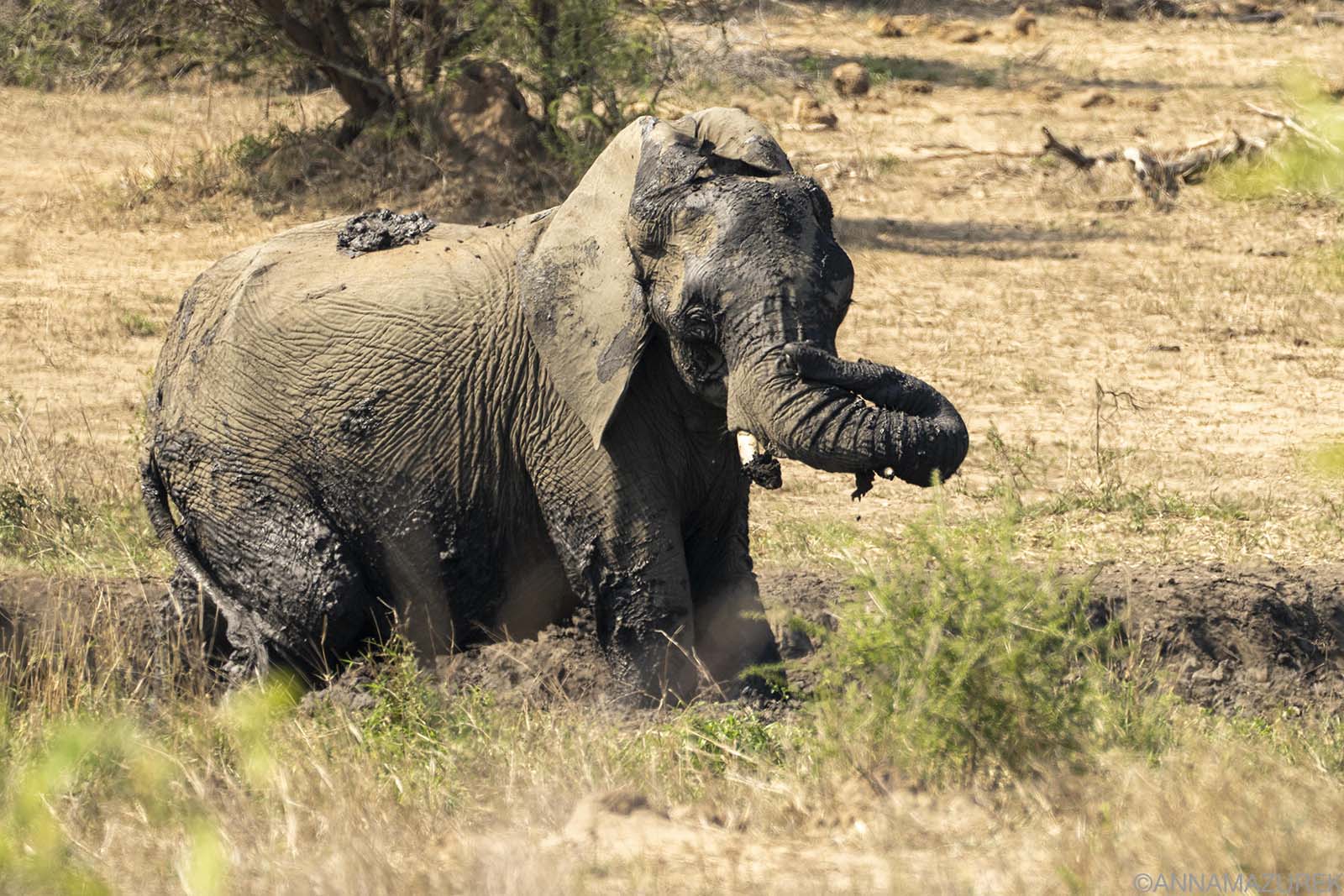 An elephant taking a mud bath to cool off in Kruger National Park. (ISO 500, f/7.1 at 1/500)
I loved watching the elephants find ways to cool off in the heat at Kruger National Park. We visited in early October right before the rainy season started. This one was using his truck to lather up with mud to cool off. I loved the curve of its trunk and the patches of mud across its body. Others were dipping their trunks into water reservoirs. You always find elephants where there is water!