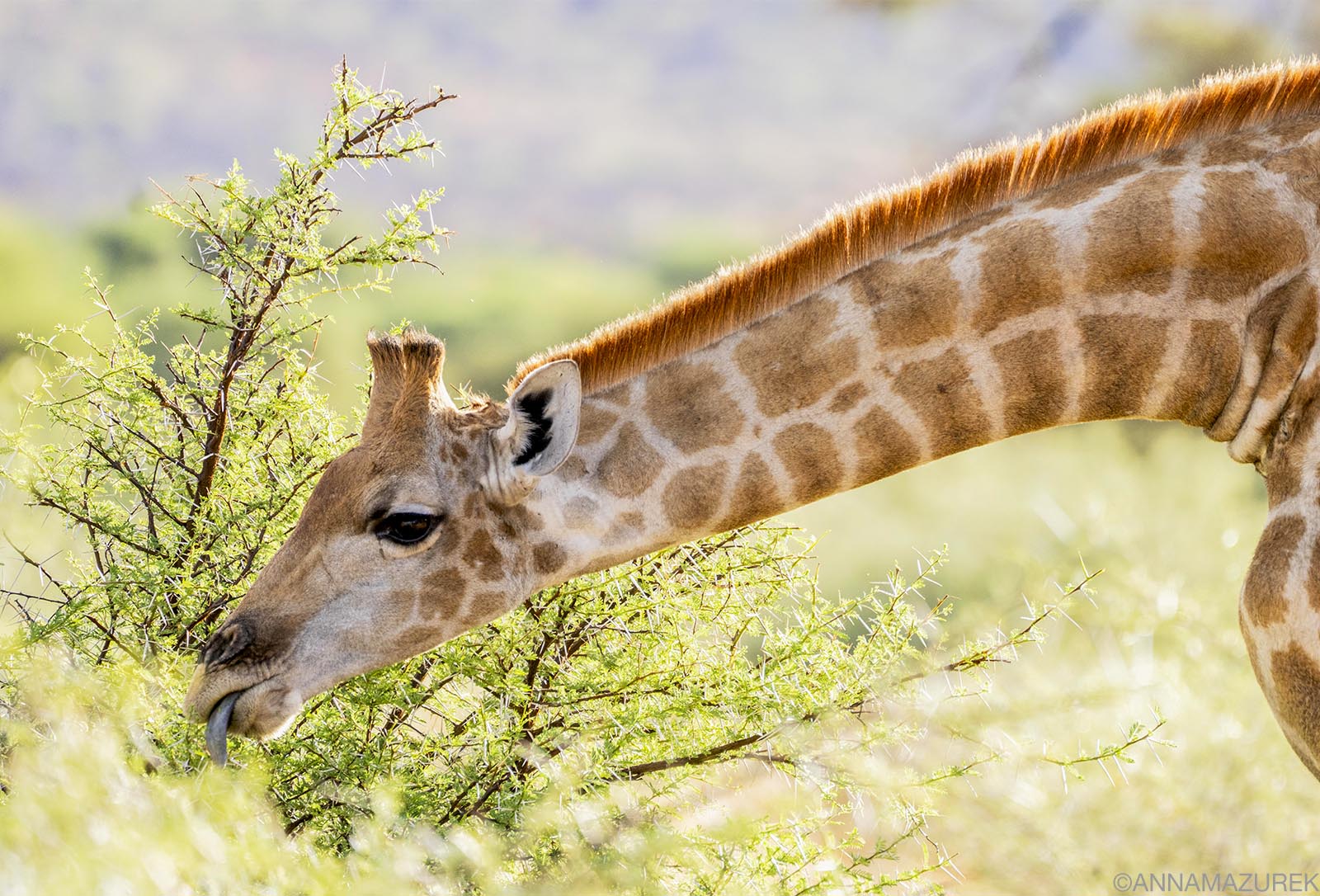
 A giraffe has a snack at Okonjima Nature Reserve in Namibia.
How much does it REALLY cost to travel in Africa? The truth is Africa isn’t cheap—you’re either paying for safety (from crime and wildlife), complicated transportation logistics or both! But, yes, there are ways to trim costs.
This trip started with a half joking WhatsApp message—“How about we road trip Namibia?”—almost two years ago. Planning a trip of this scale yourself is discombobulating and made me wonder if the zebras and giraffes were worth the effort. (Of course, they were totally worth it!)
There’s nothing I love more than talking about money and being honest about the cost of travel. It’s why I tracked every peso, dollar and Boliviano I spent on a seven-month backpacking trip in Latin America in 2014. And, I decided to do it again for this pricier two-month Africa adventure.
To make the trip more affordable, I went with my best friend, Becky, and we both worked while we traveled. Neither of us paid rent or a mortgage during this trip—Becky rented out her Lisbon condo, while I simply don’t have a lease or a mortgage by choice. Two other friends joined at different points, too, which helped cut costs. To be clear, I have no debt and would not go into debt for travel. This trip was a grander version of a canceled 2020 trip, so the saving started a long time ago! This was a rare kind of trip for me.
After hours of staring at spreadsheets, I’ve created a detailed breakdown of the cost of traveling in Africa during two-month trip to help you plan your own adventures. I also share ways to trim costs. (All costs are in USD.)
Affiliate links are used in this post. If you make a purchase, I earn a small commission at no cost to you, which goes toward blog maintenance costs.
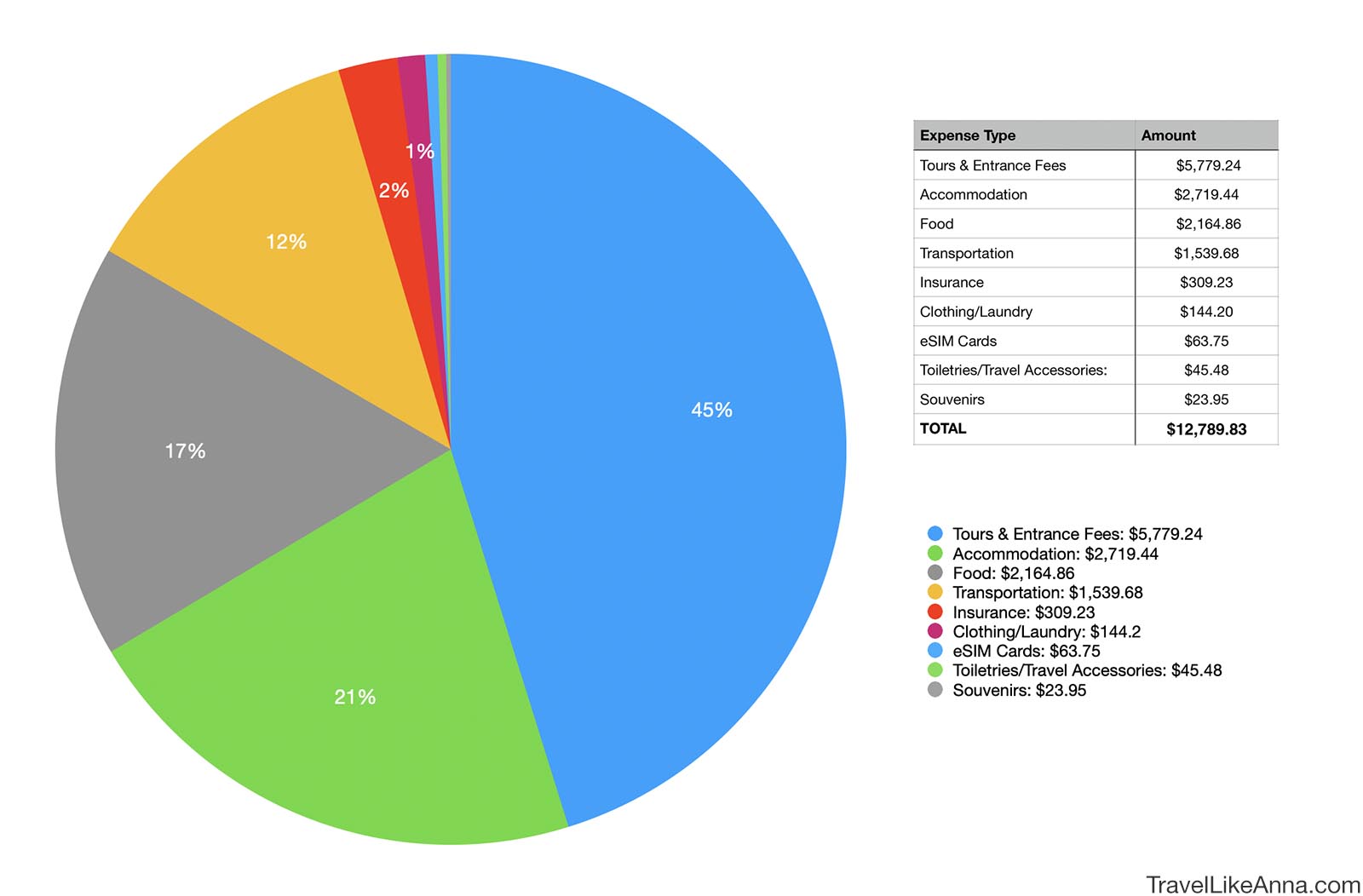 I tracked all my expenses for my two-month Africa trip with the Dollarbird app then exported the data to make these graphics.
Total Cost of Trip: $12,789.83
Cost per Month: $6,394.15
Cost per Day: $203/day for 63 days
Excludes flights. All costs are in USD.
Countries Visited: South Africa, Namibia, Botswana, Zimbabwe, and Zambia
Length of Trip: 63 days
Southern Africa Itinerary
Week 1:Cape Town
Week 2: Safari in Kruger National Park
Week 3: Chill week in Windhoek, Namibia
Week 4: Safari through Botswana and Victoria Falls
Week 5: Chill week in Windhoek, Namibia
Week 6&7: Road Trip Namibia (self-drive)
Week 7&8: Cape Town
Biggest Expenses in Africa
Our two safari tours were the most expensive items:
- 8-Day G Adventures Botswana and Victoria Falls Adventure Tour: Base Rate $2,294.15 + $472.46 (tips, airport transfers, $55 visa, meals & safari drives)
- 8-Day G Adventures Kruger National Park in Depth Tour: Base Rate $1,699 + $448 (tips, airport transfers, meals & safari drives)
- Total for tours = $4,913.61, which was 38.4% of the total cost!
Africa Travel Cost Summary
When looking at the total cost above ($12,789,23 US), you either fall into two mindsets—”That’s crazy expensive!” or “That was a good deal.”—based on your budget and expectations. For context, luxury safaris range from $1-2.5k/day per person, while budget participatory camping trips cost around $166/day per person (without optional excursions), which is roughly 19% cheaper than our trip.
For example, G Adventures offers a 40-day participatory camping trip through eight countries (Nairobi to Cape Town) for a base rate of $6,199 and says to allot an additional $470 for meals that aren’t included. This breaks down to $166/day but doesn’t account for optional safari drives, tips or entry to places like Victoria Falls ($50). (G Adventures always runs sales—we saved about 15% on our tours.)
I tracked all my expenses in the Dollarbird app, which is a paid subscription ($34/year) and the best money management app I’ve found.
Detailed Breakdown of Expenses for Africa Trip
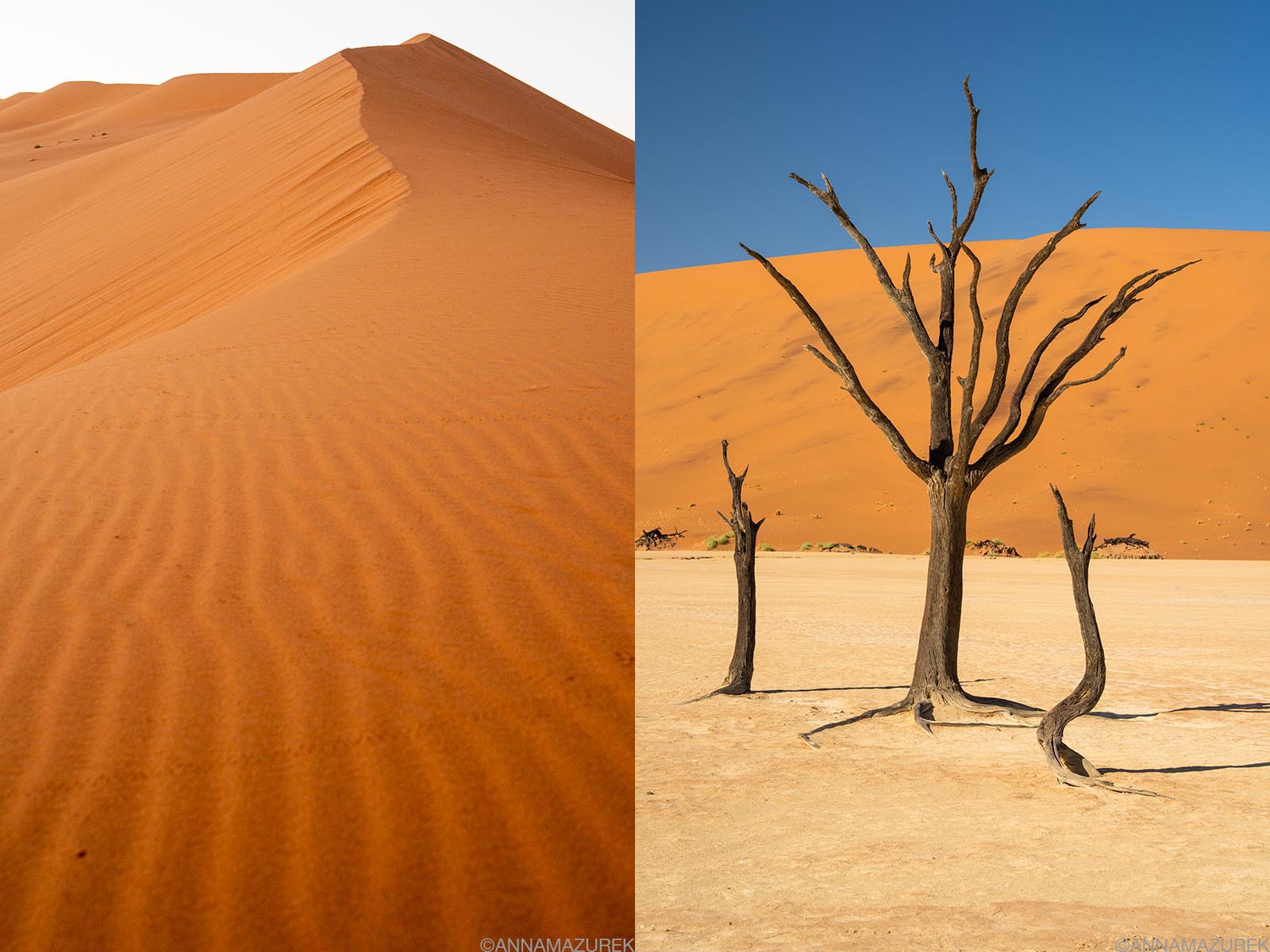 Big Daddy Dune (left) and Deadvlei (right) in Sossusvlei, Namibia.
Tours and Entrance Fees: $5,779.24
(Visas: $145; Entrance Fees: $426.65; Tours: $4,810.90; Tips: $396.69)
We did two eight-day safaris with G Adventures, a company that was recommended by travel industry friends as a budget option. These tour prices below are the base rate and don’t include the optional safari drives, some meals, tips and airport transfers. We both really enjoyed our tours and highly recommend them!
- 8-Day G Adventures Botswana and Victoria Falls Adventure Tour: $2,294.15
- 8-Day G Adventures Kruger National Park Tour: $1,699
Some things you just can’t do on your own due to safety and environmental regulations, such as Sandwich Harbor Dune Driving ($175 pp) in Namibia, rhino tracking ($116 pp) and leopard spotting ($84 pp). We also paid for several safari drives with guides because the guides have radios and tell each other where the animals are for easier wildlife spotting.
Since it’s a very tip-based society, you need to allot an extra 10% minimum for tips. (Some of the tips were included in the tour pricing in my calculations.) The admission for foreigners to certain sites was hefty—$50 entry for the Zimbabwe side of Victoria Falls.
Visas Costs in Africa
Namibia started requiring a $90 multiple-entry visa for Americans in April 2025, and it was $55 for a multiple-entry Zimbabwe visa that we used to take a day trip to Zambia. (If you are a dual passport holder, you can’t swap around your passports in Africa just to save on visa costs. Immigration will flag you because they look previous stamps to see where you’ve been in Africa.)
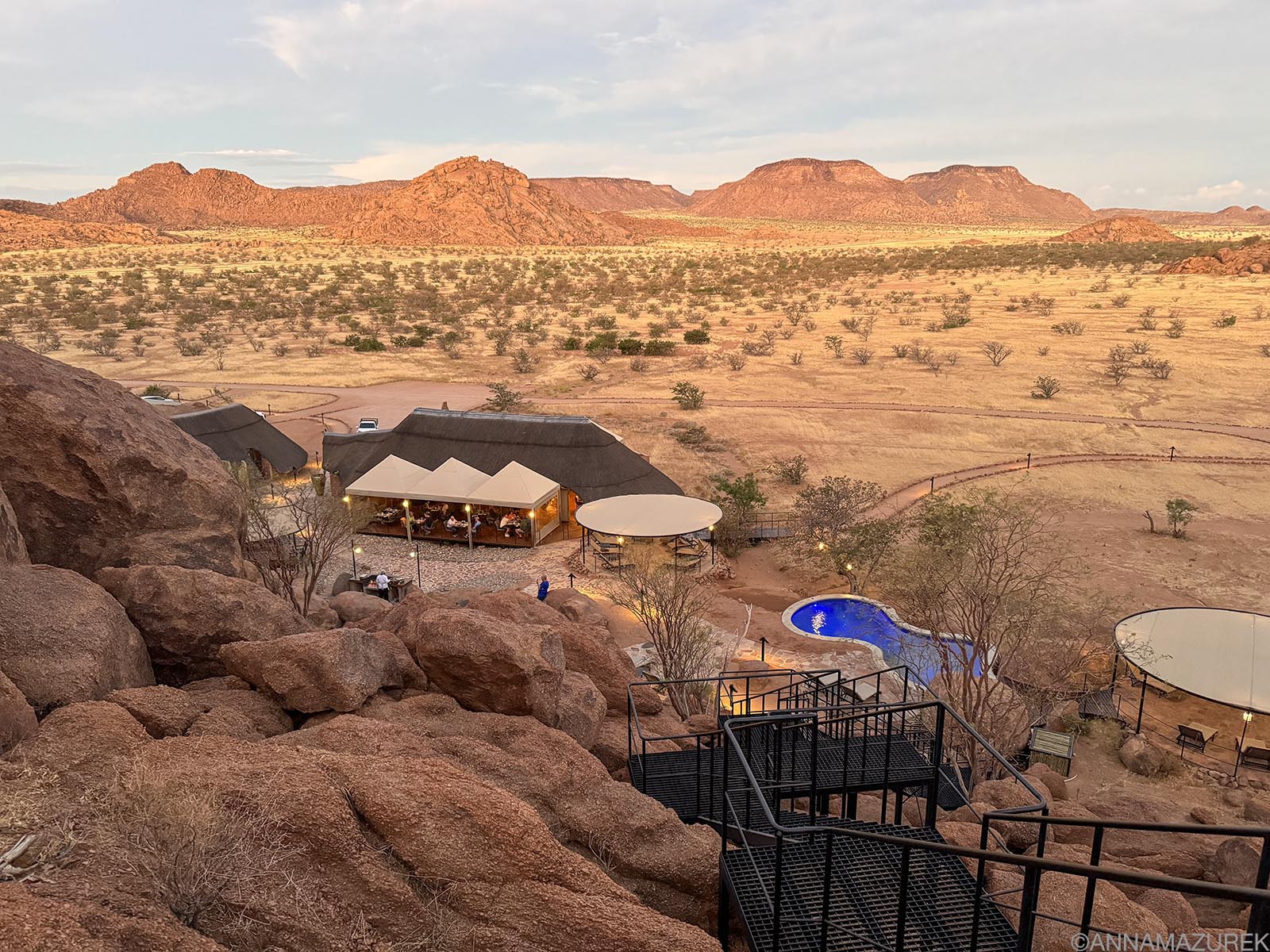 We stayed at Twyfelfontein Adventure Camp after visiting the nearby UNESCO rock art site.
Accommodation: $2,719.44
There are two options for accommodation in rural Africa: camping ($20/per person in Namibia) or swanky lodges. Since we were working remotely, camping wasn’t an option, so we splurged on fancy places for four nights of the entire two months, ranging from $281 pp to $143 pp per night, including two meals. We kept joking that we were retired since we were often the youngest people at these spots! The heat was another reason we opted for fancier accommodation.
The rest of the time we paid around $57/night pp on average for accommodation in cities to rent two-bedroom apartments with full kitchens and laundry facilities. (Swakopmund, Namibia was by far the cheapest—we only paid $19/each a night for a two-bedroom apartment downtown.) In Namibia’s Etosha National Park, we paid $88/night each for a two-bedroom chalet, which was basic but functional.
Food: $2,164.86
(Eating Out: $1,076.33; Groceries: $925.31; Beer: $163.22)
On travel days, we spent a lot of time eating sandwiches and snacks on the long drives. Anytime we were in a proper town, we ate out mostly for convenience. Plus, we were exhausted after the driving days.
My most expensive meal eating out was $38.86, including tip and wine. I only had eight meals that cost over $30 in two months, and the median meal price was $12.97. Eating out was relatively inexpensive—cute cafes in Cape Town had breakfast sandwiches for $6, etc. It’s the cost of alcohol that makes it more expensive. I just tracked beer to be funny but that also includes wine. The wine scene in South Africa and the craft beer options in Cape Town was fantastic!
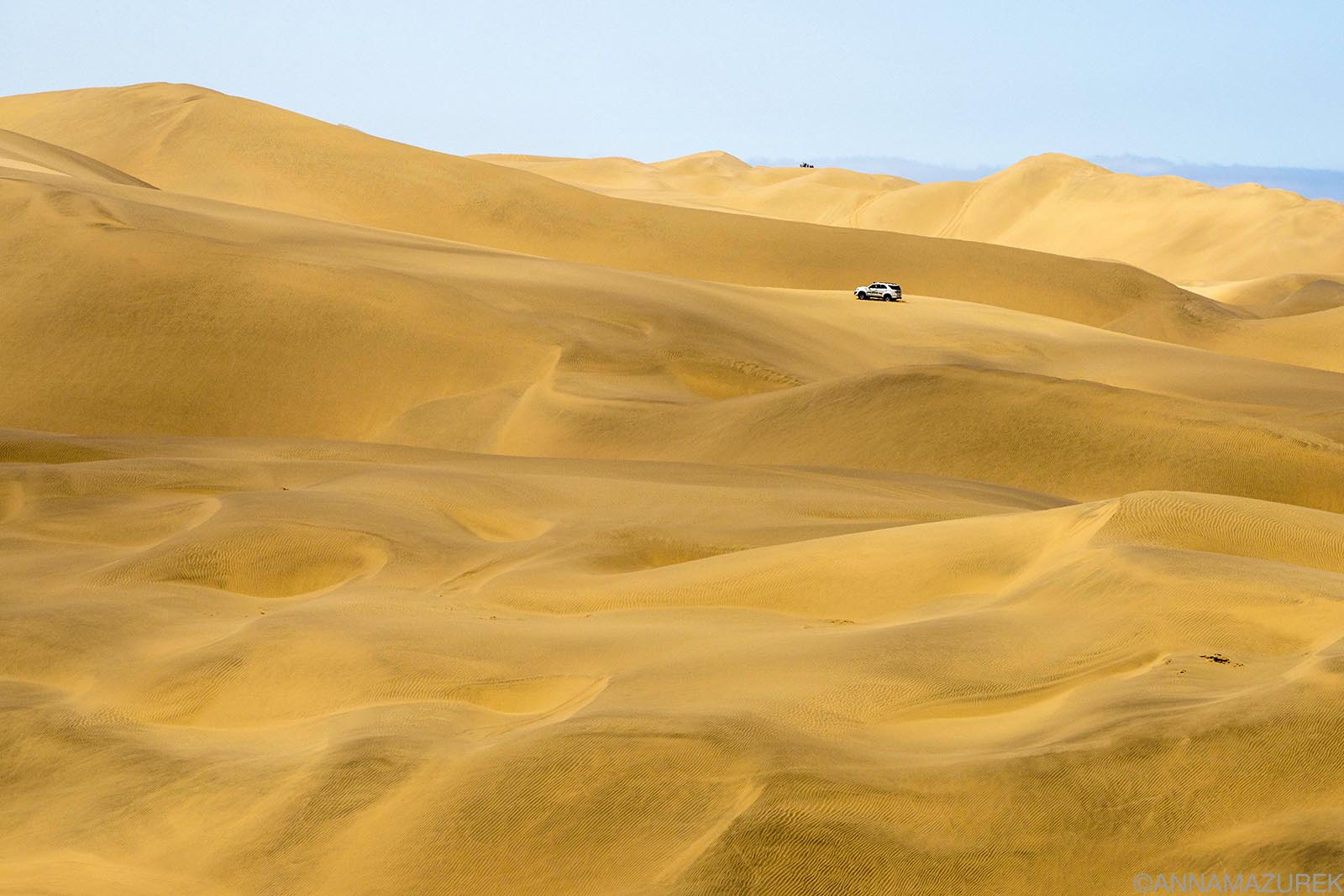 Sandwich Harbor, Namibia is one of those places you can’t drive yourself and must book a tour, which is worth every penny!
Transportation: $1,539.68
(Car Rentals: $574.76; Gas: $111.06; Mechanic/Tire: $73.73; Taxis & Private Transfers: $780.13)
We paid for safety when it came to transport. Let me be clear: You cannot walk alone at night, even as a group, in most of Southern Africa. Mostly due to the chance of being robbed but also due to wild animals in the bush. We tried to walk 15 minutes back from the farmer’s market in Green Point in Cape Town, only to run into some Dutch travelers running back, yelling for us to turn around because they’d been robbed up ahead.
We rented a 4×4 SUV ($1,4871 total) for our two-week self-drive road trip in Namibia from Kalahari Car Hire, which I’d highly recommend. After a hilarious turn of events, we ran out of gas 20 miles out of Swakopmund and paid $105 total for the roadside service. The office was so sweet with helping us and checking in on us later. One of the tires got three nails in it, so we had to buy a new one after returning the car for $116 total.
Then, in Cape Town, we rented a normal SUV ($315.20 total for a week) for driving around the area for our first week. The Namibia car cost was split three ways and Cape Town four ways because another friend joined us.
Otherwise, we did taxis, ride shares (Uber) and private transfers. For safety, we had our hotels book us airport pickups to make things easier. In Cape Town, we used Uber Black or Comfort to get around for safety. I also used the women driver feature, which I had great luck with. I also used a private transfer company called Angel Watch for airport pickups and day trips to the wine regions. Book through WhatsApp. I highly recommend them.
Namibia has a rideshare app called Yango. We used it only during the day, and it was fine. It was mostly older cars, but occasionally, the driver would ask for more money. (This is a question they ask you in the app when you rate the driver!) I wouldn’t feel very safe alone in one at night.
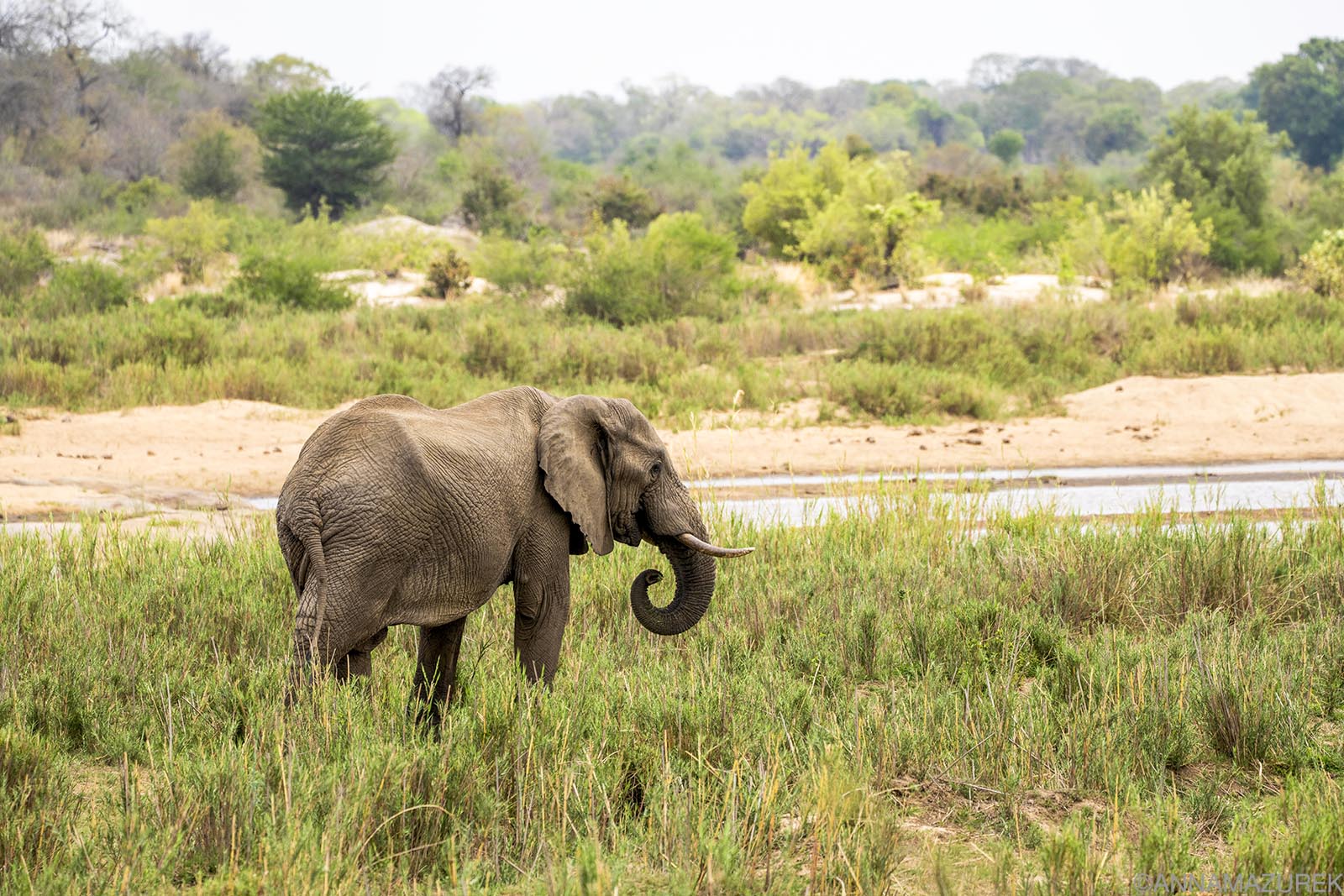 Kruger National Park does not have cell service to deter poaching.
eSIM Cards: $63.75
Staying connected was key for this trip because we were all working remotely at some point, so we needed to have the ability to hotspot our computers. Plus, it was also a safety issue for navigation on our long drives. I used Airalo’s eSIM plans for both South Africa and Botswana with no issues—you can read more in my detailed eSIM review.
In Namibia, MTC (local network) is the best and honestly only network in the country. (They claim to cover 95% of the country, but it only worked in towns and cities.) Buy an eSIM at the airport store outside arrivals. No other eSIM card company works in Namibia. My friend tried his international Verizon plan, but it did not work because they don’t partner with MTC. The same happened with Airalo.
Based on the MTC staff’s comments, they don’t partner with anyone. Basically, you have to use MTC—your international plan with any U.S. carrier will NOT work unless they use MTC. For more details, read my review.
Travel Insurance: $309.23
While SafetyWing is my go-to for travel medical insurance, I ended up going with World Nomads for this trip because SafetyWing was just under the minimum coverage required by G Adventures for tours. World Nomads also has better coverage for travel delays, which was key for my flight to Asia out of Cape Town. (I often use World Nomads in the U.S. when I’m 100 miles from home to cover me on hiking trips.) I switched back to a SafetyWing plan the minute I got back to Asia.
Full disclosure: We receive a fee when you get a quote from World Nomads using this link above. We do not represent World Nomads. This is not a recommendation to buy travel insurance.
Clothing/Laundry: $144.2 & Souvenirs: $23.95
I bought a few dresses and things while we were traveling. I made sure to book apartments or hotels with free laundry to make life easier. (I hate having other people do my laundry because they always mess up my clothes.)
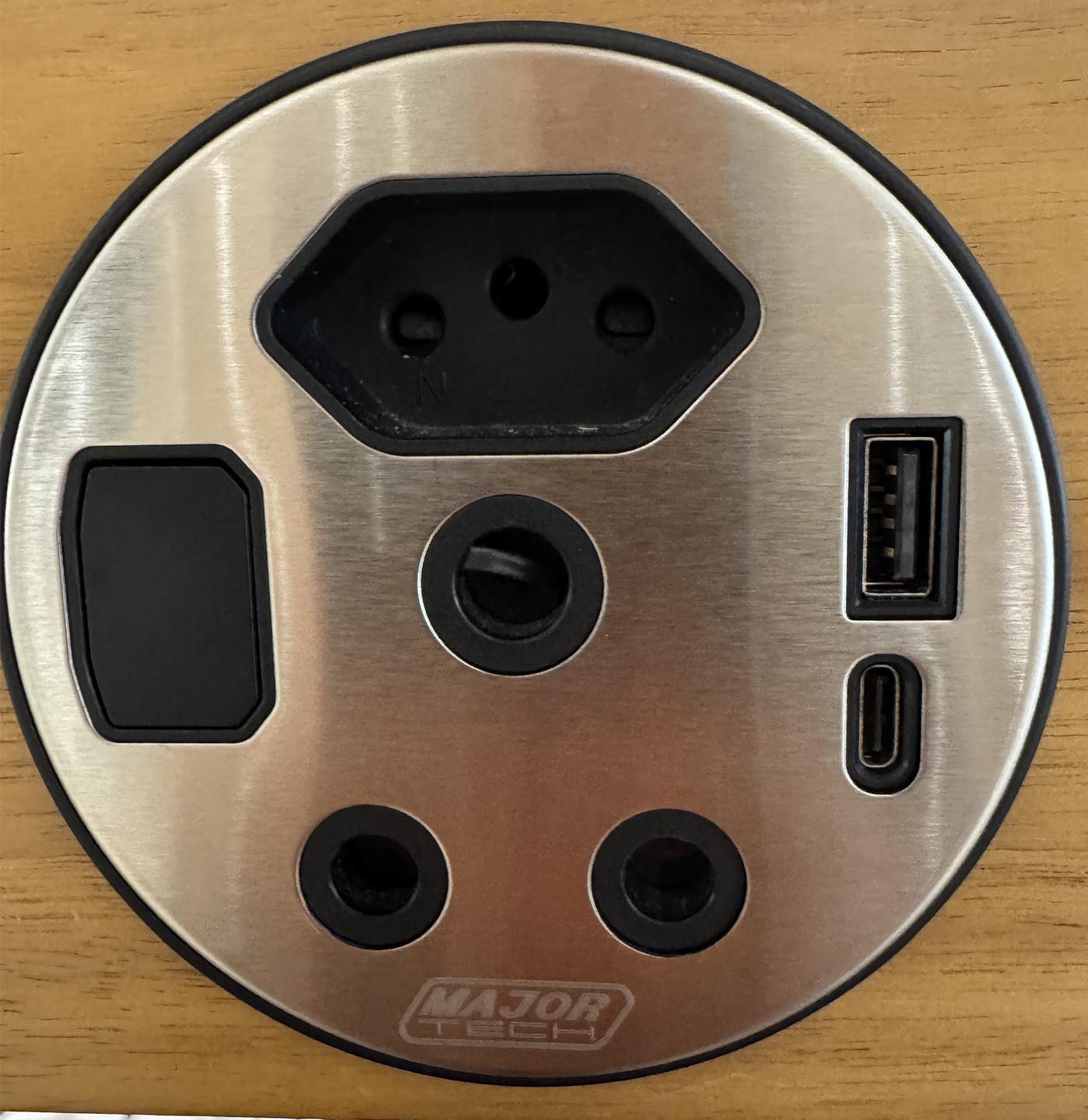 The plug chaos in my Windhoek hotel! Bring both a European plug and the rounded South African plug.
Toiletries/Travel Accessories: $45.48
The most annoying thing about Southern Africa is the plug situation—they use this giant round version of the British plug. I’ve been to over 70 countries and never seen anything like this. Plus, most places also use the standard European plug. You needed both because you never knew which type was by your bed or desk. The electronics—hair dryer, kettle, etc.—in the room were a mix.
Sometimes, there was even a standard British plug with the rectangular plugs. It was the most confusing thing ever, and the South African plug doesn’t come on the standard travel plug adapter. Buy them at the airport when you arrive or at an electronics shop.
What is the Cost of Flights to Africa?
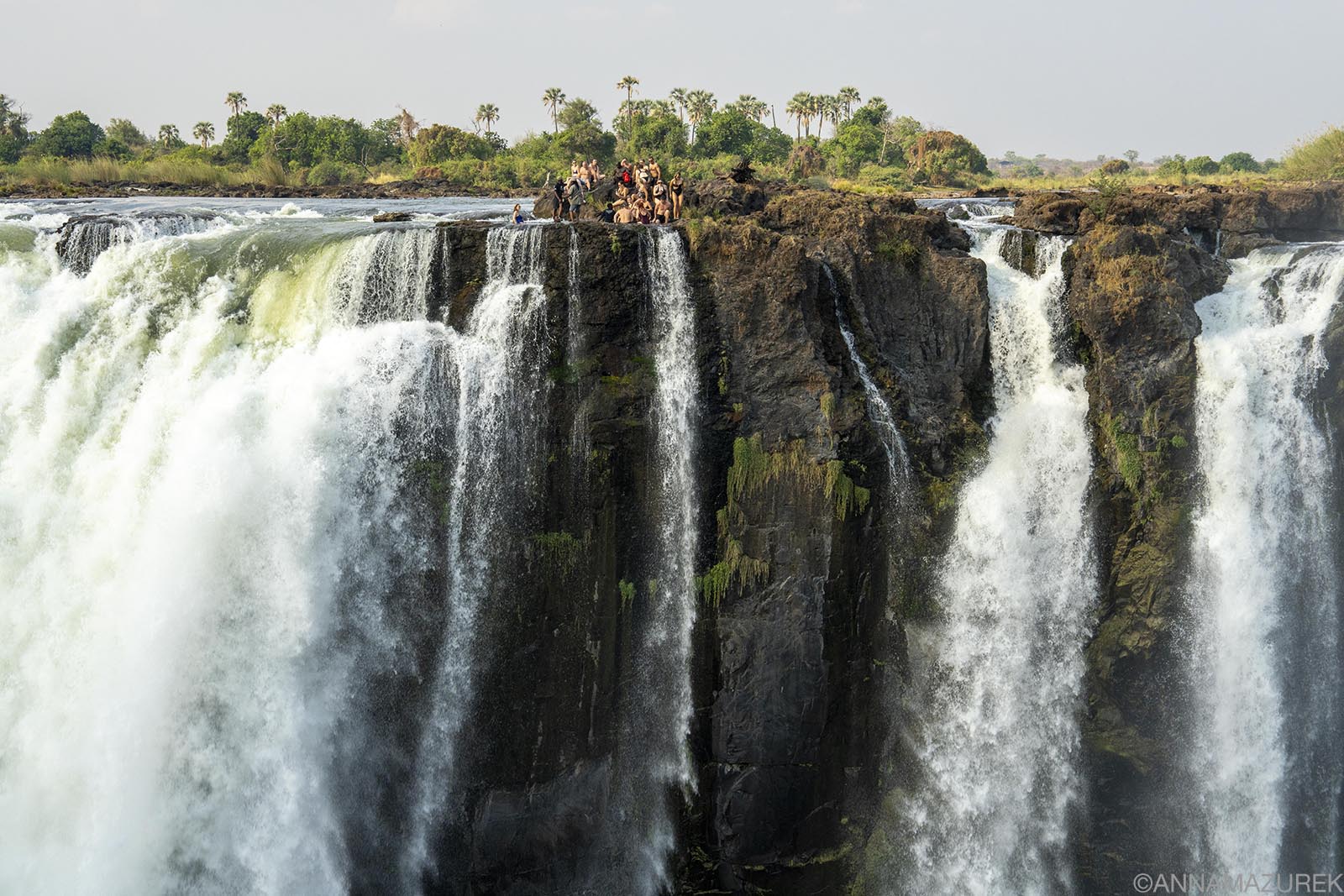 From the Zimbabwe side of Victoria Falls, there’s a nice view of the queue at Devil’s Pool on the Zambian side.
This cost breakdown above doesn’t include flights because I paid for most of my internal flights on miles, and one of my freelance jobs covered a portion of the other flights. The Star Alliance has the best network in Southern Africa, while Lufthansa’s budget carrier Discover Airlines flies direct to Victoria Falls and Windhoek from Germany. Norse, another budget airline, flies out of London direct to Cape Town.
My focus is on building status on American Airlines, but I had some extra United points that I used for the flights. Flying through Qatar is a cheap option, but there was too much tension in that region—Qatar got hit with an attack when I was booking flights, so I avoided it.
- One-Way Flight from Athens, Greece to Cape Town via London: $1,300 for economy
- Cape Town to Johannesburg: $166.90 economy + $99.50 to upgrade to business class to not have to check my camera gear.
- Johannesburg to Windhoek: $118 economy + $208 to upgrade to business class to not have to check my camera gear.
- Victoria Falls to Windhoek: 12.5K United Airlines miles + $50 for economy
- Windhoek to Cape Town: 25K United Airlines miles + $34.70 for economy
- One-Way Business Class Singapore Airlines flight from Cape Town to Bangkok via Singapore: $1,900
Do NOT fly Singapore Airlines Business Class from Africa! Economy was half the price and business class was not worth the extra cost because it’s a very old plane with a terrible, awkward seating arrangement and cheap amenities. I was very disappointed.
How Can You Travel in Africa on a Budget?
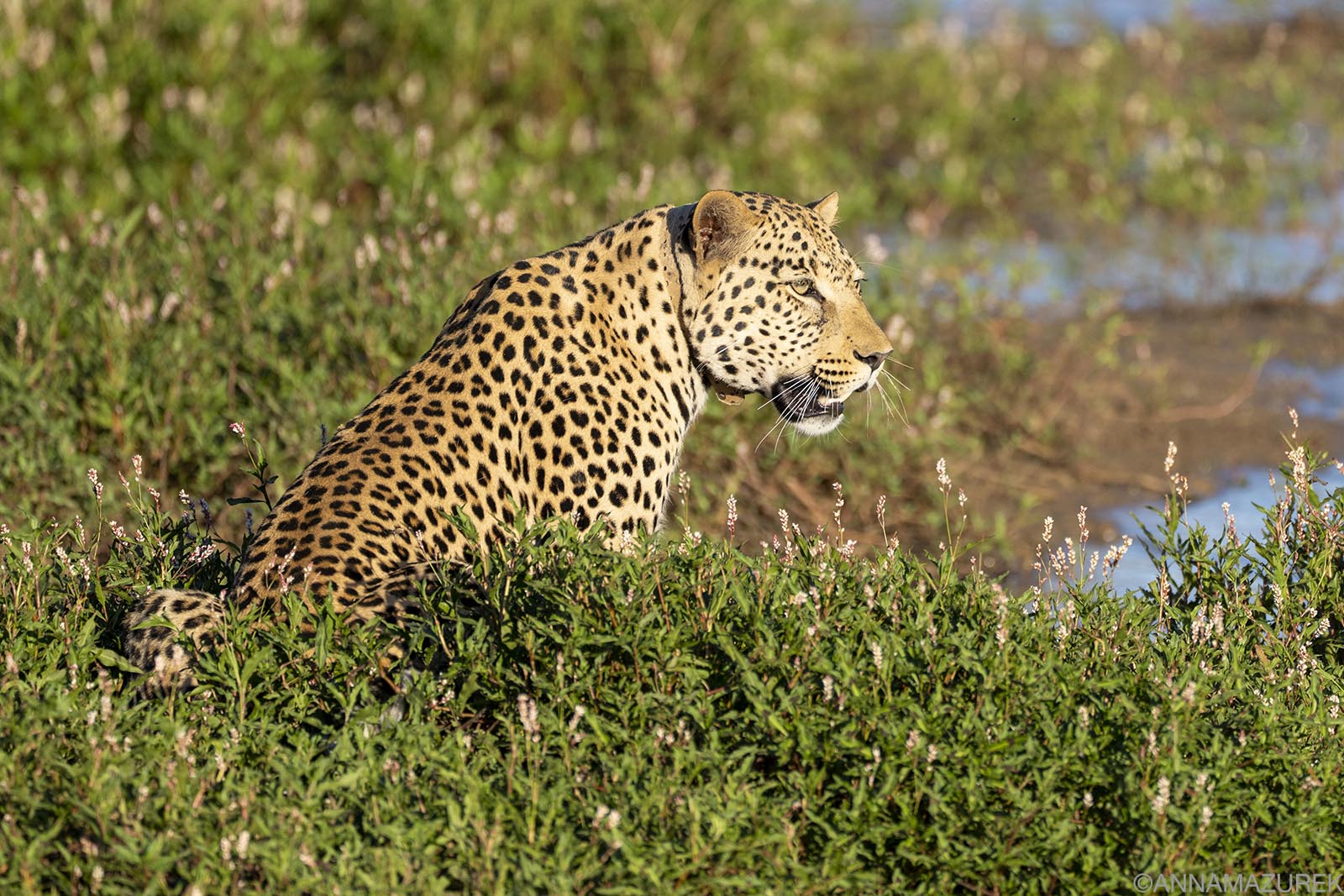 A leopard at Okonjima Nature Reserve in Namibia.
The easiest way to do Africa on a budget is to camp or do a participatory camping safari where you help set up tents and cook. It’s really that simple. You can easily rent 4×4 SUVs and trucks with camping gear, so you don’t have to bring anything really yourself. The rental will cost a bit extra to include the gear.
I’d highly recommend this for self-driving in Namibia. We did two weeks driving on our own and loved it. You’ll need a good GPS and a portable air compressor. You can easily rent these, too, but I highly recommend the travel friendly Hoto portable air compressor that self-calculates in both psi and bar.
For other parts of the region, I’d do your research about the safe areas to drive, especially in South Africa. We rented a car to explore the Cape Town area but didn’t explore on our own past the Western Cape.
I would recommend G Adventures for great budget tours. They have a wide range from classic tours with hotels to the cheaper participatory camping options.